
The City’s Front Lawn: Poplar Shading and Evening Squares on the Binhe Park Belt
绿廊十里延,晚照一城闲 Lǜláng shí lǐ yán, wǎnzhào yī chéng xián – A green corridor runs ten li; the evening light settles on a town at ease
正文:滨河公园 Bīnhé Gōngyuán the riverside park fronts the residential grid of 可克达拉市 Kěkèdálā Shì Keketokala City with a straightness only a planned city can manage: a belt of poplar promenades, lawn terraces and evening squares running parallel to the levee, close enough to the water that the river breeze does the air-conditioning. This is the Fourth Division’s idea of a civic living room – planted young, maintained hard, and used by everyone, from taiji groups at dawn to chess tables under the trees after lunch to the full evening crowd that arrives when the lamps come on.
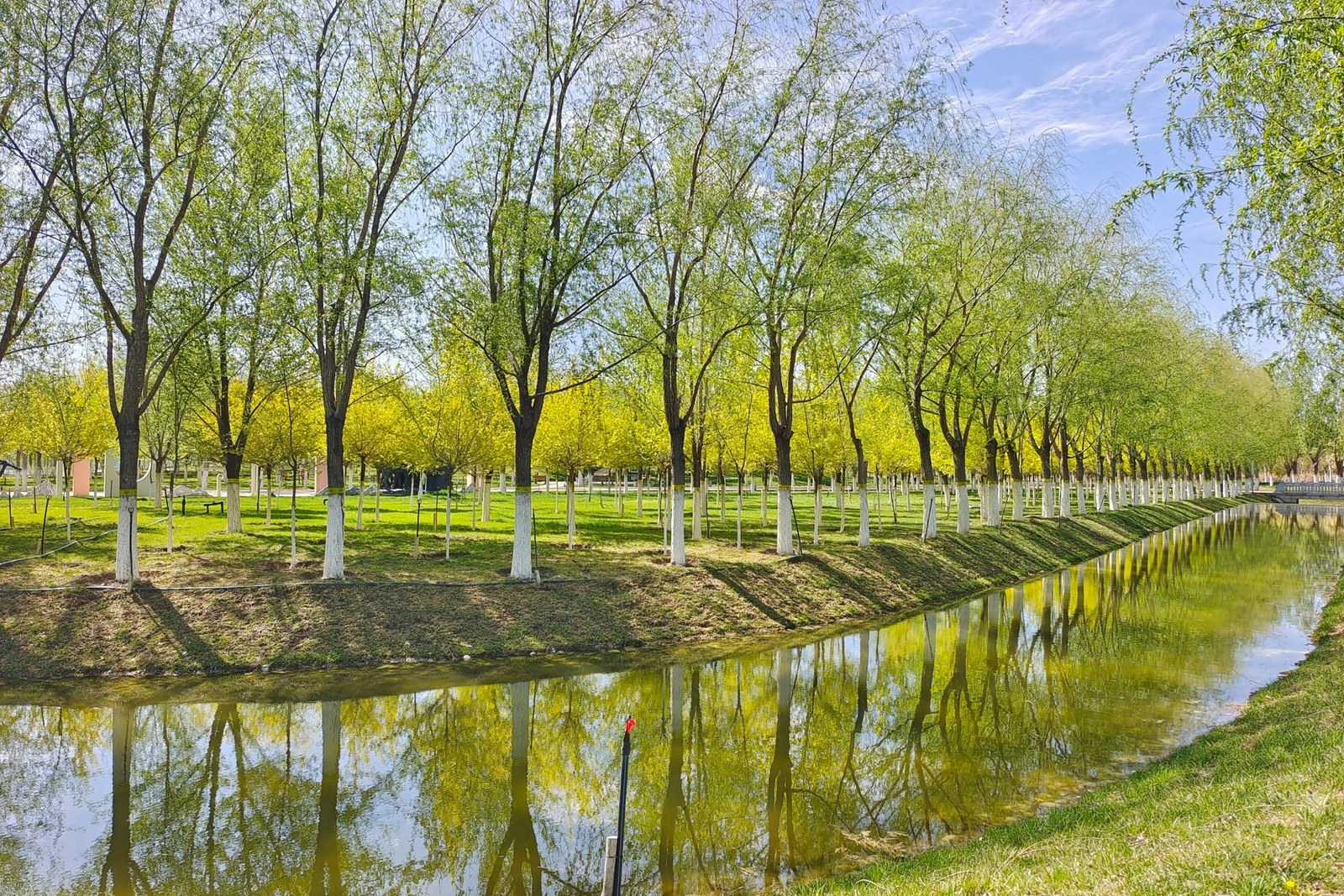
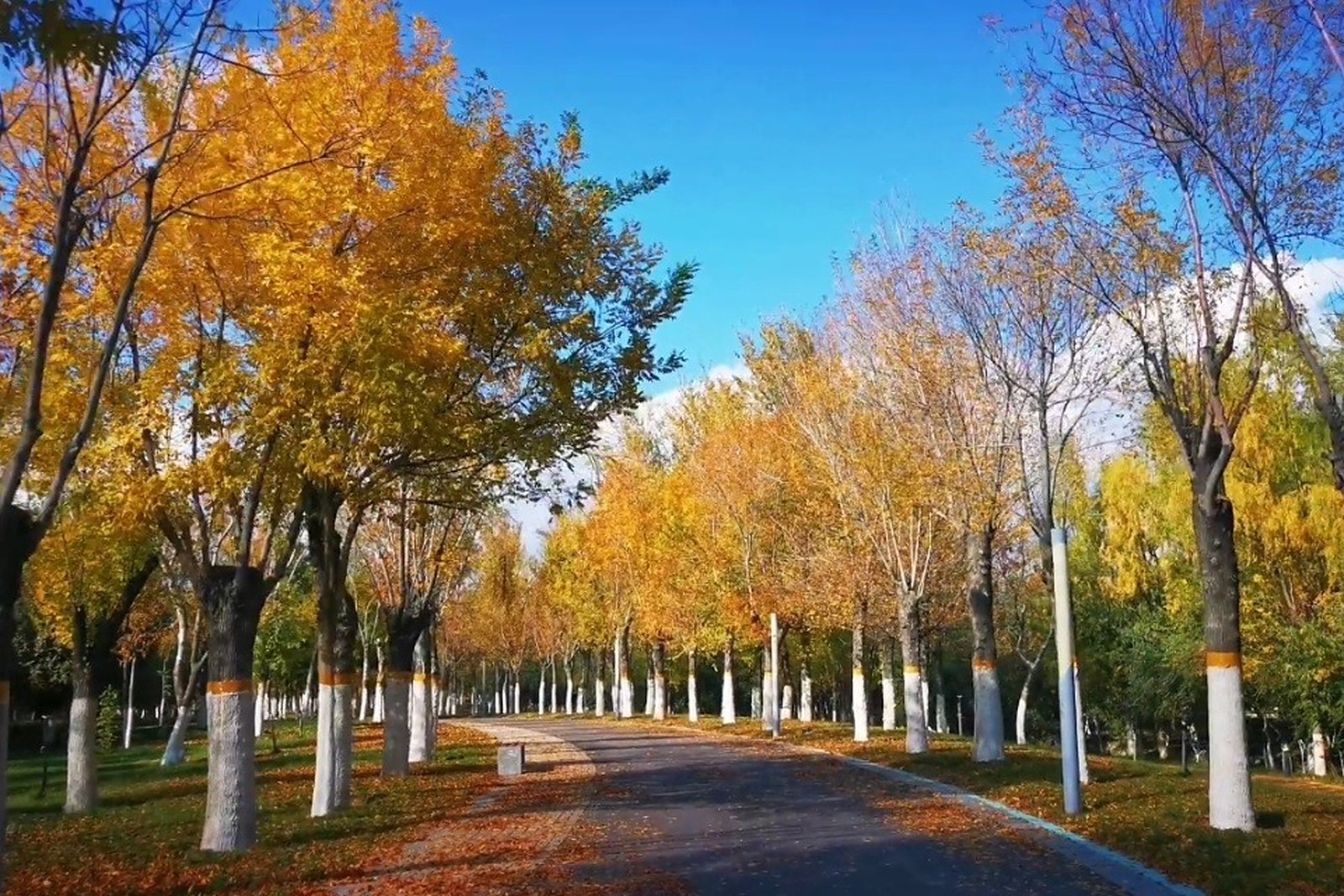
The park organizes itself along the water line. Near the civic quarter, lawns open wide enough for kite season and wedding photographs; farther along, the walkways dip toward ponds and mirror-still channels where the poplars double themselves; and at the downstream end the park simply hands the visitor to the river banks – the levee path continues west without a fence in between. Autumn turns the avenue trees gold in a single week, and the leaf-fall on the paving is the year’s best free show.
What makes the park work is how little it tries. There are no ticket gates, no manicured parterres, no loudspeaker announcements – just wide paths, deep shade, benches facing the water and squares that fill at dusk with dancers of every description. The city grew into this park rather than around it: apartment blocks front it, breakfast stalls border it, and the shortest route between almost any two points in town runs through it.
Beyond the lawns, the same 可克达拉市 Kěkèdálā Shì Keketokala City keeps more easy hours: 草原之夜纪念馆 Cǎoyuán zhī Yè Jìniànguǎn the Grassland Night memorial, 伊犁河畔 Yīlí Hé Pàn the river banks with their bridge light, the June blue of 薰衣草田 Xūnyīcǎo Tián the lavender fields, and the reed-fringed 伊犁河湿地 Yīlí Hé Shīdì the Yili wetlands – four more doors into the same 可克达拉市 Kěkèdálā Shì Keketokala City. With the park strolled, our Keketokala food map fills the day.
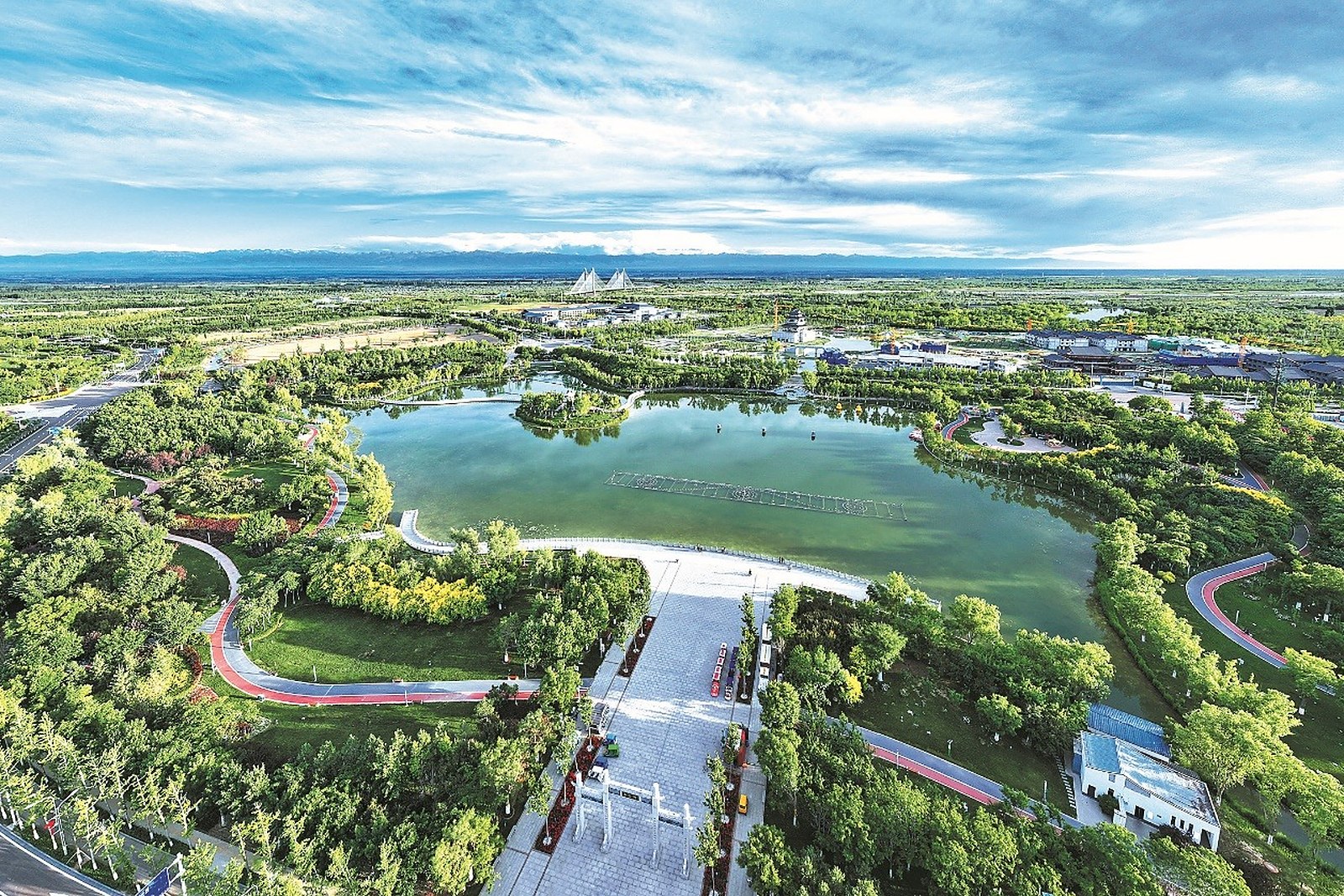
Practicalities first. The riverside park fronts the city’s residential grid – walk from any central hotel, and come evening when the promenade crowd and the river light arrive together. Mornings belong to the exercise crowd, midday to the shade-seekers; the paths are flat for the whole length, summer shade is generous by oasis standards, and the pond edges are low walls made for sitting rather than swimming.
What stays with you is the mood. New towns usually feel like renderings; the binhe park feels like a place that has always planned to be exactly this useful. A planned city gets one park right and the whole grid forgives it everything else – this is that park.
Practicalities
Practicalities
Words and Names
flowcloud would say the binhe park is Keketokala’s proof of concept: draw a green line beside a river, plant poplars with military spacing, and a city ten years old behaves like it has had a riverside promenade for a century. All checked November 2026.
Getting there: The riverside park fronts the city’s residential grid; walk from any central hotel, and come evening when the promenade crowd and the river light arrive together. All checked November 2026.