
Binglanggu Li and Miao Cultural Heritage Park fills a valley inside the Ganshiling Nature Reserve, on the boundary between Baoting and Sanya and administered from Baoting’s Sandao Town. It is named for its shape: forested ridges on both sides with a betel-nut valley running several kilometres between them. The park lies about 28 kilometres from central Sanya and 26 kilometres from the Yalong Bay coast, which is why so much of its traffic comes down from the beach hotels. Since July 2015 it has been a national 5A scenic area – unveiled with a plaque ceremony that August, and billed as China’s first ethnic-culture-themed 5A.
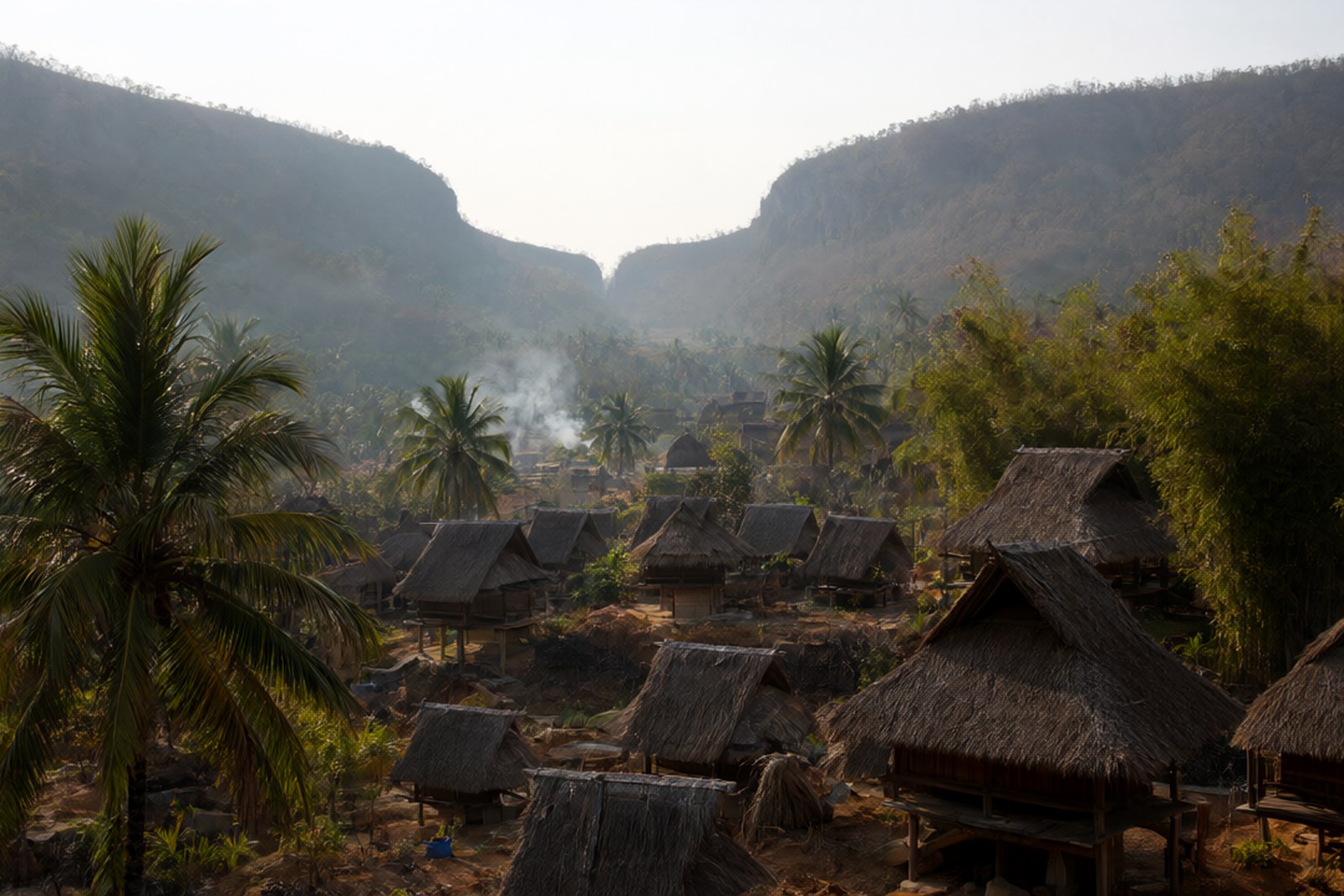
The founding date is 18 January 1998, and the park’s rise maps onto the growth of Hainan’s cultural tourism: national 4A in 2010, then 5A in July 2015. Its visitor counts have been large and steady – about 1.2 million visits in 2015, according to the coverage of the 5A unveiling, and an average of roughly a million a year in the accounts that followed. What separates it from a folk village is that the culture on show is being practised by people who live from it. Ten items of national intangible cultural heritage are demonstrated inside the park, and the phrase the operators use for the model – “scenic area plus farming households” – describes a working arrangement in which local families staff the demonstration halls, workshops and stages rather than perform an hourly script.
The park is organised into seven zones, and a visitor can walk them in a half day: the intangible heritage village; Ganshi Li village, a Sai-dialect Li settlement of some 400 residents that sits inside the grounds; the Guyin Miao family area; the Tianye Li family area; the Binglang Gu Yun live show; the orchid cabins; and a Li and Miao food street. The four objects the park calls its treasures are the Li dragon quilt, bark cloth, facial tattoos and the nose flute, and the small museums through the zone cover Li tattoo styles across the five dialect areas, dragon quilts, non-woven, hemp and cotton textiles, pottery, totems and mountain-terrace farming. Elderly Li women with traditional facial tattoos demonstrate weaving in the halls, which is the park’s answer to the question of how a living tradition should be shown at all.
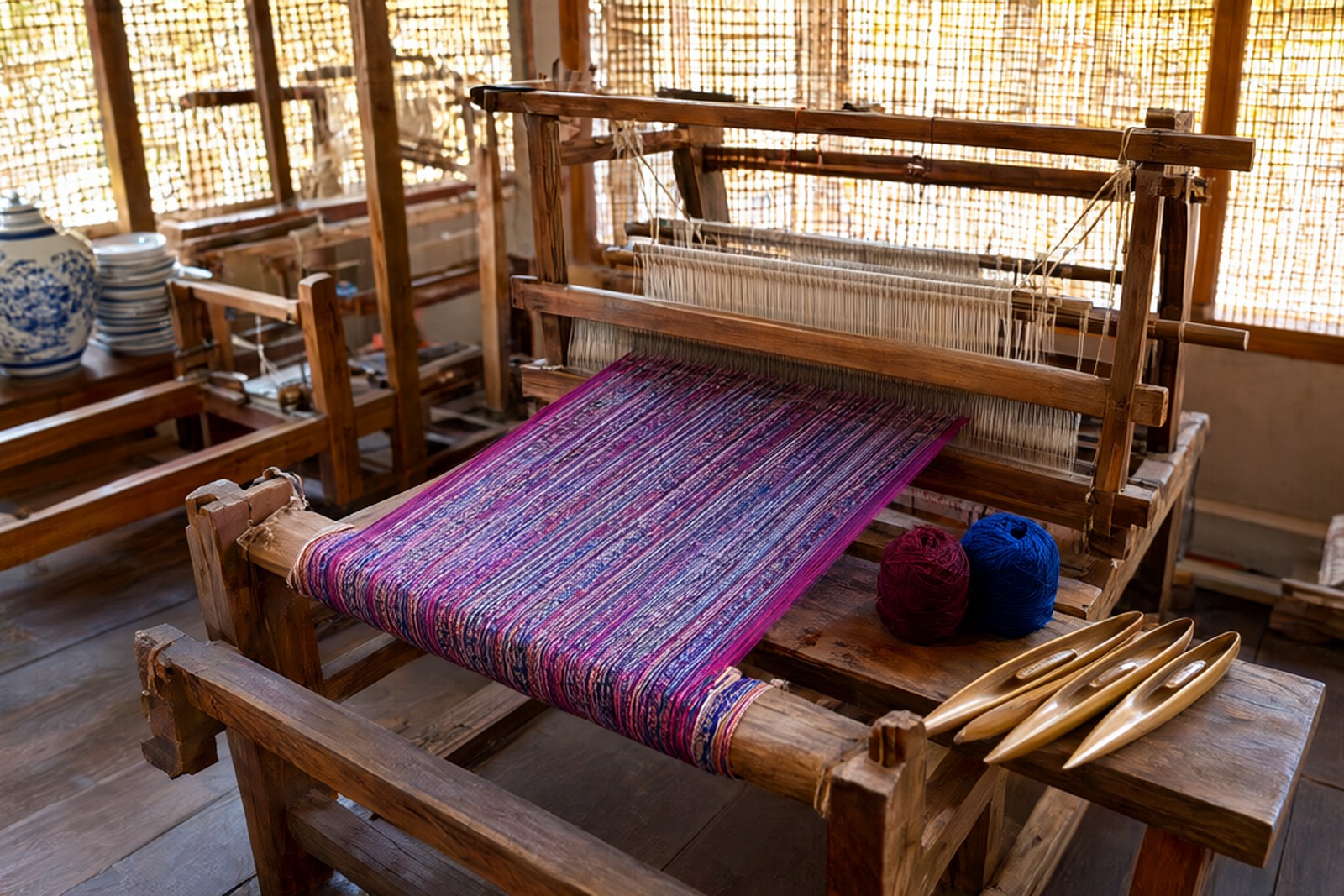
The brocade itself has a new status worth knowing. Li traditional textile techniques – spinning, dyeing, weaving and embroidering – were inscribed by UNESCO in 2009 and transferred to the Representative List in December 2024, and Hainan now counts more than twenty thousand inheritors of the craft. Baoting is a national pilot area for folk-art copyright protection, with Binglanggu as its pilot site, and in September 2025 the county donated a handwoven Li brocade dragon quilt to the China National Archives of Publications and Culture. This piece keeps the craft to that single paragraph: the weaving technique has its own article on this site, and the park is best read as the place where the tradition is staged, taught and sold rather than explained in full.
Practical notes shape a visit more than the map does. The park publishes a daily maximum of 15,000 visitors and a comfortable capacity of 10,500, which tells you why the showtimes matter: the Binglang Gu Yun performance is charged separately and seats fill early, so arrive half an hour before a scheduled performance. The route that works is the heritage village first, then the show, then Ganshi Li village for its century-old granary cluster and tattoo hall, then the Miao area and the food street. Binglanggu is also a venue for the Li and Miao Sanyuesan festival and for the Qixi water-splashing celebrations, so festival dates will be busy and should be booked ahead. Set against Baisha’s Maona village, where intangible heritage is simply daily village life, and against the folk-custom villages of the eastern coast, Binglanggu is the professional stage: bigger, busier and deliberately presented.
Practicalities
Tickets. Entry is from about 55 to 60 yuan, with the official posted price at 60 yuan a person; the Binglang Gu Yun show and the shuttle bus are charged separately, and the shuttle starts at 20 yuan a trip. Combination tickets and senior fares are widely sold. Checked October 2026, subject to change.
Opening hours. The park opens 08:30 to 18:00, with last entry at 17:30. Show times are posted daily at the gate, and the demonstration halls keep their own schedules inside those hours.
Closing day. No closing day is published – the park is open daily, which is why the capacity figures, rather than a rest day, are what actually limit a visit.
Getting there. The Sanya intercity bus line 1 stops at the Binglanggu gate, and the old coach route from Sanya’s main bus station sells tickets to Sandao and drops passengers at the park’s new gate in a little over an hour. By car, take the G98 ring road or National Highway 224 from Sanya toward Wuzhishan and Baoting; the park is about ten kilometres past the turn at Jiyang. A taxi from central Sanya is the simplest option if you are not driving, and the park’s enquiries line is 0898-38661116.
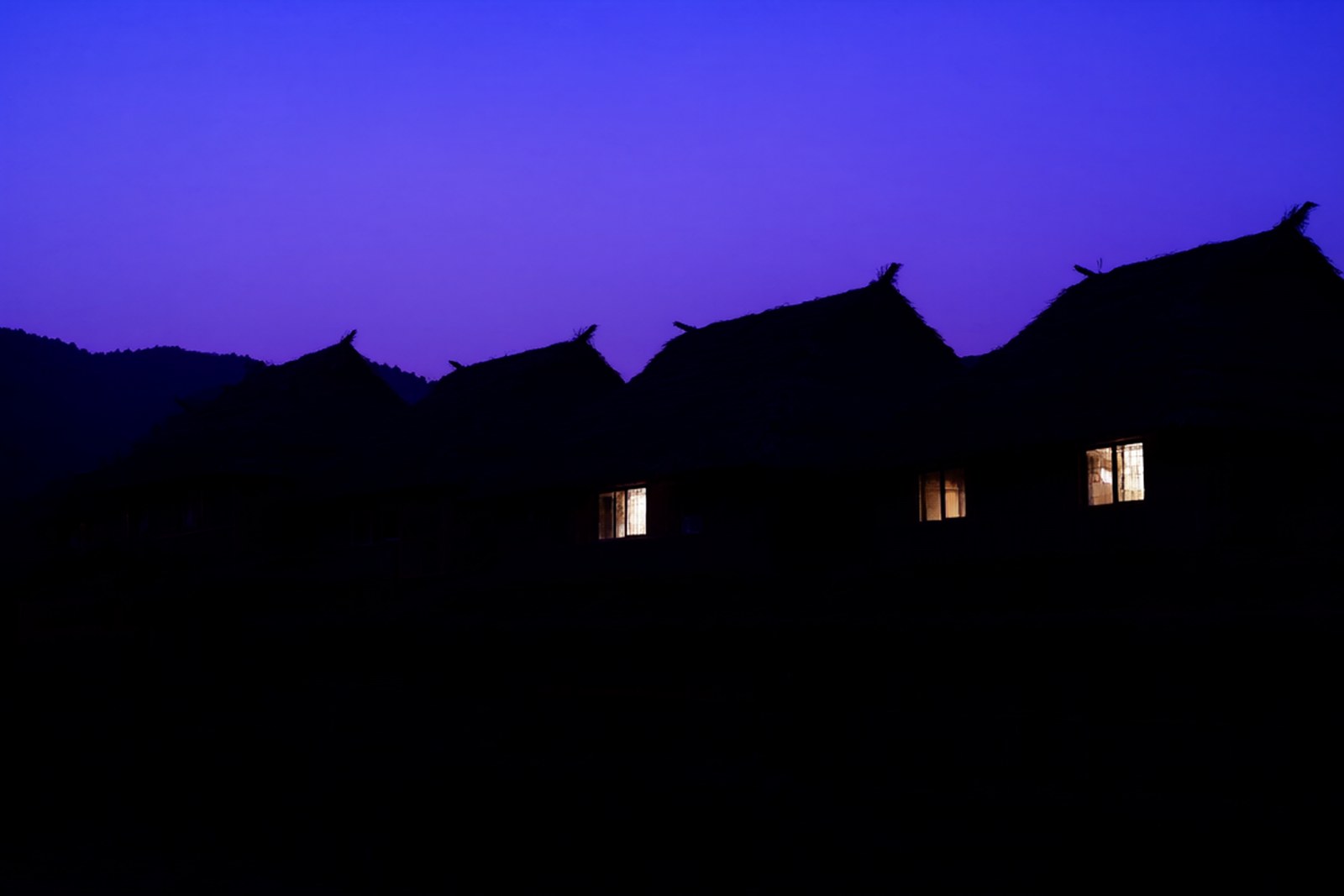
flowcloud would say that Binglanggu is where Li culture goes to work – not behind glass but on looms, on stages and at the granary door – and that a park which has counted a million visitors a year and still keeps its tattooed weavers at their frames has earned the word heritage.
Getting there: Binglanggu Li and Miao Cultural Heritage Park lies in the Ganshiling Nature Reserve on the Baoting-Sanya boundary, administered from Sandao Town, Baoting Li and Miao Autonomous County, Hainan, about 28 kilometres from central Sanya and 26 kilometres from Yalong Bay; entry is from about 55 to 60 yuan with the show and shuttle charged separately, hours are 08:30 to 18:00 (last entry 17:30) with no closing day, and the Sanya intercity bus line 1 stops at the gate (checked October 2026, subject to change).