
The Blue House — the Tenement That Refused to Fall
一桶蓝漆留百年,阳台仍晾百姓衣 Yī tǒng lánpī liú bǎinián, yángtái réng liàng bǎixìng yī – One bucket of blue paint has kept a hundred years; the balconies still hang ordinary people’s washing
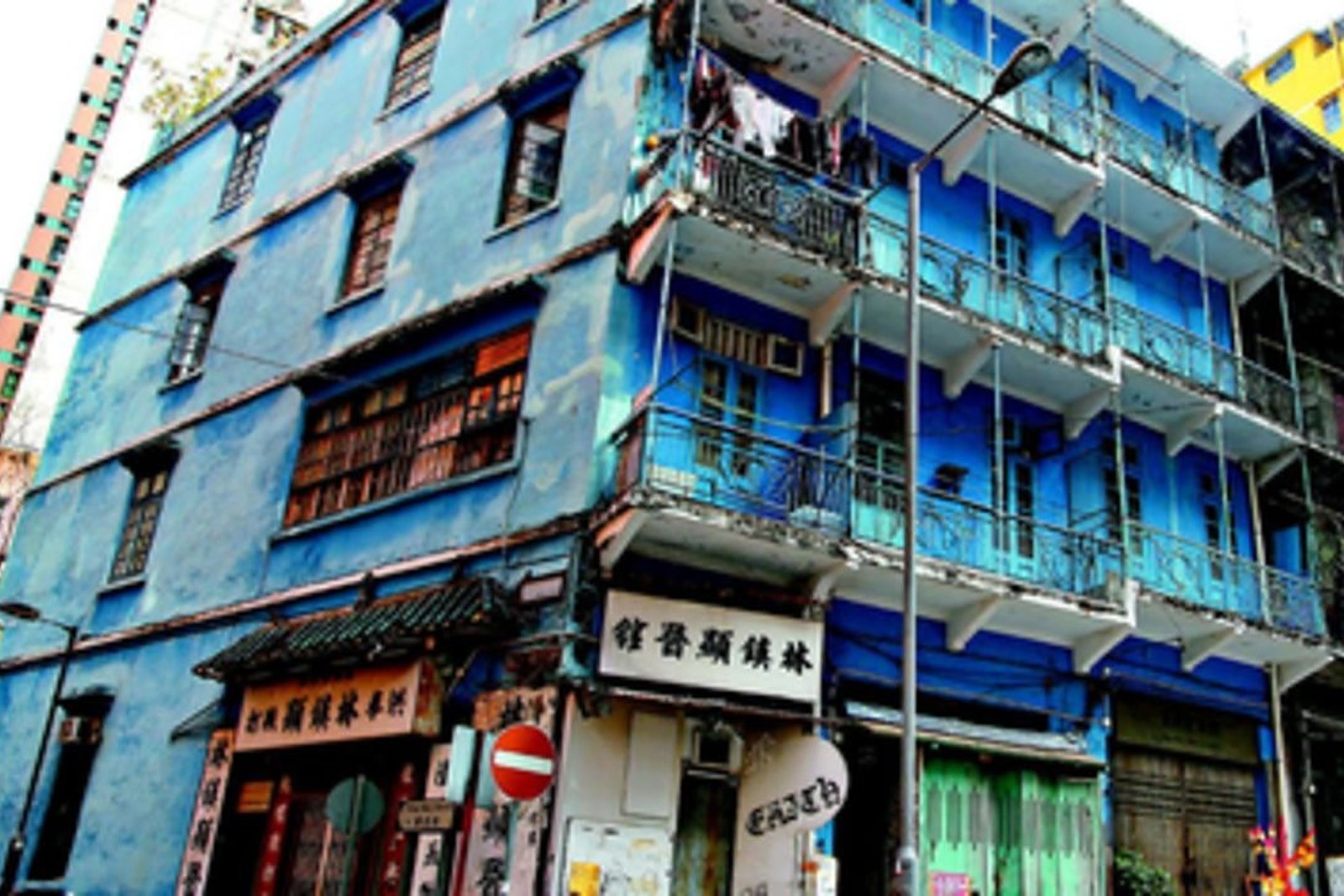
蓝屋 Lánwū the Blue House on 石水渠街 Shíshuǐqú Jiē Stone Nullah Lane is Wan Chai’s most beloved building – a 1920s tenement of the tong-lau type, its Cantonese balconies and timber-framed windows hung on a Western concrete skeleton, painted an impossibly vivid blue that stops every first-time visitor mid-step. The color was an accident of bureaucracy: when government crews refurbishing the aging block decades ago found only blue paint in their stores, they painted the facade blue, and the name – and the whole survival story – grew from that bucket.
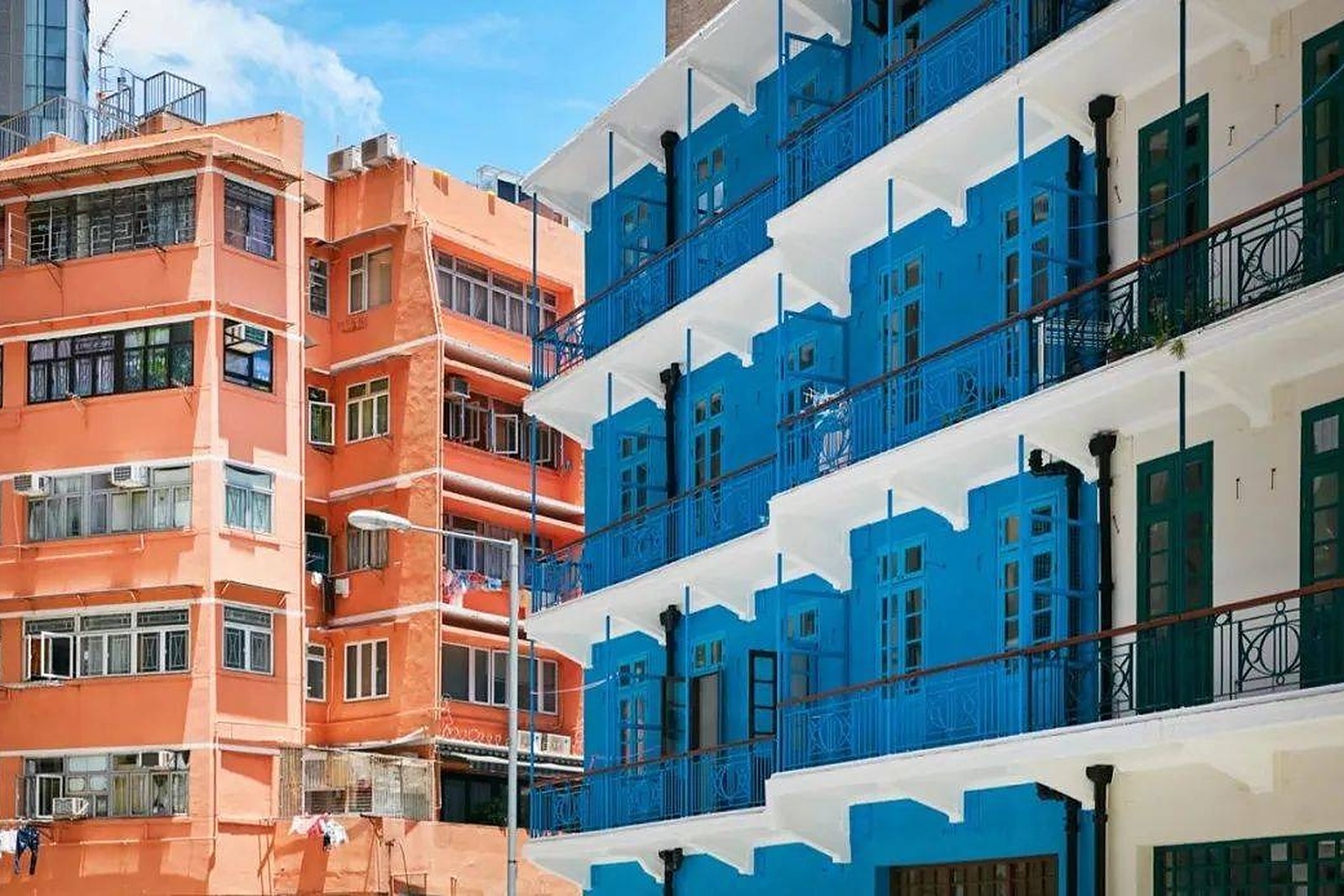
The building is architecture as biography: clinic signboards remain fixed over shopfront windows, the old wall letters and the calligraphy of the trades still read along the ground floor, and upstairs, residents continued living through every redevelopment wave that flattened the streets around. When the block finally came up for renewal, the campaign that saved it became a template – the city bought the idea of keeping tenants in place, and the revival that followed earned a UNESCO Asia-Pacific heritage award for keeping a building alive rather than embalming it.
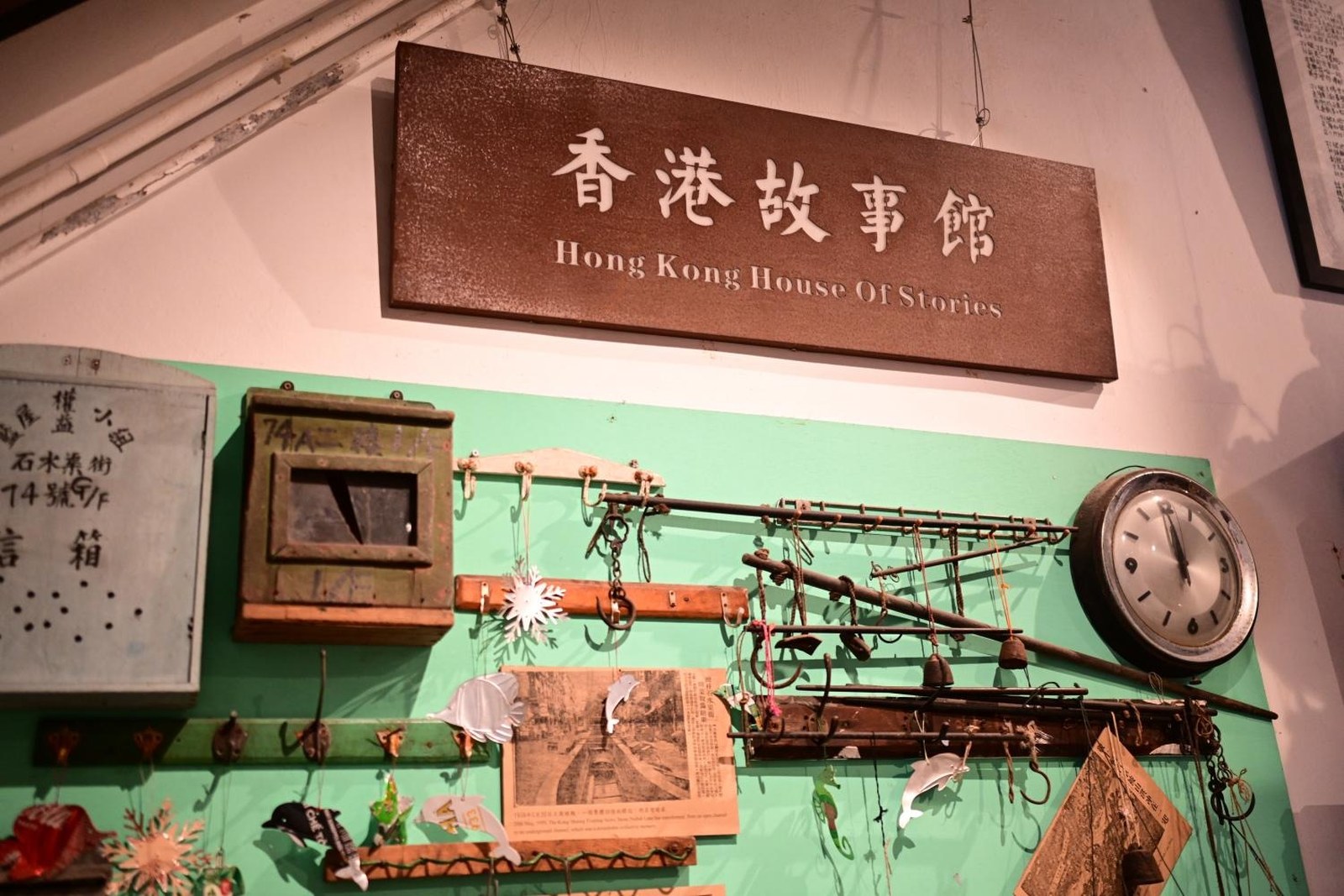
Today the ground floor holds 香港故事馆 Xiānggǎng Gùshìguǎn the Hong Kong House of Stories, a free community museum of the district’s trades and street life, and the courtyard hosts the small garden where neighbors still grow herbs against the blue wall. The balconies above remain residential – washing lines, potted plants, laundry flapping over the lane – which is precisely the point: this is a lived-in monument, not a restored exhibit.
Stone Nullah Lane itself completes the visit – the stair lanes climb toward the Wan Chai Gap, the temple of Pak Tai waits two streets over, and the wet market smells run the length of Queen’s Road East. Come on a weekend afternoon when the House of Stories opens, stand in the lane below the blue balconies, and watch a building refuse, cheerfully and indefinitely, to become the past.
Practicalities
- Stone Nullah Lane runs uphill off Queen’s Road East, about ten minutes on foot from Wan Chai MTR station.
- The House of Stories opens on weekend afternoons; the building’s exterior and lane are viewable at any hour.
- The balconies are private residents’ space – photograph from the lane, and keep voices low in the evening hours.
- Pair the visit with the Pak Tai Temple two streets west and the market lanes along Queen’s Road East.
Words and Names
蓝屋 Lánwū the Blue House, the 1920s tenement of Stone Nullah Lane; 唐楼 tánglóu tong-lau, the southern-Chinese tenement type with balconies; 石水渠街 Shíshuǐqú Jiē Stone Nullah Lane, the street that keeps it; 香港故事馆 Xiānggǎng Gùshìguǎn the Hong Kong House of Stories, the community museum below; 一级历史建筑 yījí lìshǐ jiànzhù Grade 1 historic building, its official status. Beyond the blue balconies, the same 湾仔区 Wānzǎi Qū Wan Chai keeps more places worth the detour: 香港会展中心 Huìzhǎn Zhōngxīn the fairground bird on the harbor, 跑马地马场 Pǎomǎdì Mǎchǎng the Wednesday racetrack, 大坑舞火龙 Dàkēng Wǔhuǒlóng the Mid-Autumn fire dragon, or 星街小区 Xīng Jiē Xiǎoqū the three-light lanes above Queen’s Road East – four more doors into the same district. Once the lane is behind you, our Wan Chai food map fills the table.
flowcloud would say the Blue House is Wan Chai’s stubborn heart – a building the color of a paint shortage, kept standing by the people who never moved out of it. All checked November 2026.
Getting there: Stone Nullah Lane runs uphill off Queen’s Road East, ten minutes on foot from Wan Chai MTR station; the House of Stories opens on weekend afternoons and the lane’s murals and balconies are street-viewable at any hour. All checked November 2026.