
Swan Water and Reed Mazes: The Bortala Wetlands
春融雪水沼泽宽,天鹅引颈立春寒 Chūn róng xuěshuǐ zhǎozé kuān, tiān’é yǐnjǐng lì chūnhán – Spring meltwater widens the marsh; swans stretch their necks into the cold
正文:博尔塔拉湿地 Bó’ěrtǎlā Shīdì the Bortala wetland is the soft edge of 双河市 Shuānghé Shì Shuanghe City – a belt of reed marsh, meltwater lagoons and boardwalks that spreads between the city and the mountains, filling each spring with snowmelt and each winter with whooper swans. The reserve works at two scales: a wilderness of reeds and open water that the birds treat as theirs, and a tidy public face of wooden walks, lamp posts and viewing decks where the town comes to breathe.
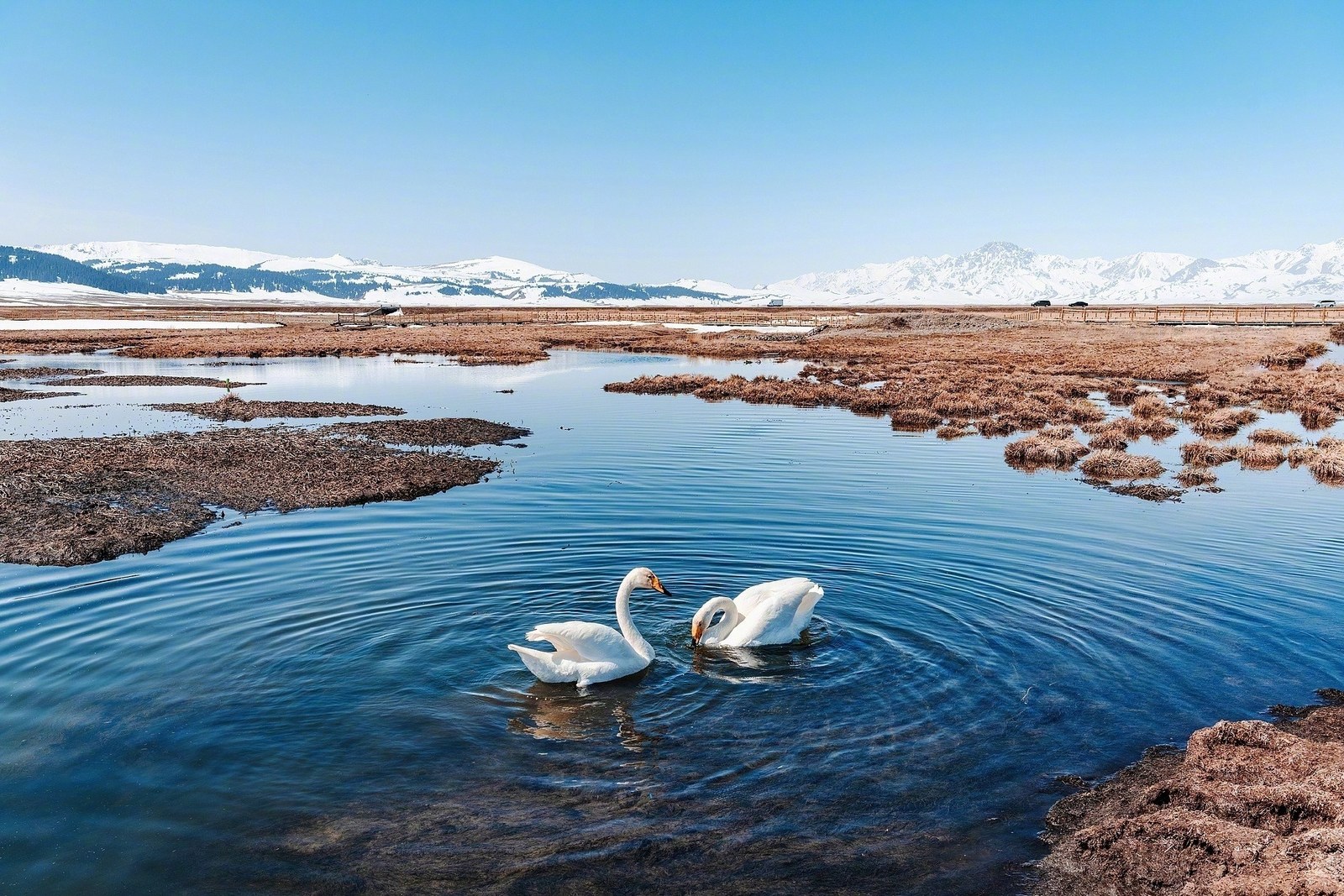
The swans are the headline. From late autumn into early spring, whooper swans raft up on the warm-spring-fed pools where the reeds part, and on a cold morning the white birds against the snow-line mountains make the single best photograph on the Bortala plain. Spring adds the melt – brown reeds standing in new water, coots and ducks returning in rafts – and by early summer the marsh runs green and the young coots paddle the channels their parents carved.
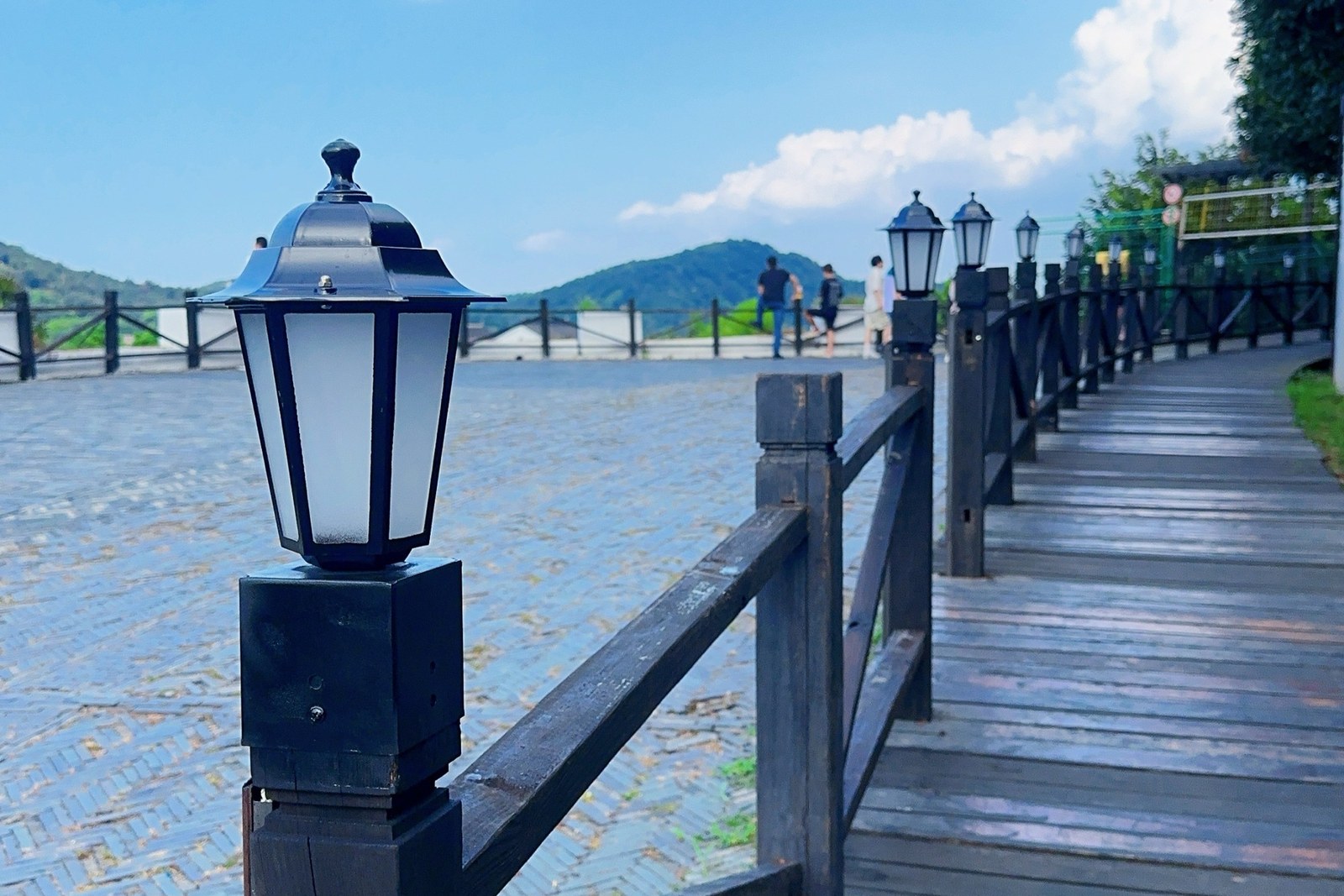
Walk the boardwalk circuit and the marsh explains itself in layers: reed beds that hide water rails and bearded reedlings, open pools where the swans sit in family groups, and distant flats where the geese graze. The wooden walks put you at water level without wet feet, the lamp posts make a short winter-evening visit practical, and the viewing decks at the channel bends are placed exactly where the birds have decided to be.
The wetland is also the city’s climate machine. It filters the river’s flow before it moves on to the farms, buffers the spring melt so the fields drink slowly, and greens a strip of the gobi edge that would otherwise run to salt scrub. The reserve’s information boards treat this as the main story – water made city possible, birds made water visible – and the swans, arriving each winter like clockwork, have become the emblem of the young city down the road.
Season decides the show. Winter is swan season, with steam rising off the springs and the birds in prime plumage; spring is the melt and the return flights; summer runs green and quiet, better for reed warblers than for crowds; and autumn brings the passage flocks through in ragged lines. Any season holds something – the marsh never quite goes dormant.
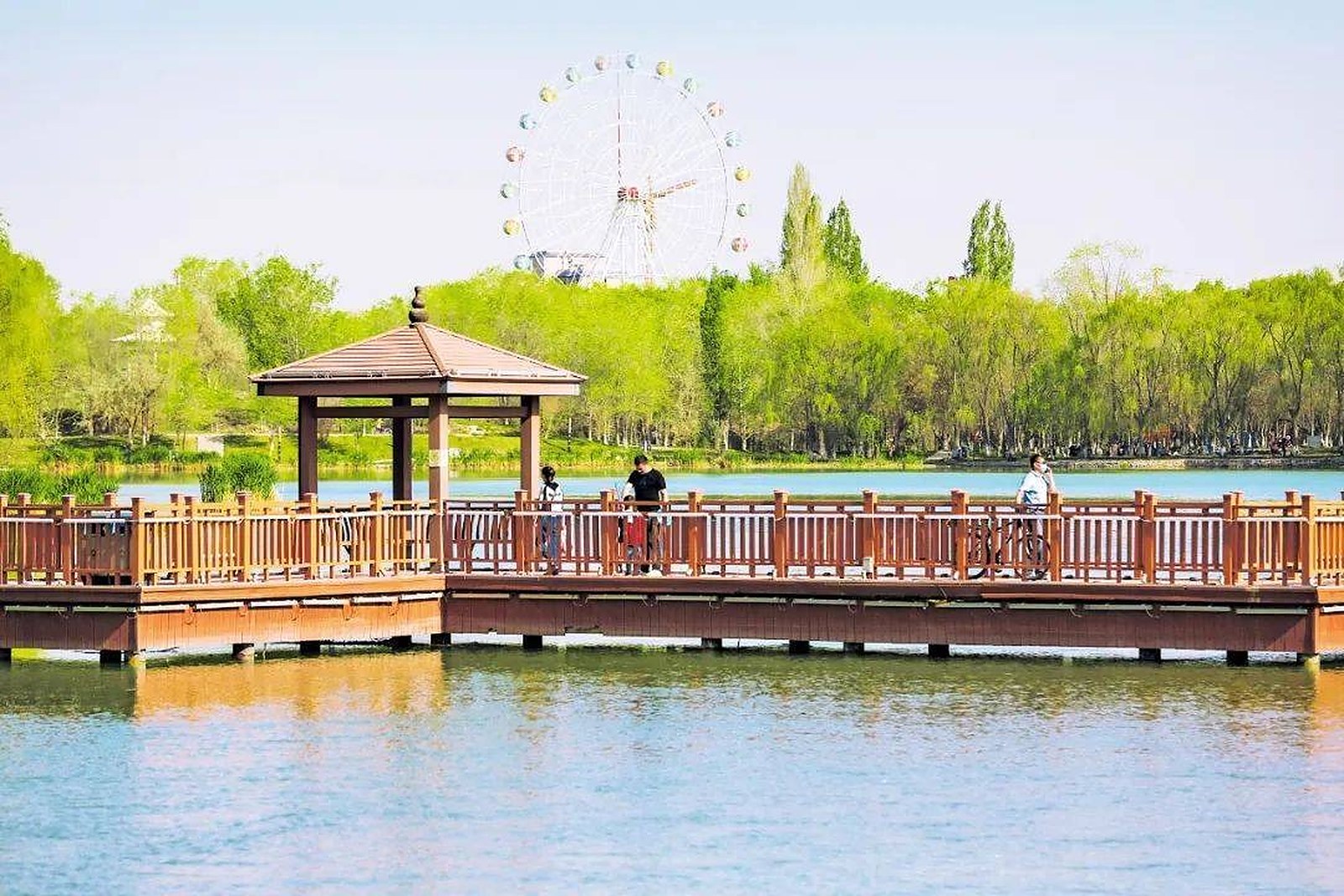
Practicalities first. The wetland sits on the city’s edge, reached in minutes by taxi; the boardwalks are free, flat and open in daylight, and the cold-season pool is the birding highlight. Bring bins if you have them, dress one layer warmer than the town requires, and keep voices low at the swan pools – the birds are calm but they are not tame.
Practicalities
Beyond the marsh, the same 双河市 Shuānghé Shì Shuanghe City keeps more places worth the detour: 博尔塔拉河畔 Bó’ěrtǎlā Hé Pàn the Bortala river banks for the evening light, 双河城市公园 Shuānghé Chéngshì Gōngyuán the Shuanghe city park for the willow bridges, 第五师双河市城市展示中心 Dì-wǔ Shī Shuānghé Shì Chéngshì Zhǎnshì Zhōngxīn the Fifth Division city exhibition center for the story hall, or 垦区田园 Kěnqū Tiányuán the reclamation fields for the cotton country – four more doors into the same 双河市 Shuānghé Shì Shuanghe City. Once the wetland is walked, our Shuanghe food map fills the day.
Practicalities
Words and Names
flowcloud would say the Bortala wetland is the city’s wild lung: swans wintering on spring-warm pools, reeds doing their gold-and-grey act all winter, and boardwalks that let you stand in the middle of it all with dry boots – frontier birding at town-edge prices. All checked November 2026.
Getting there: The wetlands lie downstream toward Ebinur lake, a 30-40 minute drive from Shuanghe; hire a car and go early for birds and soft light, since the flats turn hazy by noon. All checked November 2026.