
China’s Largest Inland Freshwater Lake: A Hundred Li of Reeds and Fishing Songs at Bosten
雪水汇成一镜湖,苇岸渔歌入画图 Xuěshuǐ huì chéng yī jìng hú, wěi’àn yúgē rù huàtú – Snowmelt gathers into a mirror lake; reed banks and fishing songs paint the scene
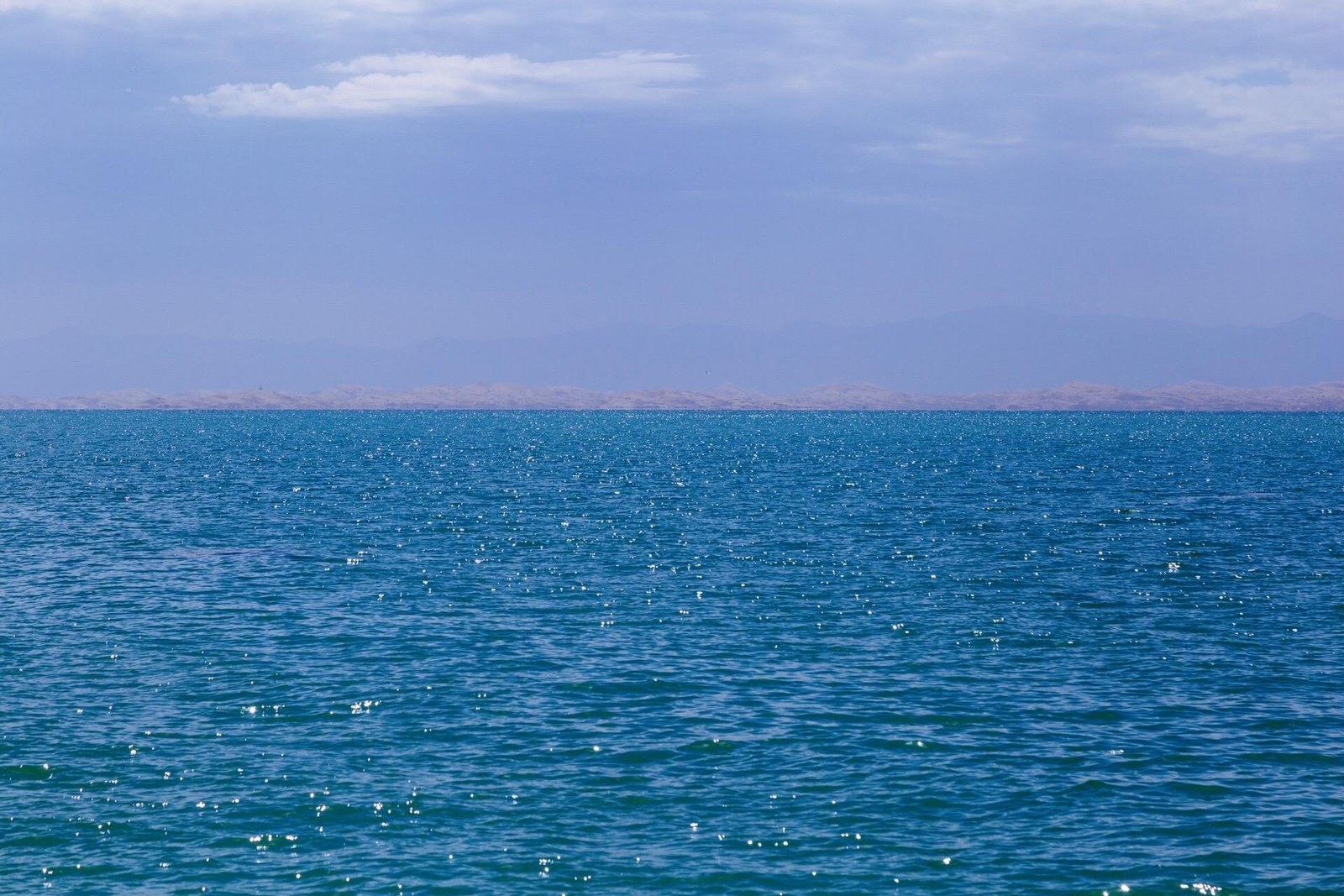
博斯腾湖 Bósīténg Hú Bosten Lake lies in Bohu county of 巴音郭楞蒙古自治州 Bāyīnguōléng Měnggǔ Zìzhìzhōu Bayingolin Mongol Autonomous Prefecture, more than a thousand square kilometres of water – the largest inland freshwater lake in China. Tianshan meltwater arrives by the Kaidu river and leaves by the Peacock, and that single exchange gives Bohu county its fish-and-rice climate. Locals simply call it the 「Western Sea」 – in a region with no ocean, water that outstares the horizon earns the name.
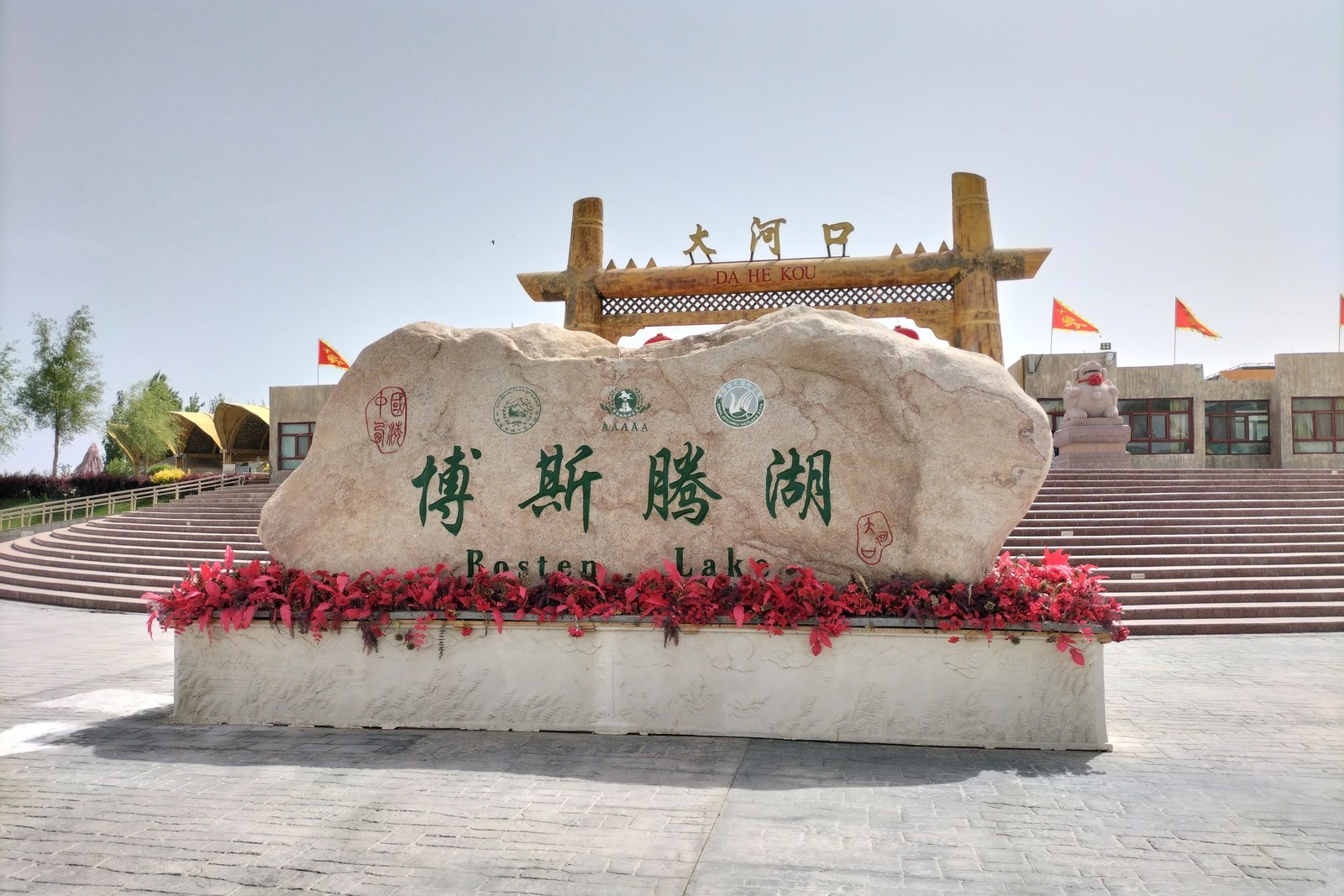
The Dahekou scenic area is most visitors’ first stop: a stone stele on the plaza, timber-look gates behind, and a viewing terrace from which the shoreline runs to the sky’s edge. In summer this is one of Xinjiang’s rare lakeside beaches – Golden Sand Bay’s fine sand kept soft by the water, children splashing, adults under parasols waiting for a lake sunset. Southward the Ahongkou reed marshes begin: boat channels walled by reeds taller than a head, flushing flocks of waterbirds at every bend – a morning’s stakeout photographers never regret.
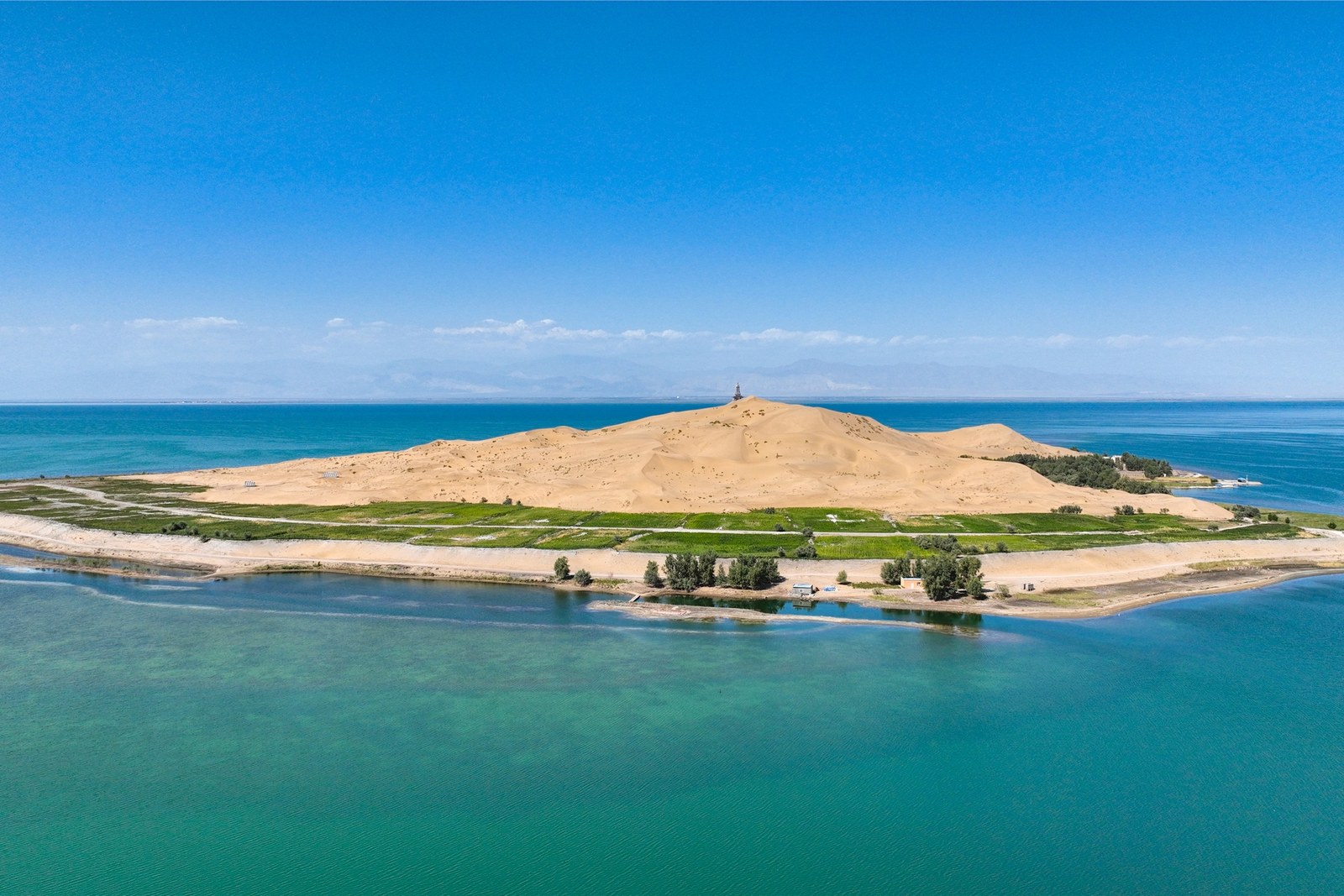
A ring road stitches the lake’s faces together: the north bank near town for food and beds, the densest reeds on the south-west for sunrise, and the south-east bays and sandbars the most photogenic, where the blue of water and sky trade layers. Drivers need not rush – viewpoints and fish restaurants punctuate every few kilometres. Park, order a lake fish, and watch the water change color: that is Bohu’s form of hospitality.
The fishery’s management story is worth knowing: a closed season runs on schedule every year, with strict mesh sizes and minimum landing sizes, so perch and the native big-head carp can catch their breath. Winter brings the ice harvest – holes augured through the ice, nets hauled with live fish thrashing, a scene livelier than any snow postcard. Reeds are the second crop: harvested in autumn and winter, stacked in golden hills along the shore, raw material for paper and board and a solid income for lakeside families.
The water repaints itself all day: grey-green at dawn, jewel blue at noon, orange-pink around sunset. On windy days waves hit the embankment with sea swagger; when the wind drops the surface turns to a mirror and returns the clouds and reeds unchanged. Serious shooters come twice – the same shoreline holds two entirely different characters.
Winter is the lake’s quietest script: the surface freezes hard enough to show bubbles suspended under the ice, ice fishermen sit a whole afternoon by their holes, and when the gate fee is suspended locals bring children to spin tops and ride ice sledges while roasted-sweet-potato sellers steam on the bank – human warmth even thicker than summer’s.
Practicalities: Dahekou prices admission and internal transport separately; Golden Sand Bay and Ahongkou ticket apart, with combo tickets winning in season. Lake mosquitoes peak in June-July – bring repellent. From Korla the drive is about an hour across alternating oasis and dune scenery, never dull.
With time in hand, thread Bohu and Yuli into one line: fish by the lake at noon, the Tarim’s poplars southward in the afternoon, a folk song at Lop Nor Village by evening – freshwater lake to desert inside a single day, a geographic swerve only Bazhou can stage.
The name itself carries stories: 「Bosten」 is said to come from Mongolian for 「standing」, after the little hills rising from the water, while Uyghur speakers call it 「Bostang」, close to oasis. Either way this is the mother lake the oasis households have lived by for generations – its fish and reeds feeding both banks.
Every summer the lake opens its fishing culture festival: the first net becomes a whole-fish banquet, song and boat races open together – the best single introduction to Bazhou’s water culture. Join in, learn one Mongolian toast, and the lake trip is complete.
Birders should watch the reed layers: egrets, reed warblers, and cormorants each hold a floor of the stand, and just before harvest the density peaks – a long lens can catch a cormorant swallowing its catch whole. Leave town for dawn light, eat and nap at a fish family at noon, return for the sunset: two entries into the lake per day is the proven rhythm.
Bohu’s fish market rewards early risers: the night’s catch fills the stalls before sunrise, perch, grass carp, and carp sold by the basin, judged by gill and eye the old way. Buy one and the shops beside the market will cook it – twenty minutes to a clear-stewed breakfast at a price no resort matches, tasting better than most.
The salt pans downstream are another scene: along the lower lake and the Peacock river lowlands, mirror-flats spread in blocks. Salt workers’ silhouettes against reed stacks at sunset make an industrial landscape southern Xinjiang rarely shows.
Practicalities
The ring road strings more than one lake: 铁门关 Tiěménguān Tiemenguan Pass for the gorge lock, 罗布人村寨 Luóbùrén Cūnzhài Lop Nor Village for the poplar fisherfolk, 巴音布鲁克草原 Bāyīnbùlǔkè Cǎoyuán Bayanbulak Grassland for the nine-bend swans, and 轮台胡杨林 Lúntái Húyánglín Luntai Poplar Forest for the golden sea – four more doors into the same 巴音郭楞蒙古自治州 Bāyīnguōléng Měnggǔ Zìzhìzhōu Bayingolin Mongol Autonomous Prefecture. Lake light seen, our Bazhou food map picks up the fisher kitchens.
Practicalities
Words and Names
flowcloud would say Bosten Lake is Xinjiang’s stand-in for the sea: reed walls instead of tides, fish feasts instead of boardwalks, and a sunset that fills the whole western sky. All checked November 2026.
Getting there: The lake lies about sixty kilometres south of Korla on the G218, a straight hour by car with the signposted turn-off at Bohu county; the Dahekou scenic area sits just outside town, while Jinhaitan and Ahongkou charge separately along the shoreline road – buses run from Korla’s north bus station to Bohu, then a local cab covers the last kilometres, and June-July means mosquito repellent is not optional. All checked November 2026.