
White Gold of the Gobi: The Cotton Country of Caijiahu
戈壁千顷棉如雪,机声隆隆唱丰年 Gēbì qiān qǐng mián rú xuě, jīshēng lónglóng chàng fēngnián – A thousand hectares of cotton like snow on the gobi; the thunder of machines sings the harvest
正文:蔡家湖田园 Càijiāhú Tiányuán the Caijiahu fields spread south of 五家渠市 Wǔjiāqú Shì Wujiaqu City around the farm town of the same name – the 103rd Regiment’s share of the reclamation plain, where the fields run in ruler-straight strips to a horizon of shelter belts and the autumn harvest turns the whole district white. This is cotton country at its most mechanized: planters, drones and six-row pickers work the rows while the gobi wind combs the poplars, and a single harvester can clear more land before lunch than a whole brigade once did in a season.
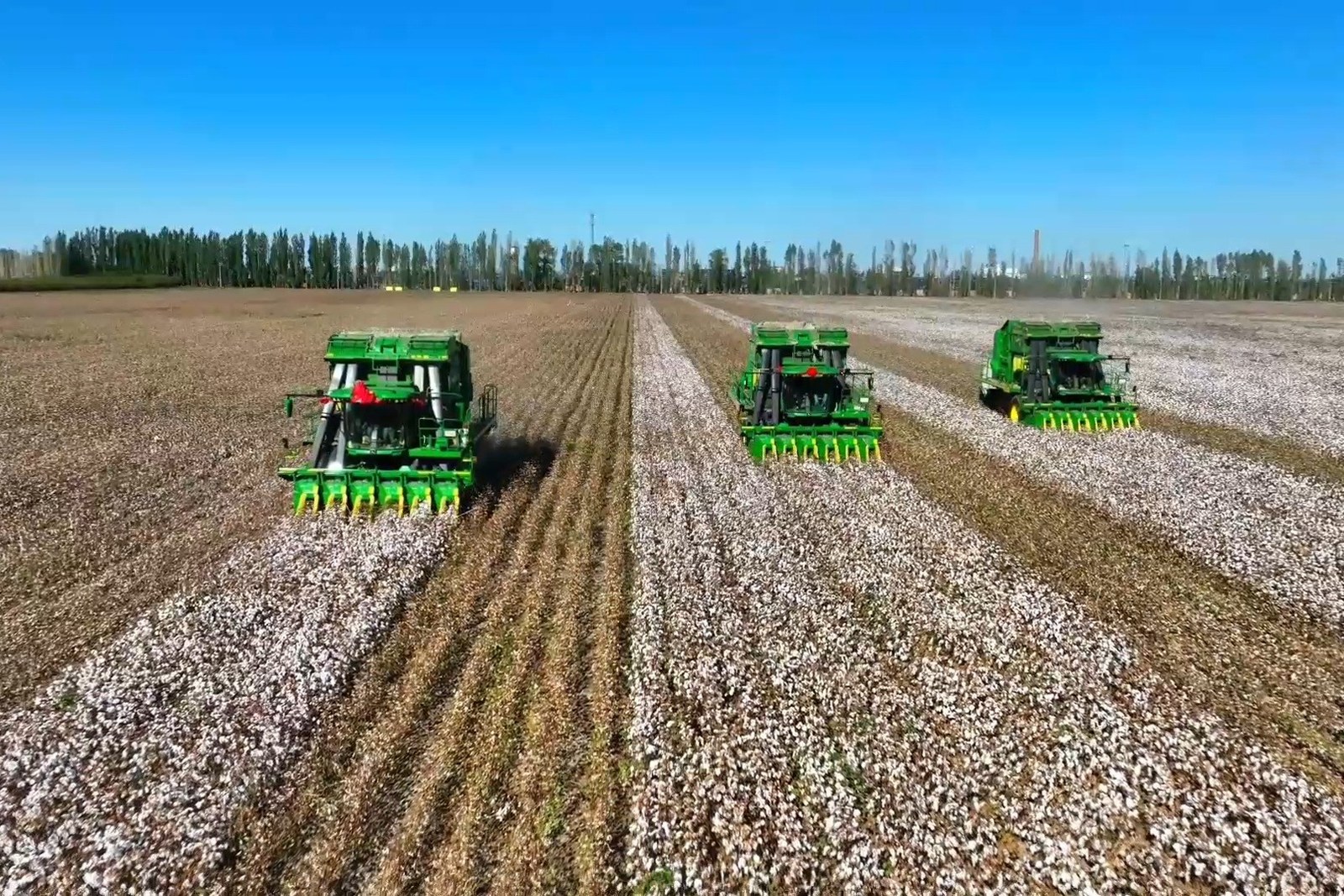
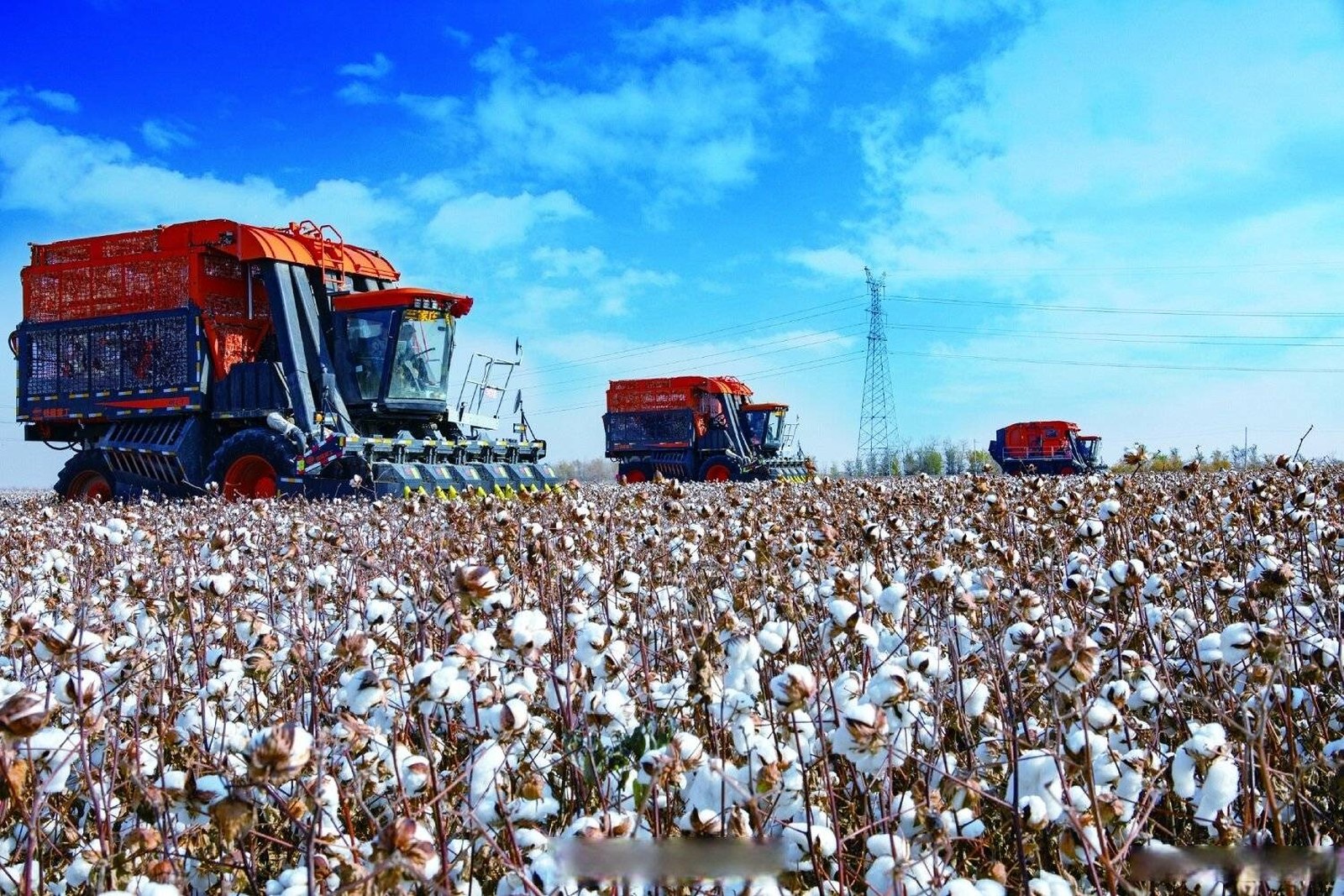
The harvest is the show. From late September the pickers roll in lines, spitting out dense cotton modules wrapped in yellow film like giant loaves, and the ginneries along the town edge glow all night with truck lights. Between the cotton strips run plots of sunflower, maize and tomatoes – the regiment farms everything the gobi will tolerate – and the ditch-bank poplars that break the wind give the whole district its green geometry. Drive the farm roads slowly in harvest season and the scale does the talking.
Read the landscape and the reclamation logic is visible everywhere: fields sized to a brigade’s day’s work, canals fed from the Qinggeda dam, tree belts planted precisely where the sand used to walk. The 103rd Regiment keeps a farm-history room in the town hall with the first hand tools on the wall – a worthwhile stop after seeing what replaced them.
The town itself is a regiment settlement in miniature: straight streets, a central cinema square, canteens serving harvest crews, and a steady hum of machinery through October. Around it, the gobi resumes – salt scrub, gravel fans and the far blue line of the Tianshan – which makes the green belt of the farms read even sharper. In spring the same plain turns into flower country when the orchards along the canals bloom white for a week.
For photographers the golden hours are harvest dawn: pickers silhouetted in dust clouds, cotton modules stacked like sculpture, the low sun turning the bare gobi pink behind. Ask permission at the field offices – the regiment farms are working businesses – and most crews wave you closer once they see you respect the machines’ line.
Practicalities first. Caijiahu town sits 20 kilometers south of Wujiaqu on the provincial farm-road grid – half an hour by car, with fuel and food in town. Harvest runs late September through October; spring planting and the orchard bloom cover April. The roads are paved but watch for module trucks at crossings.
Practicalities
Beyond the fields, the same 五家渠市 Wǔjiāqú Shì Wujiaqu City keeps more places worth the detour: 青格达湖 Qīnggédá Hú Qinggeda Lake for the bird water, 将军纪念馆 Jiāngjūn Jìniànguǎn the General Memorial Hall for the red-star hall, 头屯河谷 Tóutún Hé Gǔ the Toutun river valley for the boardwalk wetlands, or 郁金香花园 Yùjīnxiāng Huāyuán the tulip gardens for the May fair – four more doors into the same 五家渠市 Wǔjiāqú Shì Wujiaqu City. Once the fields are seen, our Wujiaqu food map fills the day.
Practicalities
Words and Names
flowcloud would say the Caijiahu fields are the regiment’s harvest engine: cotton white to the horizon every October, machines singing down the rows, and a green geometry of canals and poplars holding the gobi back all year. All checked November 2026.
Getting there: The fields start north of the city; take the Caijiahu road out of town and the first ruled fields begin within ten minutes, with farm roads branching at the canal bridges. All checked November 2026.