
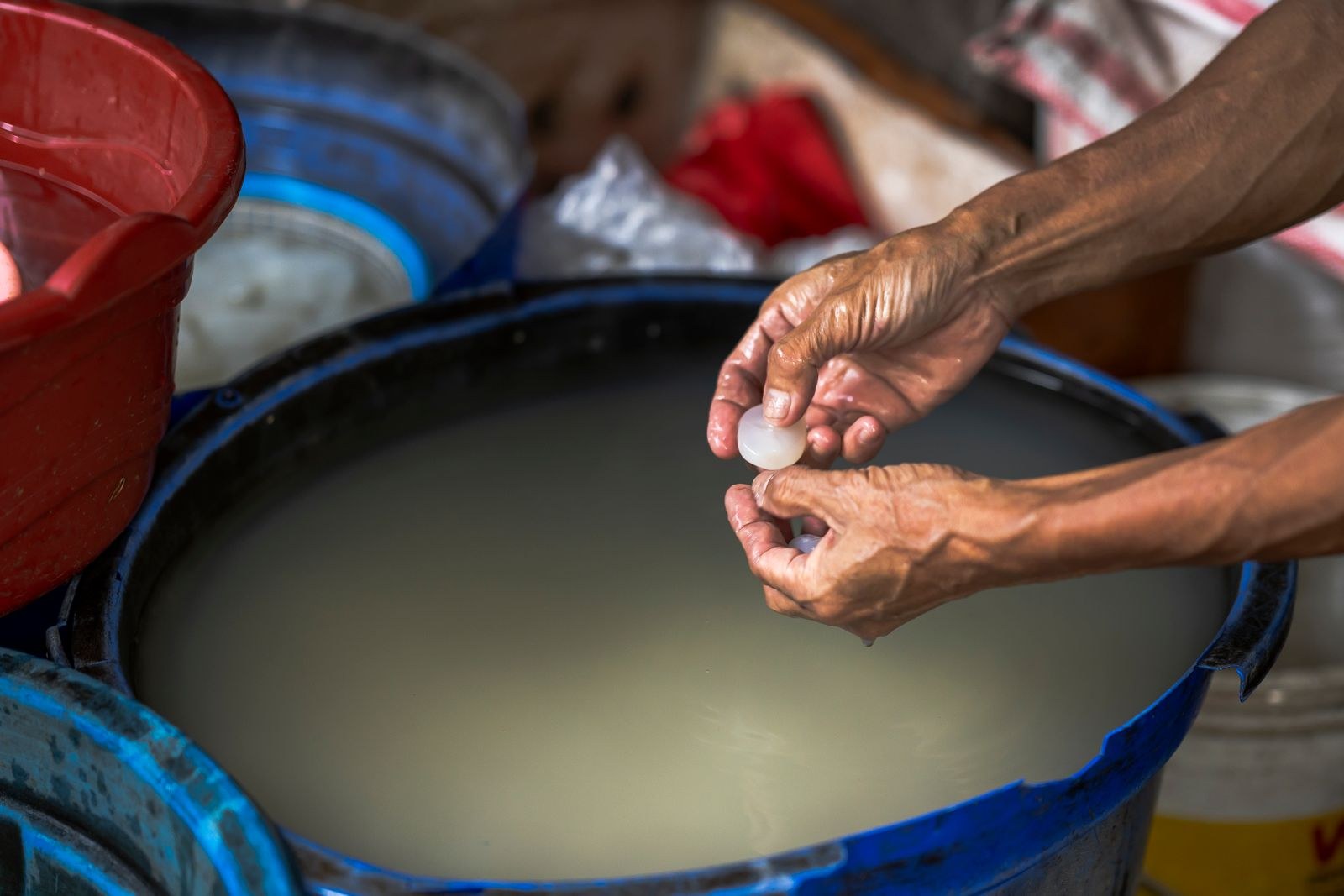
From the viewing tower the green becomes abstract. 蔡伦竹海 Càilún Zhúhǎi, the Cailun Bamboo Sea, is a grove so large that individual stems disappear into texture — hill after hill of bamboo, more than two hundred of them, over an area the local authority puts at 16 万亩 mǔ, roughly 11,000 hectares, and described as the largest continuous stretch of bamboo in China. The name of the place is a second claim on the landscape. 蔡伦 Cài Lún, the eunuch official who presented paper to the Han court in the year 105, was a native of 耒阳 Lěiyáng, and the grove is where, the tradition here says, the craft took hold: there are still more than two hundred small workshops in the hills making paper the old way, from 嫩竹 nènzhú, young bamboo, beaten and vatted by hand.
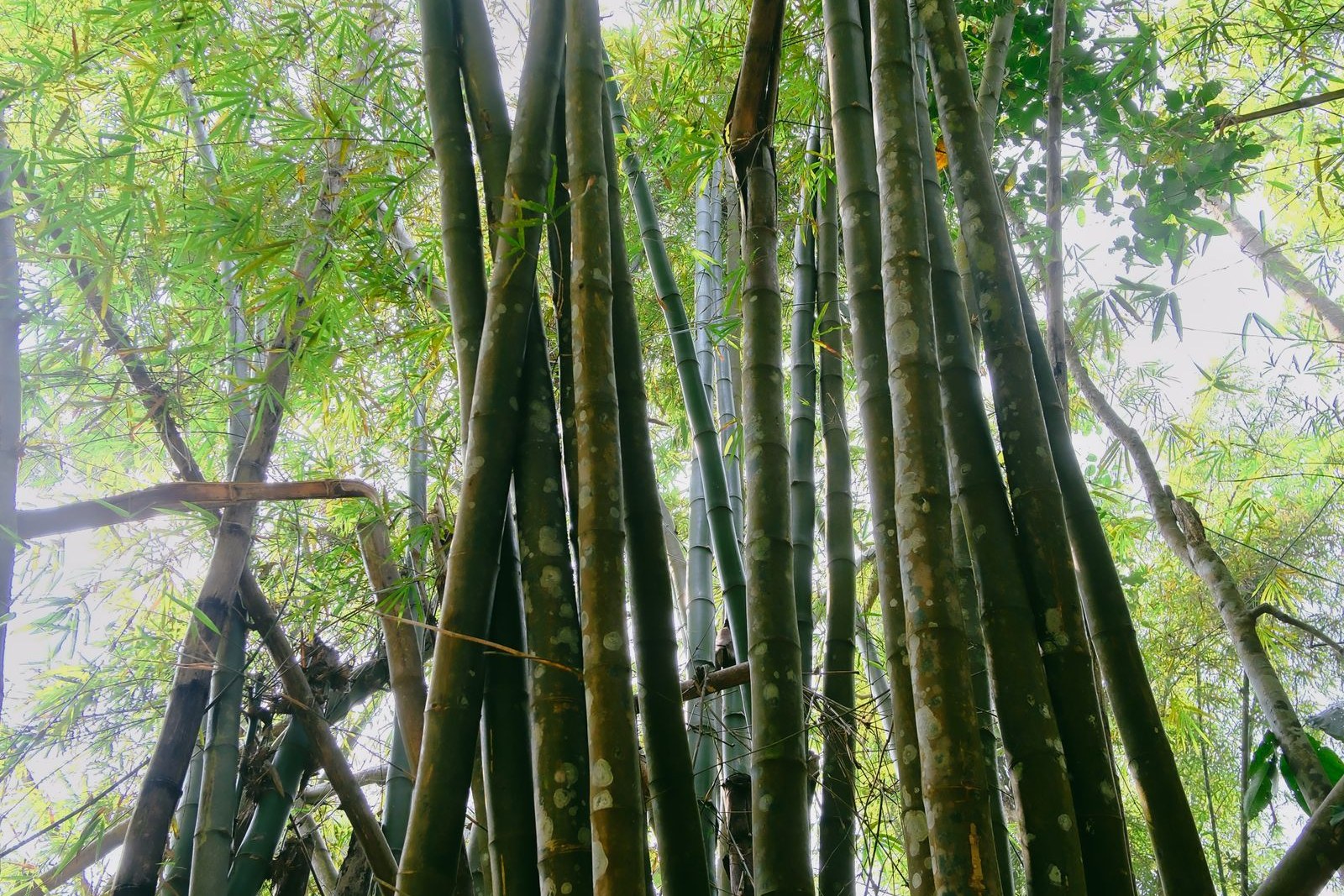
The scenic area covers about 100 square kilometres with a core of 66, along the upper reaches of the 耒水 Lěi Shuǐ river, in 黄市镇 Huángshì Zhèn and the neighbouring townships of 耒阳市 Lěiyáng Shì. It holds 4A status and is being prepared for 5A, and its selling points are unusually specific. Three of them are labelled together as the 竹海三绝 zhúhǎi sān jué, the three wonders of the bamboo sea. The first is a natural geyser at 大河滩 Dàhétān that throws water about twenty-five metres into the air and holds a Guinness record as the highest natural fountain. The second is the 上堡晶矿 Shàngbǎo Jīngkuàng, a mine that has produced mineral specimens of international reputation, more than twenty of which are held by the national mineral museum. The third is a fossil fish from the 扁体鱼 biǎntǐyú family, more than two hundred and fifty million years old, the most complete of its kind found in China after the beds at Changxing in Zhejiang.
Practicalities
Tickets. Admission is ¥50 for visitors from outside the area, with residents of 耒阳 Lěiyáng admitted free on production of an ID card. The mineral collection in the 矿石馆 kuàngshí guǎn costs a further ¥10. The internal shuttle bus, which is the practical way to move between the far-apart sights, is ¥18 one way or ¥36 return. A private car entering the scenic area pays around ¥30. Prices are not high and the add-ons are largely avoidable if you are prepared to walk.
Opening hours. The area opens at 08:00 and closes at 17:00 or 18:00 depending on the season and the source consulted, so plan on being out by late afternoon. It is a large site and half a day is the minimum; a full day is better if you want the tower, the geyser, the mine and the paper workshops. Spring brings the bamboo shoots, autumn the colour, and summer is hot and insect-heavy.
Closing day. There is no closing day. The scenic area is open throughout the year, and the only interruptions come from heavy rain, which can make the hill roads and the riverside paths hazardous.
Getting there. The bamboo sea lies about 38 kilometres from 耒阳市 Lěiyáng Shì and roughly 12 kilometres from the 公平 Gōngpíng exit of the 京港澳 Jīng-Gǎng-Ào expressway, with the 京广 Jīng-Guǎng railway and the high-speed line passing nearby. 耒阳西站 Lěiyáng Xī Zhàn is the nearest high-speed station, about an hour away by taxi or booked transfer; buses run from 耒阳 Lěiyáng town towards 黄市镇 Huángshì Zhèn but are thin. A car is strongly recommended, because the internal distances are large and the shuttle does not cover everything.
flowcloud would say that the bamboo sea is the rare Chinese scenic area that justifies its own scale, and that the geyser, the fossil and the paper workshops are three genuinely odd things to find in one forest.
Getting there: arrive at opening and head for the 观景楼 guānjǐnglóu viewing tower first, while the haze is still sitting in the valleys, then work down to the river and the geyser at 大河滩 Dàhétān. Take the shuttle at least one way; the distances between the tower, the mine and the paper workshops are deceptive on a map. If you want to see paper actually being made, ask at the entrance which workshops are working that day rather than assuming, and carry cash for the small ones. Wear shoes with grip, take mosquito repellent in summer, and allow more time than you think — the grove is 16 万亩 of it.