
Grand Canal Forest Park: The Ten-Thousand-Mu Woods, the Greenway Cycling and the Northernmost Reach of the Jing-Hang Canal in Tongzhou District, Beijing
运河尽处柳如烟,万亩林声接远天。Yùnhé jìn chù liǔ rú yān, wàn mǔ lín shēng jiē yuǎn tiān – Where the canal runs out the willows turn to mist; the sound of ten thousand mu of forest meets the far sky.
大运河森林公园 Dàyùnhé Sēnlín Gōngyuán Grand Canal Forest Park is not a city park with a pond — it is, plainly put, a whole river made walkable: a ribbon of woods and wetland strung along both banks of the 北运河 Běi Yùnhé North Canal, the northernmost working reach of the 京杭大运河 Jīngháng Dàyùnhé Beijing–Hangzhou Grand Canal, running from 潞阳桥 Lùyáng Qiáo Luyang Bridge at the Sixth Ring Road south to 武窑桥 Wǔyáo Qiáo Wuyao Bridge — a river course of about 8.6 kilometres dressed in roughly 713 hectares of planted forest, the “ten-thousand-mu woodland” of local boast, laid out as 一河、两岸、六园、十八景 yī hé, liǎng àn, liù yuán, shíbā jǐng, one river, two banks, six parks, eighteen views, and counted a national AAAA-level scenic area. This is the canal’s front door: for centuries grain barges out of the south made their final approach to Beijing under these banks, and the park keeps a rebuilt 漕运码头 Cáoyùn Mǎtóu Caoyun Wharf where excursion boats now tie up. Paths run levee-straight under poplar and willow, reedbeds swap bird calls all year, and a riverside greenway of some nine kilometres carries the cycling crowd. What you actually visit is a long green corridor you ride, stroll or float through, not a gated garden.
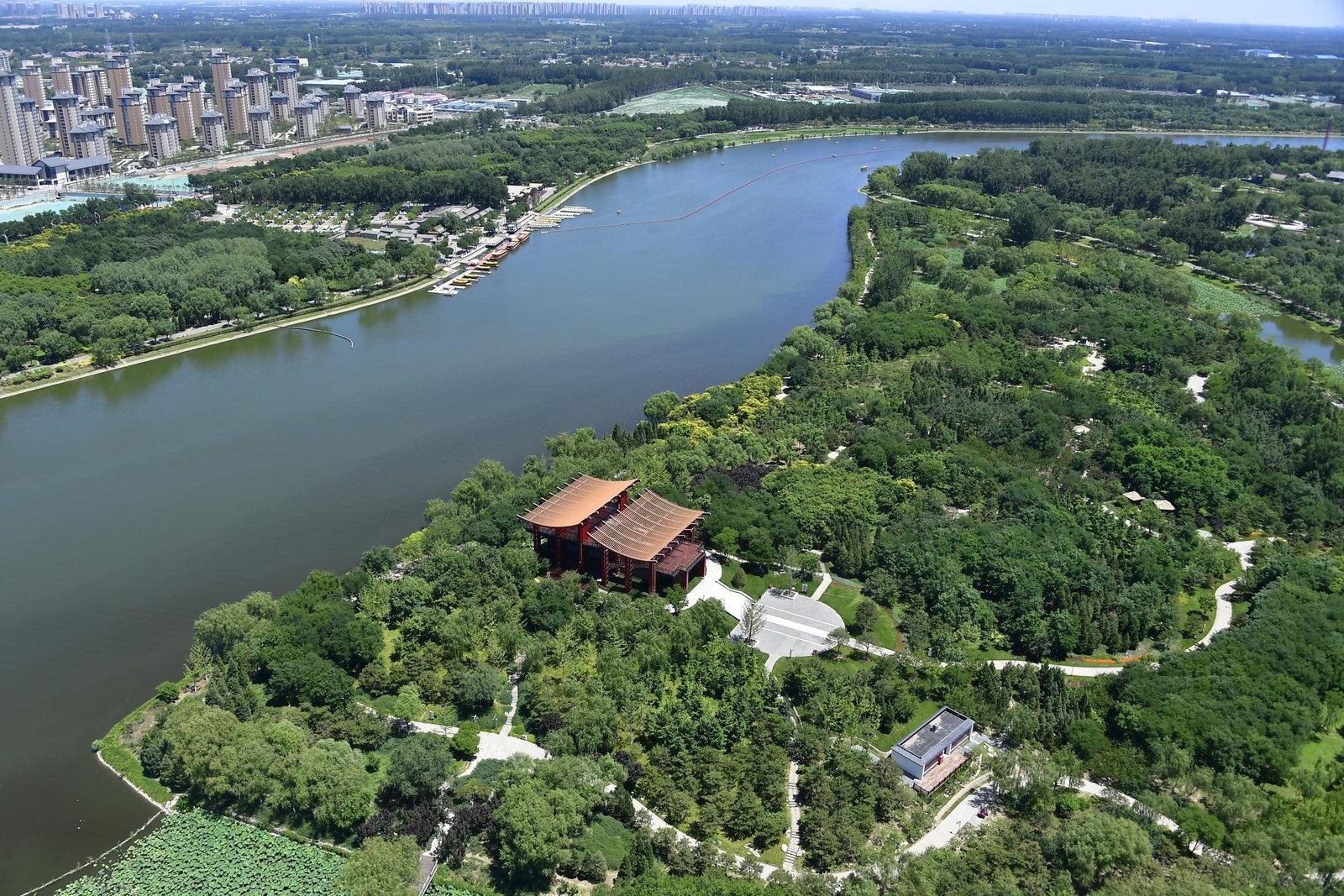
Call it honestly: free, open all day, and bigger than any single visit — the honest problem is choosing a stretch. Entry is free with reservation through official channels; parking sits at the main gates along 宋梁路 Sòngliáng Lù, and bicycles — rentals as well as your own — are the right way to see the length of it, since walkers cover only a fraction (worth confirming the details for current rental stands, boat schedules and reservation rules). Boats from the wharf run short ferries and longer sightseeing cruises in season, priced separately, and small amusements near the gates come and go with the seasons. Spring and autumn are the park’s best colours, summer evenings the coolest hours, and winter has a bare, wide, grey-heron kind of beauty. Bring water on the levees, watch for weekend cycling traffic on the shared path, and give the place half a day at minimum.
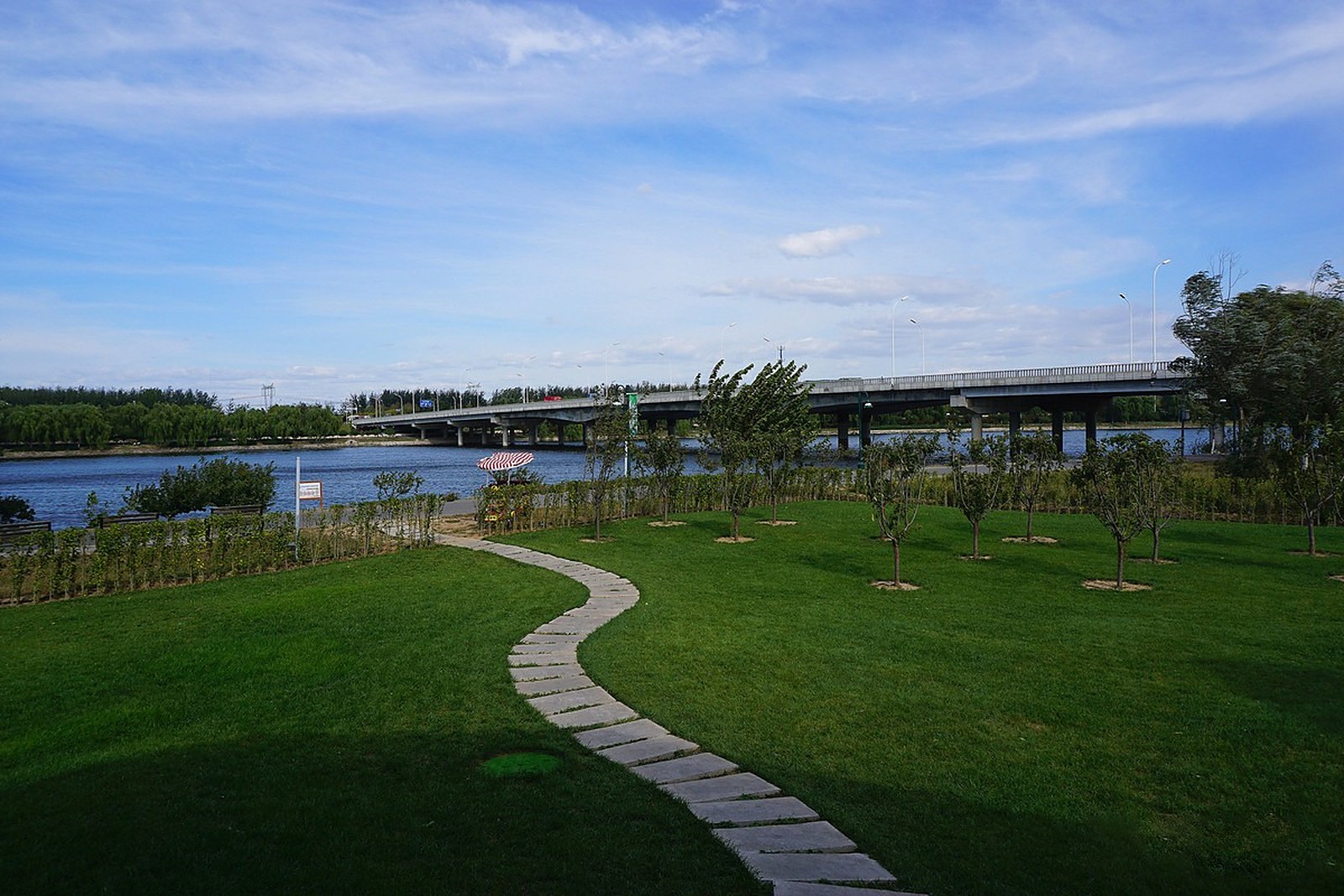
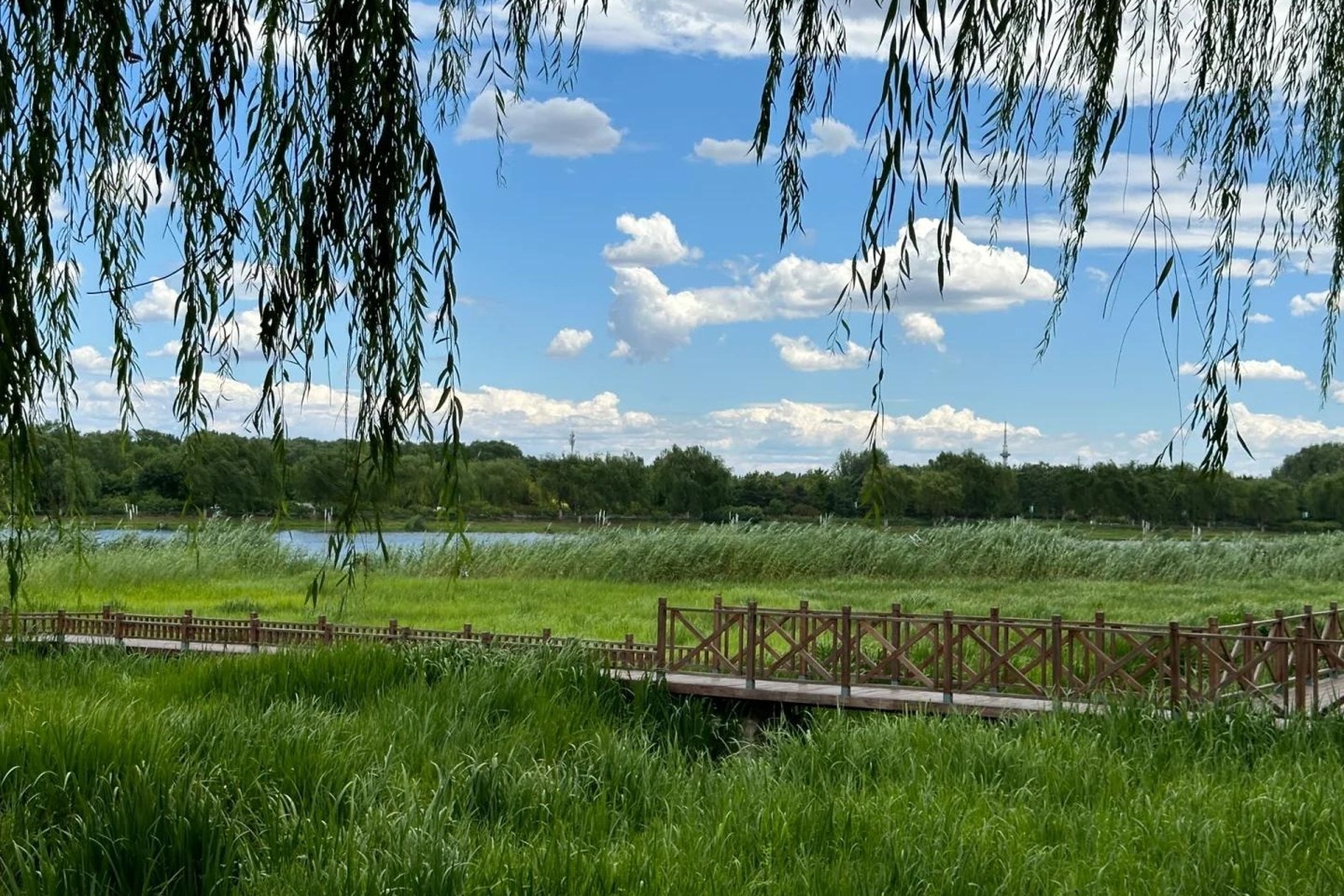
The honest star is the canal itself at dawn or dusk — flat water, opposite bank a grey-green line, herons working the shallows where the city’s towers finally stop — not the amusement corners. What gets oversold is the “eighteen views” slogan read as eighteen must-sees: the scenery is one long rhythm of water, trees and sky, and the joy is in the pedalling between names, not the plaque at each (worth confirming the details for which sub-gardens are featured on your visit). What repays the effort is the wharf quarter with its canal-trade memory, the long straight rides with wind off the water, and the simple fact of standing at the top end of a river that runs a thousand-plus kilometres south. Come for the layering of the place: bank, then boat, then the far bend.
The self-aware postscript: I pushed a rented bike along the levee at first light while a retired rower rigged his shell off the slipway, and when I asked whether the water was always this calm he nodded at the willows and said, “the grain barges left, the quiet moved in — that is also history”. That is the visit in miniature. 大运河森林公园 Dàyùnhé Sēnlín Gōngyuán suits whoever treats it as a river-length ride first and a sightseeing list second — wheels, water, willows, wharf — and exhausts anyone expecting a compact flower garden with a gate. Everything else on this Tongzhou list rings the same district: the staged streets of 北京环球度假区 Běijīng Huánqiú Dùjiàqū to the south, the cloud-reaching 燃灯佛舍利塔 Rándēng Fó Shèlì Tǎ by the old town, the reclaimed grounds of 城市绿心森林公园 Chéngshì Lǜxīn Sēnlín Gōngyuán, and the studio lanes of 宋庄艺术区 Sòngzhuāng Yìshùqū — all in the 通州区 Tōngzhōu Qū where the Grand Canal says goodbye to Beijing.
Practicalities
- Rating: ★★★★☆ — the northernmost reach of the Grand Canal dressed in a thousand-plus hectares of woods; the dawn levee and the nine-kilometre greenway outrank the gate-side amusements; ride it, don’t walk it all.
- Tickets: Free entry and all-day opening with reservation through official channels; boat trips from the 漕运码头 Cáoyùn Mǎtóu wharf priced separately — short ferries have run at around fifteen yuan with sightseeing cruises above that (worth confirming the details for current boat times, rentals and prices).
- Address: 大运河森林公园 Dàyùnhé Sēnlín Gōngyuán, along both banks of the 北运河 Běi Yùnhé from 潞阳桥 Lùyáng Qiáo to 武窑桥 Wǔyáo Qiáo, 宋梁路 Sòngliáng Lù gates, 通州区 Tōngzhōu Qū, Beijing.
- Time needed: Half a day for a good levee ride and the wharf quarter; a full day adding a cruise and the southern gardens.
Words and Names
大运河森林公园 Dàyùnhé Sēnlín Gōngyuán Grand Canal Forest Park · the riverside forest park of the canal’s north end 北运河 Běi Yùnhé North Canal · the northernmost reach of the Jing-Hang Grand Canal 京杭大运河 Jīng-Háng Dàyùnhé Beijing–Hangzhou Grand Canal · the grain artery that once fed the capital 潞阳桥 Lùyáng Qiáo Luyang Bridge · the park’s northern gate at the Sixth Ring 武窑桥 Wǔyáo Qiáo Wuyao Bridge · the southern end of the park reach 漕运码头 Cáoyùn Mǎtóu Caoyun Wharf · the rebuilt grain-transport pier with excursion boats 一河、两岸、六园、十八景 yī hé, liǎng àn, liù yuán, shíbā jǐng one river, two banks, six parks, eighteen views · the park’s own formula 绿道 lǜdào greenway · the car-free riverside path of walkers and riders
flowcloud would say that 大运河森林公园 Dàyùnhé Sēnlín Gōngyuán is the Grand Canal’s last Beijing reach made public — some 8.6 kilometres of 北运河 Běi Yùnhé banks from 潞阳桥 Lùyáng Qiáo to 武窑桥 Wǔyáo Qiáo in roughly 713 hectares of woods, the 一河、两岸、六园、十八景 yī hé, liǎng àn, liù yuán, shíbā jǐng layout, and the rebuilt 漕运码头 Cáoyùn Mǎtóu wharf where the grain barges once queued — and that the honest move is a weekday bicycle on the levee greenway, because entry is free, boats and rentals run seasonally and reservation rules shift (worth confirming the details), the eighteen views are the poster half and the flat water at dusk is the real half, and the park repays whoever rides one long reach slowly while losing anyone collecting plaques at a sprint. All checked October 2026.
Getting there: Buses from central Tongzhou run out along 宋梁路 Sòngliáng Lù with stops at the main park gates, and many visitors simply ride the riverside greenway in from the Tongzhou side by bicycle; self-drive uses the 东六环 Dōng Liùhuán and exits toward the 潞阳桥 Lùyáng Qiáo gates, where the biggest car parks sit (worth confirming the details for current bus numbers, gate parking and boat schedules). All checked October 2026.