
The Song That Named a City: Inside the Grassland Night Memorial at Keketokala
一曲传天下,草原不夜情 Yī qǔ chuán tiānxià, cǎoyuán bù yè qíng – One song carried its name to the world; the grassland keeps an unnighted love
正文:草原之夜纪念馆 Cǎoyuán zhī Yè Jìniànguǎn the Grassland Night Memorial Hall stands in the cultural quarter of 可克达拉市 Kěkèdálā Shì Keketokala City, built on the ground where a 1959 documentary crew filmed a song that would travel farther than the road it described. The ballad “Grassland Night” – written on this stretch of the Yili valley during the filming – became known across China as the famous oriental serenade, and the young bingtuan city has claimed it as its founding soundtrack. The memorial keeps that story in modest rooms: a documentary-film archive, a listening room where the original recording still plays, and wall panels that trace how a frontier settlement earned a melody the whole country could whistle.
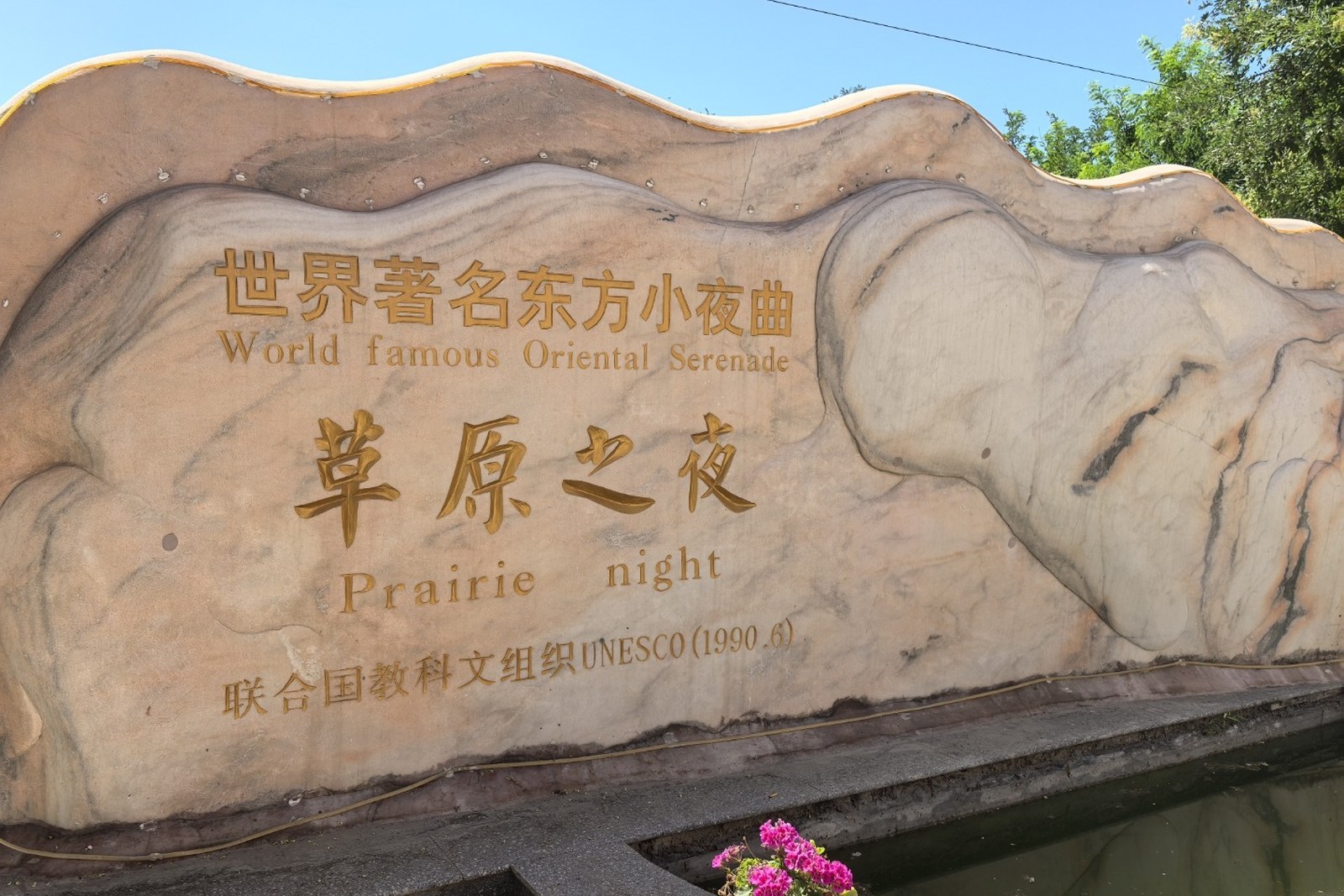
The carved stone at the entrance says it plainly: 世界著名东方小夜曲 Shìjiè zhùmíng Dōngfāng xiǎoyèqǔ – the world-famous oriental serenade, 草原之夜 the Grassland Night. Visitors stop to read it, photograph it, and then step inside to hear why. The listening room runs the song on a loop, and its lyrics map onto the landscape outside the windows: a courier waiting for the mail rider, a guitar by the encampment, the grassland waiting for a railway that took decades to arrive. When the line finally came, the city grew around the song’s geography rather than the other way round.
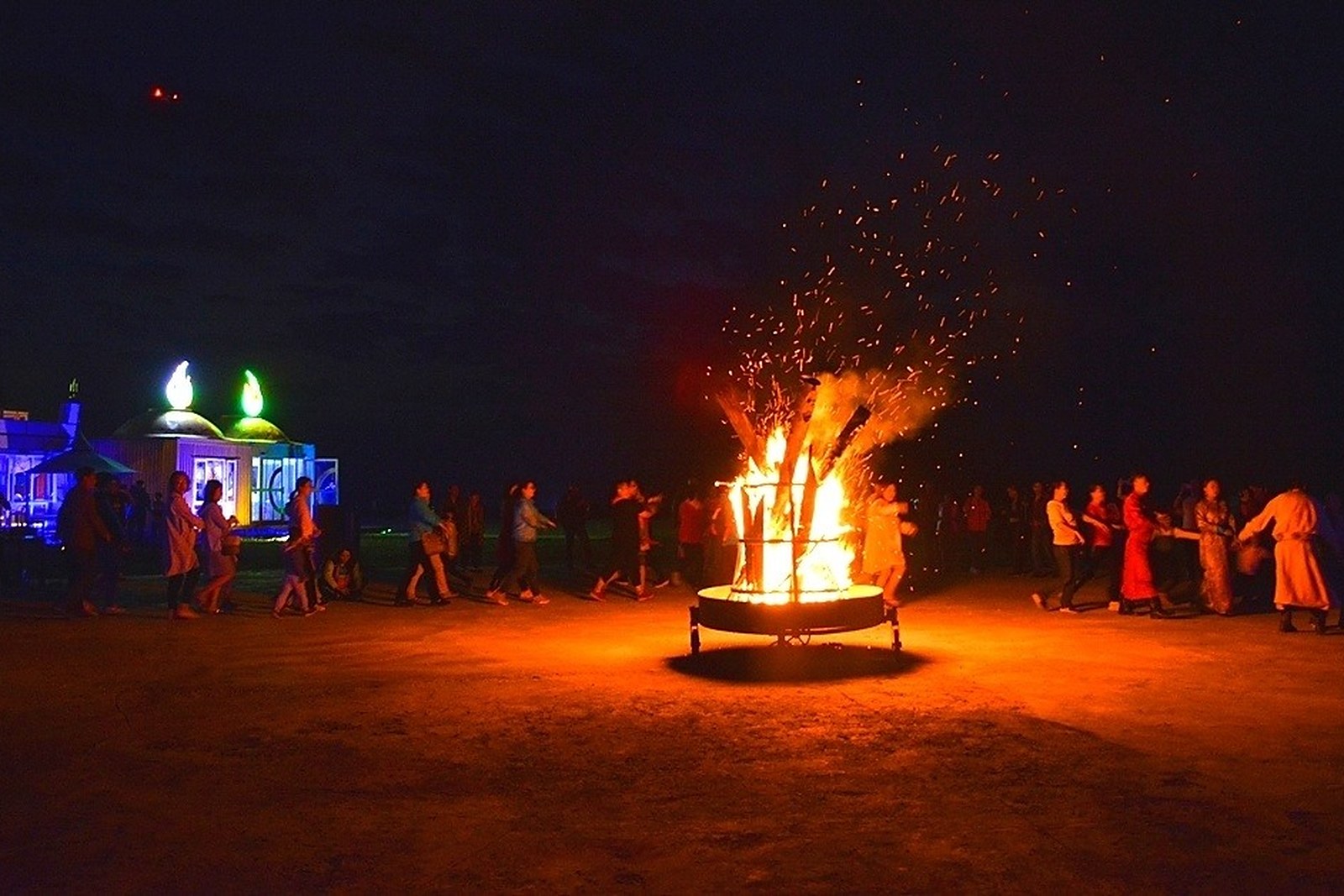
Inside, the exhibition walks the visitor from the film set outward. Production stills show the crew working among the herders of the Fourth Division farms; manuscripts and early pressings trace the song’s journey from valley radio to national broadcasts; and a dome-roofed hall near the site hosts the evening performances that keep the valley’s song-and-dance habit alive. On summer nights the lawn outside fills with locals who know every verse – the memorial is a concert venue with an archive attached.
Practicalities first. The hall sits a short taxi ride from the city center, the listening room runs daytime hours, and the film archive screens on the half hour – an hour is enough for the archive and the stone, two if you stay for a screening. Photography is welcome in the public areas, the staff will replay the original 1959 recording on request, and the whole visit pairs naturally with the riverside park belt a few minutes south. Come in the late afternoon and the dome catches the valley’s best light.
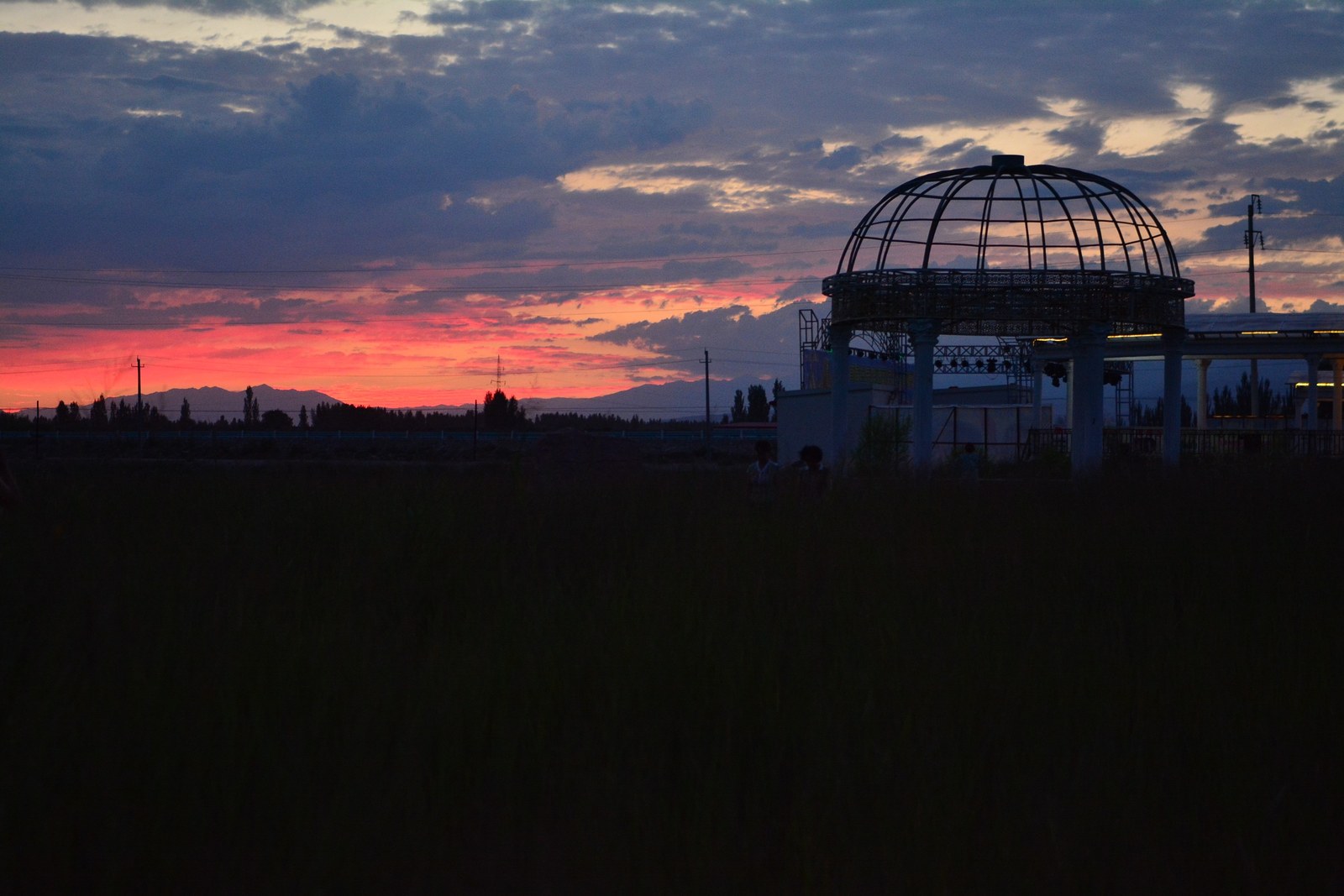
What stays with you is the strangeness of the arithmetic: a settlement of barely a decade, named after a song about waiting for progress, now keeping a museum to the waiting itself. The grassland the lyrics describe has become an avenue grid; the mail rider has become a parcel depot; and the song plays on, unchanged, in a room the size of a village hall.
Practicalities
Beyond the song, the same 可克达拉市 Kěkèdálā Shì Keketokala City keeps more places worth the detour: 伊犁河畔 Yīlí Hé Pàn the Yili river banks for bridge sunsets, 薰衣草田 Xūnyīcǎo Tián the lavender fields of the Fourth Division farms, 滨河公园 Bīnhé Gōngyuán the riverside park for the evening promenade, or 伊犁河湿地 Yīlí Hé Shīdì the river wetlands for egrets and reeds – four more doors into the same 可克达拉市 Kěkèdálā Shì Keketokala City. Once the memorial is heard, our Keketokala food map fills the day.
Practicalities
Words and Names
flowcloud would say the Grassland Night memorial is a town humming to itself: a stone that says serenade, a room that plays 1959, and a city built close enough to hear the chorus from every open window. All checked November 2026.
Getting there: The memorial stands in Kektala’s cultural quarter, a short taxi ride from the city center; the listening room runs daytime hours and the film archive screens on the half hour. All checked November 2026.