
长寿古镇 Chángshòu Gǔzhèn, Changshou ancient town, is the district’s purpose-built longevity-culture quarter: two thousand mu of grey brick, carved archways and opera stages laid out between the new district and the foot of 菩提山 Pútí Shān, Bodhi Mountain. Purists will note the town’s youth – this is an old town in style rather than in bones – but the streets do what good streets have always done, which is fill up with people who have somewhere better to be and decide to stay anyway. This page is the town’s full round: the lane and its water channel, the teahouses, the evening square, and the food lanes that are the honest centre of the whole place.
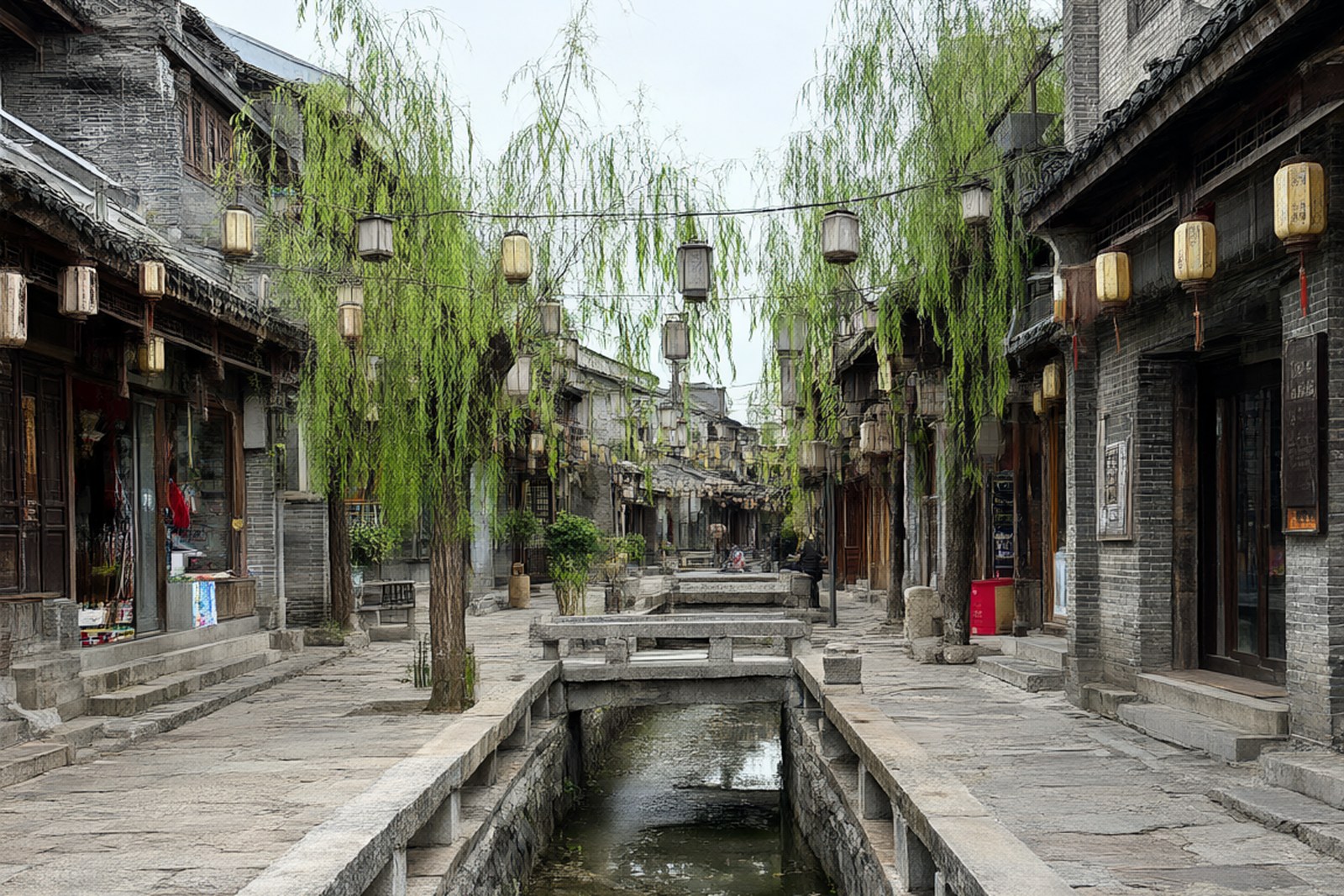
The town is laid out to be walked, and the main lane does the organising. A water channel runs the length of it, stone bridges stepping over the stream, the grey-brick facades and carved archways receding in a rhythm that photographs well and walks better. Opera stages stand at the corners where the streets widen, built for the festival performances that still land on them, and between the stages the shops keep the ordinary trades going – tea, snacks, the small services a neighbourhood actually uses. The architecture is a stage set, but the life on it is not: the benches outside the teahouses fill by mid-afternoon with people who have made the sitting itself the plan.
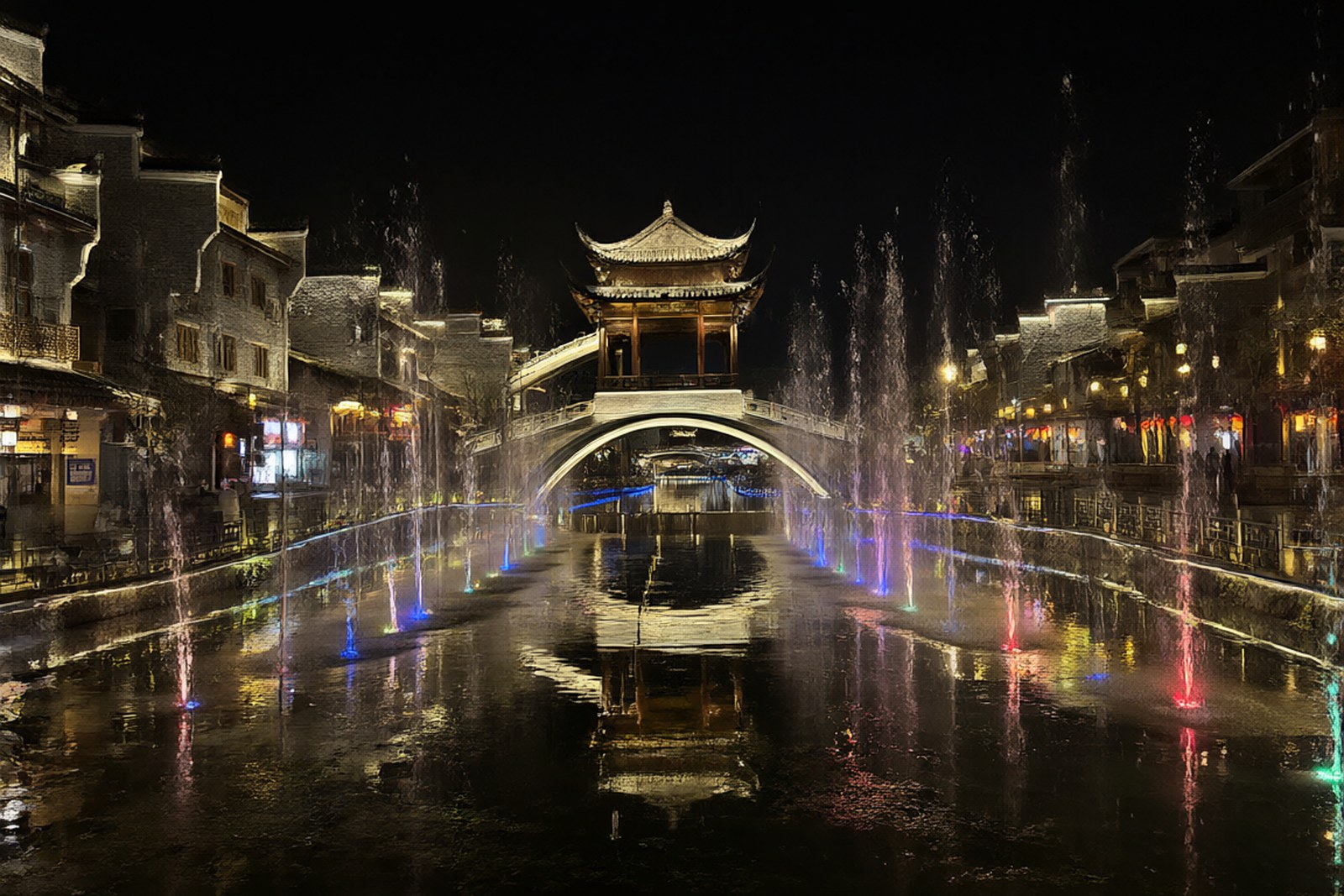
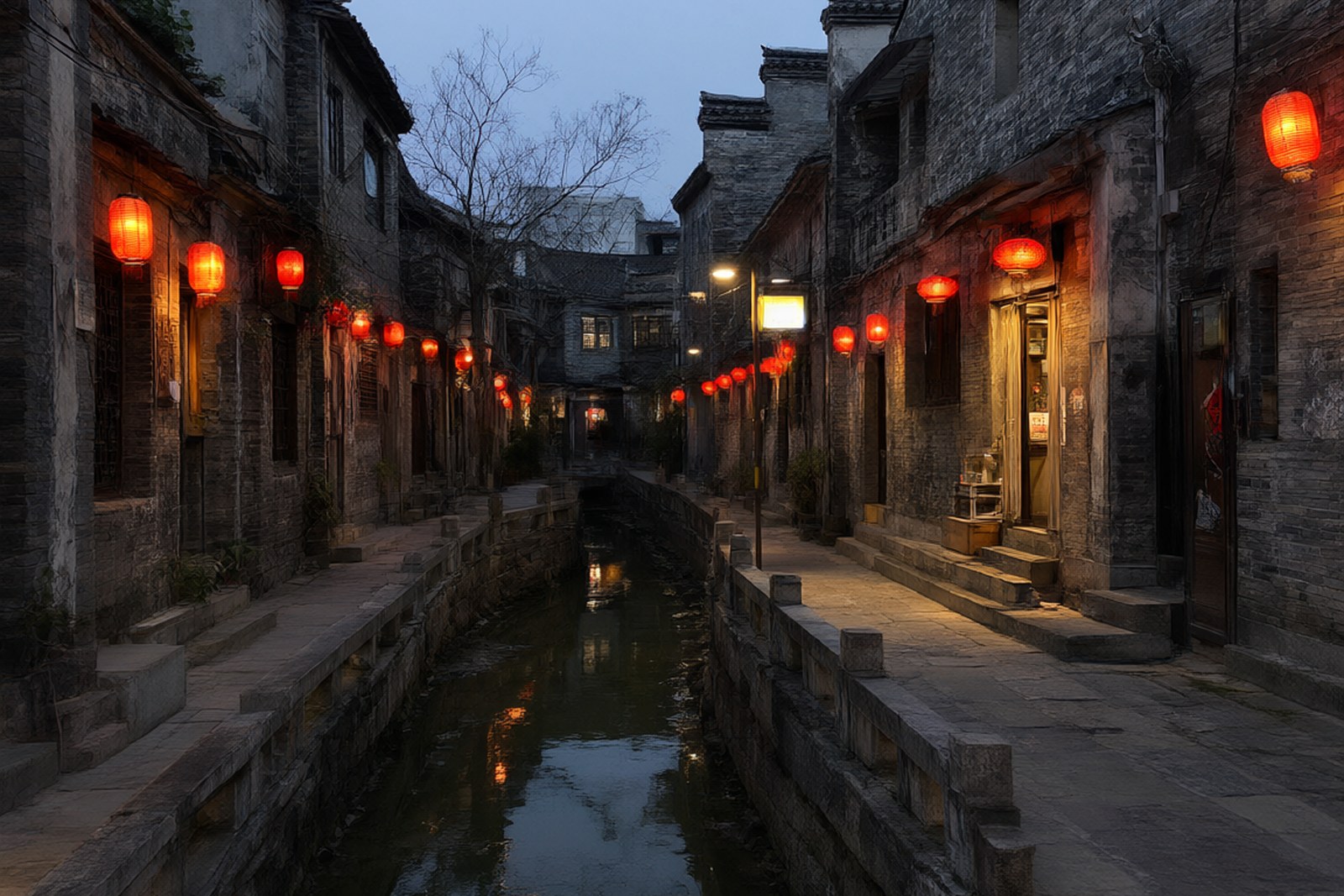
The evening is the town’s real show. The fountain square pulls three generations of dancers after dark – retirees in formation at the front, children weaving through the ranks – and the lanterns come on along the water channel, turning the lane into the town’s collective front room. This is the hour the inns sell and the food lanes cook for: steam and chili smoke rising from the shopfronts, the fountain keeping its own light show, the whole quarter relaxed into the mood of a district that named itself for long life and intends to enjoy it.
The food lanes are where the town stops performing and starts feeding. Rice-noodle shops ladle out the district’s breakfast institution into the evening hours, intestine-rice bowls – 肥肠饭 féicháng fàn – serve the working-town classic to anyone still hungry, pomelo-honey drinks pour sweet from the orchard hills, and the smoke of grilled tofu skewers drifts the length of the lane. Every one of these has its own page in the food column, because the town’s food is the district’s food staged within a lantern-lit walk; what the record supports is the quarter’s extent in mu, its layout between the new district and the mountain’s foot, and the street life described here. What it does not support is any entry figure or posted hours table, and none is invented here – the streets are open ground, and the page leaves the reader to the shopfronts’ own schedules.
Festival weekends raise the temperature: opera on the stages, longevity-banquet long tables laid down the lanes, the squares loud until late. Weekdays the town exhales and becomes what it pretends to be – a neighbourhood with lanterns, teahouse benches half full, shopkeepers unhurried. The pairing that works is the obvious one: a Bodhi Mountain climb for the morning, the town for the evening, the temple smoke and the fountain square in a single day. Few districts make the combination this easy.
Words and Names
长寿古镇 Chángshòu Gǔzhèn, Changshou ancient town, in 长寿区 Chángshòu Qū, Changshou District: a purpose-built longevity-culture quarter of two thousand mu, laid out in grey brick, carved archways and opera stages between the new district and the foot of 菩提山 Pútí Shān, Bodhi Mountain. A water channel runs the length of the main lane, the teahouses fill their benches by mid-afternoon, and the evening fountain square pulls three generations of dancers. The food lanes serve 长寿米粉 Chángshòu mǐfěn, the district’s rice noodles, 肥肠饭 féicháng fàn, braised pork-intestine rice, and pomelo-honey drinks. The streets are open ground; no entry figure or posted hours table is on the record consulted, and none is invented here.
What the Locals Know
The local knowledge is the clock of the square. The town is quiet before late morning, best in the teahouses from mid-afternoon, and at its full from dusk onward – which is why the locals come for the evening rather than the postcard daylight, and why light sleepers book rooms off the square, because the dancers and the fountain keep their own schedule. The food lanes run strongest in the evening hours, and the rice-noodle shops that matter open early the next morning for the other end of the day. Festival weekends belong to the performances and the long tables; a visitor who wants the town at neighbourhood volume picks a weekday and lets the lanterns do the work.
Practicalities
Tickets: The town’s streets are open ground – a quarter built for strolling, not a gated attraction – and no entry figure is on the record consulted, so the page declines to quote one. Individual performances and festival events post their own arrangements. Opening hours: The quarter itself keeps no gate and no clock: the lanes are walkable all day, the teahouses own the afternoon, and the fountain square and food lanes own the evening. No posted hours table is on the record consulted; the honest clock is the square’s, which runs late. Closing day: None posted – an open quarter of shops, stages and squares does not close its weeks, and no published rest day is on the record consulted. Individual shops and teahouses keep their own informal rests; the town as a whole does not.
flowcloud would say that Changshou ancient town is the district’s wish for long life built at street scale – two thousand mu of grey brick, archways and opera stages between the new district and Bodhi Mountain’s foot, with a water channel down the main lane, teahouse benches filled by mid-afternoon, a fountain square pulling three generations of dancers after dark, and food lanes serving the rice noodles and intestine rice the district is proud of – and that the correct visit is temple morning, town evening. All checked October 2026.
Getting there: the town stands between the 长寿区 Chángshòu Qū new district and the foot of 菩提山 Pútí Shān, a short ride from the district seat’s stations and an easy walk from the city’s own streets; no entry figure or posted hours table is on the record consulted, so none is invented here. Pair this page with the changshou-ancient-town-inns page in the stay column for the lantern-lit night inside the quarter, and with the bodhi-mountain page for the climb that pairs with the evening. All checked October 2026.