
长寿湖 Chángshòu Hú, Changshou Lake, is the landscape that gave the district its modern fame: a reservoir of the 1950s 狮子滩 Shīzitān dam project, sixty-five square kilometres of open water and drowned valleys that make it the largest man-made lake in southwest China, with two hundred and three islands scattered across its bays like a spilled archipelago. This page is the lake’s slow day – the boat routes that thread the main channels, the bird reserves on their quiet shores, the ridge roads where the whole pattern of water and island reads at once, and the fish tables that end the day the way the district intends.
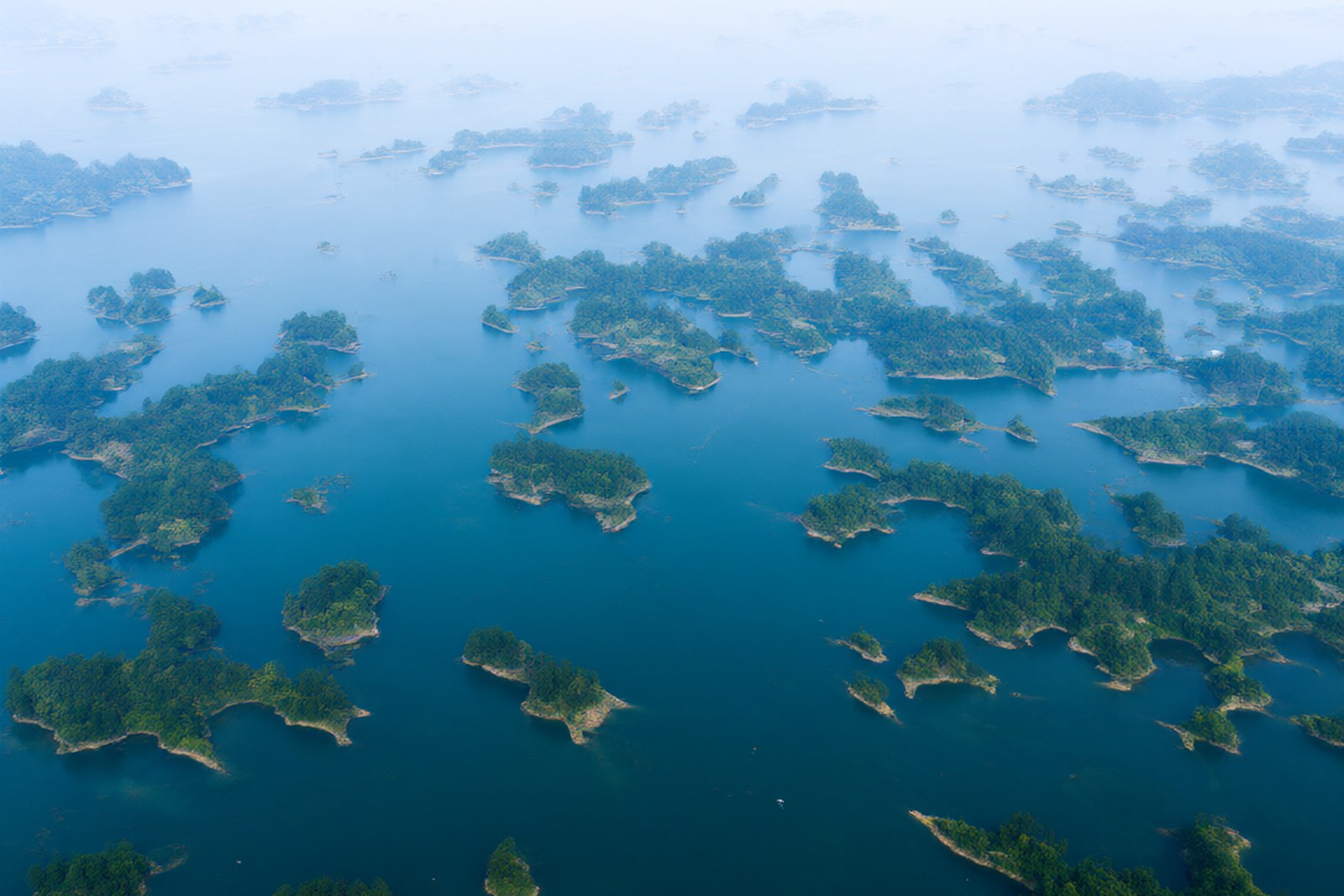
The islands are the lake’s signature and its best joke of geography. From the ridge roads above the western shore the islets are said to arrange themselves into the character 寿 shòu, longevity – the “heaven-granted longevity island” that gave a district named for long life its own signature written on the water. Whether the reading needs faith or not, photographers climb for it at dawn, when the low light lays the islets into relief and the character stands out sharpest; the rest of the day the islands are simply a green fleet at anchor, each one a hill that the reservoir turned into an archipelago when the dam closed and the valleys filled.
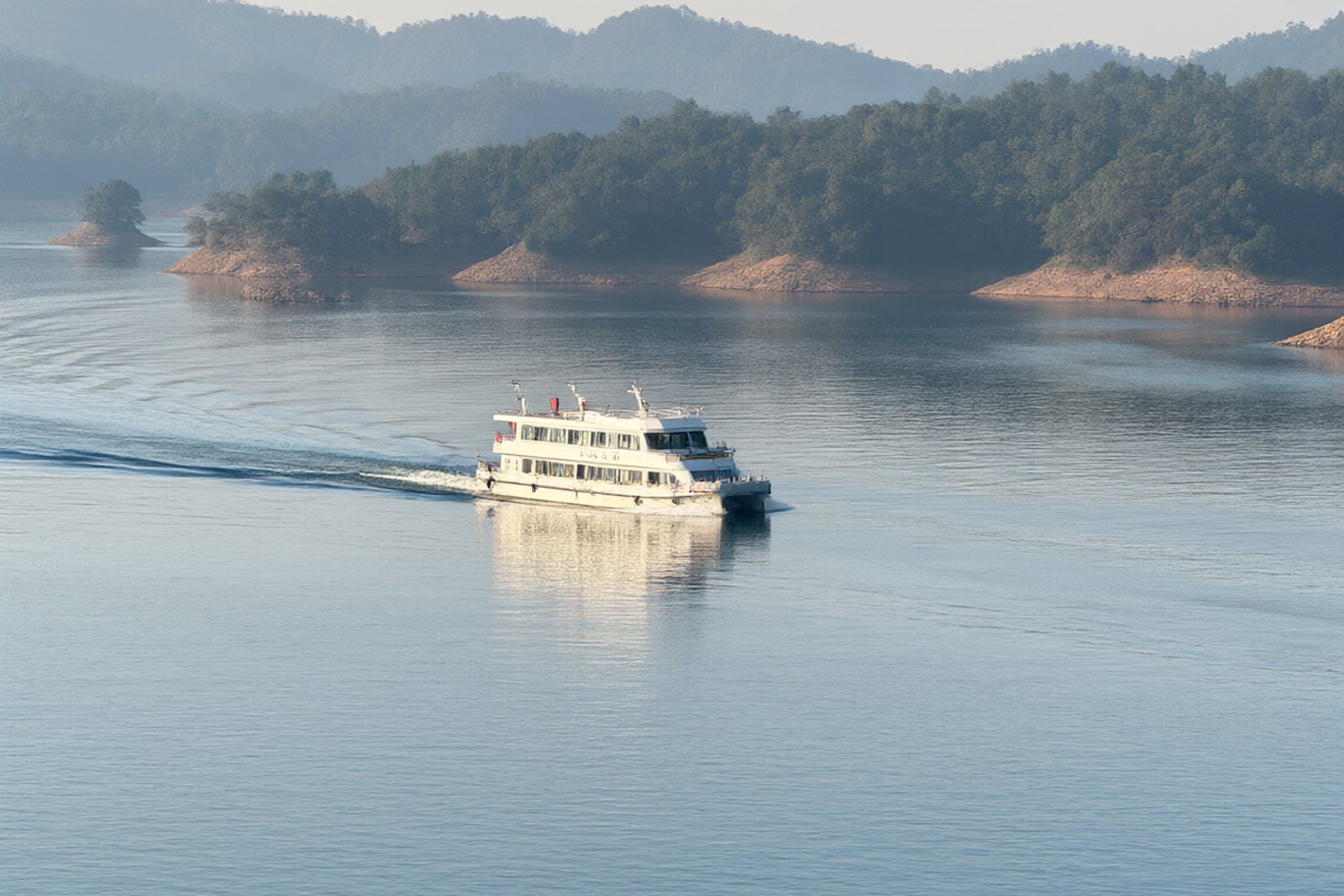
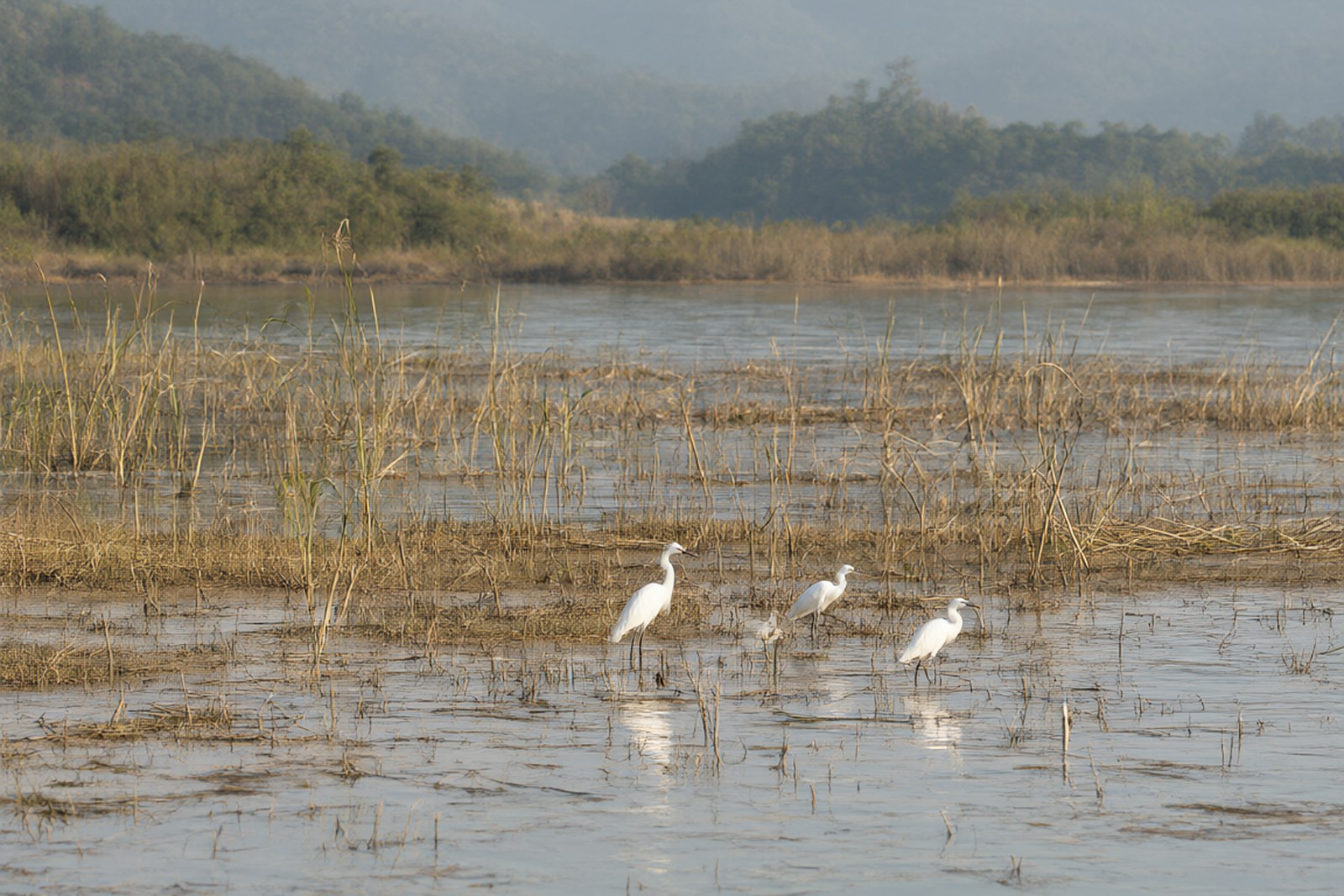
The boat routes are how the lake is actually seen. Scheduled boats and chartered craft thread the main channels past fishing rafts and into the bays where the bird reserves sit – shallow, reedy margins that shelter dozens of egret and waterfowl species, the white birds standing in the shallows in ranks that thin and regroup with the seasons. The lakeside eight views, 长寿湖八景 Chángshòu Hú bājǐng, collect the classic stops into a single itinerary: the great dam that started the whole story, the orchard islands planted in orange groves, the points and peninsulas where the water opens widest. A lake of this size rewards a full loop, and the ferry pace – slow, unhurried, island to island – is the pace the page recommends.
The lake also keeps a literary memory. The author of the novel Red Cliff stayed and wrote on these shores, and the lakefront keeps that chapter alive in its memorials – a reminder that the reservoir which gave the district its postcard also gave its writers a room with a view. What the record supports is the dam’s decade, the sixty-five square kilometres, the count of two hundred and three islands, the boat routes, the reserves and the eight views; what it does not support is any boat-fare figure or posted timetable, and none is invented here – the docks post their own rates and sailing schedules, and the page leaves the reader to them rather than quoting numbers it does not have.
The day closes the way the district plans it: at a table. The lake’s fish banquet is a fame of its own, and the whole-fish tables that follow a boat day are covered on their own page in the food column; here it is enough to say that the water one crosses in the morning is the water that fills the plates at night, and that the slow ferry pace – islands arriving one at a time, egrets keeping pace with the hull – is the surest way to reset a city-quickened clock. Come for a boat day, stay for the fish, and let the archipelago do the rest.
Words and Names
长寿湖 Chángshòu Hú, Changshou Lake, in 长寿区 Chángshòu Qū, Changshou District: a sixty-five-square-kilometre reservoir formed by the 1950s 狮子滩 Shīzitān dam project, the largest man-made lake in southwest China, with two hundred and three islands across its bays. 寿 shòu is the character for longevity that the islets are said to spell from the ridge roads – the “heaven-granted longevity island”. The 长寿湖八景 Chángshòu Hú bājǐng, the lakeside eight views, collect the classic stops from the great dam to the orange-orchard islands, and the bird reserves shelter dozens of egret and waterfowl species. No boat-fare figure or posted timetable is on the record consulted, and none is invented here; the docks post their own rates and schedules.
What the Locals Know
The local knowledge is the light and the order of the day. The day visitors and the charter boats own the main channels from mid-morning, so the locals take the water early – the first boats out, the reserves while the egrets are still feeding, the ridge viewpoint before the haze builds – or come for the last light, when the islands go copper and the boat docks empty out. Dawn is also the hour for the longevity character, when the low sun rakes the islets and the spelling shows best. Wind matters on a lake this size: mornings are calmest, afternoons can chop up the open crossings, and a light layer is worth carrying on the deck even in warm months.
Practicalities
Tickets: The lake shore is open ground, but the boat routes are the paid heart of the visit; the docks post their own fares by route and craft, and no boat-fare figure is on the record consulted, so the page declines to quote one. Opening hours: Daylight as the working norm – first boats with the calm morning water, last light for the ridge viewpoint, and the reserves best while the birds are feeding. No posted sailing timetable is on the record consulted; the honest clock is the daylight’s and the dock’s. Closing day: None posted – a reservoir of this rank does not close its weeks, and no published rest day is on the record consulted. The variable that actually cancels a boat day is weather: wind and storm close the open crossings, which is a postponed trip rather than a lost one.
flowcloud would say that Changshou Lake is the district’s headline written in water – a sixty-five-square-kilometre reservoir from the 1950s Shizitan dam with two hundred and three islands said to spell the character 寿, threaded by boat routes past bird reserves and the lakeside eight views, and finished at a whole-fish table beside the water it came from – and that the correct visit is the ferry-paced one, dawn for the character, midday for the channels, copper light for the islands. All checked October 2026.
Getting there: the lake lies northeast of the 长寿区 Chángshòu Qū district seat, reached by the shuttle road from the station square and by the shore roads that serve the docks and the resort belt; no boat-fare figure or posted timetable is on the record consulted, so none is invented here. Pair this page with the changshou-lake-hotels and changshou-lake-camping pages in the stay column for the night on the water, and with the changshou-fish-feast page in the food column for the banquet that ends the day. All checked October 2026.