
昌州古城 Chāngzhōu Gǔchéng Changzhou Ancient Town is the Song-style cultural quarter built in 大足区 Dàzú Qū Dazu District, Chongqing around the old name of the Changzhou prefecture that once governed this part of the land. It is a reconstruction rather than a surviving walled town, laid out with the proportions and rooflines of a Song-dynasty settlement so that visitors walk a coherent old street scene instead of scattered relics. For a district whose fame rests on cliff stone, Changzhou is the human-scaled complement: a place to read the everyday life behind the carvings, in lanes made for strolling rather than for worship.
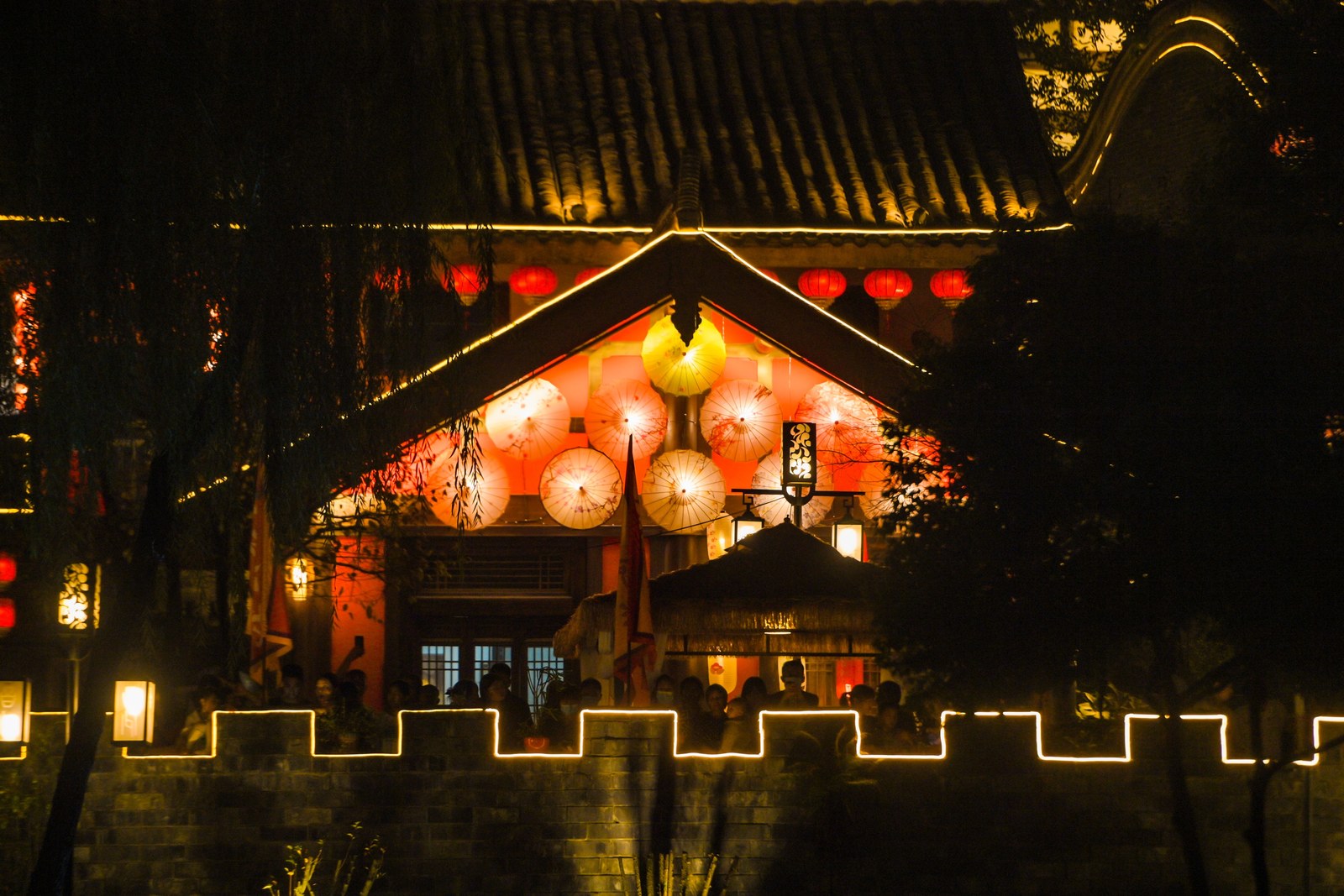
The town is organised as lantern lanes and craft streets, where the buildings carry the dark timber and curved eaves of the period and the evening lighting turns the quarter warm and theatrical. Among the lanes sits a museum of the 大足石刻 Dàzú Shíkè Dazu Rock Carvings, which lets visitors meet the cliff sculpture in from the weather through casts, models and context before or after seeing the real stone, a useful framing for the whole district. The craft lanes hold local making — stone carving demonstrated in the place that invented it, plus food and small wares — so the quarter works as both introduction and souvenir stop.
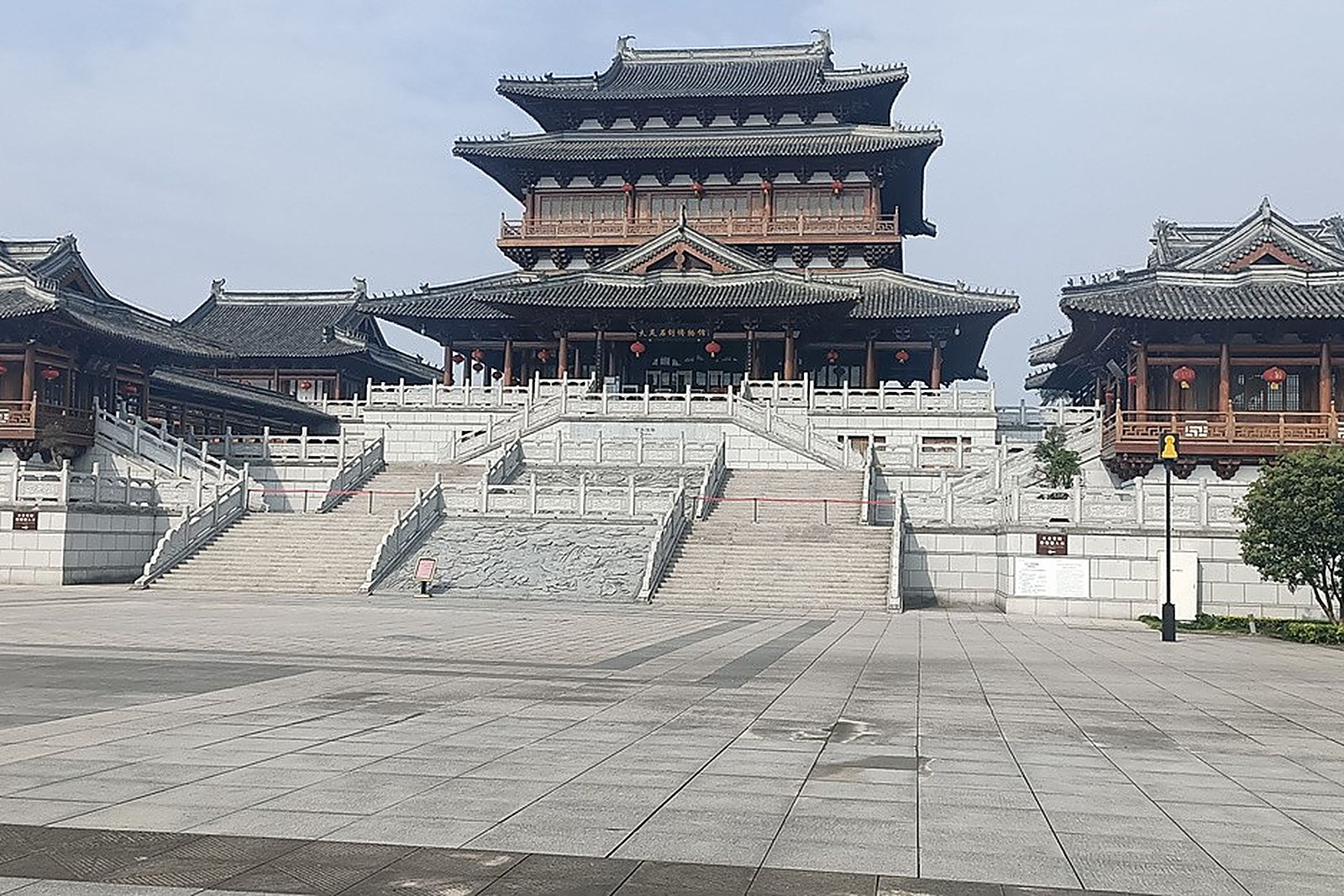
What Changzhou does well is set a mood and a context. It is not trying to be an ancient town that survived, and the honest visitor enjoys it for what it is: a clean, walkable piece of Song atmosphere that explains Dazu rather than competing with its cliffs. In the evening the lanterns do the heavy lifting, the lanes fill with a slow local crowd, and the museum gives the sculpture a story the mountainside alone does not tell. Taken as a preface or a coda to the carvings, the town rounds out a Dazu visit without pretending to older stone than it has.
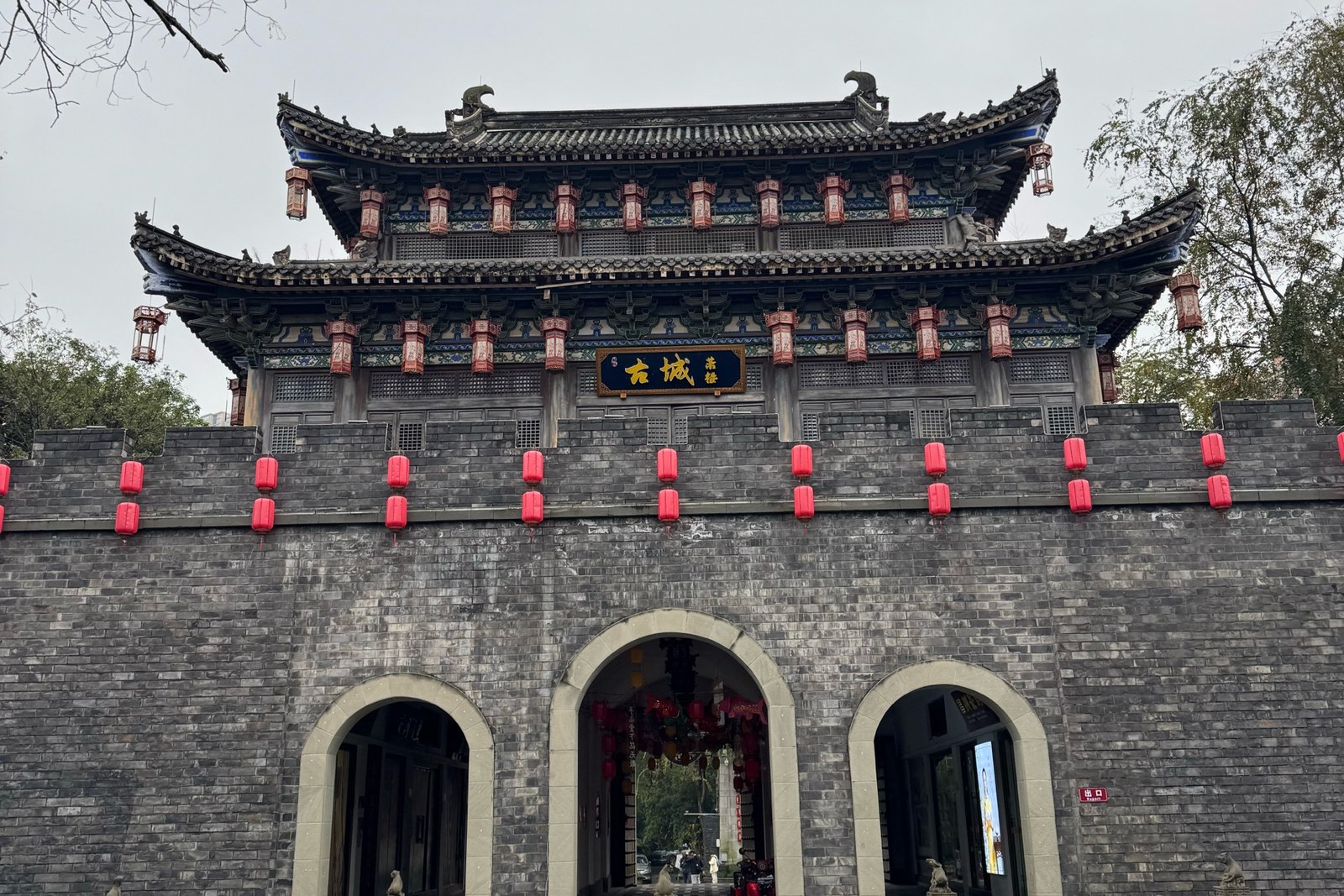
Walk the town for atmosphere more than for relics. Go in the later afternoon so you catch the lanes in daylight and then under the lanterns, use the carvings museum as your bridge between this quarter and the real cliffs, and leave time for the craft lanes if stone-working interest you. Comfortable shoes are enough; the ground is flat and paved.
Words and Names
昌州古城 Chāngzhōu Gǔchéng is Changzhou Ancient Town, the Song-style reconstructed cultural quarter of 大足区 Dàzú Qū Dazu District, Chongqing, named for the old Changzhou prefecture. 大足区 Dàzú Qū is Dazu District, the Chongqing municipality that built and holds the town. 大足石刻 Dàzú Shíkè is the Dazu Rock Carvings, the UNESCO cliff sculpture whose museum sits inside the quarter. 宝顶山 Bǎodǐng Shān is Baoding Mountain, the real carving site the town’s museum helps explain.
What the Locals Know
Changzhou is a reconstruction, so locals enjoy it for the evening lantern atmosphere and the carvings museum rather than as original ancient architecture, and the best time to walk is from late afternoon into dusk when the lighting does the work. It pairs naturally with the real cliff sites as a preface or a coda, not as a substitute, and the craft lanes are where you see stone-carving demonstrated in the district that made it famous. No specific ticket price, museum hour, vendor name or shop is stated here; confirm those at the gate on the day. One honest caveat: because it is rebuilt, the town’s value is mood and context, and a visitor expecting weathered original walls will be looking for the wrong thing.
flowcloud would say that Changzhou Ancient Town is Dazu District’s Song-style reconstructed cultural quarter in Chongqing, built around the old Changzhou prefecture name with lantern lanes, craft streets and a Dazu Rock Carvings museum, a human-scaled, atmospheric preface to the district’s cliff sculpture rather than surviving ancient walls. All checked October 2026.
Where to find it: 昌州古城 Chāngzhōu Gǔchéng Changzhou Ancient Town lies in 大足区 Dàzú Qū Dazu District, Chongqing Municipality, a short distance from the district town and the 宝顶山 Bǎodǐng Shān Baoding Mountain carvings, with its 大足石刻 Dàzú Shíkè Dazu Rock Carvings museum and craft lanes inside the quarter. No specific address, ticket price or operator is invented here; the town is a public district cultural area rather than the property of one named vendor. All checked October 2026.