
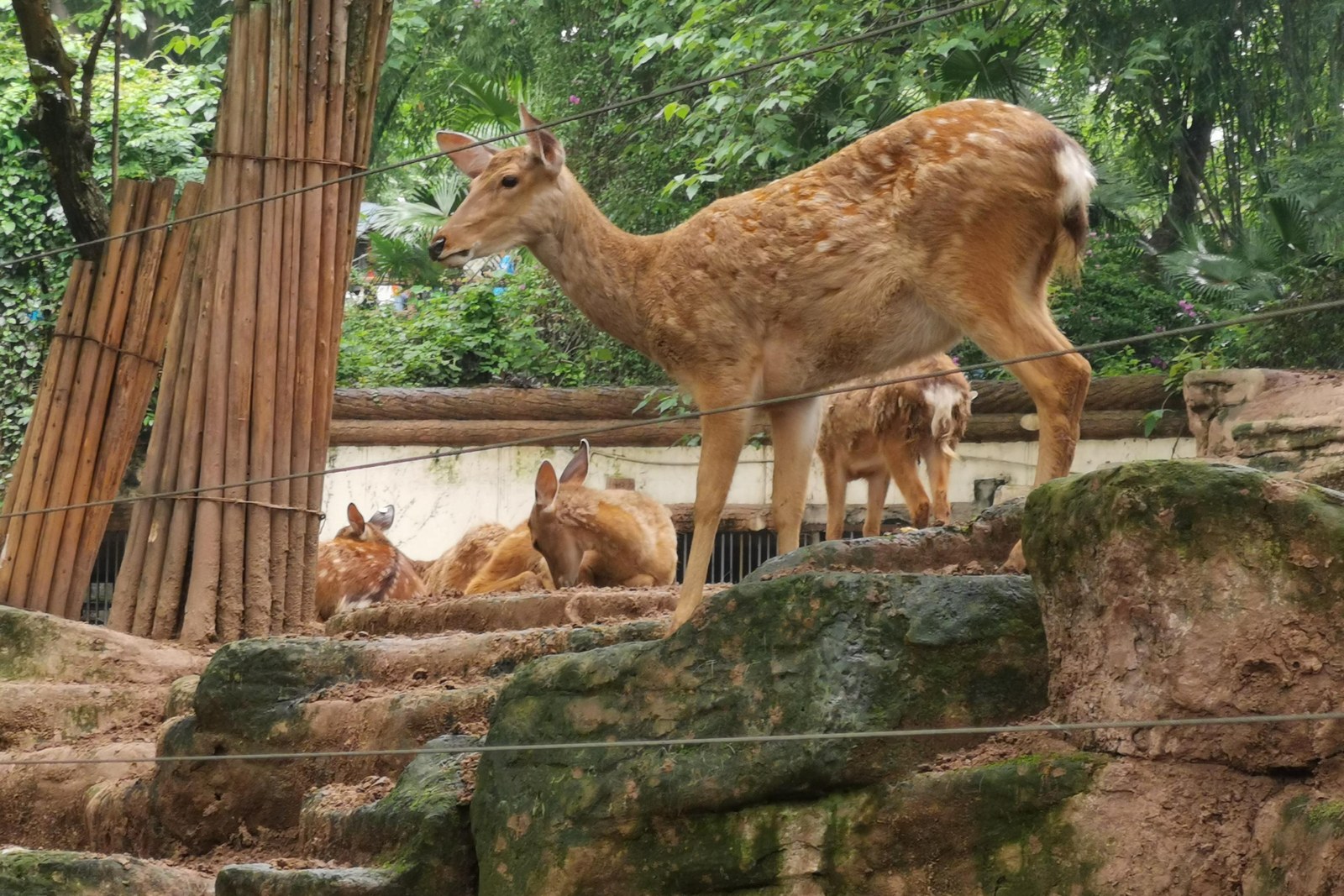
The climb is the point. Most of 重庆动物园 Chóngqìng Dòngwùyuán, the Chongqing Zoo, sits on a slope, and you enter at the bottom and go up, past enclosures in terraced bands with the rock and the trees left in rather than levelled off, until the ridge at the top gives back the river you came in on. Forty-eight hectares on the western shoulder of 九龙坡区 Jiǔlóngpō Qū, Jiulongpo District, Chongqing, a municipality of southwest China, laid out around 桃花溪 Táohuā Xī, Taohua Creek, which still runs through the grounds and does most of the explaining. It is the largest piece of green the district built for itself, and the reason is not decorative: this was a park made for the people building the city’s steel.
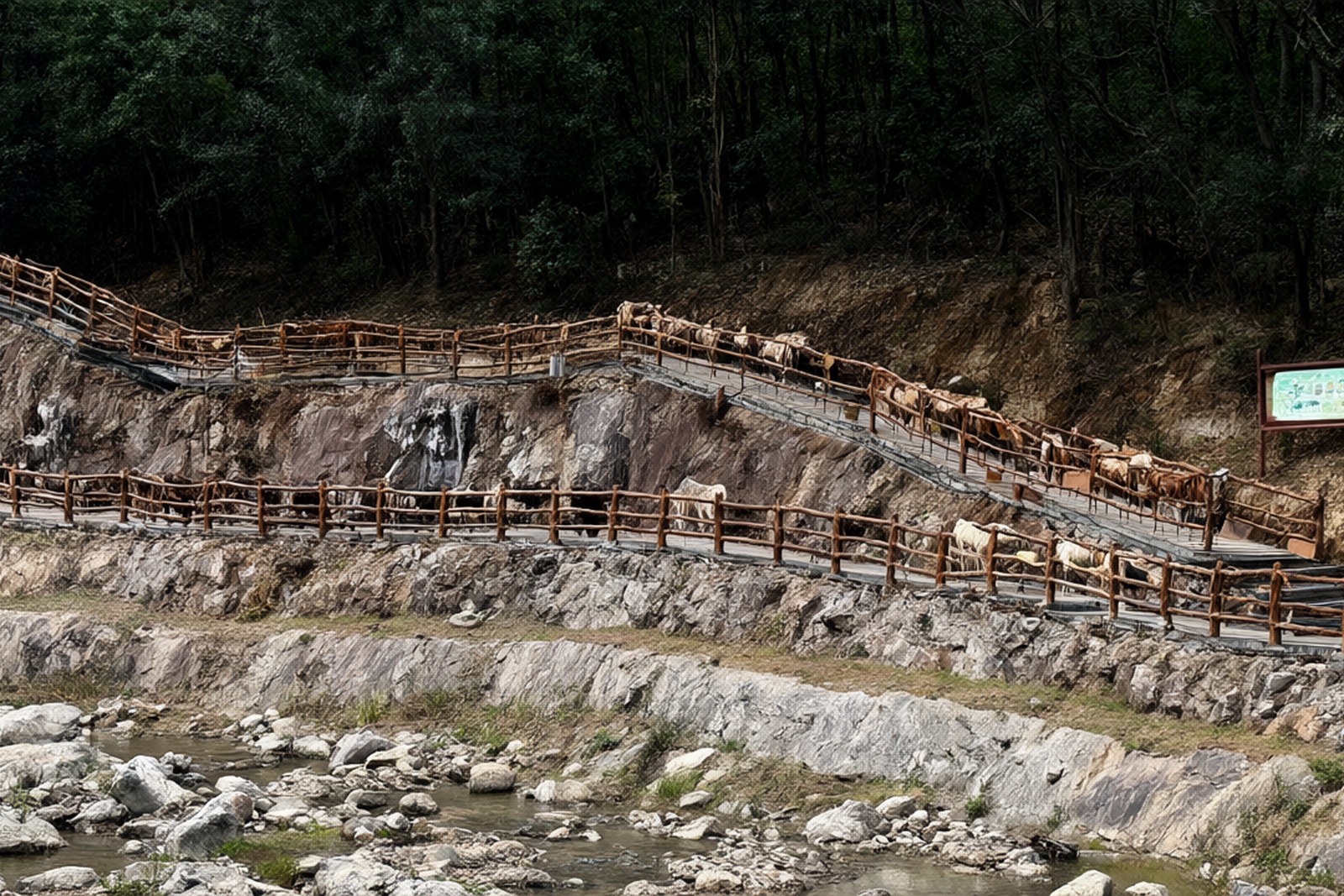
The founding sequence is unusually well documented for a Chinese park, and it is a construction project rather than an inherited garden. The zoo was founded in 1953; land was taken at 杨家坪 Yángjiāpíng, Yangjiaping, in January 1954, around the creek; construction ran through that year; and in December 1954 the finished grounds were named 西区公园 Xīqū Gōngyuán, the West District Park – a name that was a statement of position as much as of jurisdiction, since this was the far-western side of a city that had not yet grown out to meet it. The public opening came on 24 January 1955, with eleven species and sixty animals in the collection, which is the figure the zoo’s own history gives and the number that tells you how small this started.
Then the city changed what it needed. A decade of steel expansion brought a working population into the west-bank districts – men who had come to build a steelworks and now had children, and children had nowhere green to go. By decision in 1958 the park’s remit was widened from a district park to a zoo serving the city’s industrial workers and the city at large, the grounds grew to meet it, and in October 1960 it was renamed 重庆动物园, the Chongqing Zoo. That decision is why the place feels the way it does: a public garden sized for a new industrial city, planted on a hill, with paths built for people who arrive at the end of a shift.
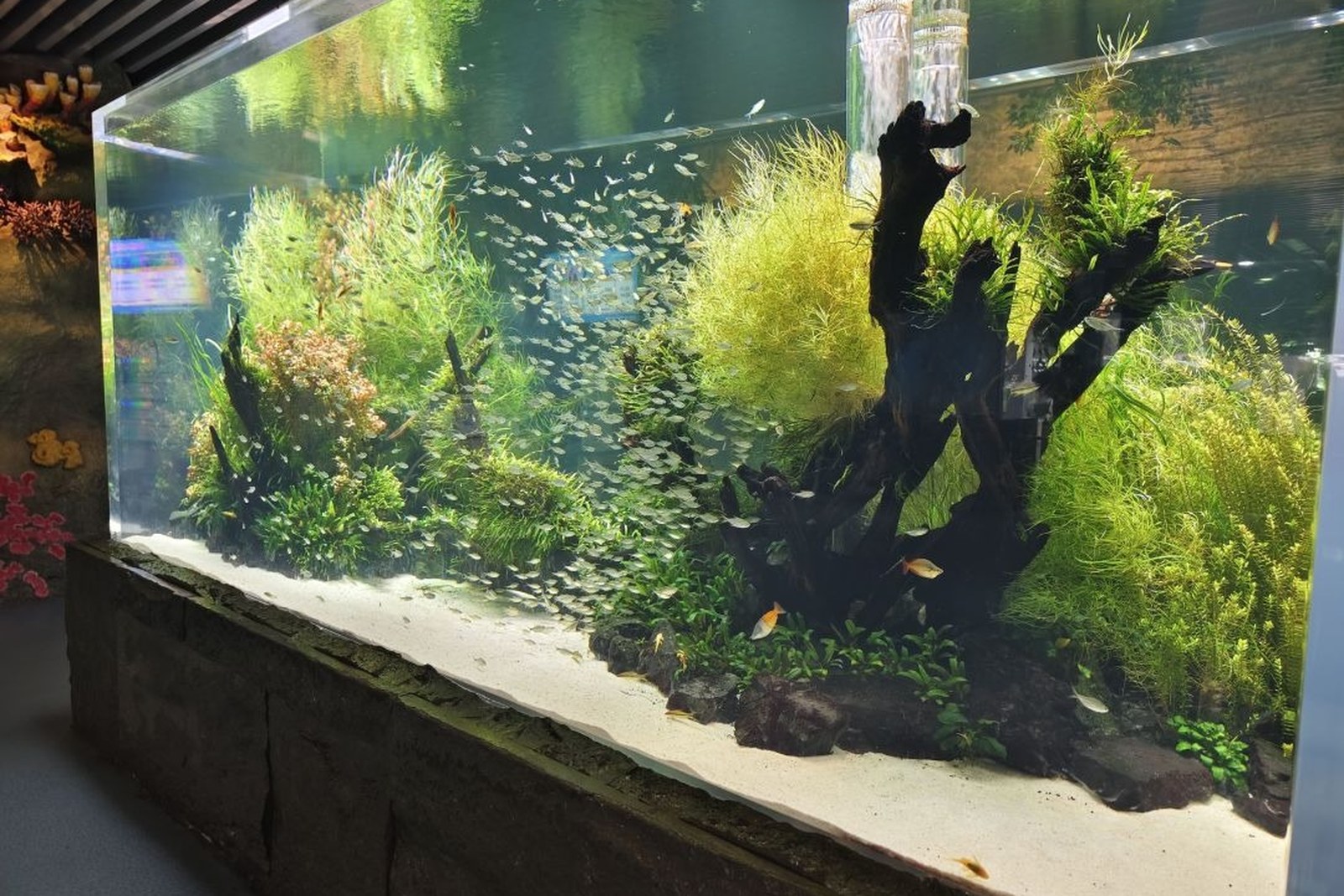
Two of its buildings carry the public face. The giant-panda house was rebuilt in 1989 – 1.1 hectares and some 2,300 square metres of floor – in the idiom that has since become standard for Chinese panda houses: rock, a hillside rather than a flat enclosure, cave and falling water, and a visitor who looks slightly up rather than through glass. The goldfish hall, completed in 1962, is the opposite gesture: a low building holding about 3,000 square metres of water, put up for a city that already had the aquarium habit and wanted its fish indoors and cold. Both are built for ordinary families on a half-day out, which is the audience the 1958 decision was about.
Practicalities
Tickets. The zoo is a ticketed public attraction and admission is charged, with the gate rate, the concession categories and any difference between the on-line and at-the-gate price all set by the zoo and the booking platforms rather than printed here; the ranges move with each season and with special programmes. Buy through the zoo’s official account or the main booking platforms before travelling, and allow for the fact that individual houses inside a large park can be closed for animal care or maintenance on any given day without that being a special event.
Opening hours. Daily opening and closing times are published by the zoo through its official site, its WeChat account and its booking listings, and those are the current authority rather than any hour printed on this page. Seasonal adjustments, animal-care closures for individual houses and any temporary exhibition changes are announced on the same channels, so the same-morning check is worth it if a particular house is the reason for the trip.
Closing day. There is no fixed weekly closing day in the published arrangement and none should be inferred here. The exceptions that do occur are school-calendar and public-holiday adjustments, announced in advance on the zoo’s official account; because it is a park built around the city’s families and schoolchildren, term-time weekdays are the days it is busiest rather than the days it is shut.
Getting there. Metro Line 2 has a station for this place by name – 动物园 Dòngwùyuán, Zoo, on the elevated section west of 杨家坪 Yángjiāpíng, Yangjiaping, the district’s main commercial centre one stop east – and the entrance is a short walk from the platform. Coming by car or taxi, expect the climb to be the walk at the end rather than the drive: the park is on a slope, and the internal distances are long enough that comfortable shoes matter more than the parking. Buses serve the district’s western neighbourhoods and the Dadukou direction along the same river road, which is the alternative approach for anyone coming from north of the river (checked October 2026, subject to change).
flowcloud would say that the Chongqing Zoo is a piece of industrial social policy that happens to be a good walk – four hectares of new grounds finished in nine months in 1954, opened in January 1955 with sixty animals, then widened in 1958 by decision because a steel city needed somewhere green for the families its steel drew in – and that the climb from the gate to the ridge is the whole history told in one gradient.
Getting there: 重庆动物园 Chóngqìng Dòngwùyuán, the Chongqing Zoo, stands on 48 hectares of the western shoulder of 九龙坡区 Jiǔlóngpō Qū, Jiulongpo District, Chongqing, a municipality of southwest China, laid out around Taohua Creek on land taken at Yangjiaping in January 1954, finished in December that year as the West District Park and opened to the public on 24 January 1955 with eleven species and sixty animals, widened by decision in 1958 to serve the city’s industrial workers, renamed in October 1960, with its 1989 panda house and its 1962 goldfish hall. Admission is ticketed and the rates, concession categories and any group terms are set by the zoo and the booking platforms rather than printed here; daily hours and any individual-house closure are published on the zoo’s official channels, and there is no fixed weekly closing day beyond school-calendar and public-holiday adjustments announced in advance. Metro Line 2’s Zoo Station is a short walk from the entrance, one stop west of Yangjiaping, with local buses and taxis along the river road the alternative approach (checked October 2026, subject to change).