
三塔千年,影入洱海。Sāntǎ qiānnián, yǐng rù Érhǎi – Three pagodas, a thousand years; their shadows fall into Erhai.
崇圣寺三塔 Chóngshèngsì Sāntǎ the Chongsheng Three Pagodas are the one Dali image that outlived every dynasty – a national 5A scenic area (rated July 2011), about 1.5 km north-west of the old town at the foot of Cangshan’s 应乐峰 Yìnglè Fēng, priced at 75 yuan adult with 37 for students, free under 1.2 m and over 70. The plan is a tripod: 千寻塔 Qiānxún Tǎ the main tower in front, 69.13 m of sixteen-storey square brick built in the 南诏 Nánzhào Nanzhao period in the reign of 劝丰佑 Quànfēngyòu (824-859), and behind it two smaller ten-storey octagonal towers of 42.19 m from the 大理国 Dàlǐ Guó Dali kingdom (937-1253). The towers are 1961 first-batch national cultural relics; the monastery they belonged to is a 2000s rebuild. The honest shape is that the pagodas are the record and the temple is the frame.
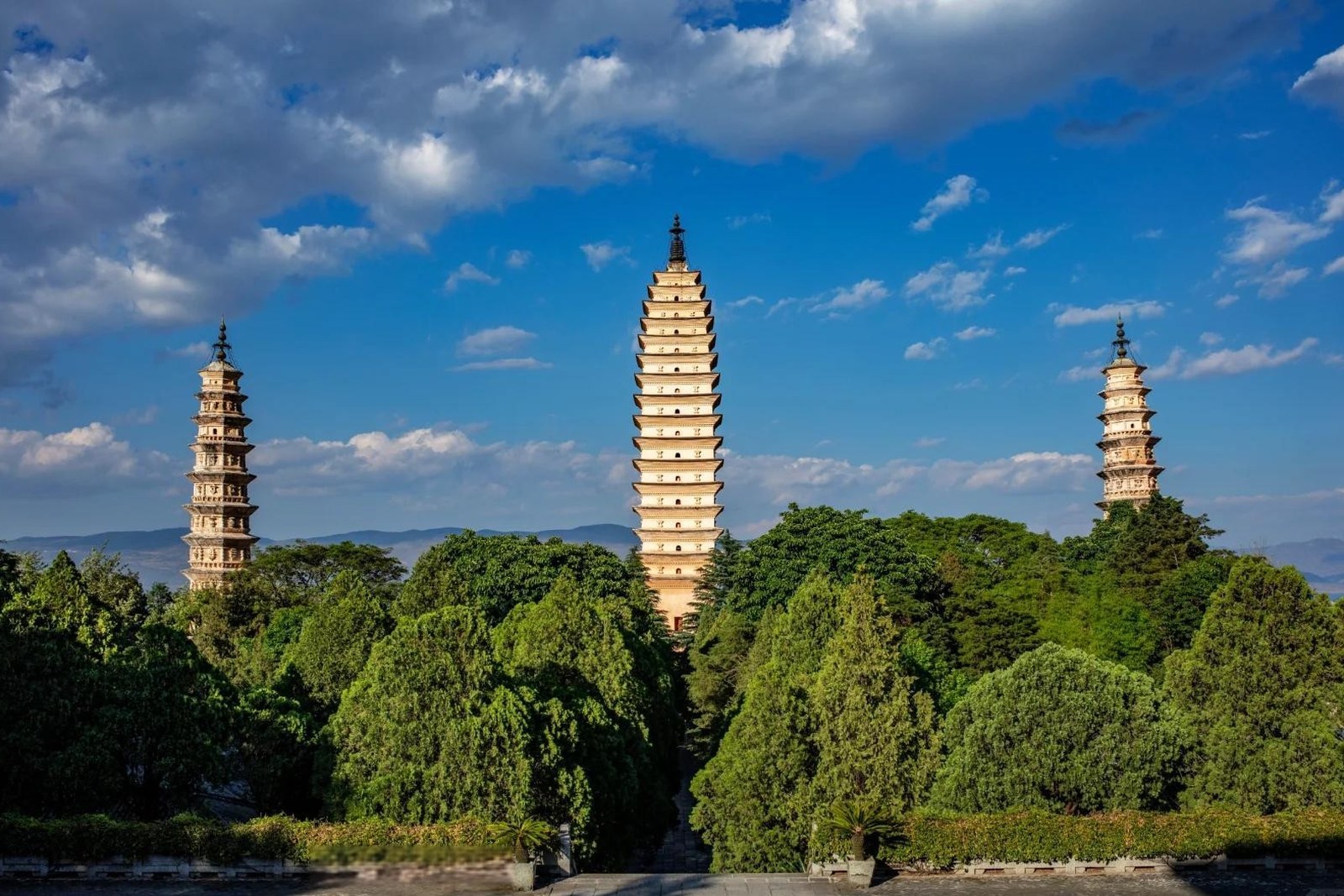
The bricks outlived the wood because the wood kept burning. 崇圣寺 was the royal monastery of a Buddhist kingdom that called itself 妙香佛国 Miàoxiāng Fóguó “the Buddha-land of subtle fragrance” – at its height the complex ran to 890-odd rooms, and nine Dali kings abdicated to become monks here, which is the kingdom’s real politics in one sentence. The temple was destroyed in the late-Qing wars and rebuilt from 2002 – the work completed in April 2005 and the monastery reopened on 1 January 2006; what never fell is the brick. The three towers have stood through more than thirty strong earthquakes – in 1514 the main tower cracked like bamboo and knitted itself within days, and in the 1925 quake the small towers were knocked crooked but never fell, which is why they still lean. The 1978-81 repairs opened the tower’s 塔刹 tǎshà finial and found 680-plus Nanzhao-Dali relics.
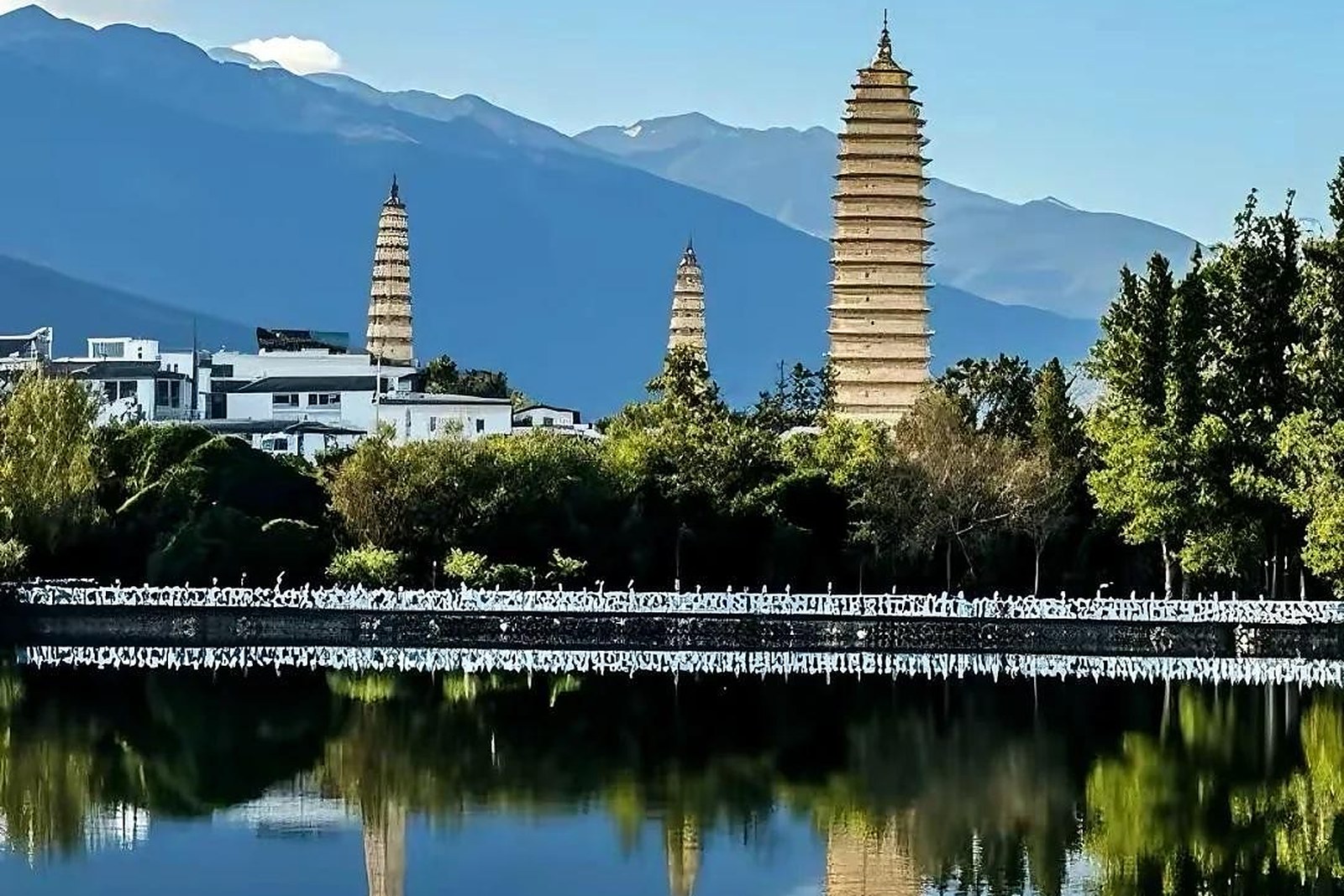
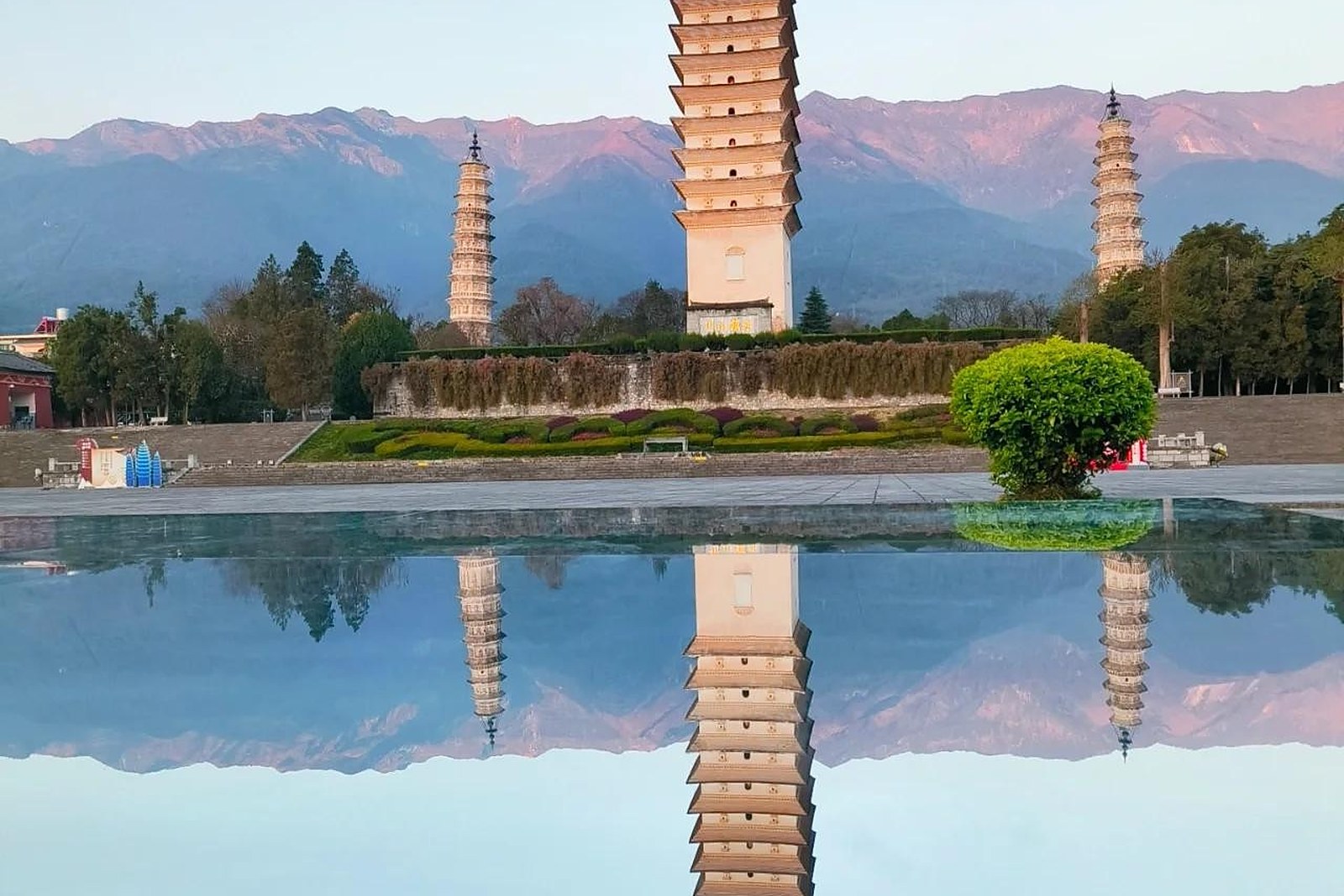
The local habit is the reflection pool. The 聚影池 Jùyǐng Chí in front of the towers gives the postcard – three towers, one inverted – and the light is best early, before the buses: the site opens 07:10 in summer and 08:00 in winter, closing 19:00 and 17:30 respectively. Come for the pagodas first and the temple halls second; the rebuilt 大雄宝殿 Dàxióng Bǎodiàn is huge and bronze, with a 117-m wood-carved 张胜温画卷 Zhāng Shèngwēn Huàjuàn as its showpiece. The site is a half-hour walk from the old town’s north gate or a 5-yuan shuttle from the 南门 Nánmén visitor centre, and 天龙八部影视城 Tiānlóng Bābù Yǐngshìchéng sits next door on its own ticket (about 40 online, 50 at the gate, 08:30-17:30). The honest frame is a paid 5A whose ticket is really for the thousand-year brick.
Practicalities
Tickets: This is the one paid headline in the group: 崇圣寺三塔 Chóngshèngsì Sāntǎ is a national 5A scenic area (rated 6 July 2011) and the three towers are first-batch (1961) national cultural relics, priced at 75 yuan adult with 37 for students, free under 1.2 m and over 70. The ticket covers the towers, the rebuilt monastery and the reflection pool; the 电瓶车 diàn píng chē carts and the 天龙八部影视城 Tiānlóng Bābù Yǐngshìchéng film city next door are separate (about 40 online, 50 at the gate, 08:30-17:30). The honest shape is a paid 5A whose ticket is really for the thousand-year brick.
Opening hours: Seasonal and published: 07:10-19:00 from May to October and 08:00-17:30 from November to April, with last entry shortly before closing. Come at opening: the 聚影池 Jùyǐng Chí reflection pool gives the postcard early, before the buses, and the rebuilt halls are huge and slow, so a morning start is the difference between the temple and the queue.
Closing day: None published: the site is a ticketed scenic area on a daily clock, not a museum with a weekly rest, and it opens through the public holidays. The honest caveat is the season, not a day – winter closes at 17:30, and the last hour is the quietest, which is when the pool holds its reflection best.
Getting there: 崇圣寺三塔文化旅游区 Chóngshèngsì Sāntǎ Wénhuà Lǚyóu Qū, 三塔路 Sāntǎ Lù / 文笔路 Wénbǐ Lù, 大理市 Dàlǐ Shì – about 1.5 km north-west of the old town at the foot of Cangshan’s 应乐峰 Yìnglè Fēng. It is a half-hour walk from the old town’s north gate, or the 5-yuan shuttle from the 南门 Nánmén visitor centre (departures through the day); buses 4, 19 and C10 reach the gate. Driving: navigate to 崇圣寺三塔文化旅游区, which has its own large car park.
Words and Names
崇圣寺三塔 Chóngshèngsì Sāntǎ the Chongsheng Three Pagodas · the 5A site 1.5 km north-west of the old town, 75 yuan
千寻塔 Qiānxún Tǎ the 69.13 m main tower · the sixteen-storey Nanzhao square brick tower, built under 劝丰佑 Quànfēngyòu (824-859)
密檐式 Mìyán Shì densely-eaved pagoda form · the closely stacked eaves that make the towers’ silhouette
南诏 Nánzhào the Nanzhao kingdom · the kingdom that raised the main tower and named the lake’s century
大理国 Dàlǐ Guó the Dali kingdom · the 937-1253 kingdom that built the two smaller towers behind
妙香佛国 Miàoxiāng Fóguó “the Buddha-land of subtle fragrance” · the Buddhist kingdom’s own name for itself
永镇山川 Yǒngzhèn Shānchuān the four characters on the tower base · “hold the mountains and rivers fast”, carved under the main tower
聚影池 Jùyǐng Chí the reflection pool · the still water that gives the three-towers-one-inverted postcard
flowcloud would say that the three towers are Dali’s one surviving image – brick, 69 metres, Nanzhao arithmetic, five-star ticket – and that the honest move is to come for the reflection pool at opening and the pagoda terraces first, because the temple is a rebuild and the towers are the record. All checked October 2026.