
Saturday mid-morning on the stone lanes, and the town is already working: dough twists frying in shallow oil, a teahouse drumming its gong toward the afternoon opera, porters swinging crates down the steps toward the river, grandmothers sorting vegetables on the doorstones of houses they have kept for decades. This is 磁器口古镇 Ciqìkǒu Gǔzhèn, Ciqikou Ancient Town – the Porcelain Port – at the foot of 歌乐山 Gēlè Shān, Gele Mountain, where the Jialing River bends. Chongqing is a municipality of southwest China, and 沙坪坝区 Shāpíngbà Qū, Shapingba District, is its north-western district, the shelf of city between that river and that ridge, and Ciqikou is the district’s oldest address. What makes the town remarkable is not preservation but continuity: the city’s other old streets were emptied and refilled by restoration, while Ciqikou never stopped – market, temple, wharf stairs and residential lanes have kept working since the Song.
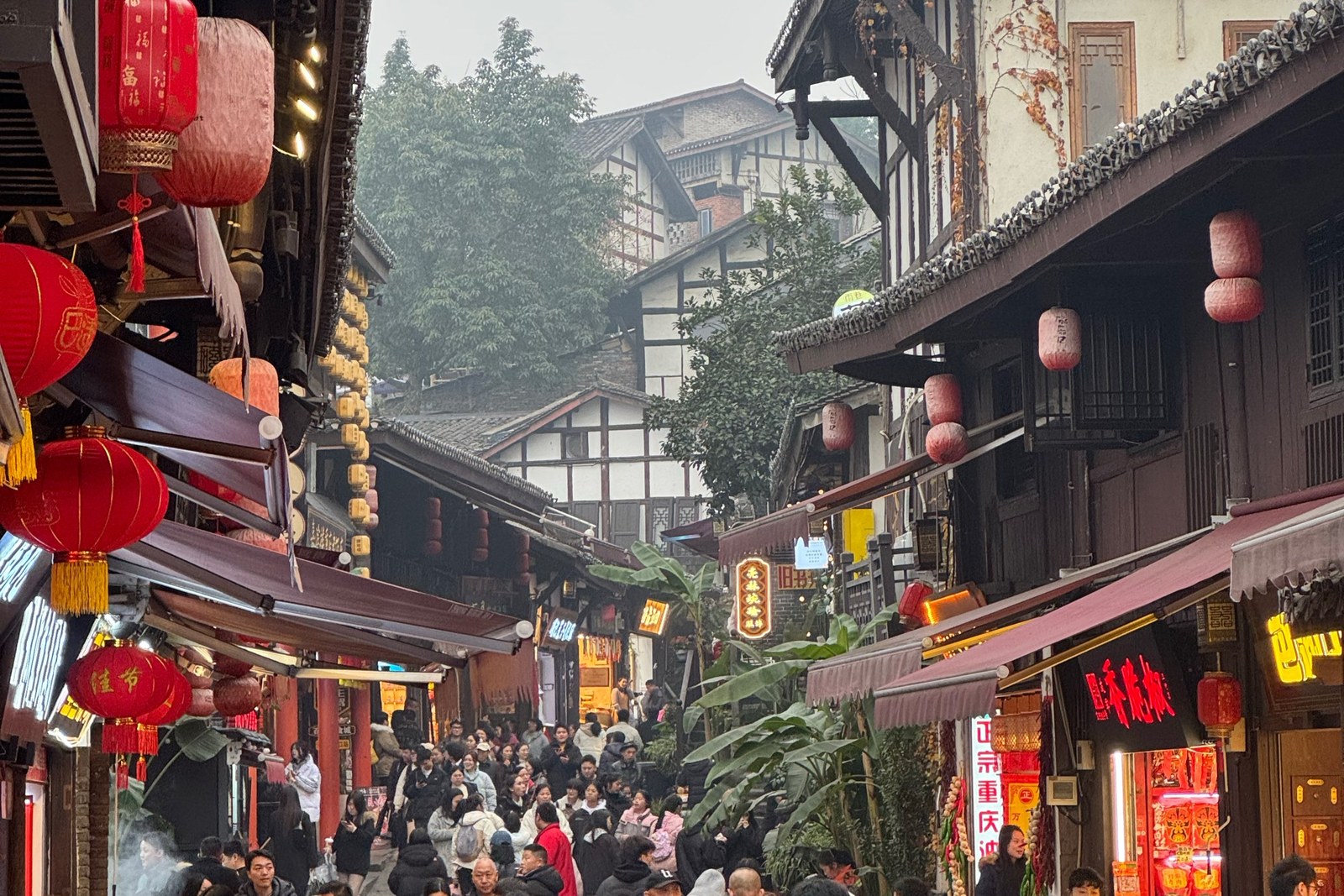
The founding sits deep. The county gazetteer and the civil-affairs record of Chongqing’s place names both carry the founding to the Xianping era of the Song dynasty, between 998 and 1003, first under the name 白岩场 Báiyánchǎng, Baiyanchang, the White Cliff Market, taken from the pale cliff above the settlement. The gazetteer’s summary has hardly been bettered: where water and land meet, the strongest town of the city’s west, its pottery the finest in the county – and so, the record adds, the locals came to call it Ciqikou, the Porcelain Mouth. In the Kangxi era of the Qing, porcelain-making brothers of the Jiang family came from Fujian with the migration the histories call Huguang filling Sichuan, built kilns on the Qingcaopo slope above the town – the Shaping kiln – and the landing grew into the largest porcelain transhipment wharf on this reach; the old rhyme the official records still quote runs: by day a thousand hands cupped in salute, by night ten thousand lamps.
One story the town keeps is marked as a story. Legend has it that the Jianwen Emperor – the Ming monarch who by tradition wandered the rivers in a monk’s robe – took shelter in the town’s Baolun Temple, and the tale coloured the map: market and temple took the name Longyin, the Dragon’s Hideout, and the temple courtyards still trade on it. The official tellings keep the word rumour attached, and so does this page; the years of the supposed hiding belong to no record worth printing. The verifiable floor beneath the legend is the wharf: a market town that had shipped pottery since the Song kept its position after 1891, when Chongqing opened as a treaty port and the wares rode the Jialing out to downstream markets – one clause of treaty history here, since the port-opening story keeps its own page elsewhere.
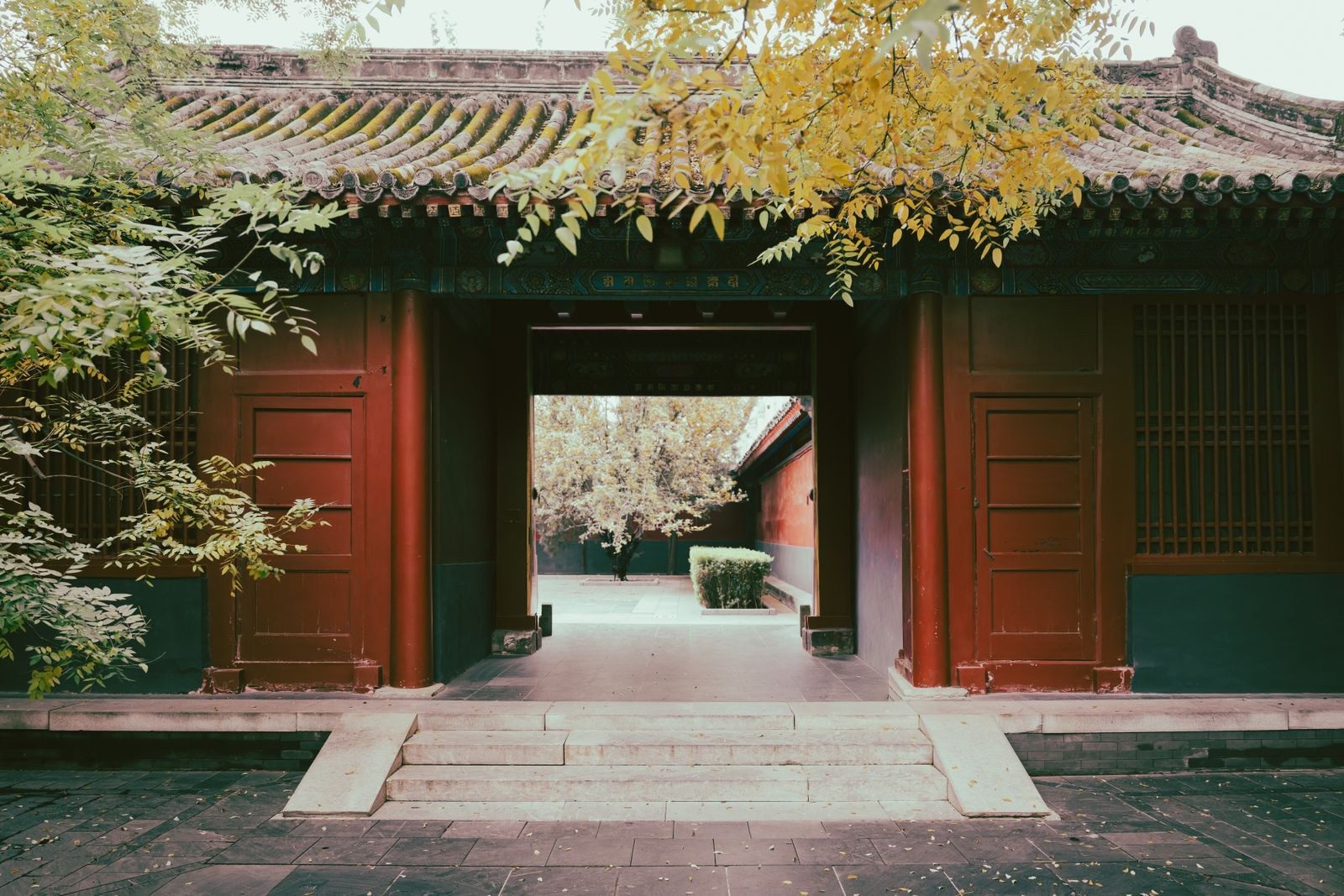
The twentieth century brought the town its busiest years. When the war pushed factories, offices and schools inland to Shapingba and the Gele Mountain foothills, Ciqikou’s population swelled past sixty thousand, the press histories recount, and the streets took the nickname Little Chongqing; the wartime school quarter along the river is the Sha in Shaci culture, the heritage the district still claims. The town carried that traffic and never paused: today it is a national 4A scenic area, rated in November 2006 in the district government’s listing, an open, free, living quarter where the national historic and cultural street recognition in the civil-affairs gazetteer sits on a thousand years of uninterrupted trade. Walk it with that in mind: the lanes behind the snack street still hold residents drying laundry across their doorways, the temple courtyards still take their worshippers, and the wharf stairs still run down to the water as they did when the kilns fired above them.
Practicalities
Tickets. There is no entry ticket: Ciqikou is a free, open-street district, and both the district government’s scenic-area listing and the travel platforms carry it at zero. Only the optional extras inside the town charge for themselves – teahouse opera in the courtyards, the 15-yuan shuttle bus running down to the ferry pier, guided walks – and each sets its own price. As of October 2026, subject to change – check before you go.
Opening hours. The old town is open around the clock: the district government’s listing records it as an all-day-open scenic area and the travel platforms agree on 24-hour access, so the lanes themselves never shut. The shops, teahouses and the temple keep their own hours, and the town is liveliest from late morning to mid-evening.
Closing day. There is no closing day: an open, un-walled old town does not close for the calendar, and the only hours worth checking are those of the temple, the teahouses and the shops if your visit turns on one of them.
Getting there. Metro Line 1 to 磁器口 Ciqìkǒu Ciqikou Station, whose exit stands a short walk from the stone gateway at the head of the main street; in season a sightseeing river ferry links the old wharf with the downtown bank across the Jialing.
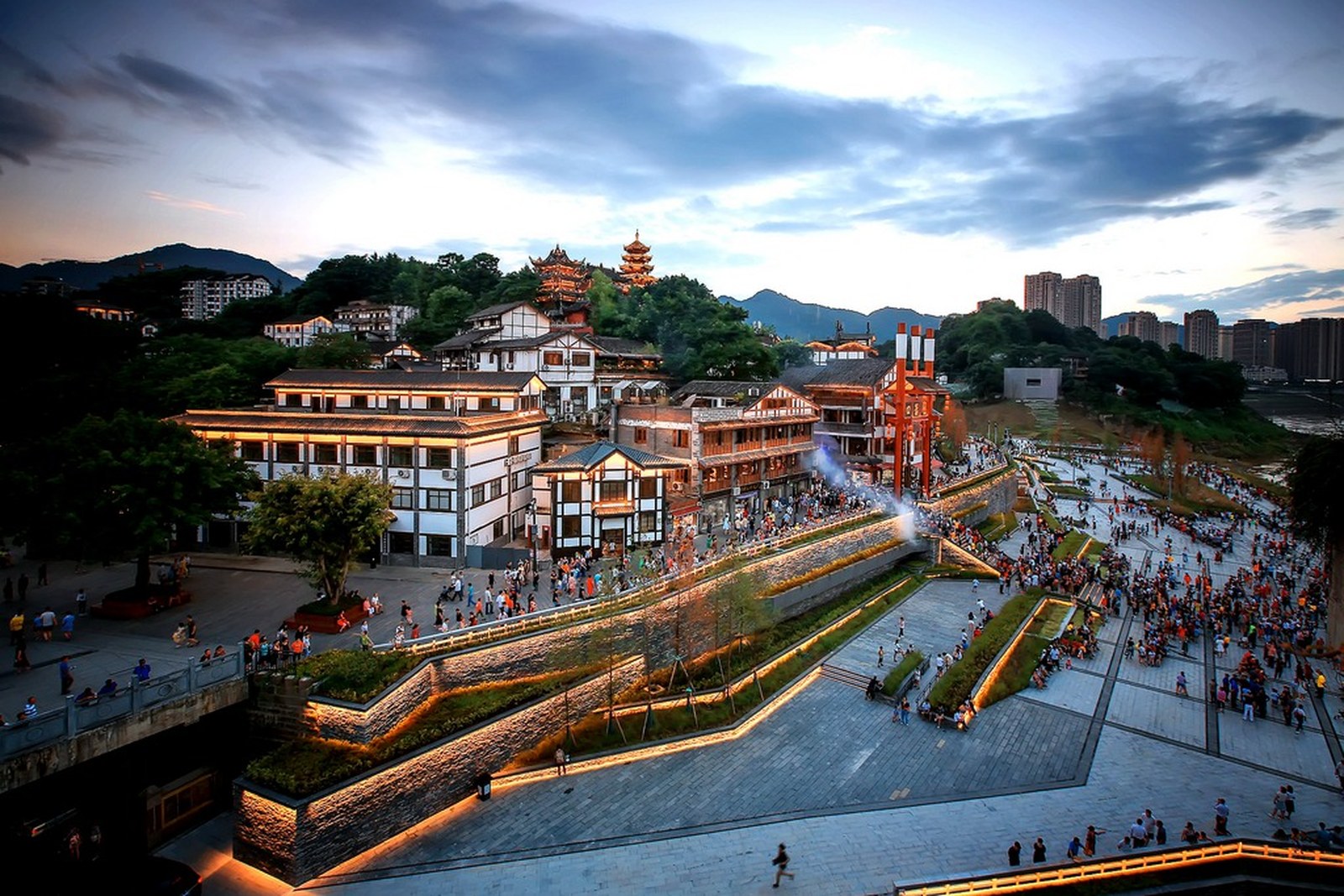
flowcloud would say that Ciqikou is the town that never left – founded in the Song’s Xianping years as the White Cliff Market, renamed for its porcelain, swollen by the war into a sixty-thousand-strong Little Chongqing, still trading on the same stone steps a millennium on – its real exhibit is not any restored facade but the queue itself: a thousand years on, the wharf market is still open.
Getting there: Ciqikou Ancient Town, 磁器口南街 1 号 No. 1 Ciqikou South Street, Shapingba District, Chongqing, a municipality of southwest China, at the foot of Gele Mountain where the Jialing bends. Metro Line 1 to Ciqikou Station leaves the stone gateway a short walk from the exit; a sightseeing river ferry links the old pier with the downtown bank in season. Entry is free and the town is open around the clock with no closing day, shops, teahouses and the temple keeping their own hours, and optional extras – teahouse opera, the 15-yuan shuttle, guided walks – charging separately; rated a national 4A scenic area in November 2006, with the national historic and cultural street recognition in the civil-affairs gazetteer (checked October 2026, subject to change).