
A Stroll Through Chongqing University’s 1929 Campus
Shapingba built itself around its schools, and the school that started it stands behind a Republican-era gate on 沙正街 Shāzhèng Jiē Shazheng Street: 重庆大学 Chóngqìng Dàxué Chongqing University, founded in 1929 on the slope between the river and Gele Mountain. Chongqing is a municipality of southwest China, and 沙坪坝区 Shāpíngbà Qū, Shapingba District, is the district that grew up around the campus and its neighbours, the city’s quarter of science, education and culture. The A Campus – A 区, the old campus – is the subject here: a working university that doubles as the city’s most walkable open-air museum of modern Chinese education, its early buildings under national heritage protection since 2019, its lake and bell tower still keeping the students’ daily rhythm.
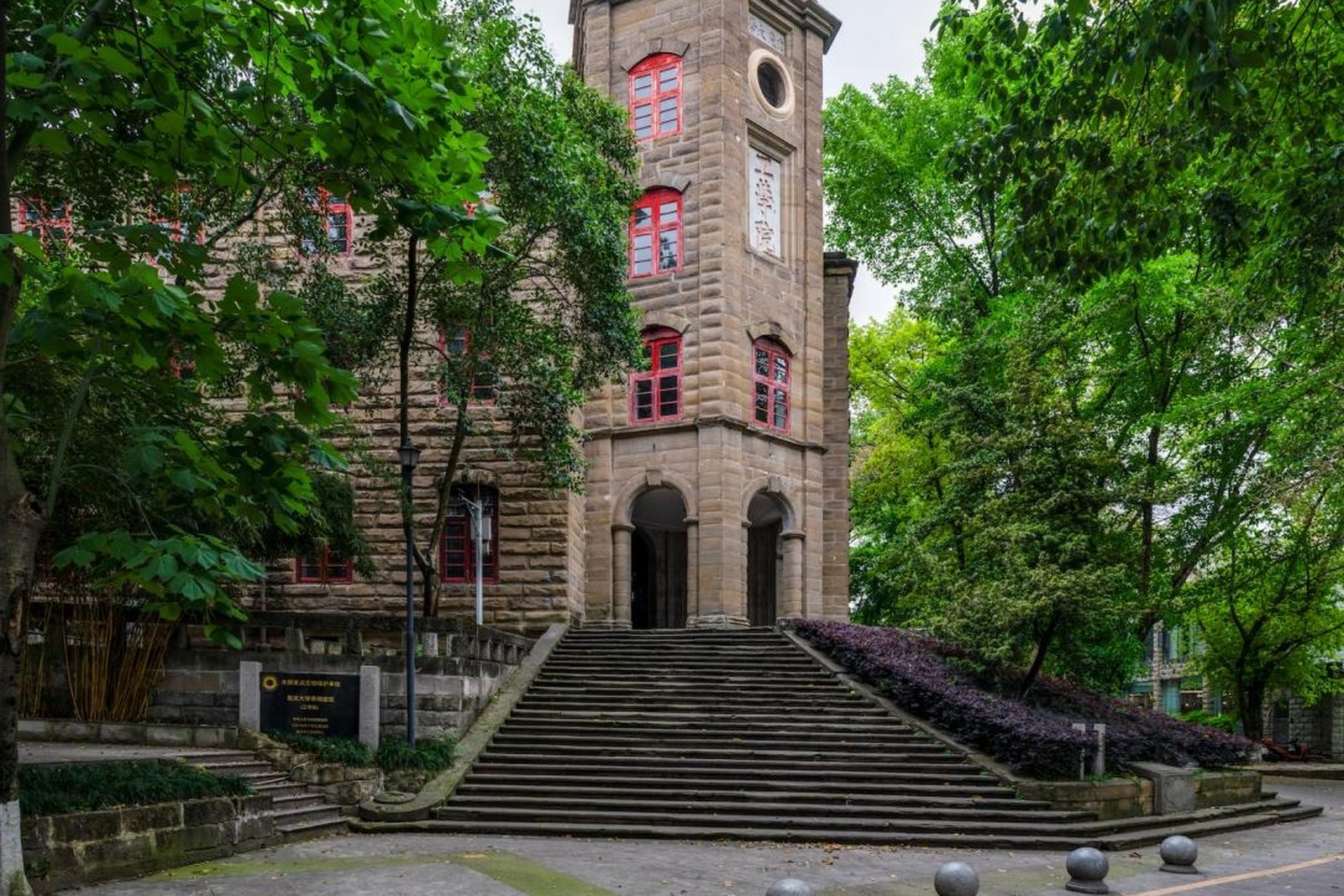
The founding year is the university’s own headline: 1929, the founding vision a complete and profound university – the phrase its own histories quote – on a permanent site kept in Shapingba as the city grew around it. The war years made the campus nationally important: with the capital relocated inland, the university shared teaching and facilities with the relocated Central University, a partnership the heritage record credits with a high ground of modern Chinese education on this slope. Hence the campus’s look – solid, plain, handsome buildings raised between the wars and never replaced – and the state’s move to protect the group whole: in 2019 the State Council listed the Chongqing University early architecture, the Science Hall, the Engineering Hall, Wenzi Zhai and Yinchu Pavilion with their surrounding landscape, among the Major Historical and Cultural Sites protected at the national level.
The buildings deserve the listing one by one. The Science Hall, 理学院 Lǐxuéyuàn, went up between 1930 and 1933 as the first teaching building of any university in Chongqing, designed by 沈懋德 Shěn Màodé Shen Maode on a mountain-shaped 山 plan, grey brick under grey tile with red columns carrying deep verandas – the campus’s most photographed facade. The Engineering Hall, 工学院 Gōngxuéyuàn, was created from 1930 as a stone building in the Western classical manner, its design credited in the heritage record to the engineer given as 莫利生 Mòlìshēng; wartime air raids damaged it, and it was repaired. Wenzi Zhai, 文字斋 Wénzì Zhāi, finished in 1934, is a brick-and-timber study hall with the 工-shaped plan of Bayu building craft. Yinchu Pavilion, 寅初亭 Yínchū Tíng, first raised in March 1941 to honour Ma Yinchu, the economist and business-school dean, gained its glazed roof in 1943, was destroyed in 1960 and rebuilt on the original site in 1981, its plaque inscribed by the general Feng Yuxiang. The group records some 8,250 square metres of floor area, in the heritage record’s figure.
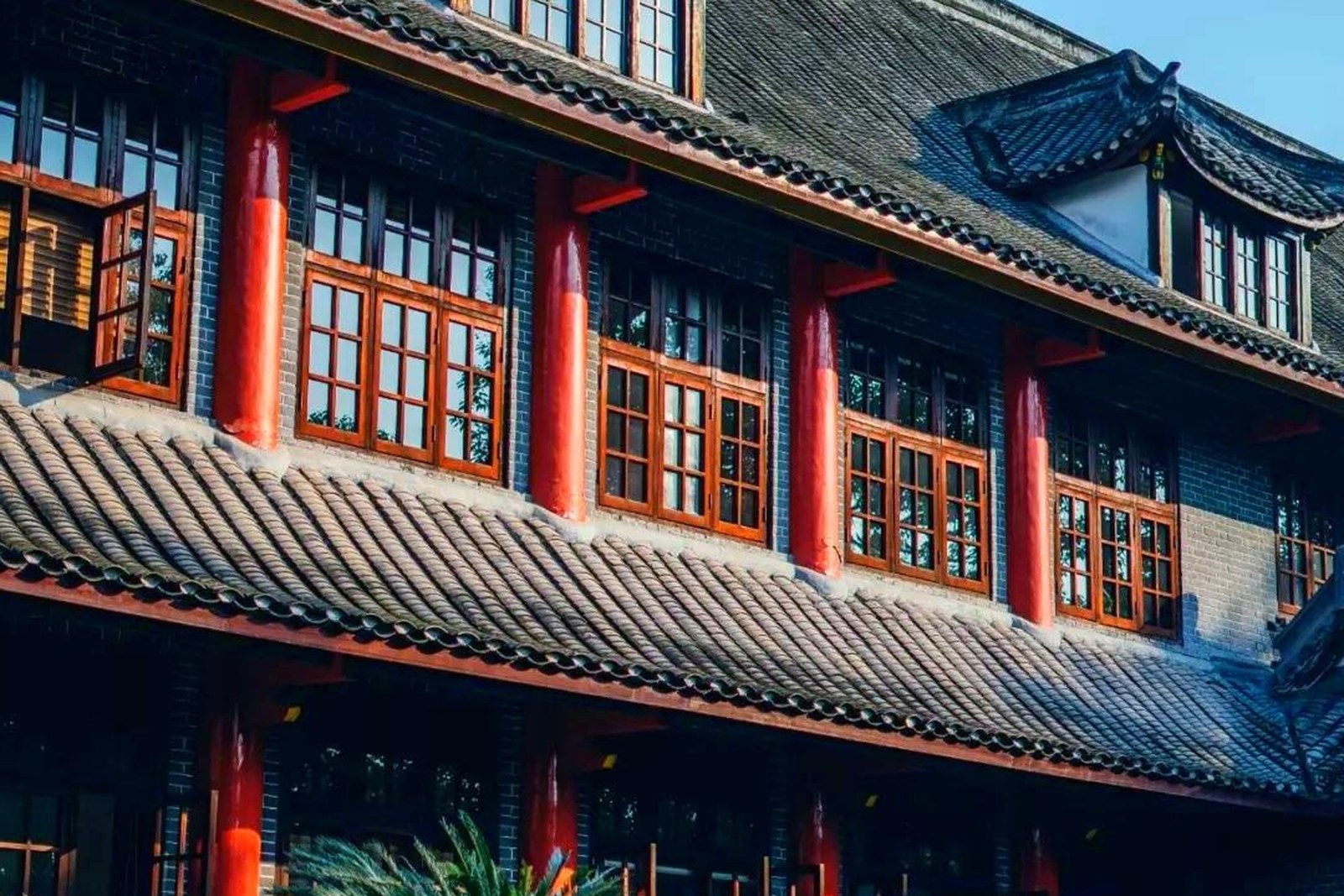
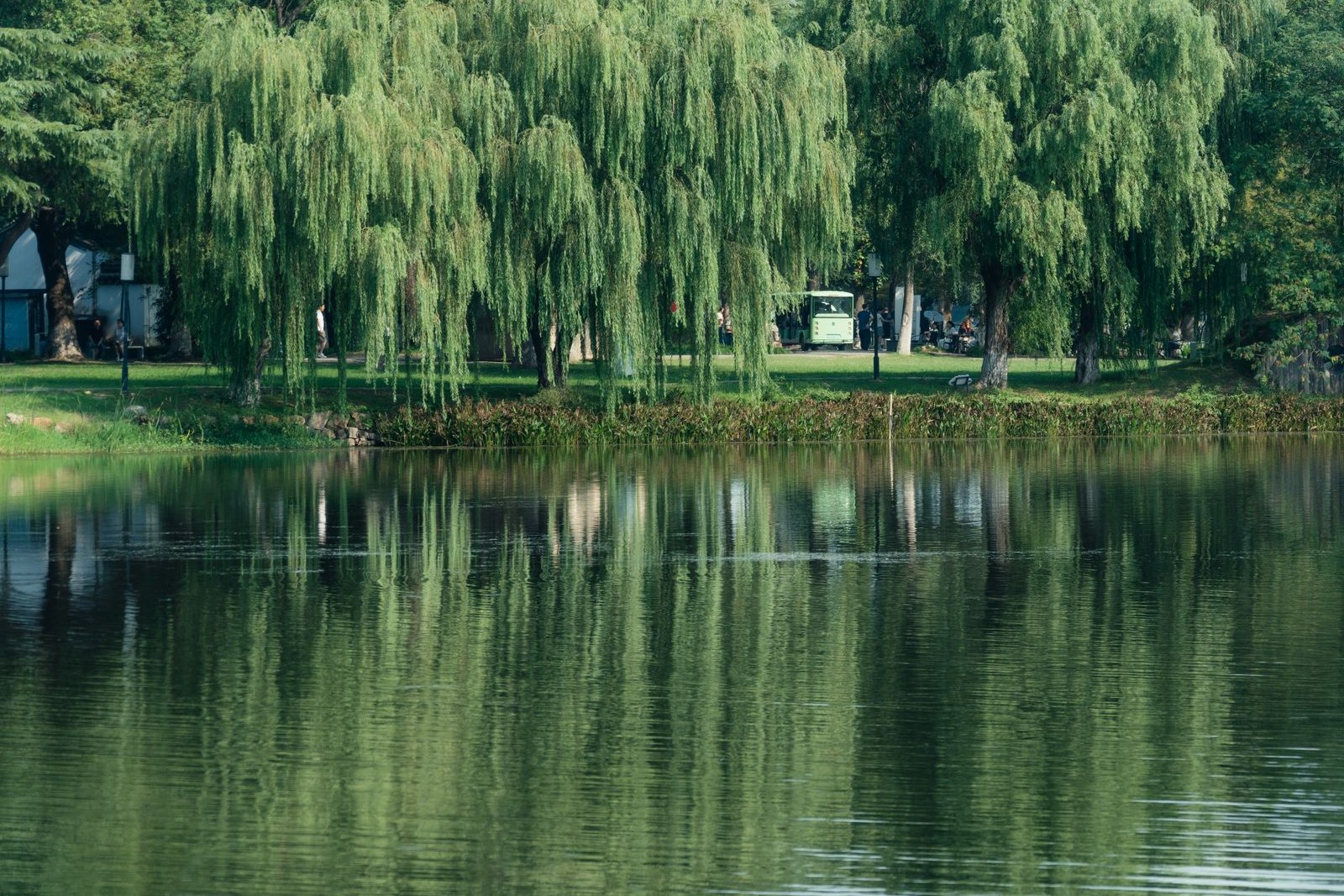
The walk strings the pieces together past the living landmarks: the Bell Tower on the main axis, the Wind-and-Rain Gymnasium housing the university history museum on the campus listing, and 民主湖 Mínzhǔ Hú Democracy Lake, the much-loved pool where students read on the banks in every season – the lake’s founding story survives in competing campus versions, so this page leaves the dating alone. Entry is by reservation, free of charge: visits are registered in advance through the university’s official WeChat account – current visitor guidance points to the 平安重大 Ping’an Zhongda account as the booking entry – with a real-name booking and an ID at the gate, and access in daytime hours for reservation-holders, subject to exam-season and event-day restrictions announced on the same account. Inside, the register is the working campus’s: low voices, kept paths, buildings doing the talking.
Practicalities
Tickets. Campus visits are free of charge, but they are not walk-in: entry is by real-name reservation made in advance through the university’s official WeChat account, current visitor guidance pointing to the 平安重大 Ping’an Zhongda account as the booking entry, and the ID card the booking is made on is the one you bring. As of October 2026, subject to change – check before you go.
Opening hours. No fixed public hours are published for the A Campus, so access runs in daytime hours for reservation-holders, with the university free to adjust admission for exam sessions, examinations and special events; the specific slot and any restrictions are per the current notices on the university’s official WeChat account rather than a printed timetable.
Closing day. There is no fixed closing day: the campus is a working university, so reservations are issued for most days of the year and access can be restricted for university events or exam seasons instead of closing on a set weekday.
Getting there. Metro Loop Line to 重庆大学 Chóngqìng Dàxué Chongqing University Station is the arrival current visitor guidance lists, near the A Campus gate, and any bus or taxi bound for 沙正街 Shāzhèng Jiē Shazheng Street reaches the 1929 gate at No. 174; the porcelain port by the river is a short ride further.
flowcloud would say that the A Campus is the rare national monument that grades its own homework – 1929 brick under a 2019 heritage listing, a lake full of readers ninety years after the halls rose, classrooms that held classes through a war and never emptied – and that the best way to read the district’s education story is to stand in the oldest teaching block and watch it still in use.
Getting there: the historic A Campus of Chongqing University at No. 174 沙正街 Shāzhèng Jiē Shazheng Street, Shapingba District, Chongqing, a municipality of southwest China, a working university whose early architecture – the Science Hall, the Engineering Hall, Wenzi Zhai and Yinchu Pavilion – was listed among the Major Historical and Cultural Sites protected at the national level in 2019. Campus visits are free but reservation-based: register in advance through the university’s official WeChat account – current guidance points to the 平安重大 Ping’an Zhongda account as the booking entry, so confirm the channel before setting out – and carry the ID the booking is made on; access runs in daytime hours with no fixed closing day, and event-day and exam-season limits are announced on the same account. Metro Loop Line to Chongqing University Station is the arrival current visitor guidance lists – a single-source route, checked October 2026 – and any bus or taxi bound for Shazheng Street reaches the 1929 gate; the porcelain town by the river is a short ride further (subject to change).