
Where the Cranes Winter: Yancheng’s Red-Crowned Crane Reserve
黄海潮平芦荻秋,鹤鸣一声落滩头 Huánghǎi cháopíng lúdí qiū, hèmíng yī shēng luò tāntóu – The Yellow Sea tide runs calm over autumn reeds; one crane call drops onto the flat of the shore
正文:丹顶鹤保护区 Dāndǐnghè Bǎohùqū the red-crowned crane reserve spreads across the coastal wetlands of Sheyang county, where the Yellow Sea meets one of the largest tidal marsh systems on China’s eastern shore. Every November the world’s flagship cranes arrive from the northern wetlands to winter here – hundreds of them standing in the shallows by morning, bugling across the reeds in duets that carry for kilometres. The reserve is the anchor of a national nature reserve that protects the whole coastal belt, and it is arranged for visitors as well: a museum of wetland ecology, observation towers over the marsh, boardwalks that push deep into the reed beds, and a rescue-and-breeding centre where crane chicks are raised for release. This is flat, big-sky country – the kind of landscape where a single bird crossing the horizon feels like an event.
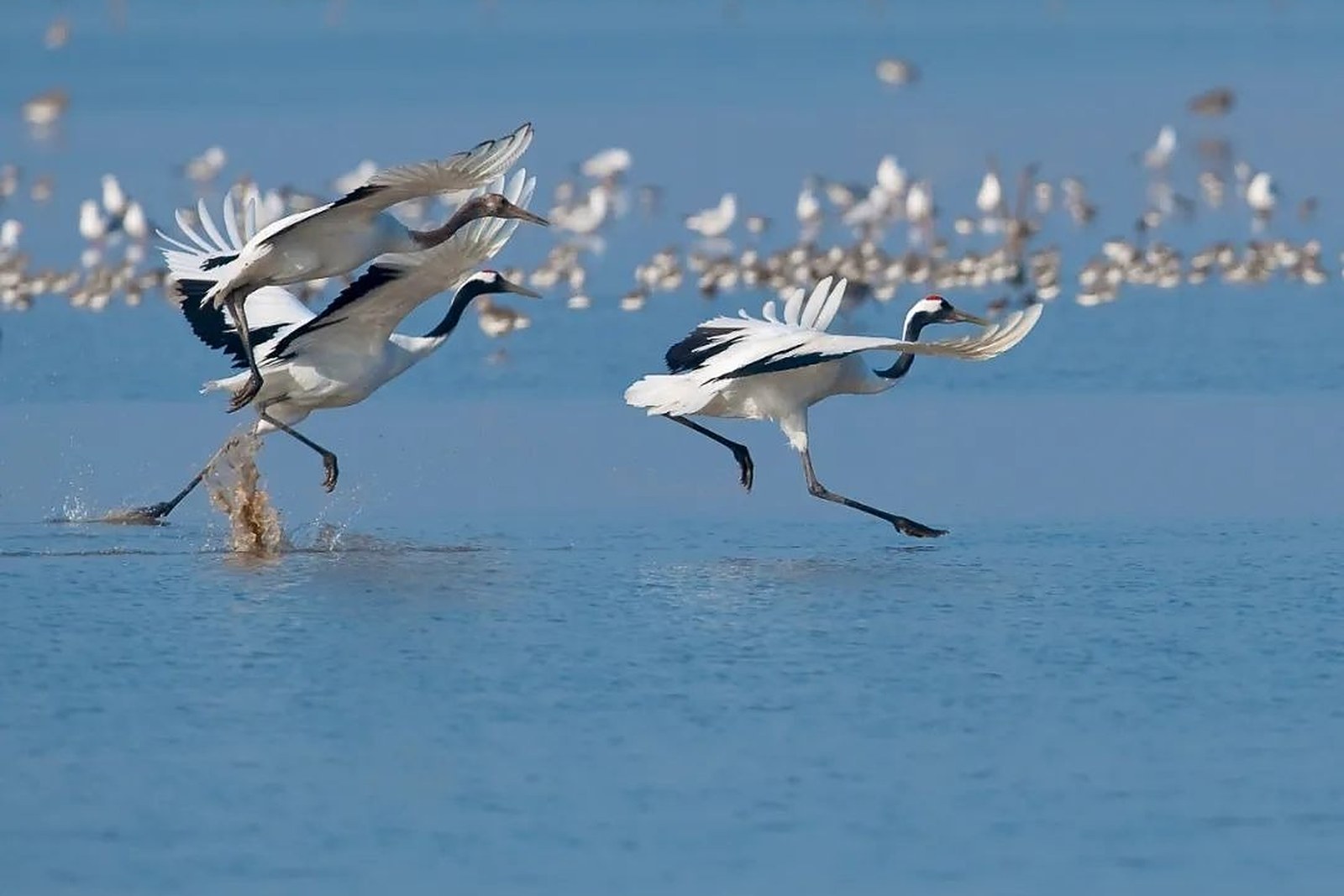
The marsh itself is the first spectacle. Reeds run to the horizon in silver-brown ranks, cut by tidal channels that fill and empty with the tide, and the boardwalks cross them at crane-eye height. In winter the reeds turn gold and thin out, opening long sightlines across the flats; in the colder mornings, frost holds on the seed heads until the sun clears the dike.
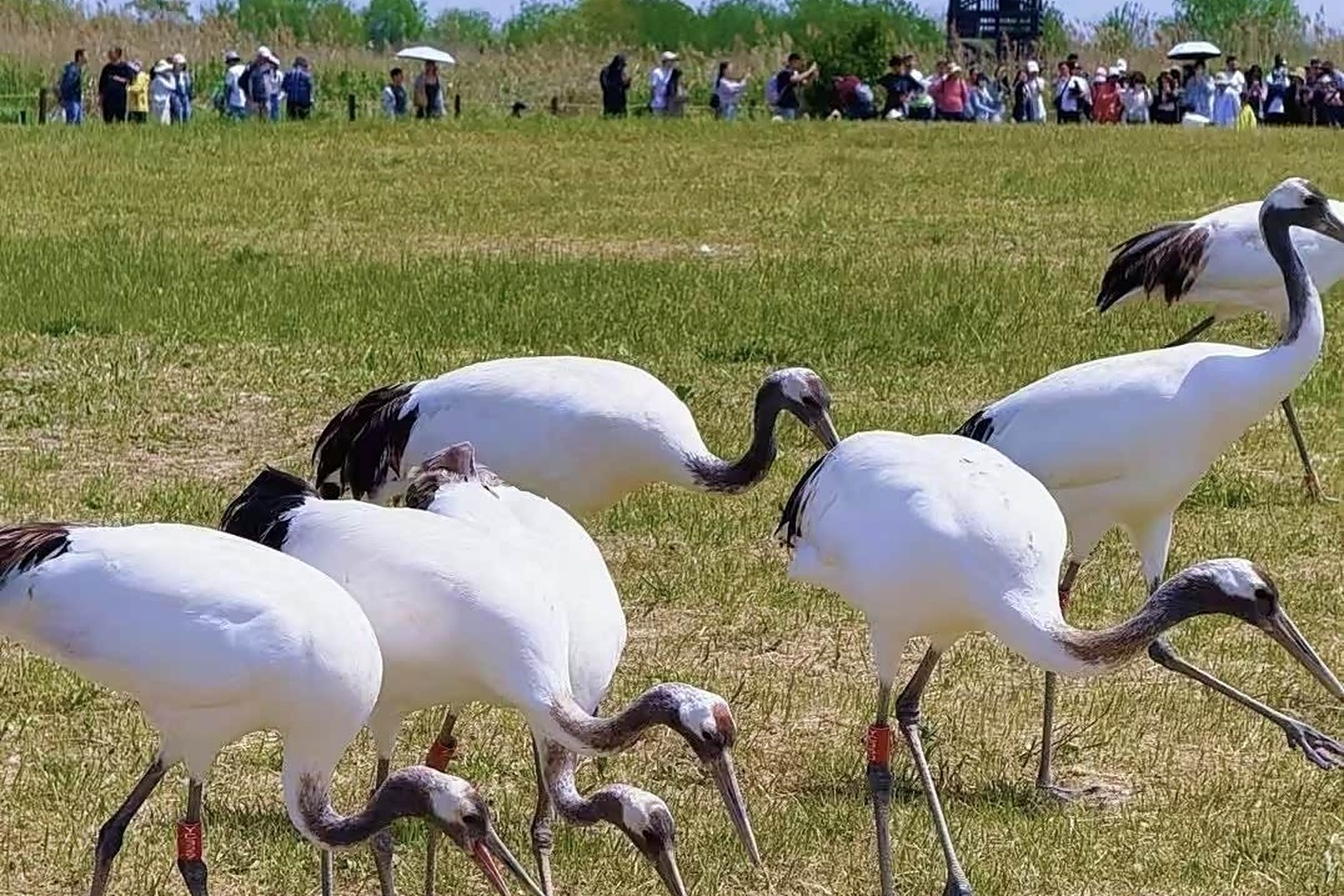
The museum and breeding centre give the visit its spine. Inside are displays on the crane’s migration route, the wetland food web, and the history of the reserve; outside, aviary pens hold the resident cranes – injured birds and captive-bred chicks that cannot be released – close enough to study the red crown and the black secondaries that flash when the wings open. Keepers give morning feeding sessions, and in season there are released flocks that wheel over the marsh before settling.
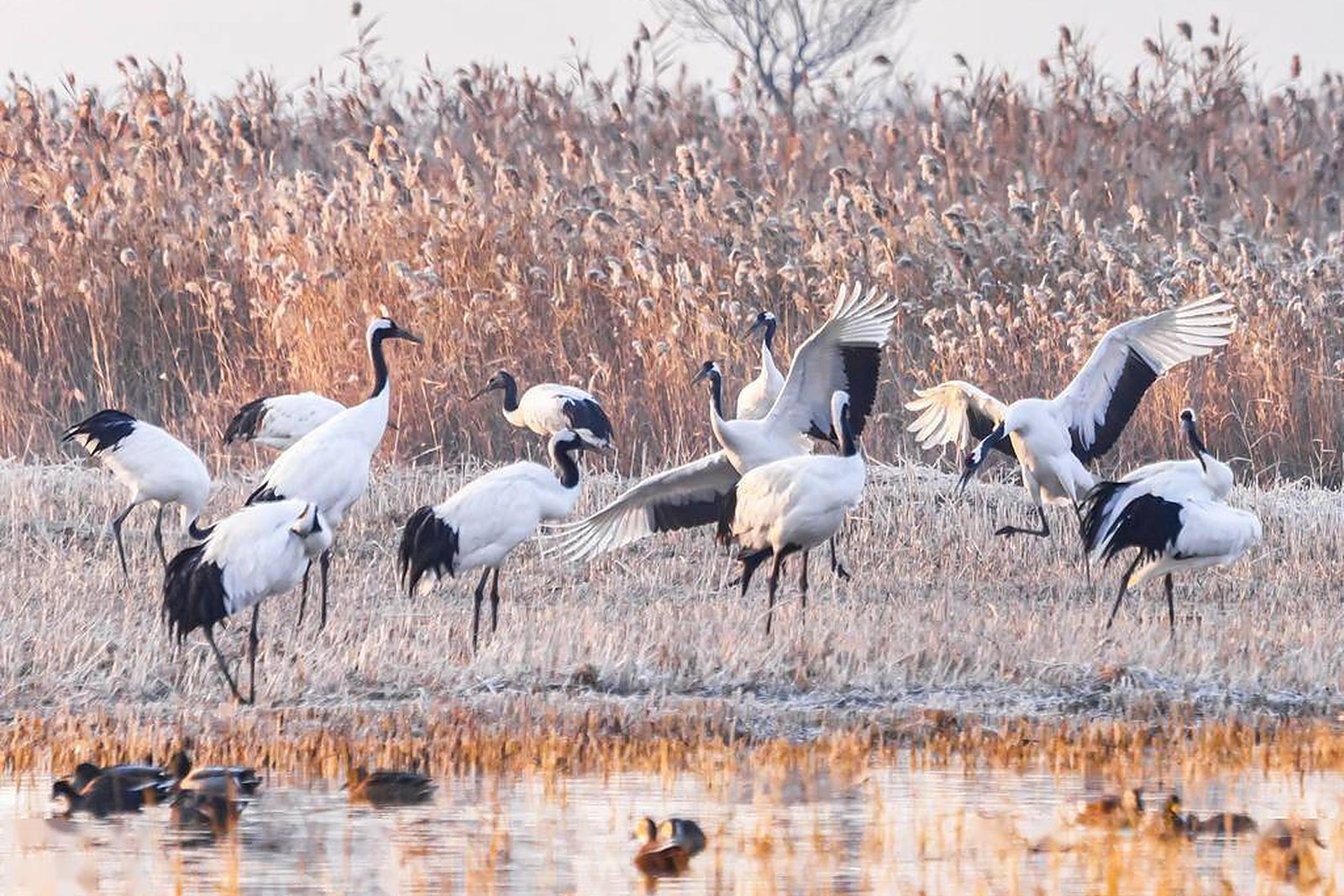
Winter is the whole point. From December through February the wild flocks feed on the tidal flats and roost in the shallows, and the reserve’s observation points fill before dawn with telescopes and long lenses. Dress heavier than seems reasonable – the sea wind funnels straight down the coast – and give the marsh a full morning: the birds move with the tide, and the best hour is usually the first one after sunrise.
Practicalities
Beyond the marsh, the same 盐城市 Yánchéng Shì Yancheng City keeps more places worth the detour: 大丰麋鹿保护区 Dàfēng Mílù Bǎohùqū the elk reserve for the reintroduced deer herds, 条子泥 Tiáozǐní Tiaozini for the tide-drawn flats, 新四军纪念馆 Xīnsìjūn Jìniànguǎn the N4A Memorial for the city’s history, or 荷兰花海 Hélán Huāhǎi Holland Flower Sea for the spring tulips – four more doors into the same 盐城市 Yánchéng Shì Yancheng City. Once the cranes have flown, our Yancheng food map fills the evening.
Practicalities
Words and Names
flowcloud would say the reserve is Yancheng at its most patient: reeds, tide, and a bird that spends its winter exactly where the land runs out. All checked November 2026.
Getting there: The reserve sits on the coastal dike roughly an hour’s drive southeast of Yancheng city – self-drive is easiest, though seasonal shuttles run from the city in winter crane season; the visit is flat boardwalk walking, and morning light plus high-tide hours give the best sightings. Pair it with the elk reserve to the south for a full coast day. All checked November 2026.