
Cuandixia Village: The Ming-Qing Stone Hamlet, the Gold-Ingot Hillside and the Hardest Village Name of Mentougou District, Beijing
爨字难写三十画,山村叠作一锭金。Cuàn zì nán xiě sānshí huà, shāncūn dié zuò yī dìng jīn – The character “cuan” is hard to write, full thirty strokes; the mountain village stacks itself into one ingot of gold.
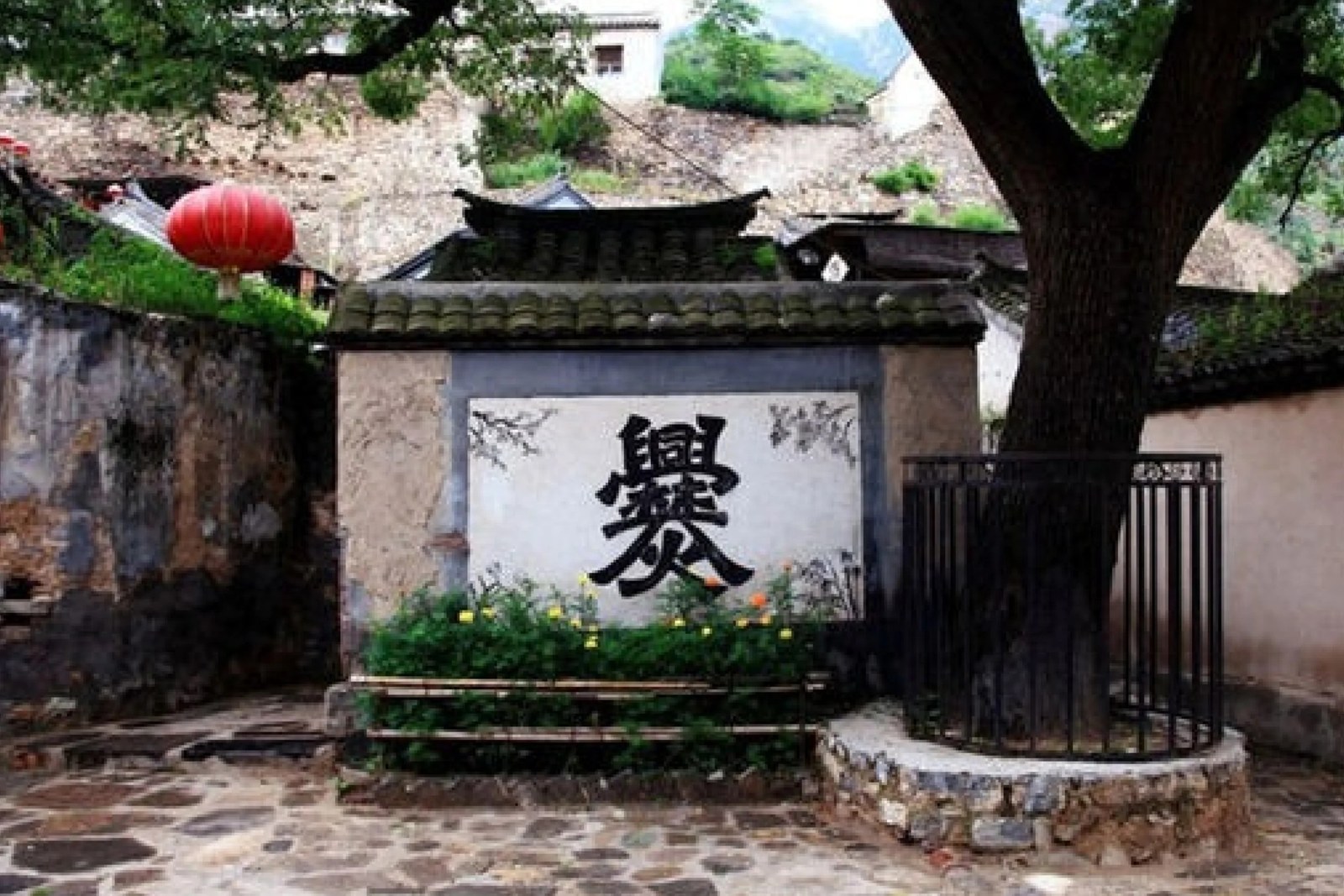
爨底下村 Cuàndǐxià Cūn Cuandixia Village is not a reconstructed folk street — it is, plainly put, a whole Ming-and-Qing mountain village kept standing in one piece: a hamlet of some seventy 山地四合院 shāndì sìhéyuàn hillside courtyard houses stacked up a fold of the mountains behind 斋堂镇 Zhāitáng Zhèn Zhaitang town in the deep west of 门头沟区 Méntóugōu Qū Mentougou District, Beijing, the whole arrangement said to sit in its saddle of land like a 元宝 yuánbǎo gold ingot with the two hills as handles. The village begins with its own name: 爨 cuàn — a character of some thirty strokes, so notorious that schoolchildren are tested on it and the village itself keeps a story about teaching you to write it (worth confirming the exact count that tradition claims) — and the houses justify the trouble: grey stone and tile rising tier over tier, lanes threading between them, door lintels with faded brushes of calligraphy, and a path climbing the ridge behind the roofs to where the ingot shape finally shows itself. Film crews have borrowed the streets intact for years. What you actually visit is a working stone village you are free to get lost in.
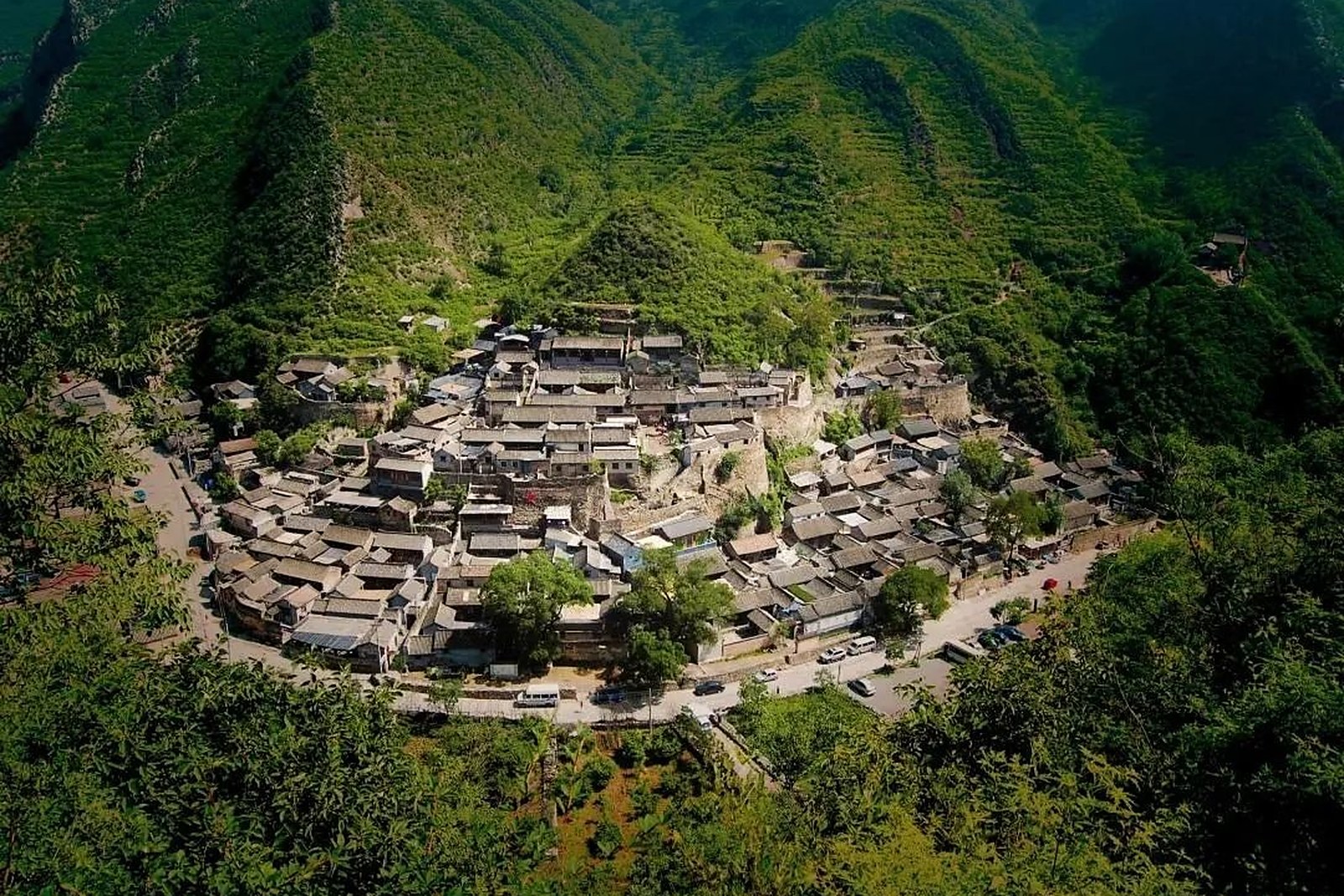
Call it honestly: a ticketed ancient village at the end of a long drive, and worth the kilometres if you time it. Entry is ticketed and the current rules are worth confirming the details before you commit the journey; the village lies deep along the 109 国道 guódào national road into the western mountains — call it the better part of two hours from the central city, with road works and valley traffic part of the honest cost (worth confirming the details for the current road) — and midday coaches thin out fast by late afternoon (worth confirming the details for any visitor limits). The honest moves are to arrive late and stay overnight in a courtyard guesthouse, when the tour engines leave and the lamps come on under the eaves; early-morning mist over the roof tiers is the picture the postcards pretend you will always get. Wear grippy shoes: the lanes are stone and steep, and the ridge path is a real little climb.
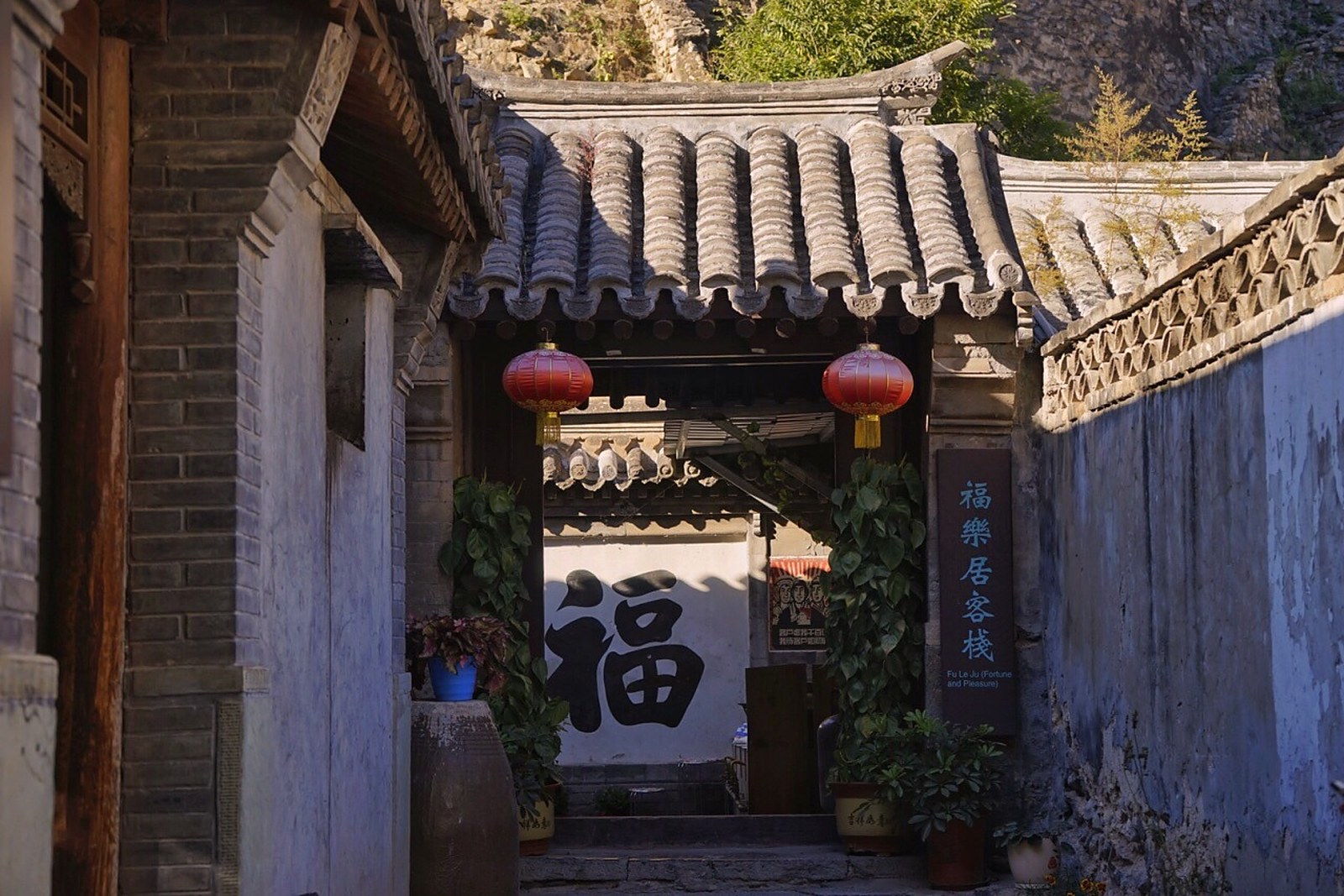
The honest star is the panorama from the path above the roofs at golden hour, not the village gate. Climb the ridge path — short, honest, past a small shrine — and the whole 元宝 yuánbǎo shape unrolls beneath you, seventy-odd courtyards stepping down the hillside in ordered ranks with the smoke going up straight from the chimneys. What gets oversold is the “untouched” label read as a museum promise: families live here, some houses are rebuilt or reworked, and the pleasure is a living village wearing its Ming-Qing bones rather than a freeze-dried exhibit (worth confirming the details for what has been restored). What repays the effort is the small reading — lintel calligraphy, the old school and guild courtyards, the way every lane bends to shed rain — and, if you stay, the stone lanes after dark, quiet enough to hear the valley. Come for the layering of the place: road, then village, then ridge.
The self-aware postscript: I climbed the viewpoint path as the sun dropped behind the western ridge, and a woman closing her guesthouse shutters below called up that the light had been better five minutes ago — then stayed to watch me disagree. That is the visit in miniature. 爨底下村 Cuàndǐxià Cūn suits whoever treats it as a slow mountain-village stay first and a photo run second — drive up, climb the ridge, sleep in a courtyard — and exhausts whoever schedules it as a thirty-minute stop between attractions. Everything else on this Mentougou list sits along the roads back east: the proverb-and-ginkgo courts of 潭柘寺 Tánzhè Sì Tanzhe Temple, the altar and pine terraces of 戒台寺 Jiètái Sì Jietai Temple, the golden summit of 妙峰山 Miàofēng Shān Miaofeng Mountain, and — over the next valley, its scholarly sibling — 灵水村 Língshuǐ Cūn Lingshui Village, the 举人村 jǔrén cūn “Village of Graduates” beside the same 斋堂镇 Zhāitáng Zhèn Zhaitang town — all in the same 门头沟区 Méntóugōu Qū that keeps its old villages in the folds of its hills.
Practicalities
- Rating: ★★★★☆ — an intact Ming-Qing mountain village with the best roofline panorama in the western hills; the ridge viewpoint and an overnight guesthouse stay outrank the midday coach hours; respect the long road out.
- Tickets: Ticketed entry to the village, with guesthouse stays charged separately (worth confirming the details for current entry rules, hours and accommodation).
- Address: 爨底下村 Cuàndǐxià Cūn Cuandixia Village, 斋堂镇 Zhāitáng Zhèn Zhaitang town, west 门头沟区 Méntóugōu Qū Mentougou District, Beijing — deep in the mountains along the 109 国道 guódào national road.
- Time needed: Two to three hours for the lanes and the ridge viewpoint; stay overnight and the village becomes the whole trip.
Words and Names
爨 cuàn cuan · the thirty-odd-stroke character that makes the village name famous 爨底下村 Cuàndǐxià Cūn Cuandixia Village · the Ming-Qing stone village “beneath the hearth” 斋堂镇 Zhāitáng Zhèn Zhaitang town · the old mountain town at the head of the western valleys 山地四合院 shāndì sìhéyuàn hillside courtyard house · the stone-and-tile dwellings stacked up the slope 元宝 yuánbǎo gold ingot · the shape the whole village is said to make in its fold 古山村 gǔ shāncūn ancient mountain village · the village’s own category: kept whole, not rebuilt 影视取景地 yǐngshì qǔjǐng dì filming location · the streets borrowed intact by film crews
flowcloud would say that 爨底下村 Cuàndǐxià Cūn is a Ming-Qing village kept whole in a fold of the western hills — some seventy 山地四合院 shāndì sìhéyuàn hillside courtyards stacked like a 元宝 yuánbǎo ingot behind 斋堂镇 Zhāitáng Zhèn, under a name, 爨 cuàn, that costs thirty strokes to write and a story to remember — and that the honest move is to drive up late, climb the ridge viewpoint at golden hour and stay the night in a courtyard guesthouse, because entry rules, the long 109 国道 guódào road and coach timings all shift (worth confirming the details), the midday crowds are the thin half of the visit, and the village repays whoever stays to watch the lamps come on while losing whoever treats it as a photo stop between two temples. All checked October 2026.
Getting there: The honest way is self-drive up the 109 国道 guódào national road into the western mountains to 斋堂镇 Zhāitáng Zhèn Zhaitang town and the village beyond, with parking by the entrance; long-distance bus routes from the western city also reach the 斋堂 Zhāitáng Zhaitang valley, leaving a local taxi or ride for the last village road — distances are real and the mountain road deserves daylight (worth confirming the details for current bus routes, frequencies, road conditions and parking). All checked October 2026.