
Incense and Linden Trees: Great Compassion Monastery
古刹钟声晨雾里,菩提叶落一庭秋 Gǔchà zhōngshēng chénwù lǐ, pútí yè luò yī tíng qiū – The old monastery’s bell sounds through morning mist; bodhi leaves drop into a courtyard of autumn
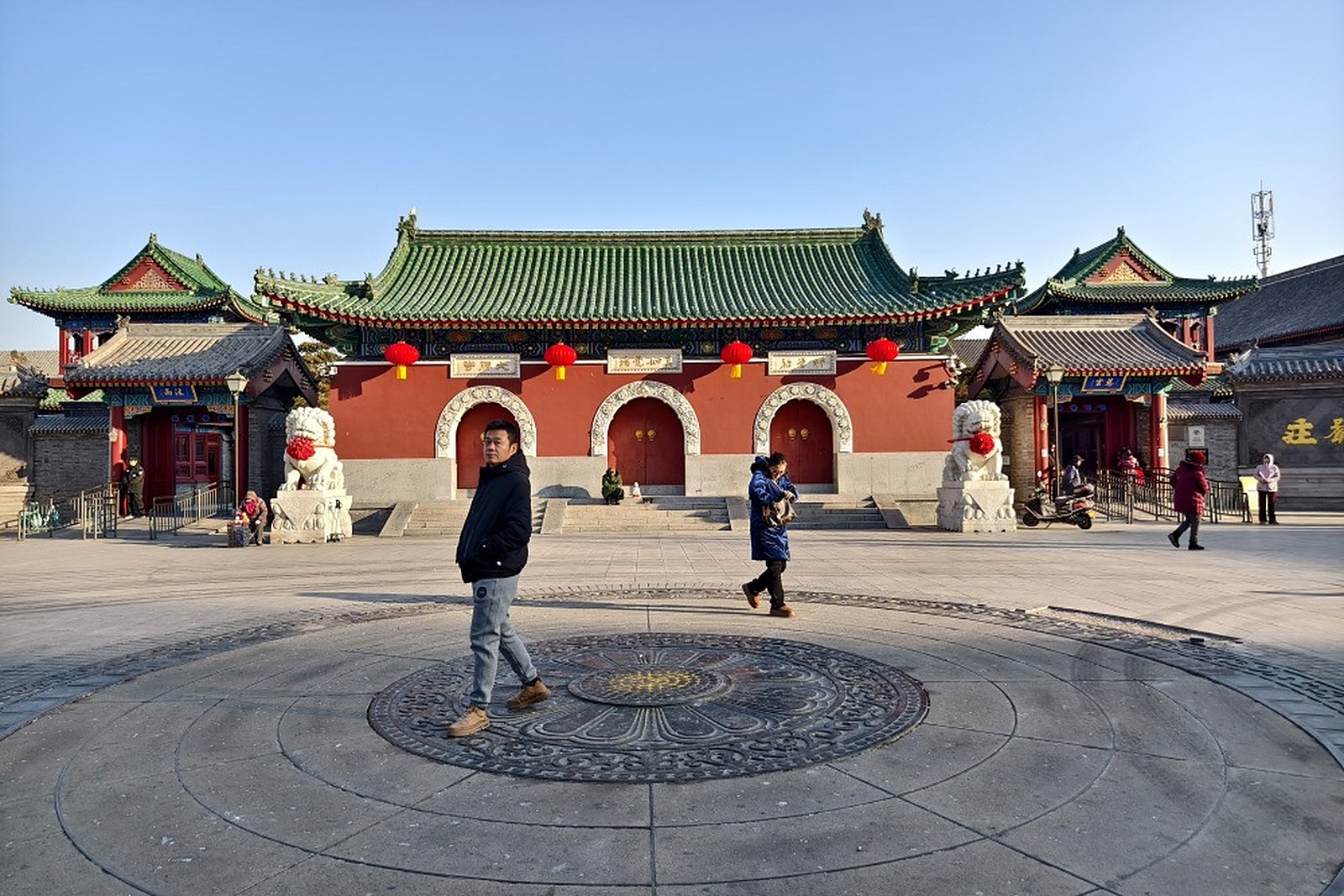
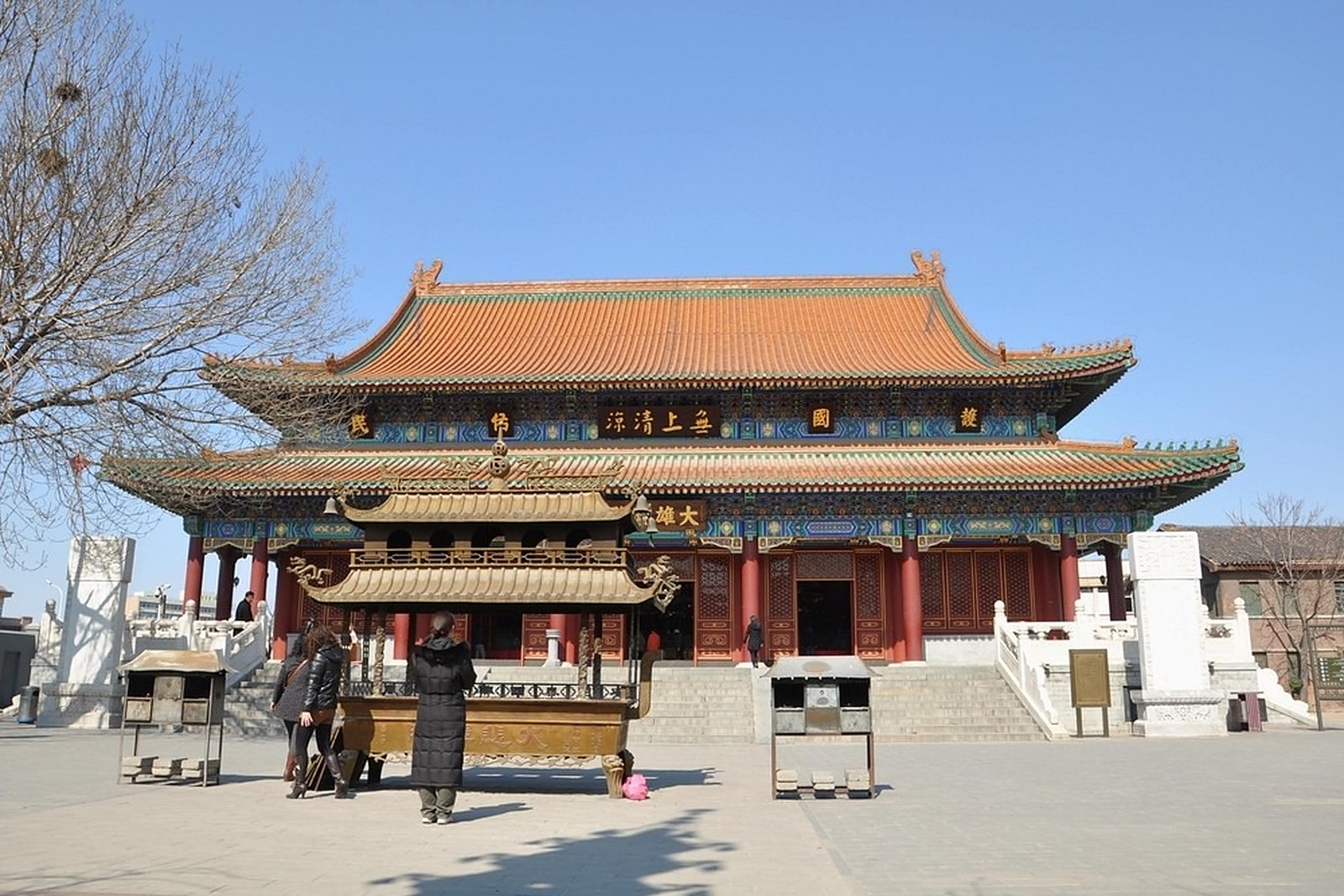
大悲禅院 Dàbēi Chányuàn The Great Compassion Monastery is 天津市河北区 Tiānjīn Shì Héběi Qū Hebei District’s working Buddhist heart – a walled compound of halls, courtyards and linden trees on 天纬路 Tiānwěi Lù, founded in the mid-seventeenth century and rebuilt into the city’s largest active monastery. It is the seat of the Tianjin Buddhist Association, the temple where the city’s families still register their prayers, and the counters beside the incense burner stay busy from first light.
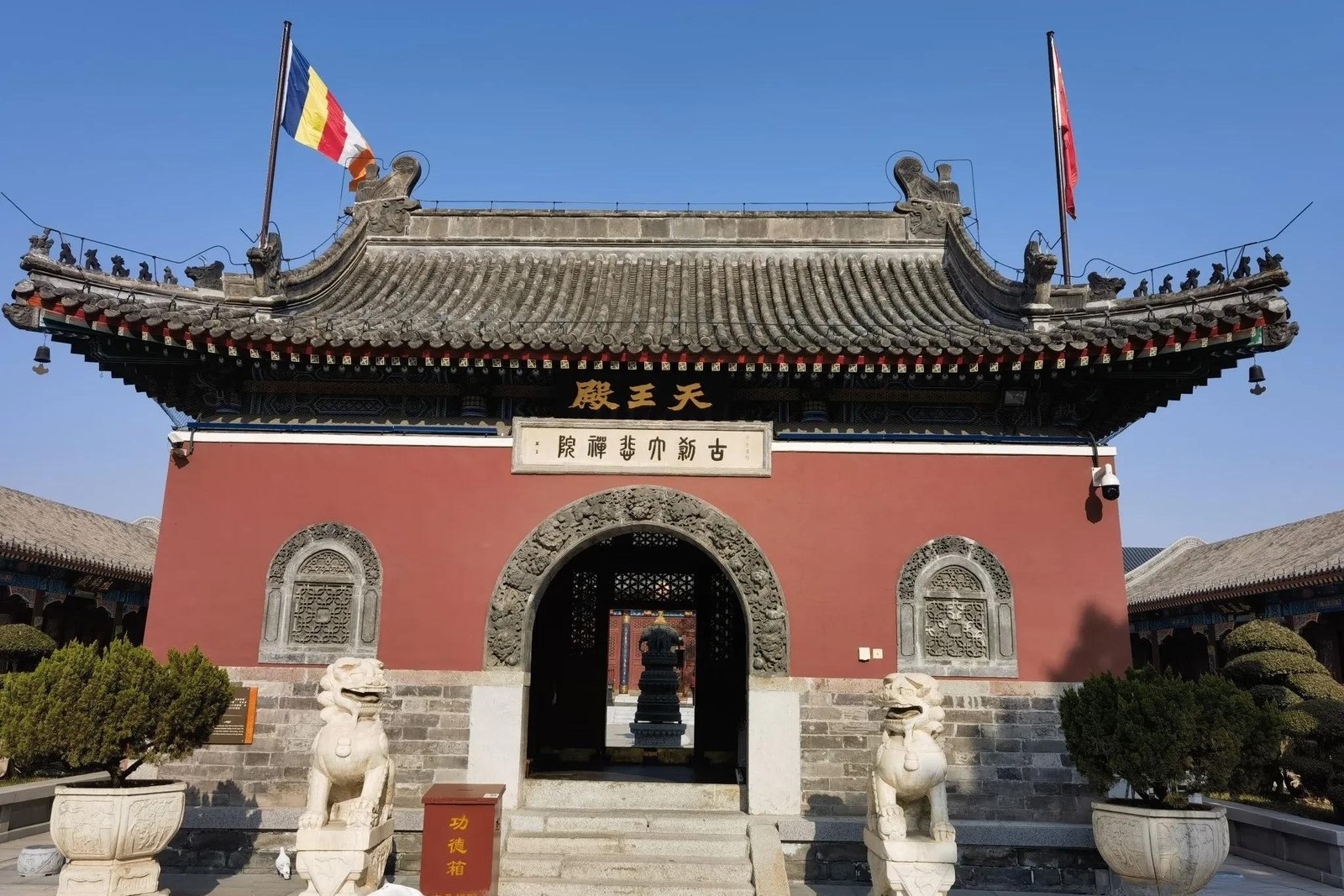
The sequence of courts does the arguing. 天王殿 Tiānwáng Diàn the Hall of Heavenly Kings opens the line with its laughing Buddha and painted guardians, the great hall behind holds the monastery’s gilded compassionate ones, and the courtyard between them fills with linden shade, stone tablets and the low hum of recitation that never quite stops. The 观音 Guānyīn the Bodhisattva of Compassion gives the temple its name – 大悲 dàbēi, the great compassion – and her shrine draws the longest queue.
The monastery keeps a scholar’s corner too. A hall remembers 玄奘 Xuánzàng Xuanzang, the Tang-dynasty pilgrim-translator, whose relic bone was housed here for years before being returned to India; the scripture library and stele courts carry the temple’s literary record, and the temple shop sells prayer beads, sutra prints and the small brass bells that children ring on the way out.
Go early. The monastery opens around nine and the first hour belongs to locals – incense lit in batches, ducks of candles on the altar rail, the bell over the courtyard – before the tour groups arrive mid-morning. The temple fair days around lunar New Year pack the courts; the quiet season is a weekday after the morning recitation, when the lindens keep the courtyard to the pigeons and the broom.
Practicalities
- Entry is a modest ticket (a few yuan) that includes three incense sticks; opening hours roughly 9:00 to 16:30.
- Metro Line 1 or 3 to 天津之眼 Tiānjīn Zhīyǎn area stations, then a short walk north on 天纬路.
- The monastery is active – keep voices low in the halls and photograph only the courtyards, not the altars.
- The 天津之眼 ferris wheel stands across the river, ten minutes east on foot.
Words and Names
大悲禅院 Dàbēi Chányuàn the Great Compassion Monastery; 天王殿 Tiānwáng Diàn the Hall of Heavenly Kings; 玄奘 Xuánzàng Xuanzang, the Tang pilgrim whose relic rested here; 观音 Guānyīn the Bodhisattva of Compassion; 大悲 dàbēi the great compassion, the temple’s namesake. Beyond the monastery, the same 天津市河北区 Tiānjīn Shì Héběi Qū Hebei District keeps more places worth the detour: 意式风情区 Yìshì Fēngqíngqū the Italian Style Town, 望海楼教堂 Wànghǎilóu Jiàotáng the Wanghailou Church, 梁启超纪念馆 Liáng Qǐchāo Jìniànguǎn the Liang Qichao Memorial, or 宁园 Níng Yuán Beining Park – four more doors into the same Hebei District. Once the incense has had its hour, our Hebei food map fills the table.
flowcloud would say the Great Compassion Monastery is the district’s breathing room: a bell that keeps the mornings, lindens that keep the shade, and a name that promises exactly what the courtyard delivers. All checked November 2026.
Getting there: The gate faces Tianwei Road west of the river – Metro Line 1 toward West Station or Line 3 to Zhongshan Road station, then a fifteen-minute walk north. All checked November 2026.