
下关风,上关花,苍山雪,洱海月。Xiàguān fēng, Shàngguān huā, Cāngshān xuě, Érhǎi yuè – Wind at Xiaguan, flowers at Shangguan, snow on Cangshan, moon on Erhai.
大理古城 Dàlǐ Gǔchéng Dali Old Town is the walled square at the centre of everything Dali – a Ming city of about 3 km² on the site of the Nanzhao capital 羊苴咩城 Yángjuémiē Chéng, first enclosed in 1382 (Hongwu 15), laid out on a chessboard of nine streets and eighteen lanes, and named to the first batch of national historic-and-cultural cities in 1982. Entry is free and the town is open around the clock; what a visitor buys is not a gate but a bed inside the wall. Four gates name the compass – 洱海门 Ěrhǎi Mén (east, toward the lake), 苍山门 Cāngshān Mén (west, toward the mountain), 双鹤门 Shuānghè Mén (south), 三塔门 Sāntǎ Mén (north, toward the pagodas) – and 复兴路 Fùxīng Lù runs north-south through the middle while 人民路 Rénmín Lù crosses it east-west. The old town sits at about 2,000 m between Cangshan and Erhai, and its core is a walking zone where cars give way to cobbles. The honest shape is that this is a lived Bai town with a wall around it, not a scenic area with a ticket.
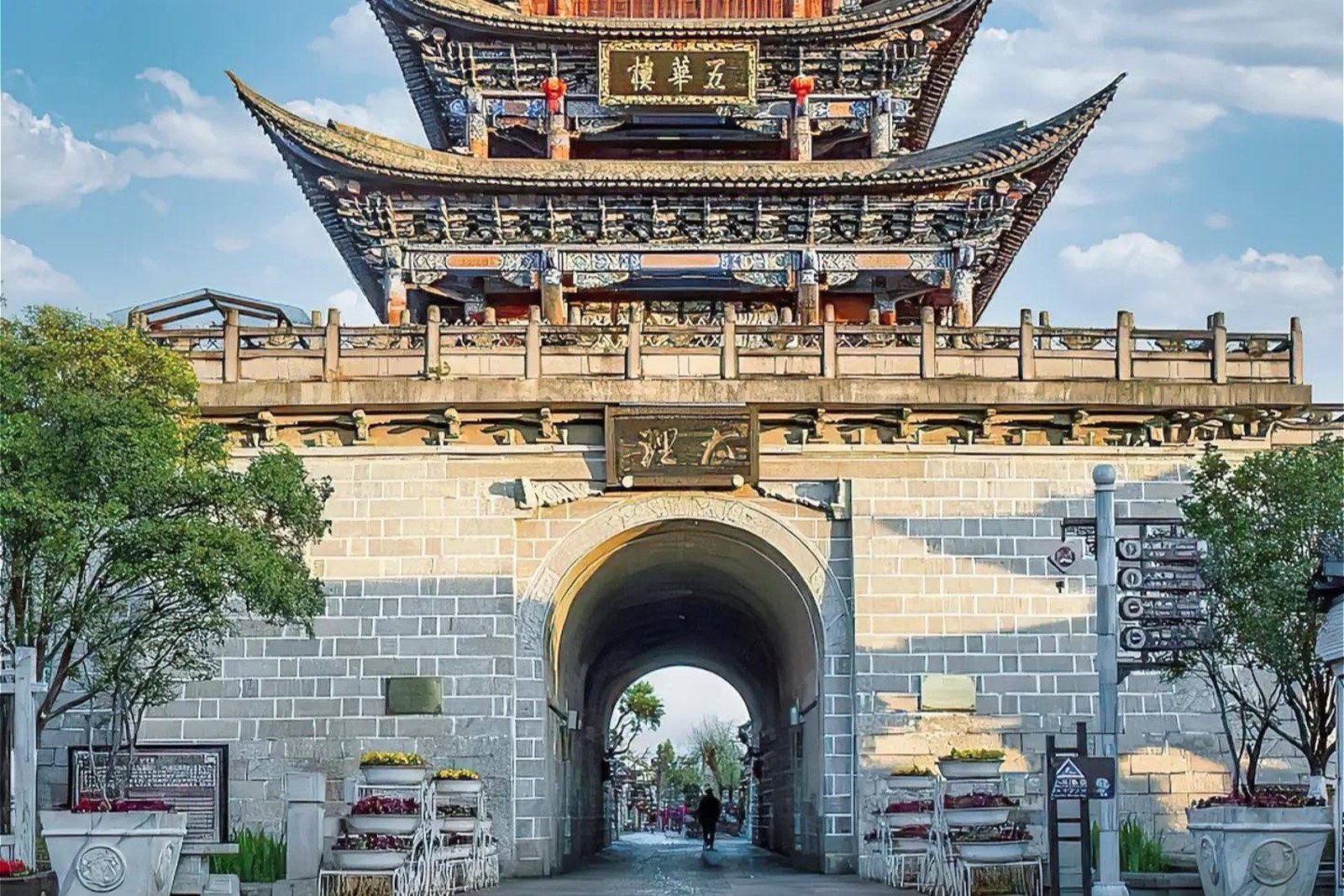
The wall is Ming, the street plan underneath it is not. 羊苴咩城 was the capital of 南诏 Nánzhào and then of 大理国 Dàlǐ Guó, a kingdom that ran from 937 to 1253 under the 段氏 Duànshì Duan clan, and the Ming army that took Yunnan in 1381-82 rebuilt the city as its Dali prefectural seat, which is the rectangle a visitor walks today. The old 五华楼 Wǔhuá Lóu Five-Flower Tower was the Nanzhao guesthouse where, tradition says, Kublai Khan was received; the present tower is a rebuild. What survives of the Dali kingdom is elsewhere – the pagodas up the road, the Bai language in the market – and the town itself is a Ming frame around a Bai life. Foreigners arrived in numbers in the 1980s and 90s – 洋人街 Yángrén Jiē Foreigner Street is named for that era – and the town has been a slow-motion artists’ colony since. The comparison with 丽江 Lìjiāng Lijiang is the useful one: Dali is quieter, less rebuilt, and still a county town that happens to be famous.
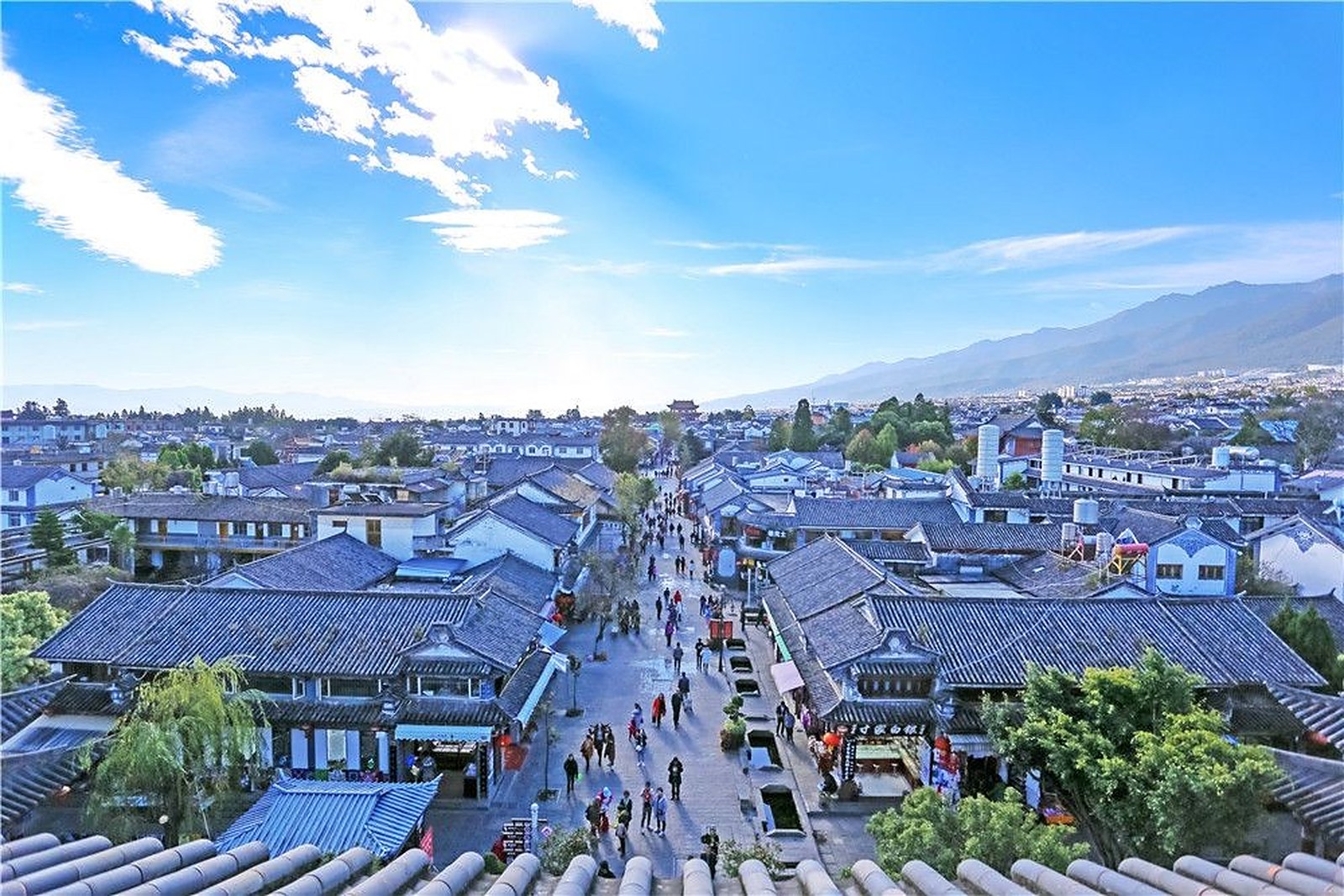
The local pattern is morning-first. The 北门 Běimén north gate market runs from first light, selling produce and 饵块 Ěrkuài rice cakes to residents; 人民路 wakes up slowly with cafes and the 床单厂艺术区 Chuángdānchǎng Yìshùqū Bedsheet Factory art zone; the lanes behind 复兴路 hold the Bai courtyard houses and the small museums. Two paid stops sit inside the wall – the 张家花园 Zhāngjiā Huāyuán Zhang family garden (80 yuan, 08:00-18:00) and the 文庙 Wénmiào Confucian temple – but the town’s value is the walking. Ask about 电暖 diànnuǎn heating if you come between November and March: there is no central heating, a Bai courtyard room is a cold room, and the small museums inside the wall keep their own daytime hours.
Practicalities
Tickets: Free entry, and that is the standing offer rather than a gap: 大理古城 Dàlǐ Gǔchéng Dali Old Town is a free, open national historic-and-cultural city (first batch, State Council, 1982), not a ticketed 景区, and no national scenic grade is published for it. The sights inside the wall charge separately: the 张家花园 Zhāngjiā Huāyuán Zhang family garden runs 80 yuan adult (08:00-18:00, last entry 17:30), while the 文庙 Wénmiào Confucian temple and the small museums keep small, variable charges – ask at the door. The honest shape is that the wall asks nothing at the gate, and what a visitor pays for is a choice, not an entrance.
Opening hours: Open around the clock – the streets have no gate to shut – and the only clocks that matter belong to the sights inside: the 张家花园 Zhāngjiā Huāyuán Zhang family garden keeps 08:00-18:00 with last entry at 17:30, and the 文庙 Wénmiào and the small museums run daytime hours that vary hall by hall, so check before you walk over. The practical split is the day’s rhythm rather than a published timetable: the 北门 Běimén market runs from first light, and the quiet windows on 复兴路 Fùxīng Lù are early morning and after the evening meal.
Closing day: None published, and the reason is the town’s model rather than an editorial silence: a free street town with no weekly rest named, open every day the light allows. The one weekly rhythm in the neighbourhood belongs to the temple halls and small museums inside the wall, which keep their own Mondays – the honest caveat is to assume nothing for those and ask locally.
Getting there: 大理古城 Dàlǐ Gǔchéng Dali Old Town, 大理市 Dàlǐ Shì Dali City, 大理白族自治州 Dàlǐ Báizú Zìzhìzhōu, Yunnan – the honest address is a gate name, because the wall has four: 南门 Nánmén (the visitor centre), 洱海门 Ěrhǎi Mén east toward the lake, 苍山门 Cāngshān Mén west toward the mountain, 三塔门 Sāntǎ Mén north toward the pagodas. Give a driver the gate, never “Dali old town”; the core inside is a walking zone where cars give way to cobbles, so park outside the wall. From 大理站 Dàlǐ Zhàn, the railway station in 下关 Xiàguān south of the plain, it is about half an hour by taxi, longer when the coaches are in.
Words and Names
大理古城 Dàlǐ Gǔchéng Dali Old Town · the free Ming wall on the 羊苴咩城 Yángjuémiē Chéng capital site, nine streets and eighteen lanes between two mountains
羊苴咩城 Yángjuémiē Chéng the Nanzhao capital · the city under the wall, seat of 南诏 Nánzhào and then 大理国 Dàlǐ Guó
白族 Báizú the Bai people · the plain’s own people, whose language and courtyard houses the town is still built around
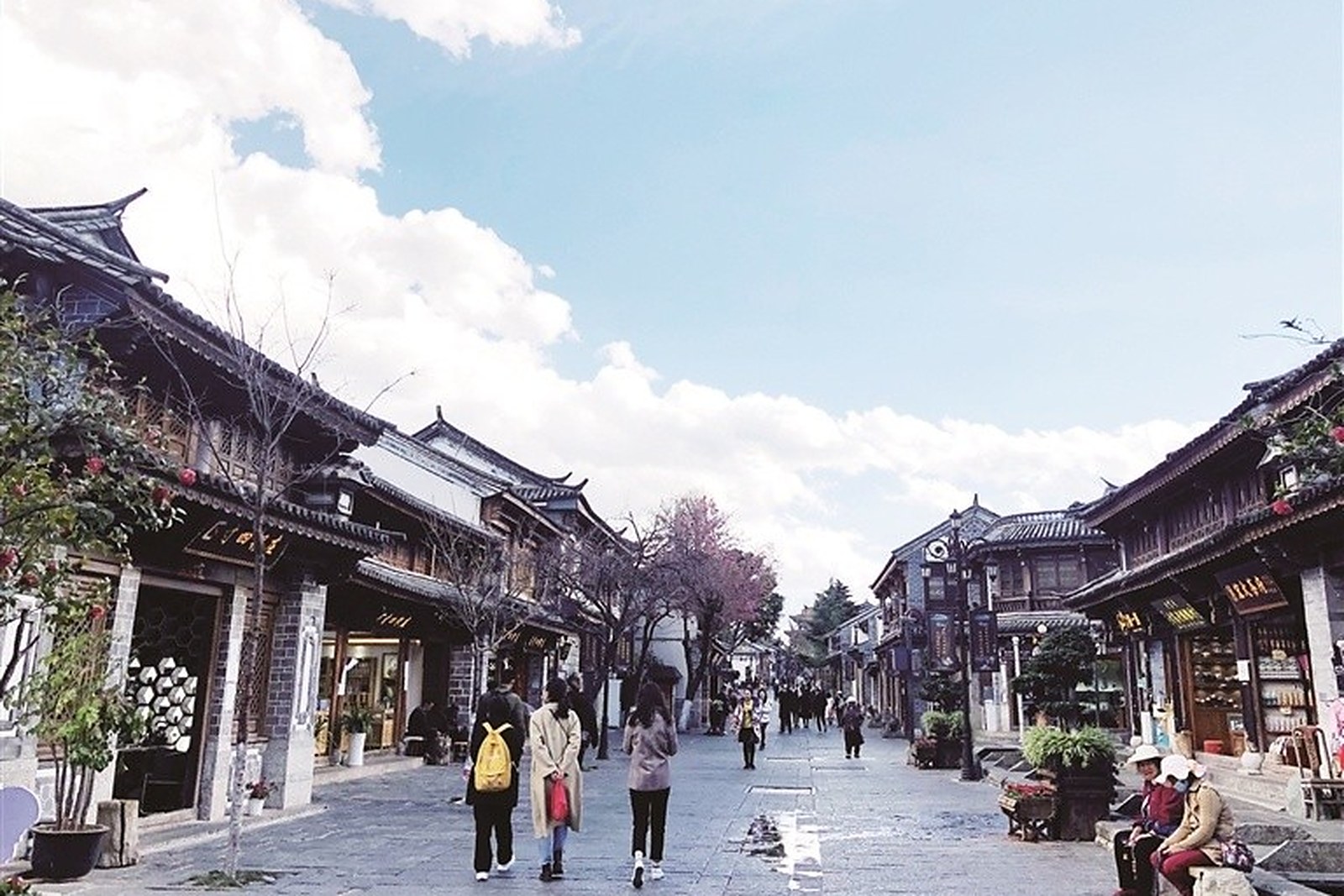
复兴路 Fùxīng Lù the main north-south street · the postcard axis, snack stalls running between the gates
人民路 Rénmín Lù the main east-west street · the slow-waking one, cafes and the 床单厂艺术区 Chuángdānchǎng Yìshùqū Bedsheet Factory art zone
洋人街 Yángrén Jiē Foreigner Street · the lane named for the 1980s-90s foreign influx, still the artists’ corner
风花雪月 Fēnghuāxuěyuè “wind, flower, snow, moon” · the four scenes of Dali, one to each landmark around the plain
床单厂艺术区 Chuángdānchǎng Yìshùqū the Bedsheet Factory art zone · the old bedsheet works turned studios and cafes on 人民路 Rénmín Lù
flowcloud would say that the old town is a free Ming wall around a Bai city – about 3 km², nine streets and eighteen lanes, gates named for the lake, the mountain and the pagodas – and that the honest move is to sleep inside it for two nights and walk 复兴路 Fùxīng Lù once but 人民路 Rénmín Lù twice, because the south gate is the postcard and the back lanes are the town. All checked October 2026.