
The Pagoda on Shugang: Daming Temple and the Monk Who Sailed to Japan
栖灵塔影俯江淮,一棹东渡志不改 Qīlíng tǎyǐng fǔ Jiānghuái, yī zhào dōudù zhì bù gǎi – The Qiling Pagoda’s shadow looks over the rivers and lakes; one boat sailed east and the will never turned
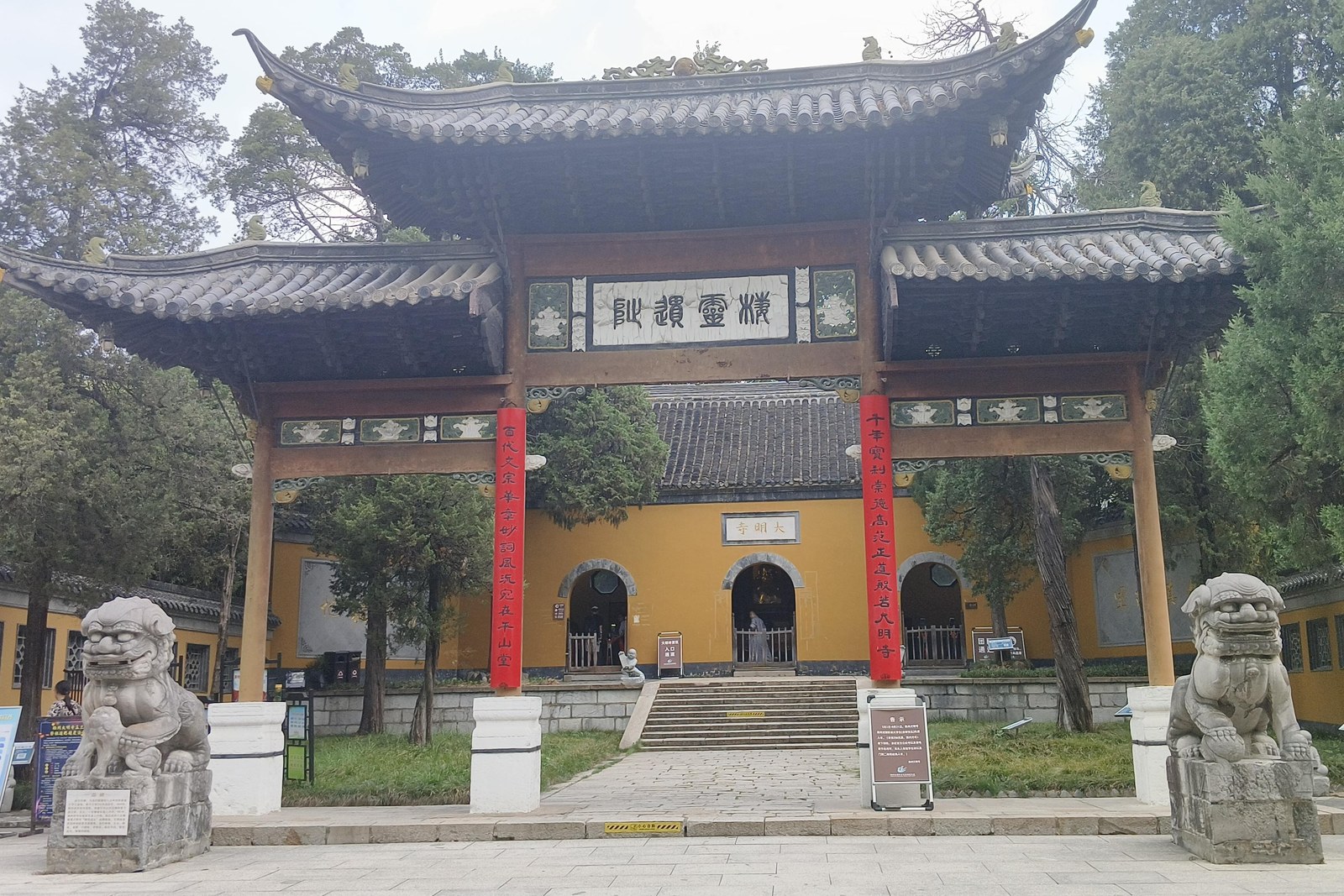
正文:大明寺 Dàmíng Sì Daming Temple crowns Shugang hill at the north end of Slender West Lake, and it carries a fifteen-century resume: founded in the Liu Song dynasty, renamed and rebuilt across the Tang, Qing and modern eras, and known to the world as the home temple of Jianzhu – Ganjin – the monk who took six tries and his eyesight to carry Buddhism, medicine and architecture to Japan in the eighth century. The grounds stack their own skyline: the Tang-style Qiling Pagoda rebuilt in 1973 over the original site, the Memorial Hall of Jianzhu in Japanese-influenced timber, gardens of bonsai and rockery, and the temple halls where incense has hardly paused since the year 457.
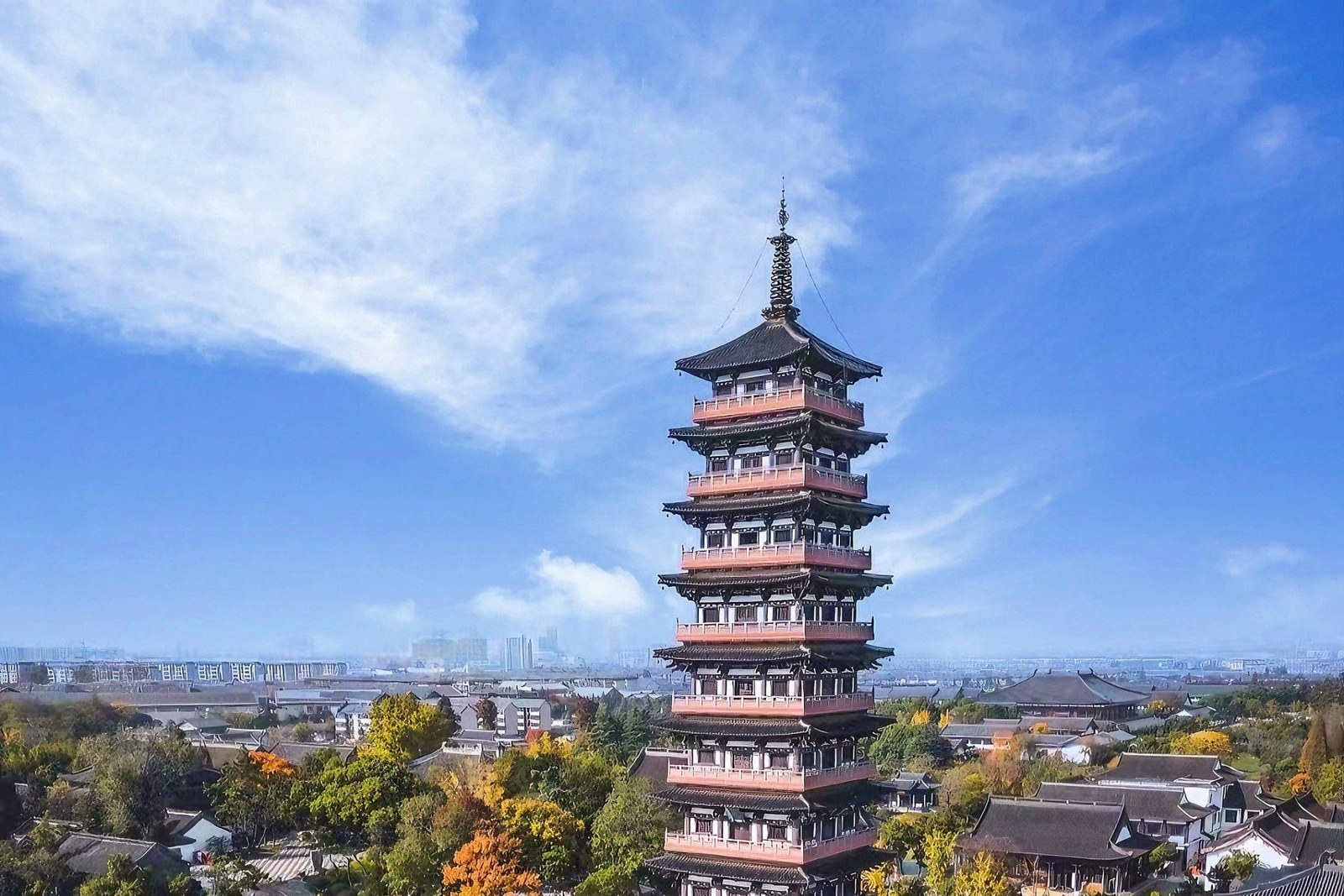
The Qiling Pagoda leads the view. Nine storeys of red columns and grey eaves, it rises from the temple’s central axis and gives the best vantage in Yangzhou – the lake and city unroll southward from the top balcony. Climbers pass the bell levels and come out under the finial with the whole municipal grid at their feet.
The Jianzhu Memorial Hall is the site’s quiet centre. Built in the 1960s with Japanese collaboration, its timber frame, lanterns and dry-landscape court recall the temple’s Toshodai-ji sibling in Nara, and the exhibits follow the monk’s six crossings – storms, blindness, the eventual arrival, and the statutes he carried. The hall’s calm makes it the stop visitors remember; the stele courts outside record the modern friendship built on one eighth-century voyage.
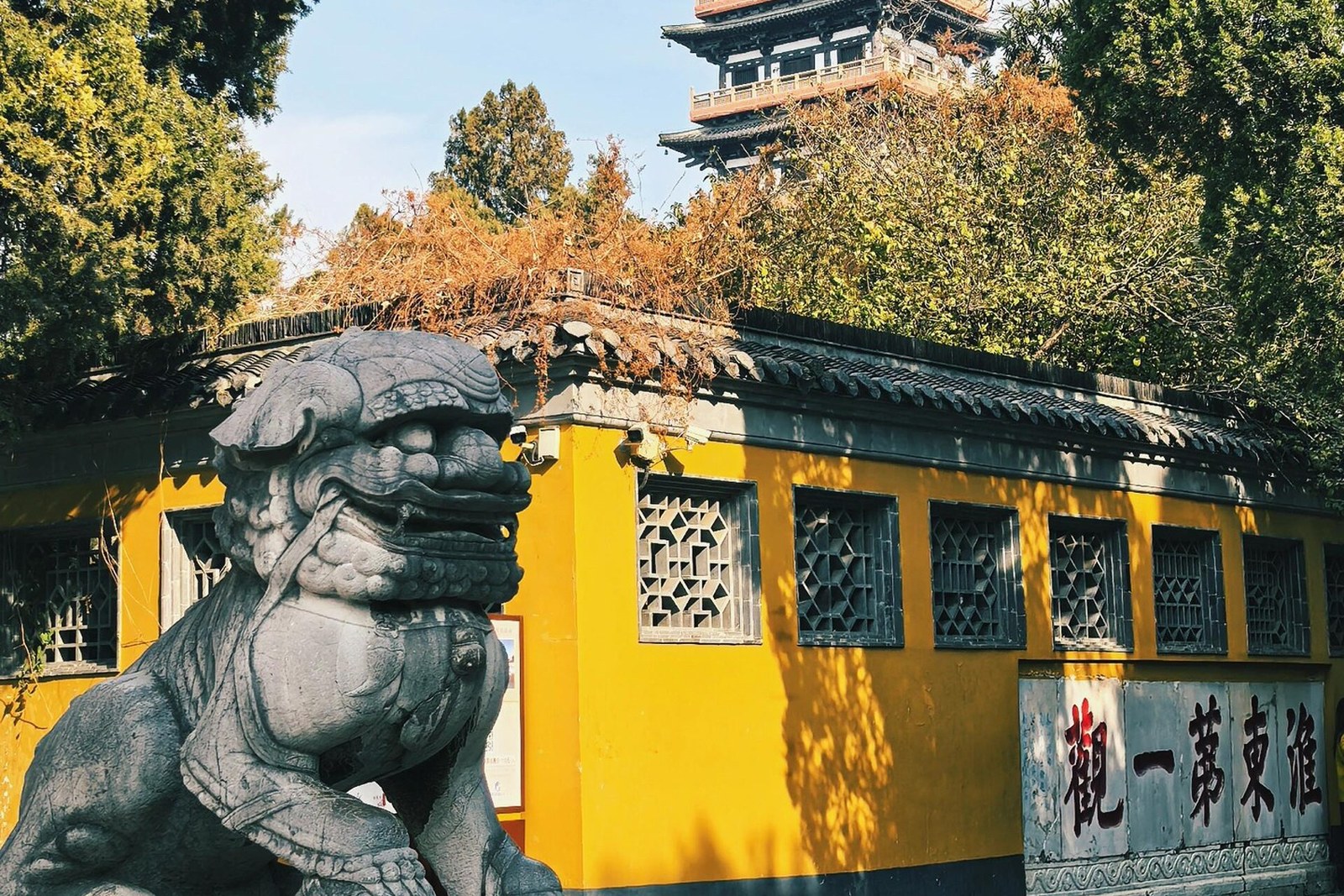
Around the halls the hill keeps its own gardens: the West Garden’s fountain pool and bonsai collection, the ping-shan terrace where Song poets held their famous gatherings, and the stone lanes down toward the lake. Come in autumn when the ginkgoes go yellow against the pagoda’s red, or in spring when the temple’s orchid shows open – the hill is at its best when the city below is between seasons.
Practicalities
Beyond the hill, the same 扬州市 Yángzhōu Shì Yangzhou City keeps more doors on the itinerary: 瘦西湖 Shòu Xīhú Slender West Lake below the gate, 个园 Gè Yuán Ge Garden in the old town, 东关街 Dōngguān Jiē Dongguan Street’s snack lanes, or 何园 Hé Yuán He Garden’s covered corridors – four more doors into the same 扬州市 Yángzhōu Shì Yangzhou City. Once the pagoda is climbed, our Yangzhou food map fills the table.
Practicalities
Words and Names
flowcloud would say Daming Temple keeps Yangzhou’s longest memory: a pagoda rebuilt on Tang ground, and a blind monk who kept sailing east until the sea let him through. All checked November 2026.
Getting there: The temple sits atop Shugang hill at the north end of Slender West Lake – taxis take ten minutes from downtown, entry is ticketed with the pagoda climb extra, and the temple, Jianzhu memorial and gardens fill a calm half-day. Pair it with the lake below for one full itinerary. All checked November 2026.