
The rock is the colour of a struck match. It rises out of the green in cliffs and pillars and rounded humps, banded red and orange and rust, and when the late sun hits a cliff face the whole mountain seems to be glowing from inside, as if the stone had kept some of the heat that made it. I climbed 长老峰 on a hot October afternoon with a bottle of water and no hat, which was a mistake, and stood on the ridge at six o’clock watching the red basin turn the colour of a coal that has just been blown on.
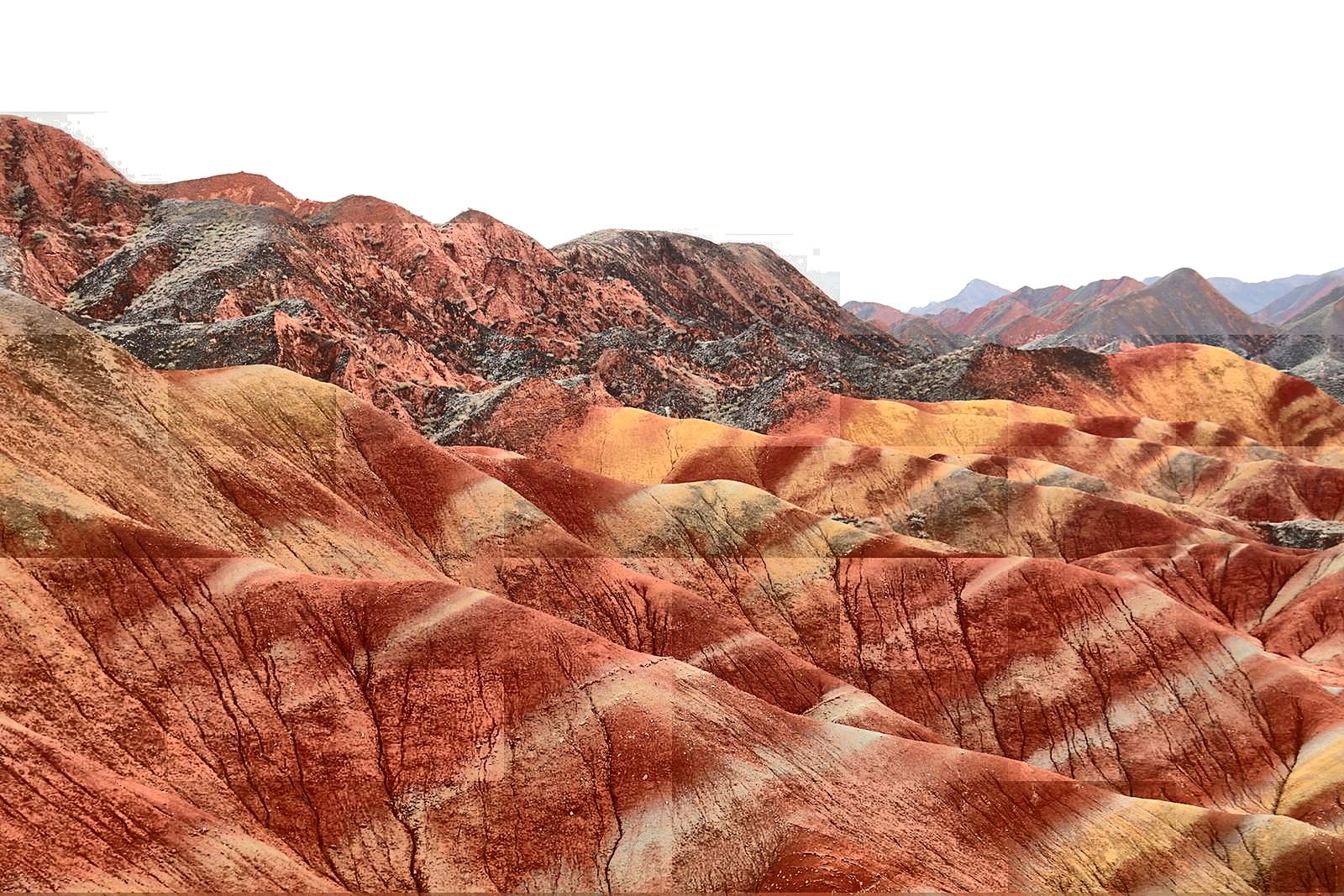
丹霞山 Dānxiá Shān, in 韶关 Sháoguān, northern Guangdong, is the mountain that gave its name to an entire kind of landscape. “Danxia landform” (丹霞地貌) is now the international geological term for this red-bed sandstone scenery of cliffs, towers and gorges — and this is the place it was named after, because this is where the type example stands. In 2010 it was inscribed as part of China Danxia on the UNESCO World Heritage list, and it is also a UNESCO Global Geopark.
The Mountain
The rock began as red sediment laid down in a basin, then was lifted and cracked and cut by water and weather for millions of years until it became what you see: steep cliffs of red sandstone sitting on softer red beds, capped by harder layers so the tops stay flat while the sides fall away. It is a geologist’s textbook, and a very beautiful one.
The site is large and split into distinct areas. 长老峰 (Zhǎnglǎo Fēng, Elder Peak) is the classic climb, with a stepped path and a cableway up to a ridge where the whole red basin opens out in front of you. 阳元山 (Yángyuán Shān) is the other must, home to the huge natural stone pillar of 阳元石 (Yángyuán Shí), which is — how to put this politely — unmistakably phallic, and has made the mountain locally famous for it. Its quieter counterpart, 阴元石 (Yīnyuán Shí), sits on the far side of the valley. 翔龙湖 (Xiánglóng Hú) is the calm lake at the foot, and the 锦江 (Jǐnjiāng) river trip takes you along the cliffs by boat.
What You Actually Do
Most people do it over two days. Day one: up 长老峰 by cable car or on foot, along the ridge, and down in time for sunset on the red cliffs. Day two: 阳元山 and the stone, the lake, and a river cruise on the 锦江 if the water is high enough.
The walking is real but manageable — stone steps, handrails, some steep sections, and a few places where you squeeze between boulders. Give yourself a full day per area if you like to stop and look, which you will. Start early: by ten in the morning the steps have queues, and by one in the afternoon the red rock is radiating heat back at you.
Practicalities
Tickets. The main Danxia Mountain ticket is about ¥100, and it is valid for 48 hours from first entry — so you can do 长老峰 one day and 阳元山 the next on the same ticket, which is very much the point of the pricing. The 锦江 river cruise and the 长老峰 cableway are charged separately (both in the tens of yuan; the cableway is one-way each way, so a return adds up). Discounts for children, students and seniors with valid ID, and free entry for young children and the very elderly.
Do you need to book? Not strictly — you can buy at the gate — but buy online in advance through the scenic area’s official WeChat account or any major Chinese ticketing app, because the ticket window queue at holiday weekends is genuinely long and the 48-hour clock starts at first entry. Advance purchase is typically the same day or the day before; there is no long lead time, but during 国庆 (1–7 October) and Spring Festival the daily visitor cap can sell out. Cableway and cruise tickets are best bought on arrival in cash or by QR code, since capacity depends on the weather.
Opening hours. The main scenic areas run roughly 07:00–18:30, with the cableway operating within that window and last cable up around 17:30. In summer some gates and the internal park roads stay accessible a little longer. There is no closing day — the scenic area is open every day of the year, though the cableway and the river cruise suspend operation in high wind or heavy rain.
Getting there. Danxia Mountain is in 仁化县 (Rénhuà), about 50 km from Shaoguan city.
- By high-speed rail: Guangzhou South to 韶关站 (Shaoguan), about 50 minutes to an hour, then the Danxia tourist bus or a taxi for the 50-minute run to the mountain gate. Some trains stop at 韶关东 instead, which is closer to the mountain.
- By car: about 3 hours from Guangzhou via the 京港澳 expressway, roughly 4 hours from Shenzhen. Park at the main gate and use the internal shuttles.
- Local: shuttle buses run between the mountain’s various gates and the 长老峰 cableway base; they are included in the ticket.
One warning. The site is huge and the areas are far apart — do not assume you can walk from 长老峰 to 阳元山 in an afternoon and still enjoy either. Choose a base near the mountain gate, start early, and carry water; the steps are steep and the Guangdong sun on red rock is hot. Rain turns the stone slick, so watch your footing. And the 阳元石 is exactly what it looks like; nobody at the site pretends otherwise.
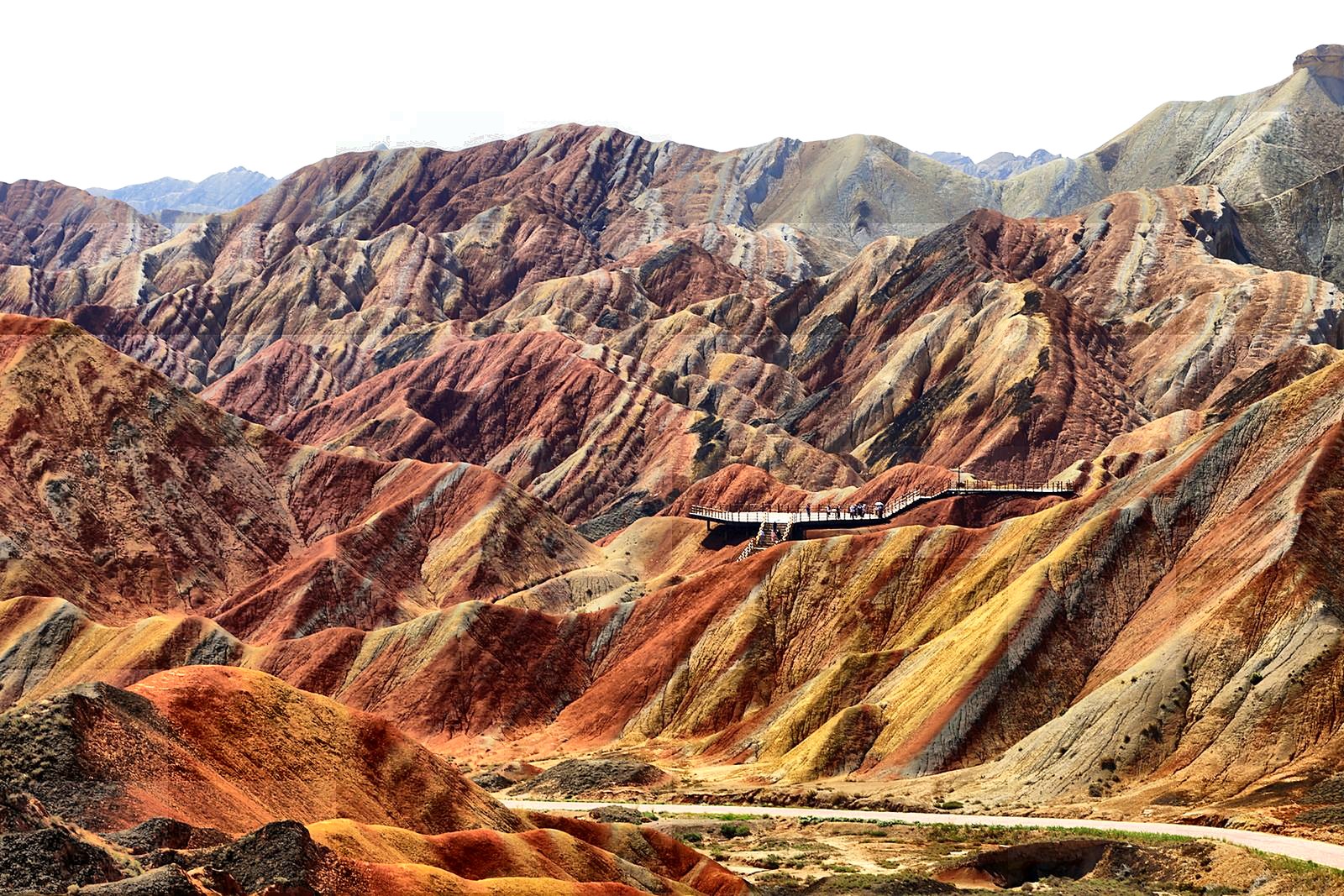
flowcloud would say that rock this red is just the earth showing you its age, and that standing on a cliff a hundred million years in the making is the cheapest way to feel small.
Getting there: 丹霞山 (Danxia Mountain), 仁化县, 韶关 (Shaoguan), Guangdong — UNESCO World Heritage (China Danxia) and Global Geopark. Guangzhou South to 韶关站 about 1 hour by high-speed rail, then about 50 minutes by bus or taxi; about 3 hours by car from Guangzhou. Ticket about ¥100, valid 48 hours, book online ahead at holiday weekends; river cruise and cableway extra. Open roughly 07:00–18:30, no closing day. Plan two days: 长老峰 for the ridge view and the sunset, 阳元山 for 阳元石.