
The name comes first, because the name is a legend: 弹子石 Dànzǐshí, Danzishi, the Birth-of-a-Son Stone, keeps a boulder said to mark the spot where the flood-taming hero 大禹 Dà Yǔ, Yu the Great, was born to a local woman – legend has it, and the legend stays a legend, but the stone gave its name to a working wharf that has watched the two rivers meet for centuries. 长嘉汇弹子石老街 Chángjiāhuì Dànzǐshí Lǎojiē, the Danzishi Old Street at Changjiahui, climbs the riverbank in 南岸区 Nán’àn Qū, Nan’an District, Chongqing being a municipality of southwest China, at the precise point where the Jialing River folds into the Yangtze. The street rises through nine terraced levels – nearly a thousand metres of main road climbing some eighty metres of height difference – from the working river at the bottom to the confluence panorama at the top, and it reopened on 1 June 2018 as the south bank’s port-culture quarter: the wharf reborn, the old place names written back into the steps.
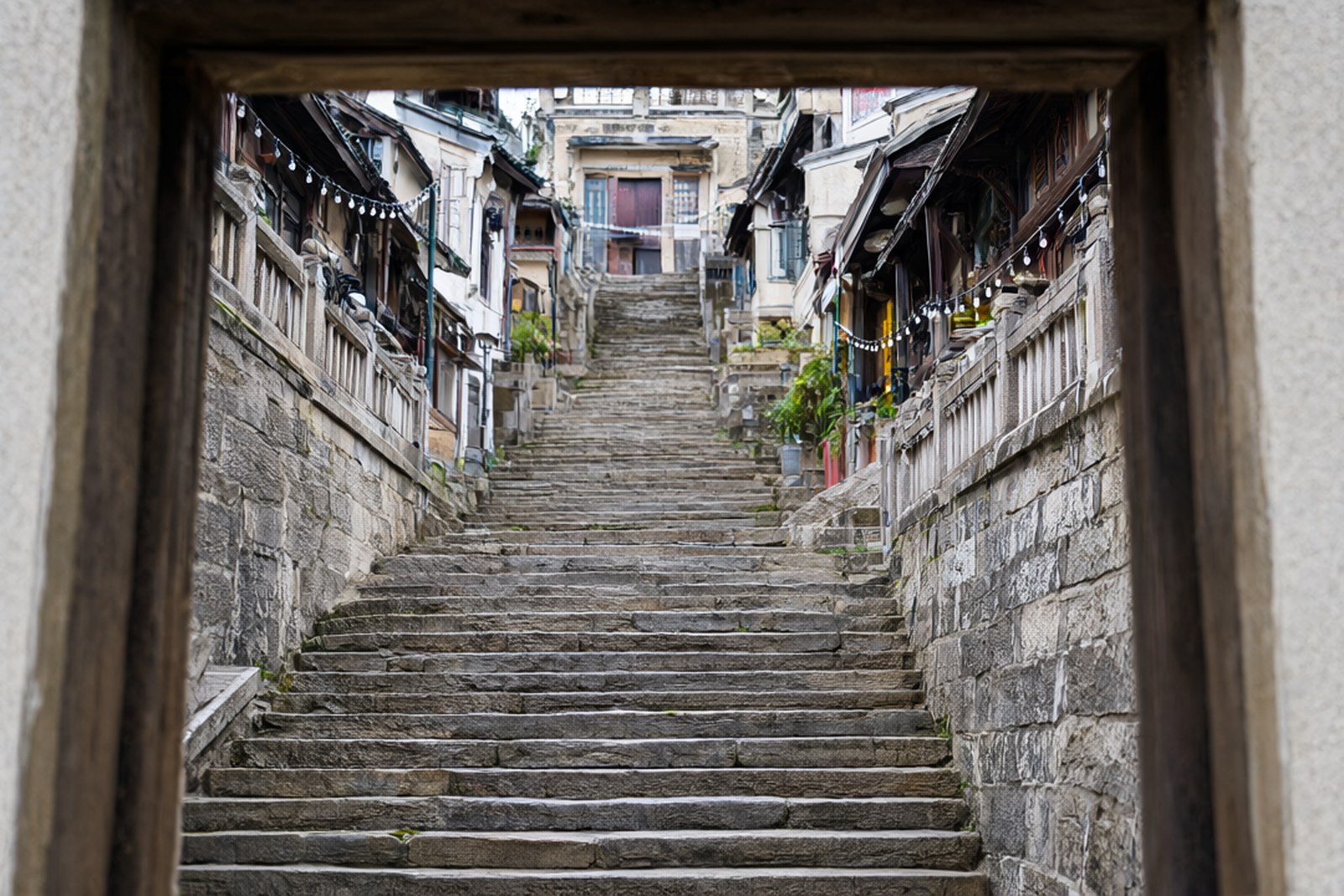
Before the reopening, this was the south bank’s oldest working address. The wharf below served as a water-and-land port for centuries, the landing where passengers and cargo moved between boat and bank at the confluence, and after Chongqing opened as a treaty port in 1891 the waterfront here was among the first to host foreign trading firms. Two relics anchor the era: the former French navy barracks, a grey-stone compound built in 1902 according to heritage listings and now among the street’s most striking survivors of the treaty-port years, and the restored 王家大院 Wángjiā Dàyuàn, Wang Family Courtyard, the great merchant house of the old quarter. The 2018 reopening gathered the layers into a single graded district – a nationally rated 4A scenic area built around the treaty-port theme and the nine-tier hillside landform – with the old street’s layout summarised locally as one street, two wharves, four courtyards and ten scenes, and the modern quarter folding an aquarium and theatre spaces into the terraced lanes for the families that the ferrymen once ferried.
The walk is the point. Enter low and climb, because the nine levels are the street’s argument: each terrace opens a new slice of the confluence, the courtyards set their gates at the old elevations, and the stone steps thread between restored lanes the way they did when the whole slope was the port’s staircase. The upper terraces pay the view out slowly – the Jialing sliding in from the left, the Yangtze shouldering past from upstream, the headland of 朝天门 Cháotiānmén, Chaotianmen, holding the seam between them – and by early evening the old street’s own lamps take over, the terraces glowing down toward the dark water. This is not a skyline-watching deck; the show here is the meeting of the rivers and the lamplight of the street itself, and the honest rhythm is daytime for the buildings, dusk for the water.
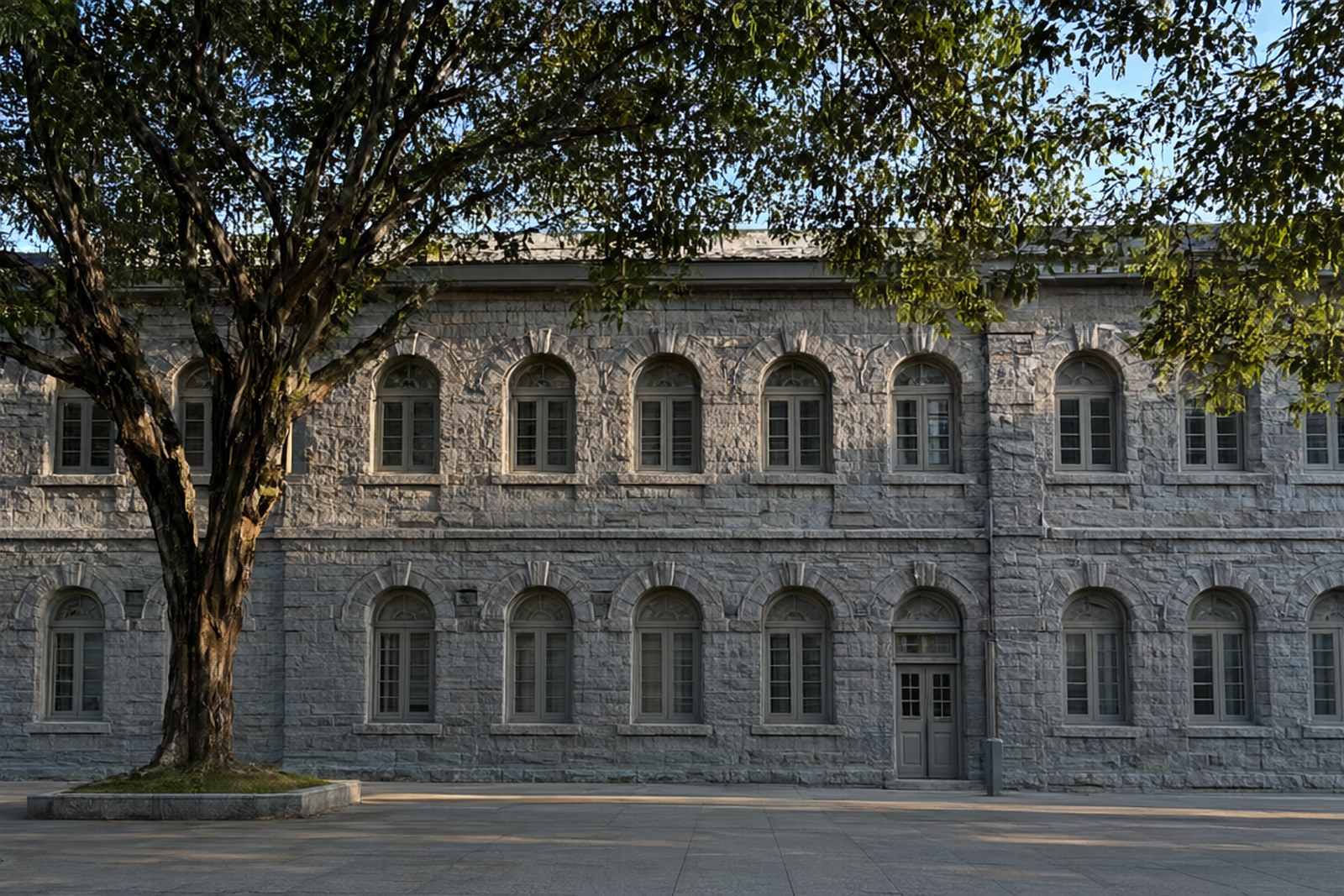
Give the street half a day and let the tiers pace it. Morning suits the buildings, when the courtyards and the barracks compound are cool and uncrowded; lunch belongs to the stepped market lanes, where the dockside foods of the old wharf – tofu-pudding rice, steamed pork slices, sweet-potato skewers roasted over coals – are served within a stone’s throw of the French stone; and late afternoon carries you up the final tiers for the confluence light. Families get an easy win in the adjoining mall’s small aquarium and the theatres tucked between the courtyards, all signed on site rather than in advance. The street is free to wander and formal enough about its tidiness to feel curated without feeling staged – the place names on the walls are the originals, and reading them as you climb is half the entertainment.
Practicalities
Tickets. No entry ticket: Danzishi Old Street is a free open-street district, with the aquarium, theatres and similar attractions inside charging separately on their own terms. As of October 2026, subject to change – check before you go.
Opening hours. The district keeps 10:00 to 22:00 daily, per the district government’s current scenic-area listing; the evening slot through the lamp-lighting is the reason the late hours exist.
Closing day. There is no closing day: the district opens every day of the week on the same 10:00 to 22:00 schedule, with individual venues inside varying.
Getting there. Metro Loop Line to 弹子石 Dànzǐshí, Danzishi, Station, then a flat walk of about 800 metres toward the river; or bus 338 along Nanbin Road to the Changjiahui stop, or bus 373 to the Weiguo Lukou stop, both at the street’s river end.
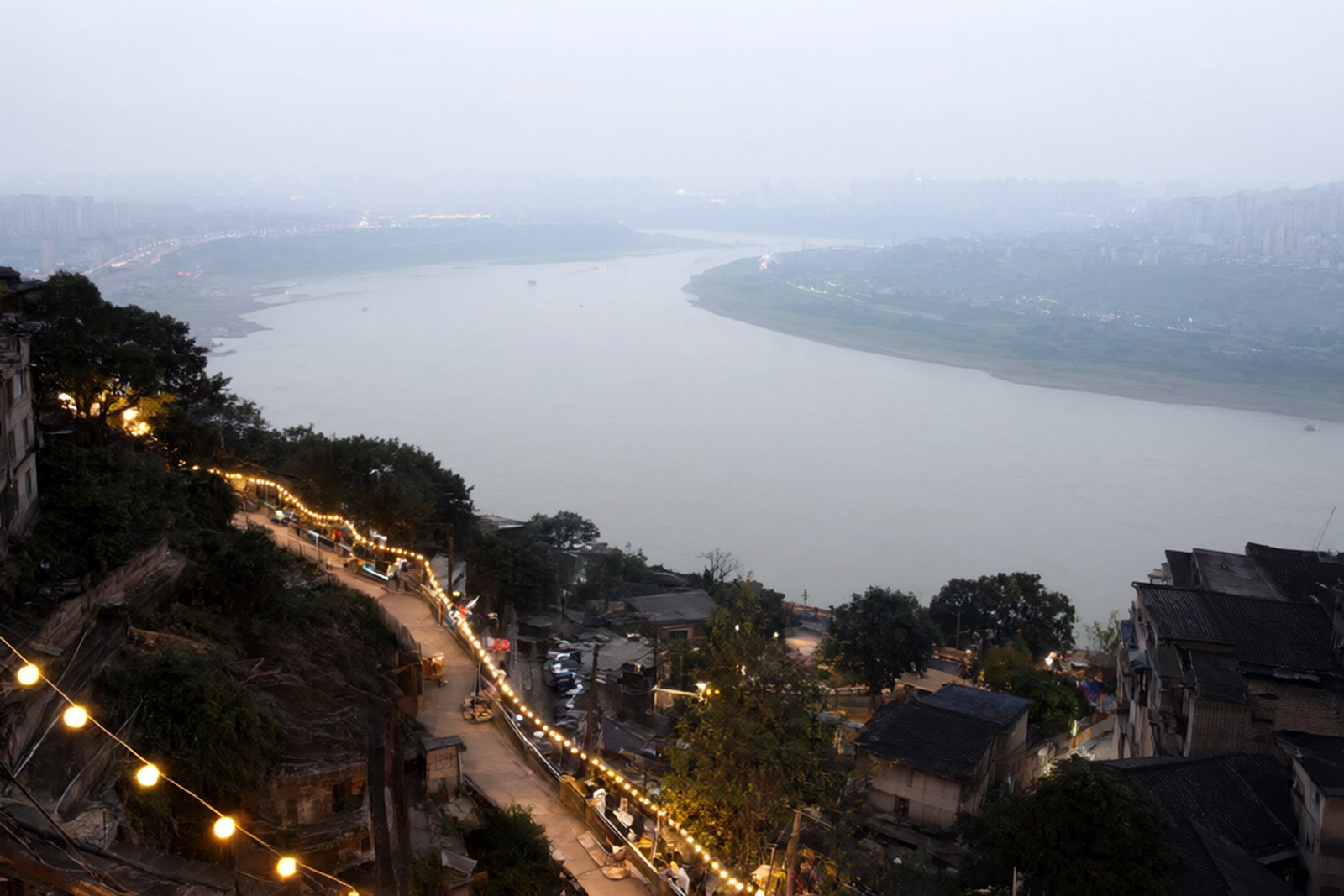
flowcloud would say that Danzishi is the wharf that got its second launch – nine tiers of old Chongqing rebuilt on their own foundations, a French barracks and a merchant courtyard keeping the receipts – and that the two rivers meeting at your feet is the oldest landmark this city owns, still working every day.
Getting there: Danzishi Old Street at Changjiahui is the nine-tier slope street of Nan’an District, Chongqing, a municipality of southwest China, reopened on 1 June 2018 where the Jialing River meets the Yangtze; a working water-and-land wharf for centuries and an early landing place of foreign trading firms after the 1891 treaty-port opening, it keeps the former French navy barracks of 1902 and the restored Wang Family Courtyard among its relics, and the district – a nationally rated 4A scenic area built around the treaty-port theme – climbs nearly a thousand metres of main street through some eighty metres of height difference; entry is free, hours run 10:00 to 22:00 daily with no closing day, and the arrival is metro Loop Line to Danzishi Station about 800 metres away or buses 338 and 373 to the river end (checked October 2026, subject to change).