
Daxingshan Temple: The Tang-Era Esoteric Buddhist Seat of Beijing, the 1403 Great Buddha and the Quiet Monastery Lane in Daxing District, Beijing
慈恩遗韵唐刹里,大像巍巍证法灯。Cí’ēn yíyùn Táng shà lǐ, dàxiàng wēiwēi zhèng fǎdēng – The lingering charm of the old Ci’en temple lives on in this Tang-era monastery; the towering great image stands as witness to the lamp of the dharma.
大兴善寺 Dàxīng Shàn Sì Daxingshan Temple is not a gilded gate with a ticket window — it is, plainly put, one of the oldest monasteries still standing in Beijing, kept alive by a lineage older than most of its neighbours: founded in 607 under the Sui and renamed in 648 when the Tang court honoured it, it sits in the south of the capital’s historic core, now within 大兴区 Dàxīng Qū Daxing District, some twenty-odd kilometres south of the old city wall. Its claim is specific rather than grand: for centuries it was the capital’s esoteric-Buddhist centre, the seat where Indian masters such as 善无畏 Shànwéiwēi Subhakarasiṃha and 金刚智 Jīnggāng Zhì Vajrabodhi came to translate the tantric sutras, making it the birthplace of the Chinese 密宗 mìzōng esoteric school that would later travel on to Japan. The building you visit today is mostly a Ming-and-Qing reconstruction around a Tang footprint, but the story it keeps is the Tang one. What you actually visit is a calm two-courtyard monastery on a working street, not a scenic area with shuttles and show halls.
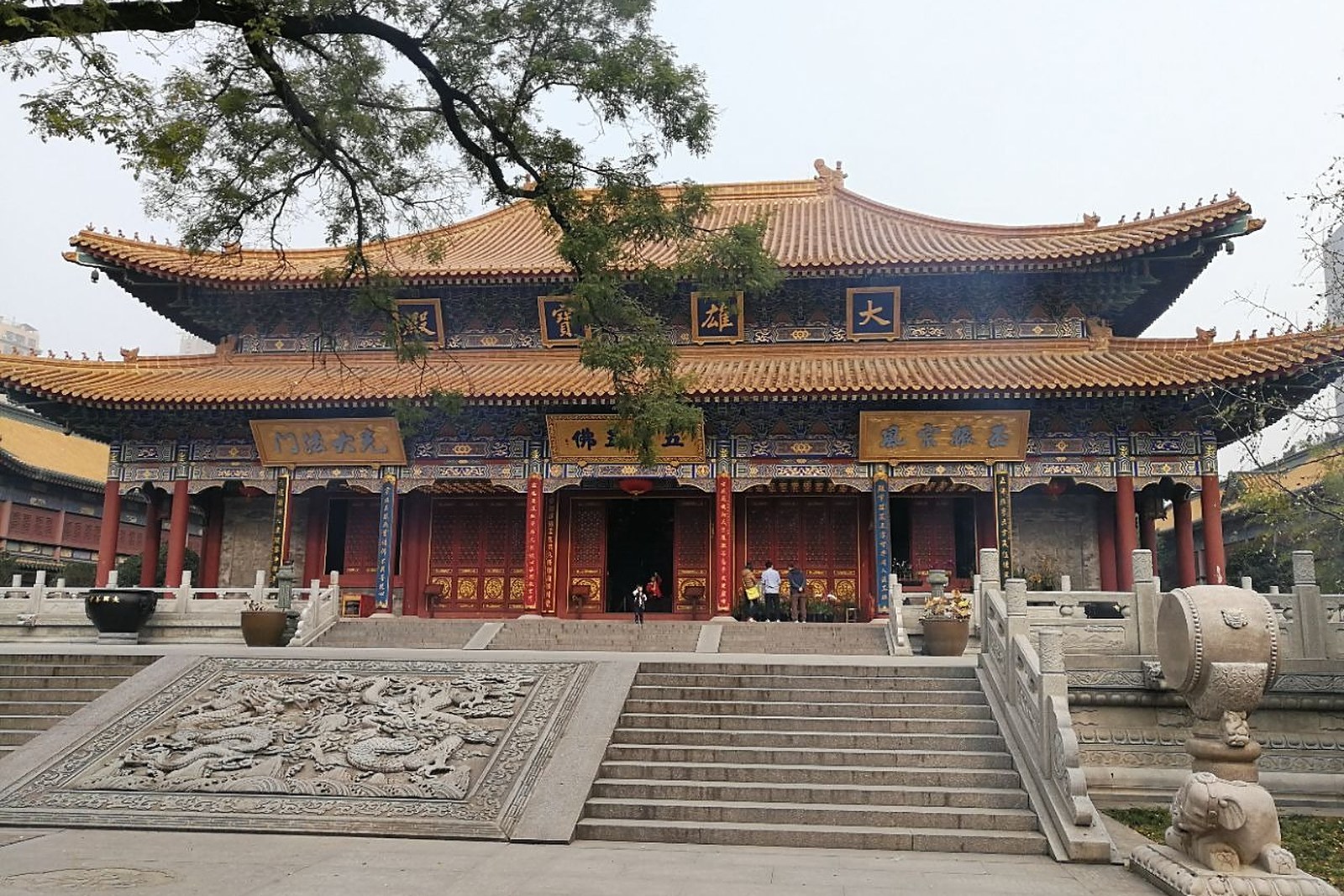
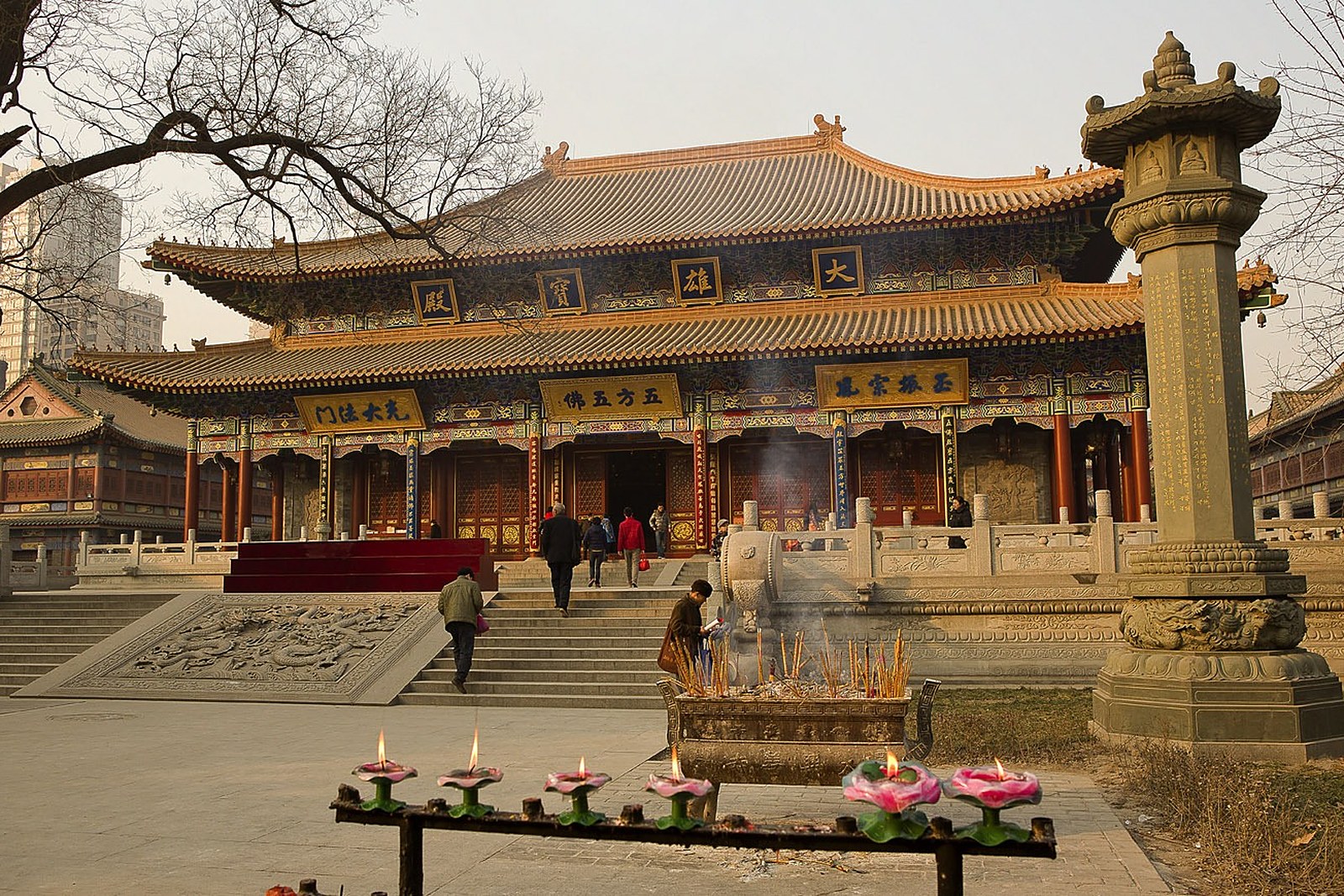
Call it honestly: the temple charges little or nothing at all, with hours that follow the usual morning-to-afternoon pattern and occasional closures for maintenance (worth confirming the details for current admission, opening days and any reservation rules). The honest warning is expectation, not price — the site is compact, so give it an hour to an hour and a half rather than a whole afternoon, and go early, because the lane fills with local worshippers and photography groups by late morning. Spring puts peach blossom against the grey walls and autumn cools the courtyard shade, and the quietest moments are weekday mornings before the tour buses reach the district. Bring a light layer for the incense-hall interior, and leave room in your head for the one object that justifies the trip.
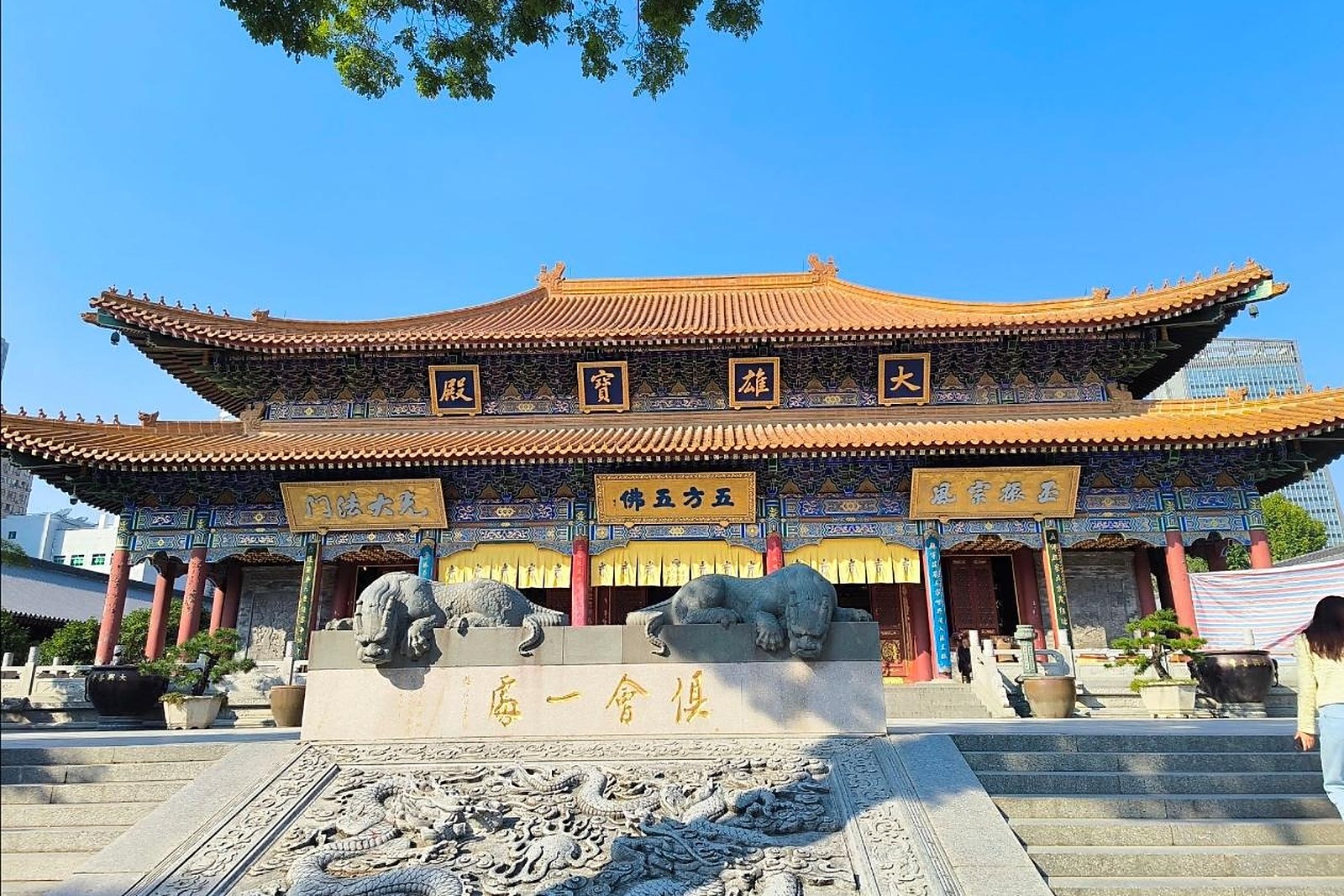
The honest star is the 大佛 dàfó great Buddha — a seated bronze colossus reported to stand close to nine metres, raised in 1403 in the main hall, its face worn smooth by eight centuries of candle-smoke and bowing (worth confirming the details for the exact height and which halls are open on your day). What gets oversold is the “oldest temple” superlative read as a sprawling heritage complex: this is a tight, low, genuinely lived-in monastery, and its pleasure is in the close reading of one great image and the hush of the courtyards, not in counting gates. What repays the effort is the lineage itself — the idea that the very esoteric tradition Japan calls 真言宗 zhēnyán zōng was first set down in China inside these walls, and that a small southern district now holds the thread that runs from a Tang translation hall to a Kyoto temple. Come for the layering of the place: gate, then courtyard, then the great image in the dark.
The self-aware postscript: I stood before the great Buddha with a monk sweeping the front steps, and when I asked how long he had been here he said, “the statue has watched more people come and go than my broom has swept — that is why we keep the floor clean”. That is the visit in miniature. 大兴善寺 Dàxīng Shàn Sì suits whoever treats it as a slow, incense-quiet read of one great image first and a checklist of dynasties second, and exhausts anyone expecting a vast scenic compound with a lake and a cable car. Everything else on this Daxing list lies within the same district: the urban lake of 大兴公园 Dàxīng Gōngyuán across the new town, the old village lanes of 古城村 Gǔchéng Cūn a short drive away, the river crossing of 永定桥 Yǒngdìng Qiáo over the Yongding River, and the starfish terminal of 北京大兴国际机场 Běijīng Dàxīng Guójì Jīchǎng at the district’s southern edge — all in the same 大兴区 Dàxīng Qū that has held a Tang dharma-lamp for fourteen hundred years and now parks a jet age beside it.
Practicalities
- Rating: ★★★★☆ — a Tang-lineage esoteric seat and one of Beijing’s oldest monasteries; the 1403 great Buddha and the courtyard hush outrank the gift counters; go early, go quiet.
- Tickets: Admission free or a token fee, with usual morning-to-afternoon hours and occasional maintenance closures (worth confirming the details for current admission, opening days and reservation rules).
- Address: 大兴善寺 Dàxīng Shàn Sì, 兴丰街道 Xīngfēng Jiēdào Xingfeng sub-district, 大兴区 Dàxīng Qū, Beijing — off the 双兴路 Shuāngxīng Lù corridor near the old town centre.
- Time needed: An hour to an hour and a half for the two courtyards and the great Buddha; add time if you stay for a service.
Words and Names
大兴善寺 Dàxīng Shàn Sì Daxingshan Temple · the Tang-lineage esoteric seat of the old capital 大佛 dàfó great Buddha · the seated bronze colossus of 1403 in the main hall 密宗 mìzōng esoteric Buddhism · the tantric school first set down here 善无畏 Shànwéiwēi Subhakarasiṃha · the Indian master who translated here 金刚智 Jīnggāng Zhì Vajrabodhi · the second Indian translator of the line 真言宗 zhēnyán zōng True Word school · the lineage that travelled on to Japan 兴丰街道 Xīngfēng Jiēdào Xingfeng sub-district · the modern ward that keeps the site
flowcloud would say that 大兴善寺 Dàxīng Shàn Sì is a Tang dharma-lamp that outlived its own dynasty — founded in 607, renamed in 648, the esoteric seat where 善无畏 Shànwéiwēi and 金刚智 Jīnggāng Zhì set down the 密宗 mìzōng that would cross the sea to Japan, and crowned by a 1403 大佛 dàfó some nine metres tall — and that the honest move is a weekday morning before the tour groups arrive, because admission, opening days and which halls are open all shift (worth confirming the details), the oldest-temple title is the poster half and the smoke-worn face of the great image is the real half, and the monastery repays whoever lets the courtyard do the talking. All checked October 2026.
Getting there: Metro Line 4 大兴线 Dàxīng Xiàn Daxing line runs straight into the district and stops at 大兴 Dàxīng station, a short taxi or local 兴-numbered xīng-numbered bus to the temple gate, with the old-town streets giving easy access from the district centre (worth confirming the details for current train times, bus numbers and gate parking); self-drive leaves the 京开高速 Jīngkāi gāosù G3 at the 大兴 Dàxīng exits and follows the signed lanes to the gate-side lots. All checked October 2026.