
大圆祥博物馆 Dàyuánxiáng Bówùguǎn, the Dayuanxiang Museum, is Bishan’s private museum in the hills: a collection of salvaged building parts from Sichuan’s demolished courtyards and temples – wooden doors by the thousand, window lattices, ancestral screens, carved panels and stone work – displayed in long sheds on a reconverted industrial site, the visitor walking the aisles as though down a street of removed facades. The trade knows it by the visitors’ phrase – 推开万扇古门, pushing open ten thousand old doors – and the collection’s argument is exactly that: the demolition century deserved a salvage century, and one collector’s buying has stacked the evidence in sheds the public can walk. This page is written as the collection and the argument, because both are the sight.
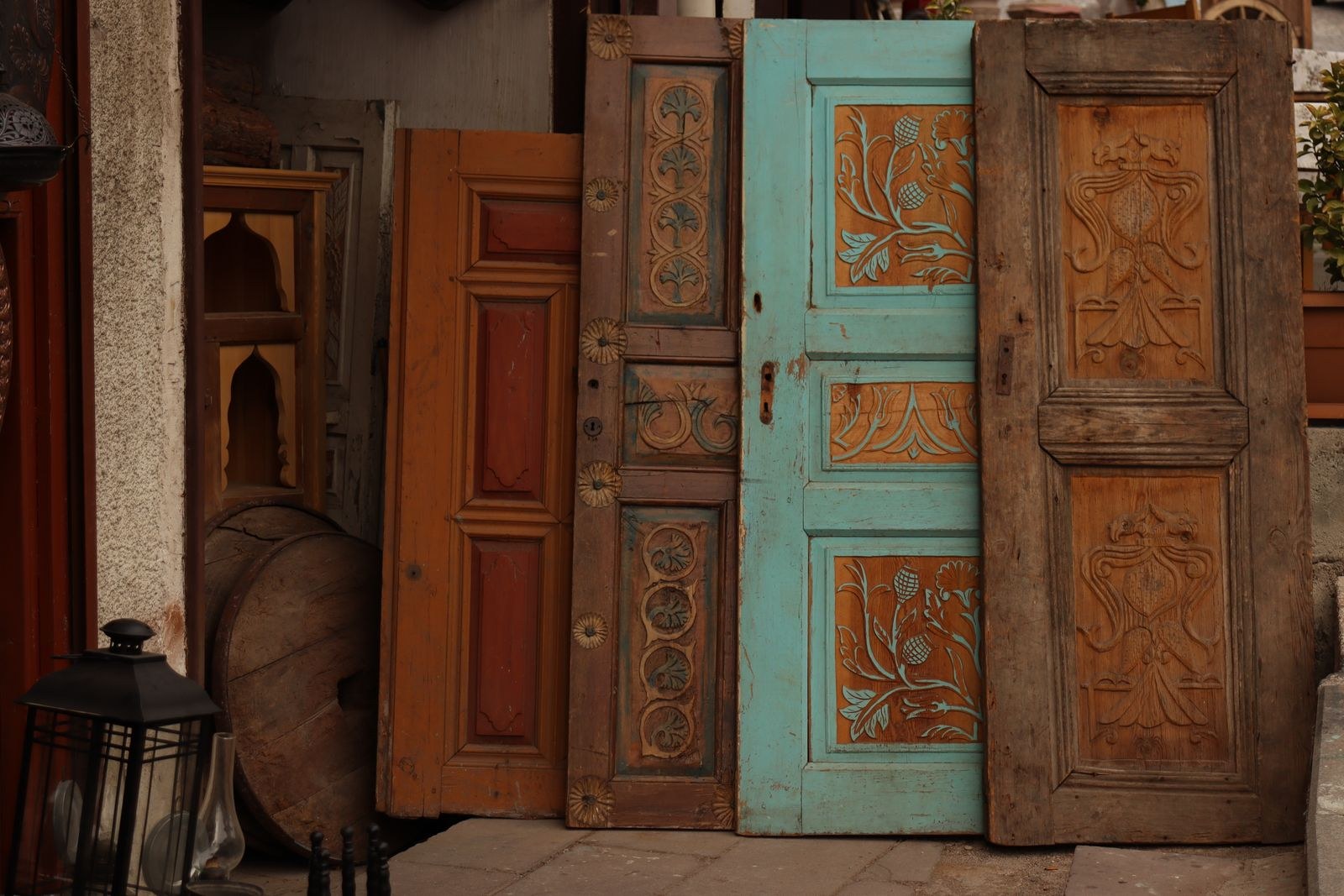
The collection is the content, and its class matters more than any count. Sichuan’s courtyard houses, ancestral halls and temple buildings came down by the thousand across the demolition decades, and what survived the fires and the rebuilds was often the joinery – doors, lattices, screens, lintels – because the joinery was the crafted part and the crafted part was the sellable part. Dayuanxiang’s sheds hold that salvage at a scale the trade treats as one of the serious private holdings: the Sichuan-school woodcarving 川工木雕 – the opera scenes, the figure panels, the lattice geometry cut by workshop hands for courtyards that no longer exist – plus the stone tanks, the flag-stones and the ancestral furniture of the same demolished world. The page quotes no catalogue count, because no verified count is on the record consulted; the honest description is the class and the scale-word the visitors use, ten thousand doors, read as the image it is.
The setting is half the experience. The museum sits on a reconverted industrial site in the district’s hill country, which gives the sheds the warehouse solemnity the material needs – long aisles, high roofs, daylight from roof lights, dust in the beams – and the visitor’s walk is architectural rather than vitrined: the doors stand as doors stand in a house, hinged and closeable, and a visitor can open one, step through, and understand in one motion what a demolished courtyard actually was. The all-weather fact is the other practical argument: the sheds are the district’s one indoor sight of any size, which is why the weekend itineraries slot the museum into the wet day between the parks and the mountain. The folk-museum framing is the district’s own – 深山里的博物馆, the museum deep in the hills – and the page keeps that phrase because it is accurate on both words.

What the record supports is the museum, the private folk-museum framing, the hill-country industrial setting, and the class of the collection – doors, lattices, screens, Sichuan-school carving, stone work at door-and-screen scale; what it does not support is a verified catalogue count, a posted ticket, an opening-hours table or a street address worth quoting, and none is invented here. The page declines to rank the holding against the province’s state museums because the record does not, and it declines to enumerate numbered halls for the same reason: the sheds are the plan, and the visitor’s legs are the catalogue. A reader books the visit the way private museums actually work – by the season’s posted hours and the phone – and the page says so rather than inventing a front desk.
The museum also completes the travel batch’s shape. The parks are the civic water, the mountain is the big outdoors, the church is the imported stranger – and the museum is the district’s one argument about loss: a room-sized reminder that the courtyards behind the county’s history were physical things, built by the woodworking trades the road county supported, and that what survives of them is now stacked in hillside sheds an hour from the metro. It is the batch’s melancholy page, and the district is right to keep it indoors and all-weather. All checked October 2026.
Words and Names
大圆祥博物馆 Dàyuánxiáng Bówùguǎn, the Dayuanxiang Museum, a private folk museum on a reconverted industrial site in the hill country of 璧山区 Bìshān Qū, Bishan District: long shed aisles of salvaged building parts from Sichuan’s demolished courtyards and temples – wooden doors by the thousand (the visitors’ phrase is 推开万扇古门, pushing open ten thousand old doors), window lattices, ancestral screens and carved panels of 川工木雕 chuāngōng mùdiāo Sichuan-school woodcarving, with stone tanks and related stonework. The doors are hung and closeable, and the walk is architectural rather than vitrined. No verified catalogue count, posted ticket, hours table or street address is on the public record consulted, and none is invented here; book by the season’s posted hours and the phone, as private museums are actually visited.
What the Locals Know
The local knowledge is about pace and hands. The sheds reward slow walking – the lattice geometry and the carving panels repeat and vary, and a visitor who hurries sees one door while a visitor who walks sees the grammar – and the openable doors are the experience: locals show children the closeable doors first, because stepping through a removed facade teaches the demolished-courtyard point faster than any caption. Photography wants the overcast day; the roof-light aisles are even and the carved relief reads best in flat light. The museum pairs naturally with the wet-day slot in a Bishan weekend, and the drive in from the county town is part of the deep-in-the-hills framing the district uses. What the record does not carry is any count, ticket or hours worth quoting, and the page declines all three – the class, the scale-word and the sheds are the facts, and the season’s posted hours are the rest.
Practicalities
Tickets: No posted ticket figure is on the record consulted, and the page invents none – the honest form for a private folk museum is the season’s posted hours and the phone, and the class of the visit is a shed walk priced like the private museums it belongs to. What the record carries is the collection and the setting, not a rate card, and the page keeps to that shape.
Opening hours: By the season’s posted hours, as private museums actually run – no hours table is on the record consulted, and the practical answer is to book by phone before the drive. The one scheduling fact worth planning around is light: photography wants the overcast day, the roof-light aisles are even, and the carved relief reads best in flat light, so a grey afternoon is the connoisseur’s slot.
Closing day: Not on the record consulted – a private museum keeps its own calendar rather than a municipal rest day, which is one more reason the phone call comes before the drive. The weather fact cuts the other way here: the sheds are the district’s one indoor, all-weather sight of any size, so the wet day that closes the ridge paths is the day the museum earns its slot in the itinerary.
Getting there: The museum is on a reconverted industrial site in the hill country of 璧山区 Bìshān Qū, Bishan District, reached by road from the county town – the drive in is part of the 深山里的博物馆, the museum deep in the hills, framing the district uses. No street address worth quoting is on the record consulted; the booking phone resolves the last leg, and the visit pairs with the wetland and park pages as the weekend’s indoor half.

flowcloud would say that the Dayuanxiang Museum is the district’s salvage argument in building form – thousands of salvaged doors, lattices and carved panels from Sichuan’s demolished courtyards racked in long hillside sheds, the visitors’ phrase 推开万扇古门, ten thousand old doors, and the川工木雕 Sichuan-school carving as the scholarly core – and that the correct visit is the slow aisle walk on an overcast day in 璧山区 Bishan District, because no count, ticket or hours survive in the record consulted and the page invents none. All checked October 2026.