
德安里 Dé ān lǐ is a village built by one family as a single piece of architecture, and it is the largest and most complete of the great 府第式 fǔ dì shì mansion complexes left in 潮汕 Cháo shàn. It stands at 南村 nán cūn in 洪阳镇 hóng yáng zhèn, in the north of 普宁市 Pǔ níng shì in 揭阳市 Jiē yáng shì, and it was built for the household of 方耀 Fāng Yào, the Qing admiral who commanded the Guangdong naval forces, from the tenth year of the 同治 Tóng zhì reign, 1871, to the sixteenth year of 光绪 Guāng xù, a century and a half ago. The figures are what people come for and they are worth setting down plainly: 63,000 square metres of site, 32,000 of built floor, and 773 rooms in the count the site itself uses. The 广东名胜古迹辞典 guǎng dōng míng shèng gǔ jì cí diǎn, the dictionary of Guangdong’s famous sites and antiquities, describes it as a rare giant 府第式 building group for the province, and it is not the size alone that earns the phrase – it is that the whole thing was drawn before it was built.
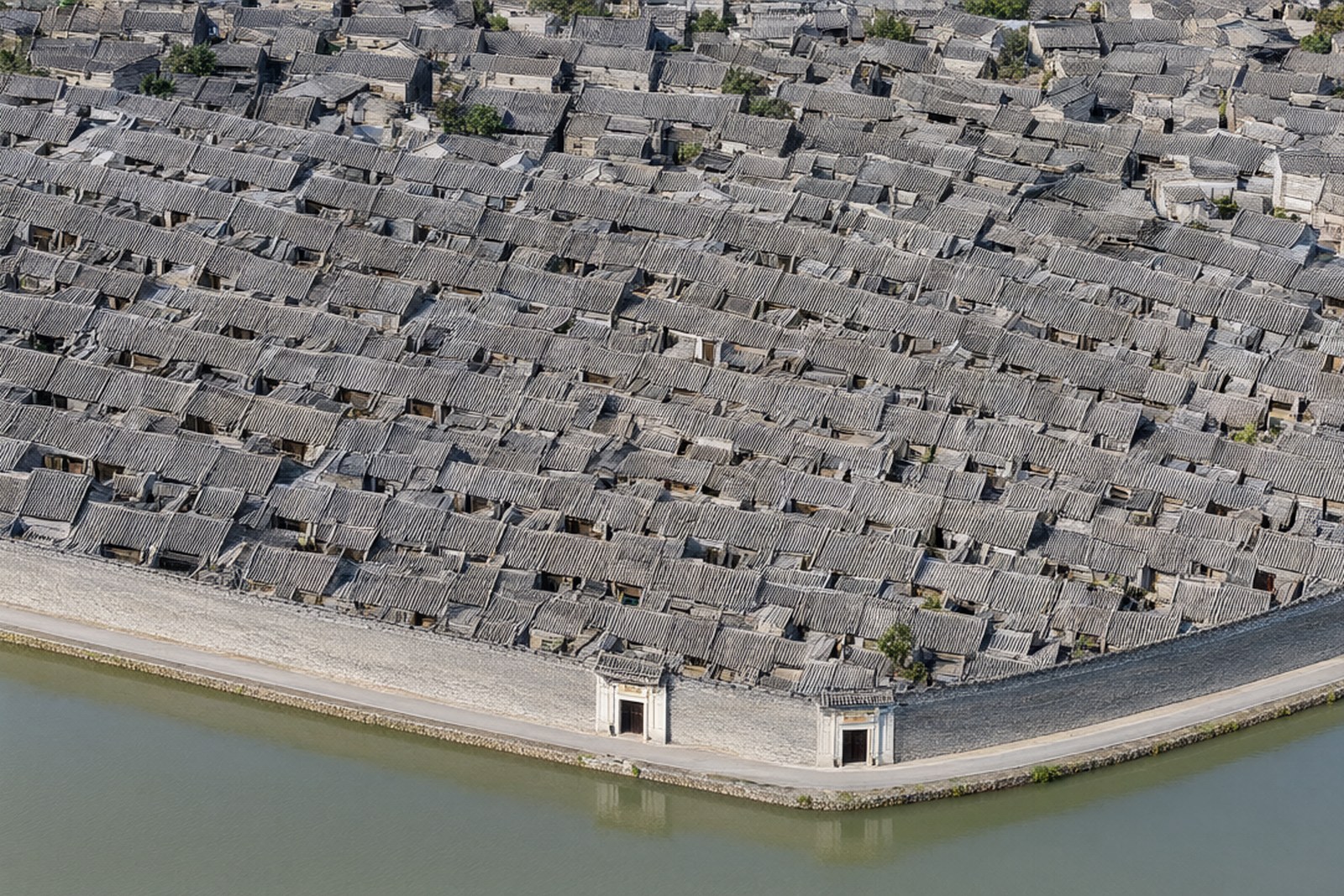
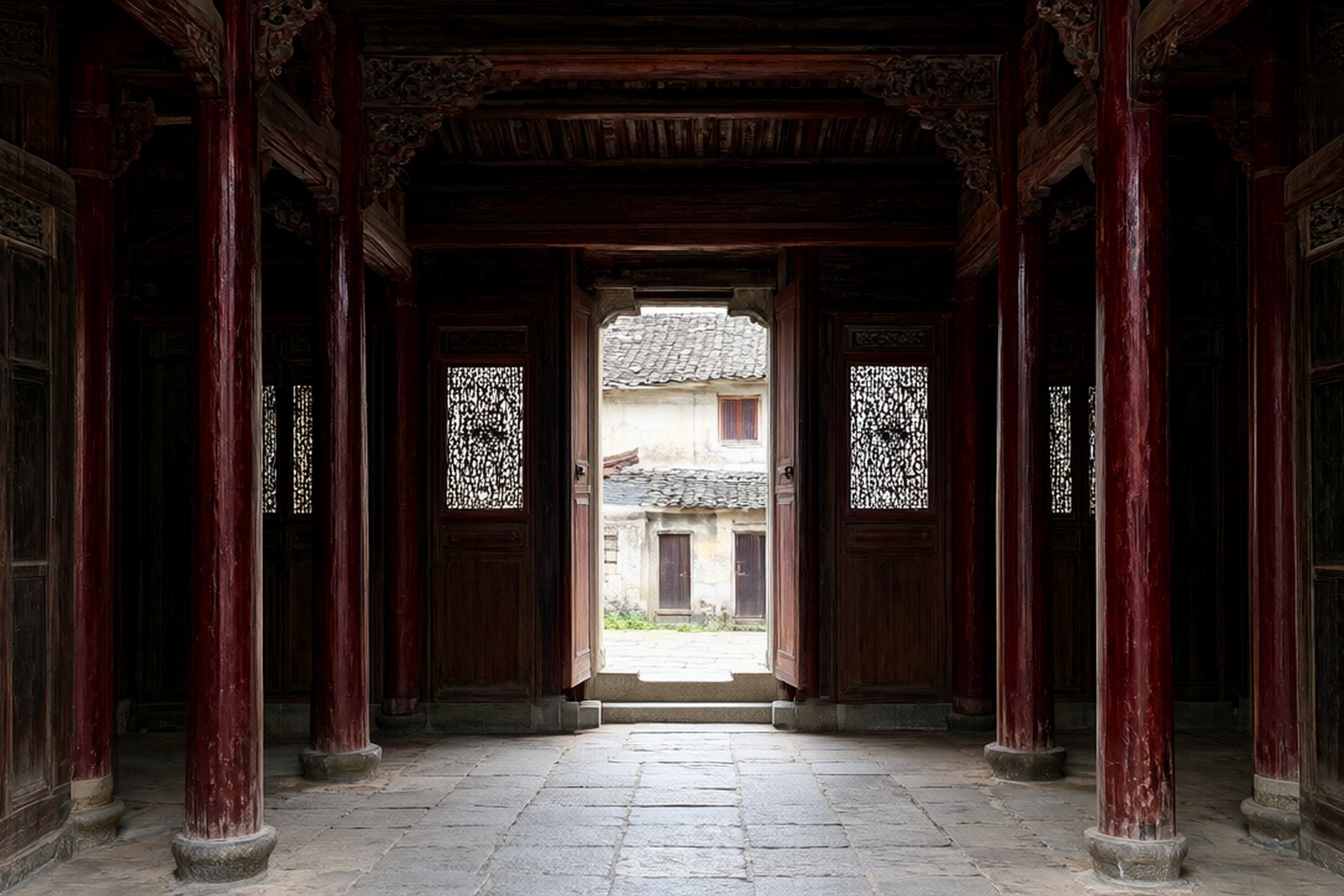
The plan is the reason it is in the textbooks, and it works through three named devices. The oldest part, 老寨 lǎo zhài, is a 百鸟朝凰 bǎi niǎo cháo huáng, a hundred birds facing the phoenix: the 方氏家庙 fāng shì jiā miào, the family ancestral hall called 燕诒堂 yàn yí táng, sits at the centre as the phoenix on the branch, and exactly one hundred houses are arranged around it on both sides,向 xiàng inward, on a symmetrical axis, with the number one hundred held to strictly – one hundred being the birds doing the facing. It is the only surviving 百鸟朝凰 layout in 潮汕 that has kept its original form, and the discipline of it is the point: a hundred is a symbolic number and the builders refused to make it a hundred and one. The middle compound, 中寨 zhōng zhài, runs on 驷马拖车 sì mǎ tuō chē, four horses drawing a carriage: the ancestral hall 诒承堂 yí chéng táng stands as the carriage in the middle, and two 三厅亘 sān tīng gèn halls, the three-hall type, and two joined pairs of 四点金 sì diǎn jīn on either side stand for the four horses. The 新寨 xīn zhài, the new compound, repeats the middle one’s arrangement, so that the whole complex carries two of these carriage groups side by side. Inside it a visitor can read off the whole vocabulary of 潮汕 domestic building – 三厅亘, 四点金, 下山虎 xià shān hǔ and 独脚狮 dú jiǎo shī – and the decoration runs to 木雕 mù diāo wood carving, 石雕 shí diāo stone carving and 嵌瓷 qiàn cí porcelain mosaic, with the frames, the gutters, the roof pitches and the cross-ventilation worked out so carefully that the local account of it claims there is almost nothing to fault even down to how a room takes its light and keeps out its damp.
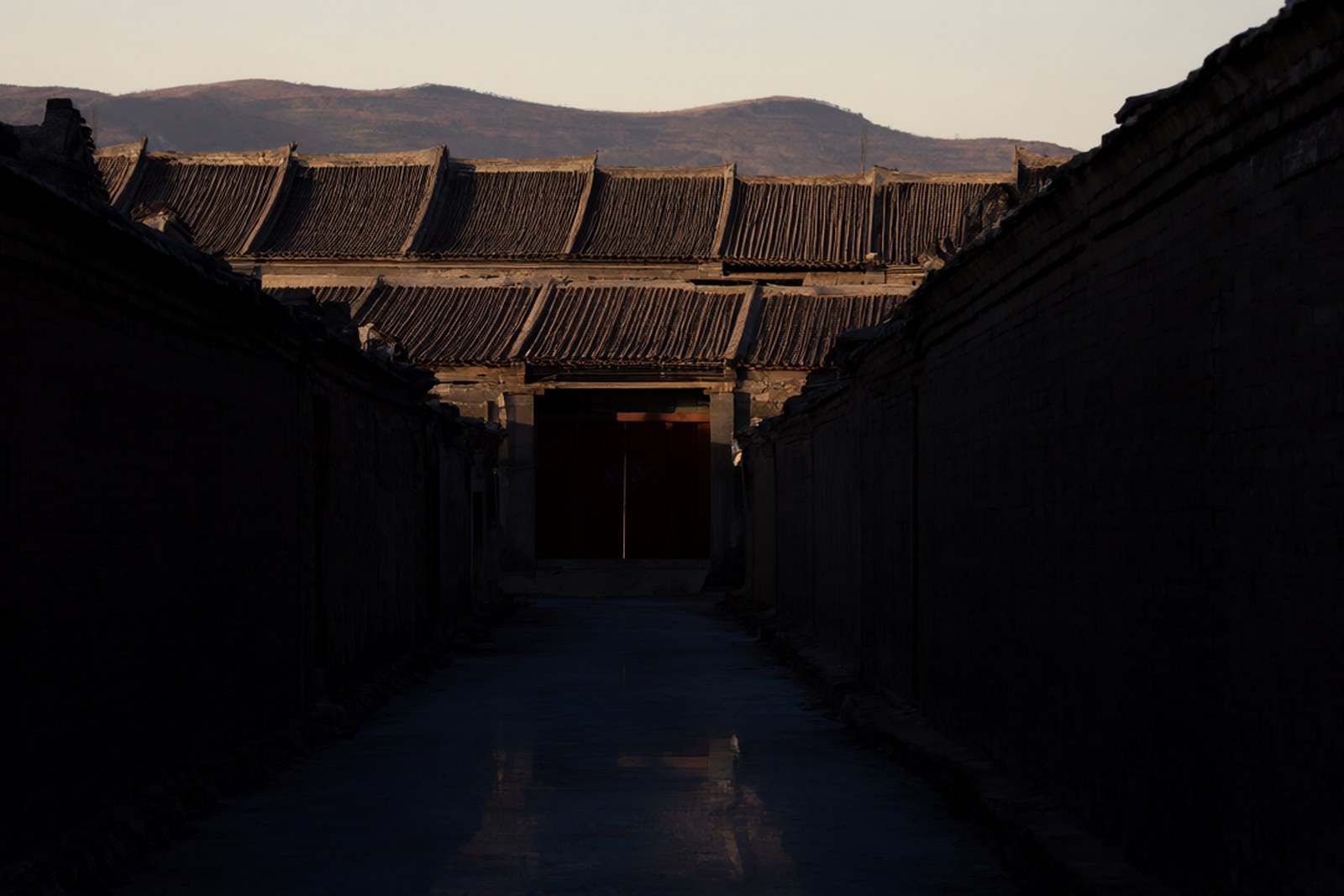
Between the compounds there is everything a household of that size needed and none of it is decorative filler: reception halls, ancestral halls, a family Buddhist chapel, 书斋 shū zhāi study rooms, bedrooms, dining rooms, store rooms, lofts and gatehouses, with a forecourt in front of the wall, a rear garden, a lotus pond and the whole perimeter closed by a wall – and outside the wall a 护寨河 hù zhài hé, a moat, which is the detail that tells you this was not only a residence. The three houses share one street of shophouses along the northern edge of the compound, which is part of why the place still functions as a village rather than an exhibit.
The man who paid for it was born in 普宁 and made his name in the fighting of the 咸丰 Xián fēng and 同治 reigns, in the campaigns against the Taiping and in the pacification of the coast; his record earned him the honorific 展勇巴图鲁 zhǎn yǒng bā tú lǔ, the title granted to a soldier of exceptional courage, in the Manchu form the court used, and he rose to 广东水师提督 guǎng dōng shuǐ shī tí dū, admiral commanding the Guangdong naval forces. 德安里 is what an admiral with a large family and an eye for planning spent a fortune building on his own ground, and the site has been managed as a heritage place since 2007. It is a 中国传统村落 zhōng guó chuán tǒng cūn luò, a Chinese traditional village, and a 广东省文物保护单位, and it carries a 国家 AAA 级旅游景区 rating and a place on the list of 揭阳八景 jiē yáng bā jǐng, the eight sights of 揭阳. In 2025 it was included among the province’s intangible-heritage tourism routes. Two of the compounds are in daily use as a school: 老寨 and 中寨 are the campus of 洪阳中学 hóng yáng zhōng xué, which means that on a weekday the ancestral halls have children walking through them, and that the best day to see the architecture without them is the weekend.
The setting matters as much as the building, because 洪阳 is not a village with a mansion in it – it is a former county capital. The town was founded in the third year of 万历 Wàn lì, 1575, and it went into the fourth batch of 中国历史文化名镇 zhōng guó lì shǐ wén huà míng zhèn, Chinese historic and cultural towns, in 2008, the first town in eastern Guangdong to hold the national listing. 普宁 was made a county in 1563 and fixed its seat at 洪阳 in 1586, and from then until 1949 – 363 years – this was where the county was governed. It has about 66 square kilometres and a population of sixteen thousand in the old core, with three provincial-level protected sites, seven at city and county level, and a hundred and forty-five lesser registered antiquities. The old 普宁学宫 xué gōng is here, founded in 1575 and rebuilt in 1721, 29 metres wide and 78 deep, with the 大成殿 raised 0.7 metres on its terrace and its columns cut as 梭形巨石柱 suō xíng jù shí zhù, stone shafts shaped like a weaver’s spindle. The 城隍庙 chéng huáng miào has been here since 1563, three courtyards and eleven bays in about 1,620 square metres. The 培风塔 péi fēng tǎ went up in the seventh year of 乾隆, seven storeys of octagon in rammed 三合土 sān hé tǔ, and the 文昌阁 wén chāng gé is the building where 林则徐 Lín Zé xú died in 1830, now the Lin Zexu memorial hall and the district’s anti-drug education centre. Two local customs are worth knowing: 十五夜行头桥 on the fifteenth night of the first month, when the town walks over the old bridge, and 摆社 bǎi shè in the same month. What to eat is settled – 洪阳粿汁 hóng yáng guǒ zhī, rice-flour sheets in a broth with braised egg and braised pork, and 普宁豆干 pǔ níng dòu gān, the bean curd eaten with a dip of chives and salt water, which is the dish this town is known for all over the province. The town was called 厚屿 hòu yǔ in the old books, and it grows flowers over twenty-five thousand mu.
Practicalities
Tickets. Free. The site is open to the public at no charge, which is unusual for a complex this size and makes it easy to walk round twice; the 德安里博物馆 dé ān lǐ bó wù guǎn, the museum, the art gallery with its rotating shows, and the antiques arcade are all inside the same free admission.
Opening hours. 09:00 to 17:00, every day of the year, which is the whole of the visitor window; the site is not lit and there is no evening access to the compounds. Three hours is the right amount of time, and the order the site recommends is the one the plan itself suggests: start at 老寨 and read the 百鸟朝凰 first, since it is the oldest and the most legible, then 中寨 and 新寨 for the two carriage layouts, and finish in the museum and the streets of the town.
Getting there. 德安里 is at 南村 nán cūn in 洪阳镇 hóng yáng zhèn, in the north of 普宁市 Pǔ níng shì about twenty kilometres from the city centre on the 324 national road and the 普惠 pǔ huì expressway, and roughly an hour and a half from 揭阳市 Jiē yáng shì; 普宁站 pǔ níng zhàn on the 厦深 Xià shēn high-speed line is south of the city with 揭阳潮汕国际机场 Jiē yáng cháo shàn guó jì jī chǎng about an hour away, and buses run from 普宁 to 洪阳镇 through the day with the site a short walk from the town centre.
Closing day. There is no weekly closing day and the site opens every day of the year, including the days when the school is in session inside two of the compounds. The only caution is practical: because 老寨 and 中寨 are the 洪阳中学 campus, the halls that are classrooms are off limits during school hours on weekdays, and a visitor whose interest is the architecture rather than the town will see more of it on a Saturday or a Sunday or in the school holidays.
flowcloud would say that the interesting thing about a man who built himself 773 rooms is not the number but the hundred – one hall standing for a phoenix and exactly one hundred houses locked into place around it, because a plan that fussy is not a house, it is a statement about the family’s place in the order of things, and it is still making it to anyone who walks in from the moat and starts counting.
Getting there: 德安里 is at 南村 nán cūn in 洪阳镇 hóng yáng zhèn, in the north of 普宁市 Pǔ níng shì, 揭阳市, about twenty kilometres from the city centre on the 324 national road and the 普惠 pǔ huì expressway and an hour and a half from the prefecture city; 普宁站 pǔ níng zhàn on the 厦深 Xià shēn high-speed line is south of the city and 揭阳潮汕国际机场 Jiē yáng cháo shàn guó jì jī chǎng about an hour off, with buses from 普宁 to 洪阳镇 through the day and the compound a short walk from the town centre. The 普宁学宫, the 城隍庙, the 培风塔 and the 文昌阁 are all in the same town, so the sensible thing is to give 洪阳 a whole day rather than an afternoon.