
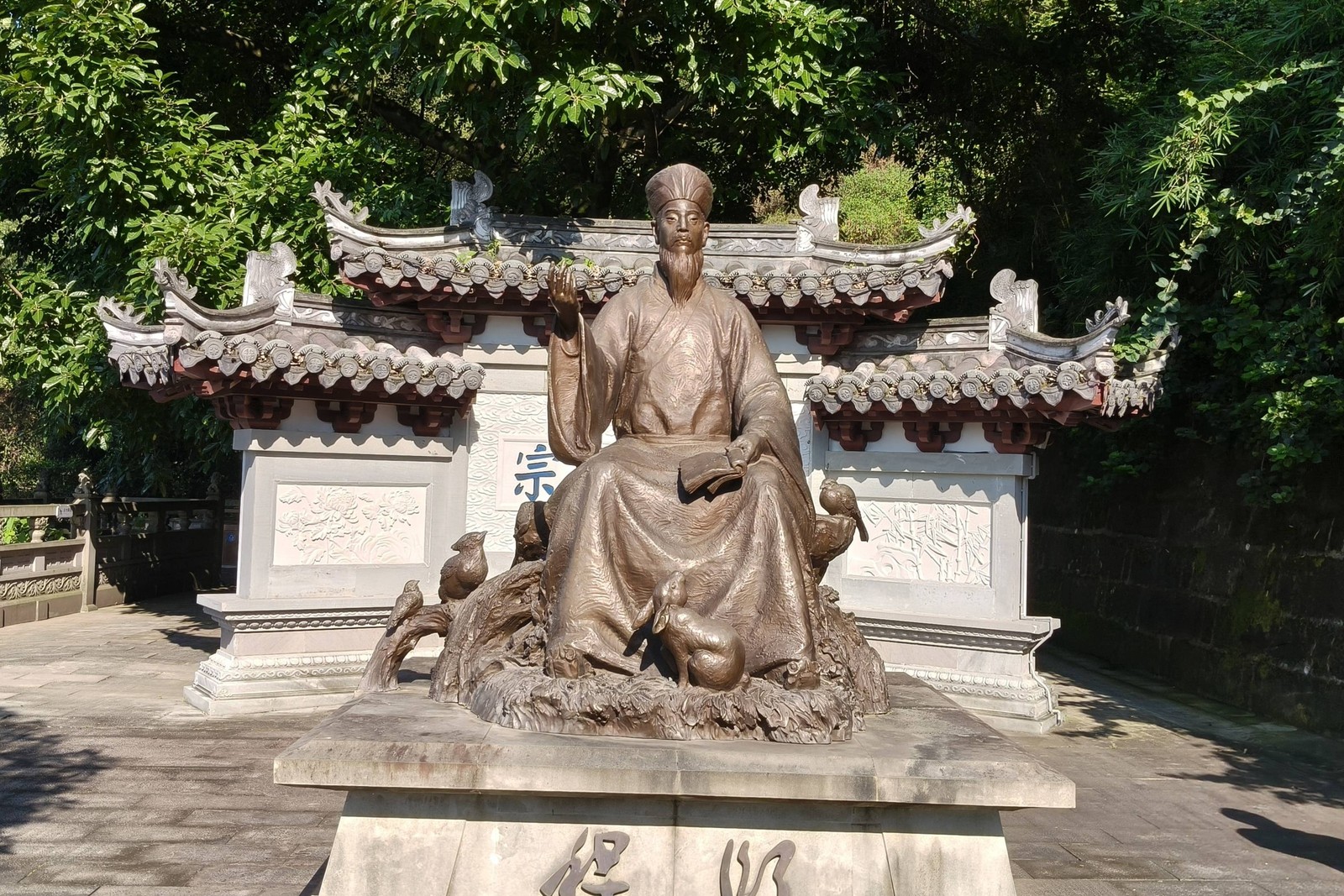
Philosophy in China has addresses, and one of the most consequential is a cliff on the Yangtze below the district seat of 涪陵区 Fúlíng Qū, Fuling District. Here, in the years of his exile, the Song-dynasty scholar 程颐 Chéng Yí lectured by the river and worked through the 周易 Zhōuyì, the Book of Changes, in a cave in the cliff – reading, commenting, and teaching in a riverside grotto that later generations would come to treat as a shrine of thought. The tradition that he “pointed out” the meaning of the Changes in that cave gives the modern park its name: 点易园 Diǎnyì Yuán, the Garden of Pointing Out the Changes.
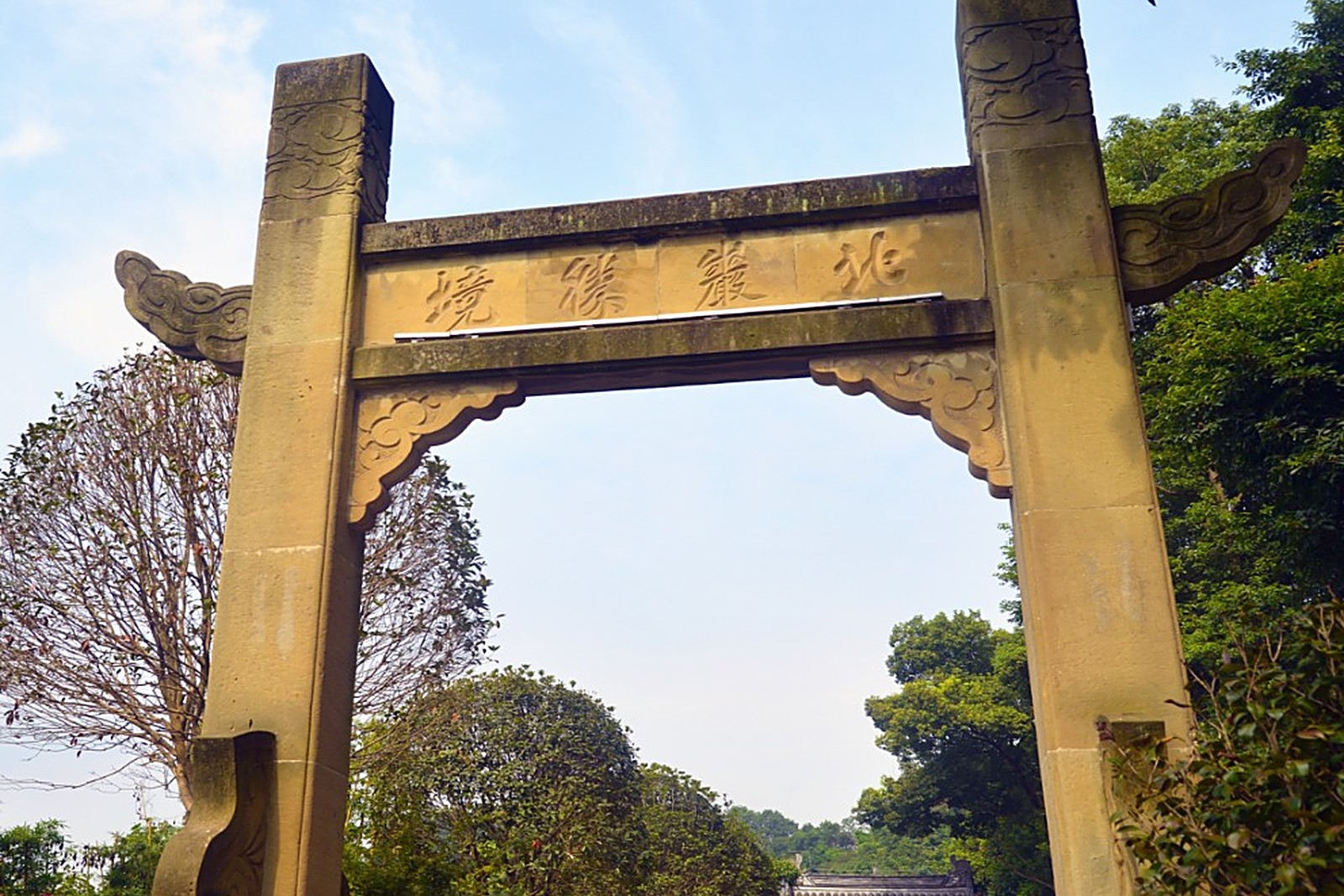
The weight of that cave is easy to underestimate from outside. Cheng Yi’s commentary on the Book of Changes became one of the founding texts of 程朱理学 Chéng-Zhū Lǐxué, the Cheng-Zhu school of Neo-Confucianism – the body of thought that shaped the examination halls, the academies and the moral vocabulary of East Asia for the better part of a millennium. A cradle of that tradition is not a metaphor here; the site is counted among the actual cradles, because the lectures and the commentary belong to these years on this cliff. A cave above a river with the century’s most consequential footnotes written inside it is, by any measure, a remarkable address.
The modern park climbs the cliff the way the tradition climbed into prominence – gradually, through layers. Paths and stairs rise through pavilions and courts, past inscribed stones whose carved characters weather into the rock face, and the river appears and disappears between the green as the path turns. The cliff itself is a gallery: generation after generation of visitors and officials left their own inscriptions beside the older ones, so the rock reads like a conversation conducted across centuries in carved characters, with Cheng Yi’s cave as the subject everything circles back to.
The cave itself is the terminus and the point. 点易洞 Diǎnyì Dòng, the Dotting-the-Changes cave, is modest – a grotto in the cliff, exactly the kind of place a scholar in political disfavour could work without being noticed, which was the whole point. Its plainness is the lesson the park keeps teaching: the founding work of Neo-Confucianism was done in exile, by a man the court had sent away, in a riverside cave that cost the state nothing. The Yangtze runs wide below it now, as it did then, and the view from the cave’s mouth – river barges, the far bank, the light on the water – is the same distraction the commentator had to work against.
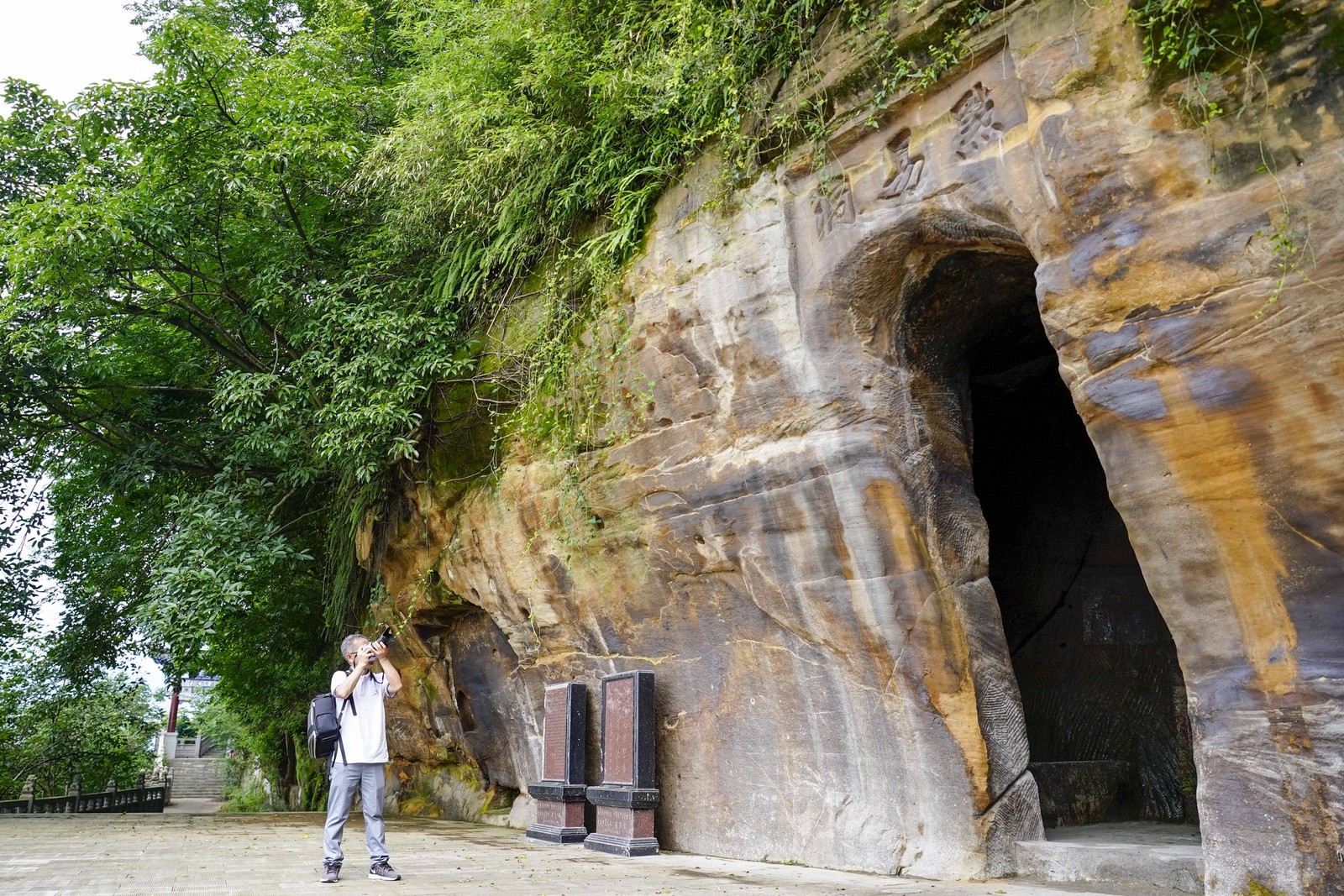
The practicality of the site is its best-kept quality. 点易园 Diǎnyì Yuán sits close enough to the riverside museums of the district seat to share a morning with them – a short run along the river, and the cliff park opens its paths. Admission is listed at 28-30 yuan and the hours run 9:00-17:00, which means the cave can be the morning’s second act: the river’s ledger underwater first, the philosopher’s cliff after, and the Yangtze seen from both.
Words and Names
点易园 Diǎnyì Yuán, the Garden of Pointing Out the Changes, the cliff park on the Yangtze below the district seat of 涪陵区 Fúlíng Qū, Fuling District. 程颐 Chéng Yí, the Song-dynasty scholar who spent his exile years lecturing by the river and commenting on the 周易 Zhōuyì, the Book of Changes, in the cave that names the site. 点易洞 Diǎnyì Dòng, the Dotting-the-Changes cave, the grotto in the cliff where the commentary tradition locates his work. The site is counted among the cradles of 程朱理学 Chéng-Zhū Lǐxué, the Cheng-Zhu school of Neo-Confucianism. Admission is listed at 28-30 yuan, hours 9:00-17:00.
What the Locals Know
The local knowledge is the pairing and the pace. Locals do not come to the cliff park to hurry: the climb is short enough for an easy morning, and the inscribed stones reward the visitor who stops and reads rather than the one who counts the pavilions. The time to have the cave to yourself is the first hour after the 9:00 opening, before the tour parties arrive at the cliff – and the view from the cave’s mouth is at its best then too, with the morning light flat on the river instead of glittering. Locals also know the cliff is a different place in different weather: grey rock and grey river in the rain, which is arguably the season the exile would recognise; hard blue clarity after a cold front, when the far bank comes out sharp. Either way, the hour spent looking down the river from the pavilions is the one the park is really for.
Practicalities
Tickets: admission is listed at 28-30 yuan on the record consulted – a small range rather than a single figure, and the page quotes it as such rather than picking one end; nothing beyond that range is offered here, and no concession rates are on that record. Opening hours: 9:00-17:00, per the same record. The cliff climb and the cave sit comfortably inside a half-day, and the first hour after opening is the one the locals keep for themselves. Closing day: no published weekly rest day is on the record consulted, so the page declines to speculate; a riverside park of this kind keeps its own notice at the gate, and that notice is the honest authority on the day.
flowcloud would say that Dianyi Garden is the district’s most quietly consequential address – a Yangtze cliff where the exiled 程颐 pointed out the meaning of the Changes in a cave, founding by riverside footnote a school of thought that would outlast the dynasty that exiled him, all reachable for a small admission inside a morning shared with the riverside museums. All checked October 2026.
Getting there: the cliff park stands on the Yangtze below the 涪陵区 Fúlíng Qū district seat, close enough to the riverside museums to share a morning – a short run along the river from the town centre, or an easy ride from the riverside hotels; the district seat itself is on the Yangtze corridor downstream of the Chongqing core. Pair this page with the baiheliang-museum page for the district’s natural riverside double: the river’s ledger in the morning’s first half, the philosopher’s cliff in the second. All checked October 2026.