
吊罗山 Diàoluó shān is the last great block of primary tropical rainforest in the south of 海南, and it sits in the north-west of 陵水 Língshuǐ, in the hills that rise between the coastal plain and the island’s spine. It is a place of old trees, closed canopies, and the kind of damp, green, fecund forest that the island used to have a good deal more of before the farmland and the resorts took the low country. The mountain is a reserve, protected, and it is the answer for anyone who has had enough of beaches and wants the other half of 海南: the rainforest, the waterfalls and the high-country air.
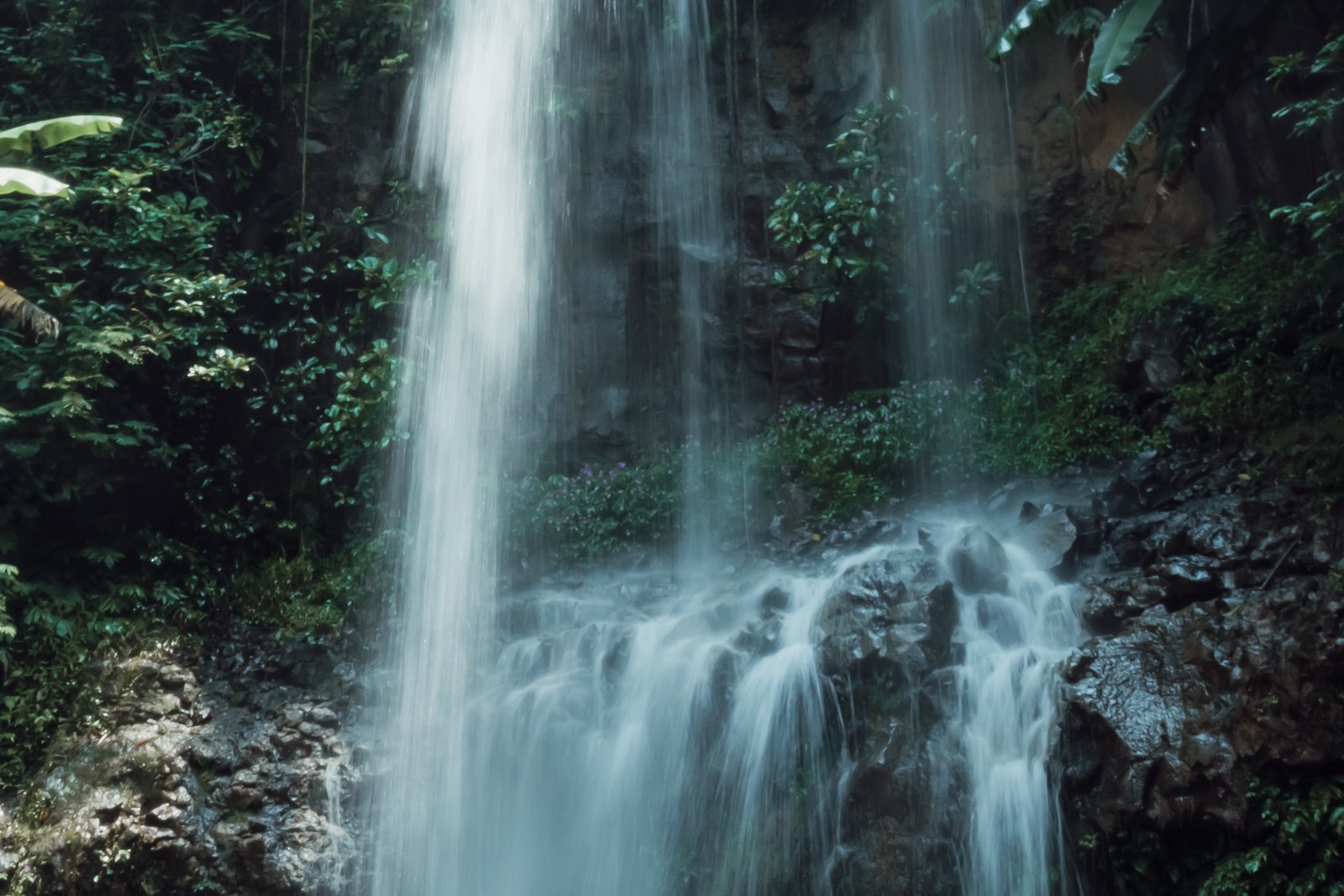
The walking is the point. There are trails through the reserve, some long and some short, most of them over mossy stone and roots and through patches where the light comes down in shafts and the humidity is a real thing. The forest is full of what you would hope for: strangler figs, tree ferns, palms, lianas, and the 桫椤 suō luó, the tree fern, a living relic of the age of the dinosaurs that grows here as it does in a few other damp refuges. Birds and the occasional macaque cross the trail. The reserve also holds a lake, 小妹湖 Xiǎo mèi hú, at the top, and a set of waterfalls – the 吊罗山瀑布 Diàoluó shān pù bù, a tall drop that comes down a rock face and pools below – reached by a path from the parking area.
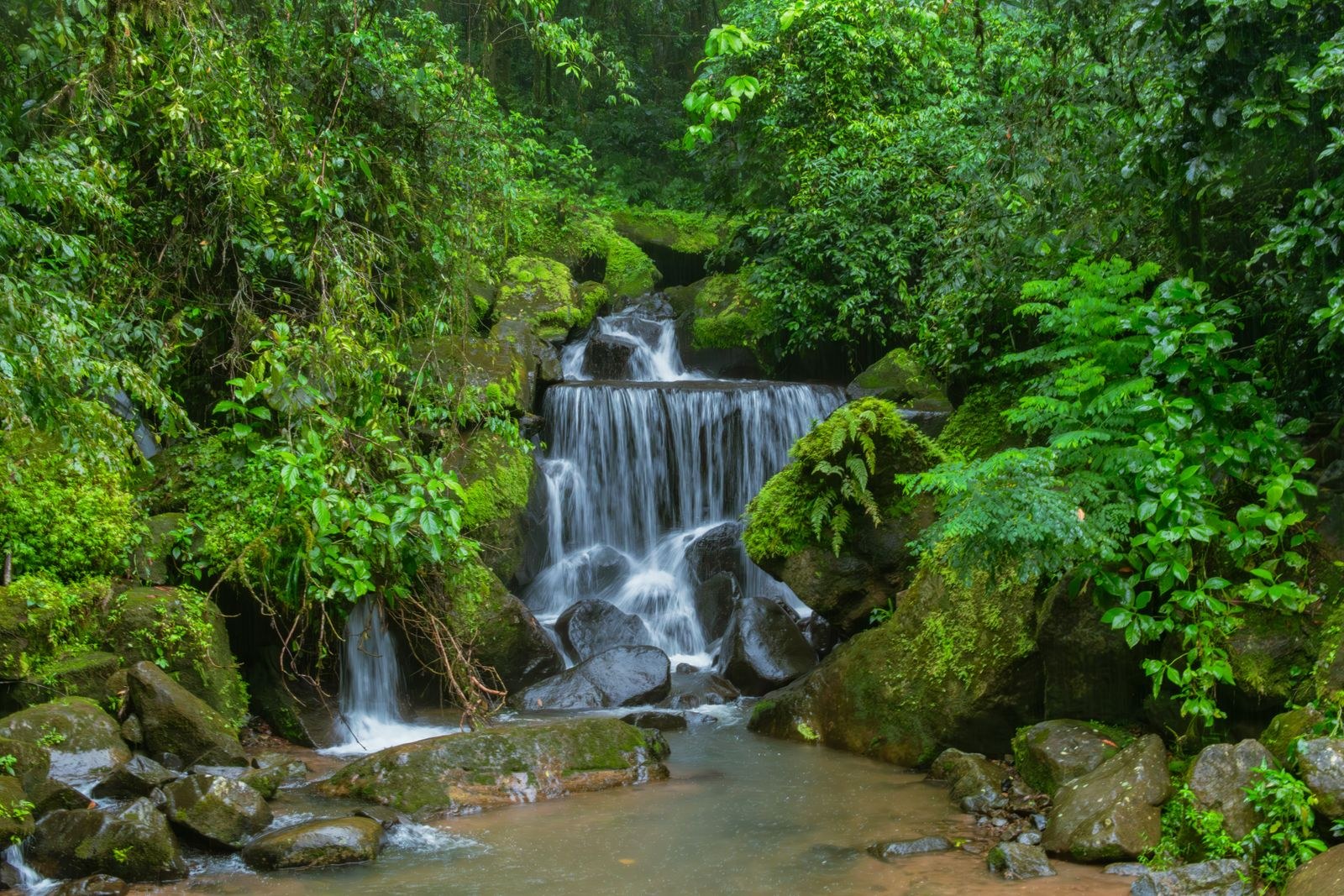
The mountain is cooler than the coast, which is half its charm. As you climb, the heat drops, the air smells of wet earth and leaf, and you can hear the forest rather than a road. It is not a wild expedition; the trails are marked and there are boardwalk sections, and you can do a piece of it in a few hours. But it is a long way from the beach hotels and it is quiet, which is what makes it special. Come in the rainy months for the fullest waterfalls, or in the cooler dry months for the cleanest walking; either way bring water, a dry layer and shoes with grip, because the stone is wet.
Practicalities
Tickets. The reserve charges an entrance ticket, in the region of ¥60 to ¥80, which covers the trails and the waterfall areas. There may be a separate charge for a shuttle to the upper trailheads on a busy day.
Opening hours. The reserve is open roughly 08:00 to 17:00, with entry not allowed after the middle of the afternoon, as the trails are long and the light goes early under the canopy.
Getting there. 吊罗山 is in the north-west of 陵水, reached by road from the county town in about an hour to an hour and a half of winding hill driving; from 三亚 it is about two hours. There is no rail station at the mountain; 陵水站 Língshuǐ zhàn on the ring railway is the nearest, from which you hire a car or a taxi.
Closing day. The reserve is open every day of the year with no weekly closing day, but the upper trails and the waterfall path are closed for safety during heavy rain and for the period of a typhoon warning, when the whole reserve is shut.
Getting there: 陵水 town is the base, about an hour by road, and the ring railway’s 陵水站 is the station; from there a car or taxi up the mountain road is the way in.
flowcloud would say that an island famous for sand and sea keeps, in its northern hills, the forest it had before any of that, and that to walk into it is to remember that the beach was never the whole of the place.