
Two villages in Ding’an explain the whole of its exam-time reputation, and they are half an hour apart by car. 高林村 Gāolín cūn, in the northeast of 龙湖镇 Lóng hú zhèn where the county meets Wenchang and Haikou, was the birthplace of 张岳崧 Zhāng Yuèsōng, the only tanhua that Hainan has produced, and its name means tall trees fit to be pillars, taken in his honour. 龙梅村 Lóngméi cūn, in 雷鸣镇 Léi míng zhèn about 10 km north of the county seat, was the home of 王弘诲 Wáng Hónghuì, the Nanjing minister of rites whose single memorial in 1576 let Hainan’s students sit their examinations on the island. Both are free and both are lived in.
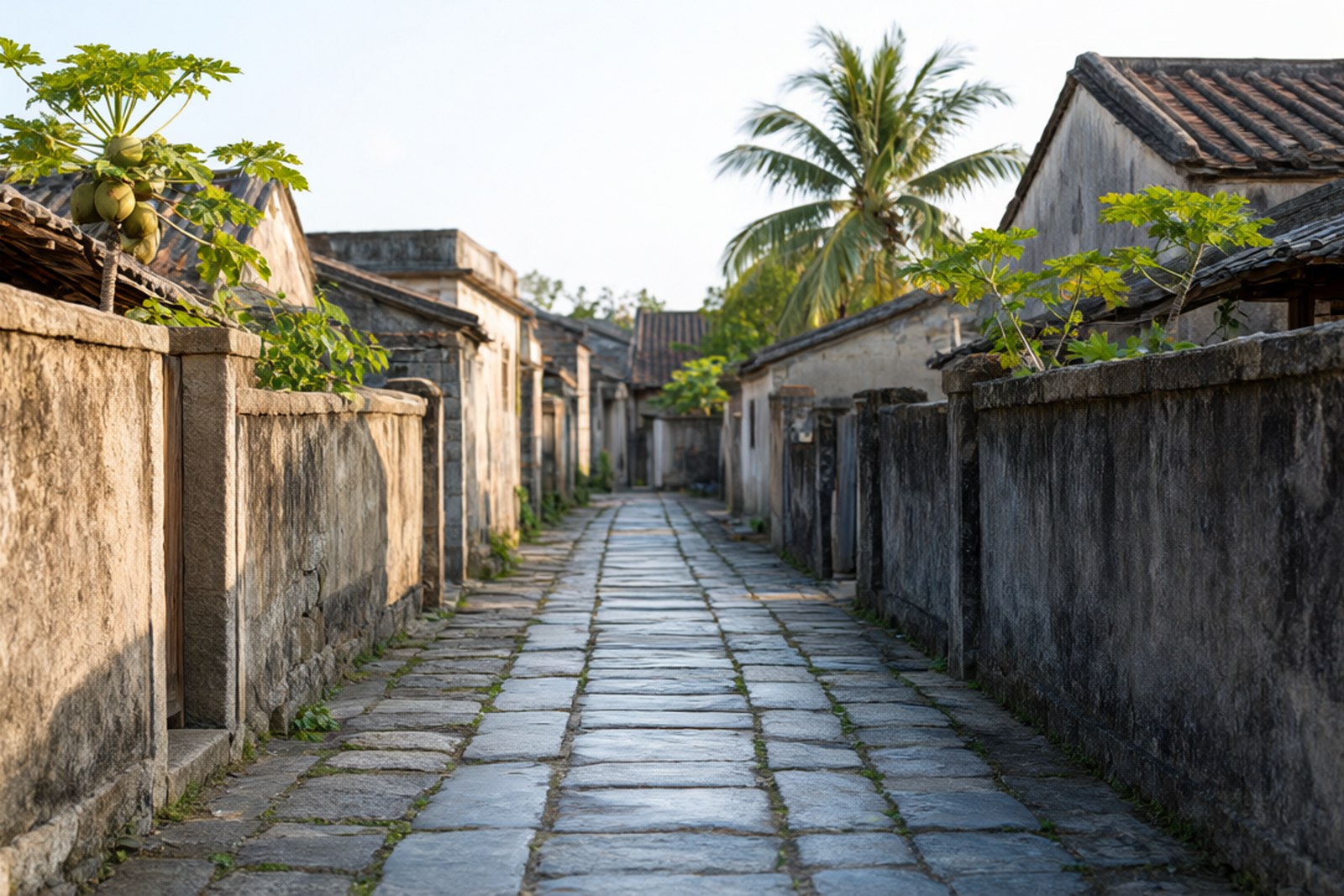
高林村 is the smaller of the two, 1.23 square kilometres and about 185 people, and it is laid out with an order that visitors notice before they can name it: the houses face south along a slope with water in front and hill behind, and the lanes run seven ways one direction and three the other, which is why the official literature calls it one of the few planned villages in old Hainan. 张岳崧 passed in 1809 and served as a Hanlin compiler, as education commissioner in Shaanxi and Gansu and as salt commissioner in Zhejiang. He was also a calligrapher good enough to be given the county’s epithet for the excellence of writing.
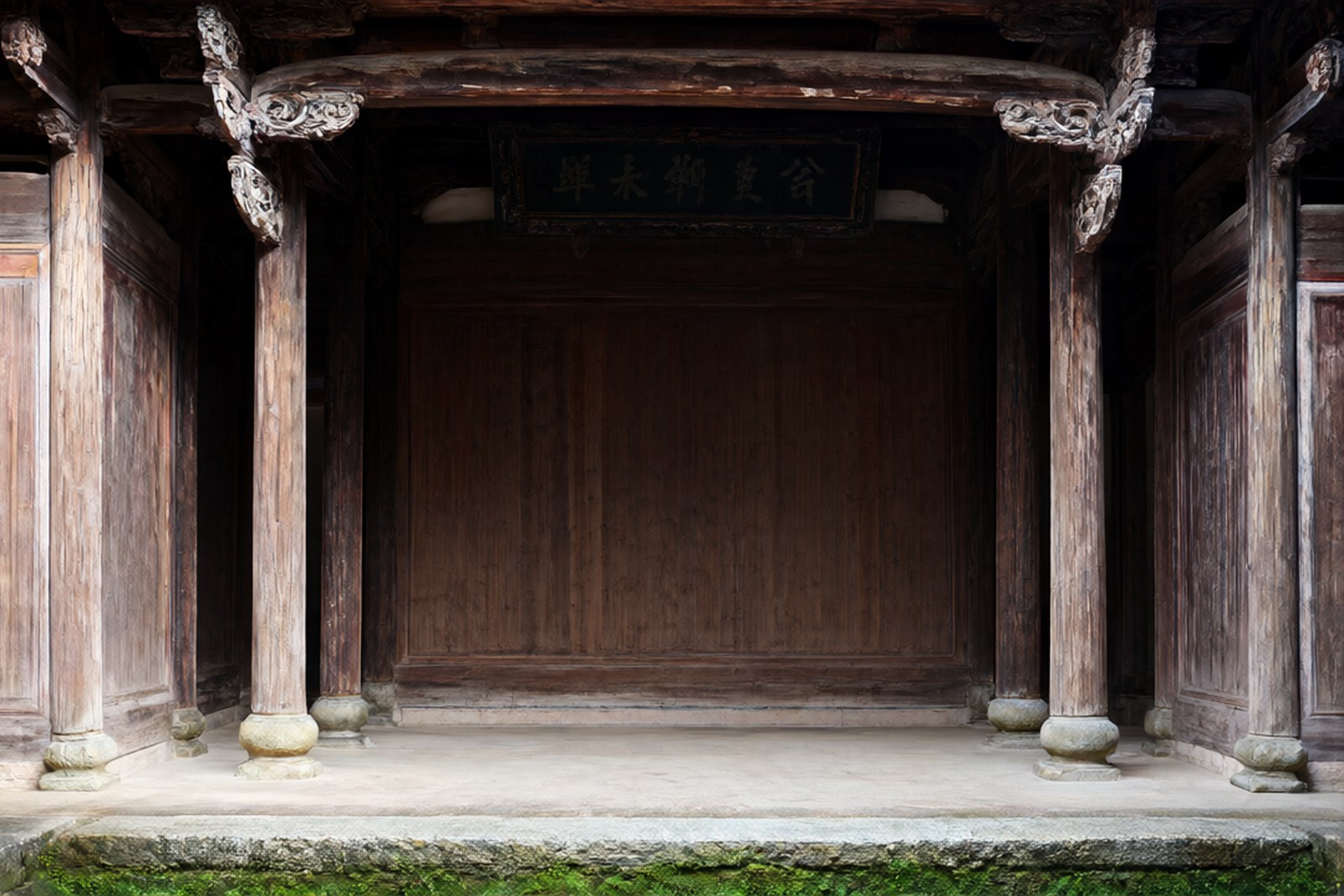
The family’s record is compressed into a local phrase, one soil and three generations of honours: a metropolitan graduate, a provincial graduate and a grandson who also passed. By his descendants’ account he never added a single mu of land, and he held that a house need only keep off the wind and rain, which is what the plaque on his birthplace means: the Hall of Sufficient Ease. The village’s modern record runs from county protection in 1986 to the first batch of Chinese traditional villages in December 2012, 646 nationally and seven in Hainan, with provincial protection in 2008 along the way.
龙梅村 makes the other half of the argument, because 王弘诲 changed the rules. He came first in the Guangdong provincial examination at nineteen and rose to be minister of rites at Nanjing. His memorial of 1576, asking the Wanli emperor for an education commissioner in Qiongzhou, was granted; the phrase for it, returning the examinations to Qiong, is carved into local memory. The village still keeps his 太史坊 Tàishǐ fāng, raised in 1574 for the state historian by the grand coordinator 殷正茂 Yīn Zhèngmào, four columns and three roofs, 5.1 metres high and 7.3 wide, and the most complete Ming stone archway surviving in Hainan, with a couplet on its pillars in the calligraphy of 董其昌 Dǒng Qíchāng, his own pupil.
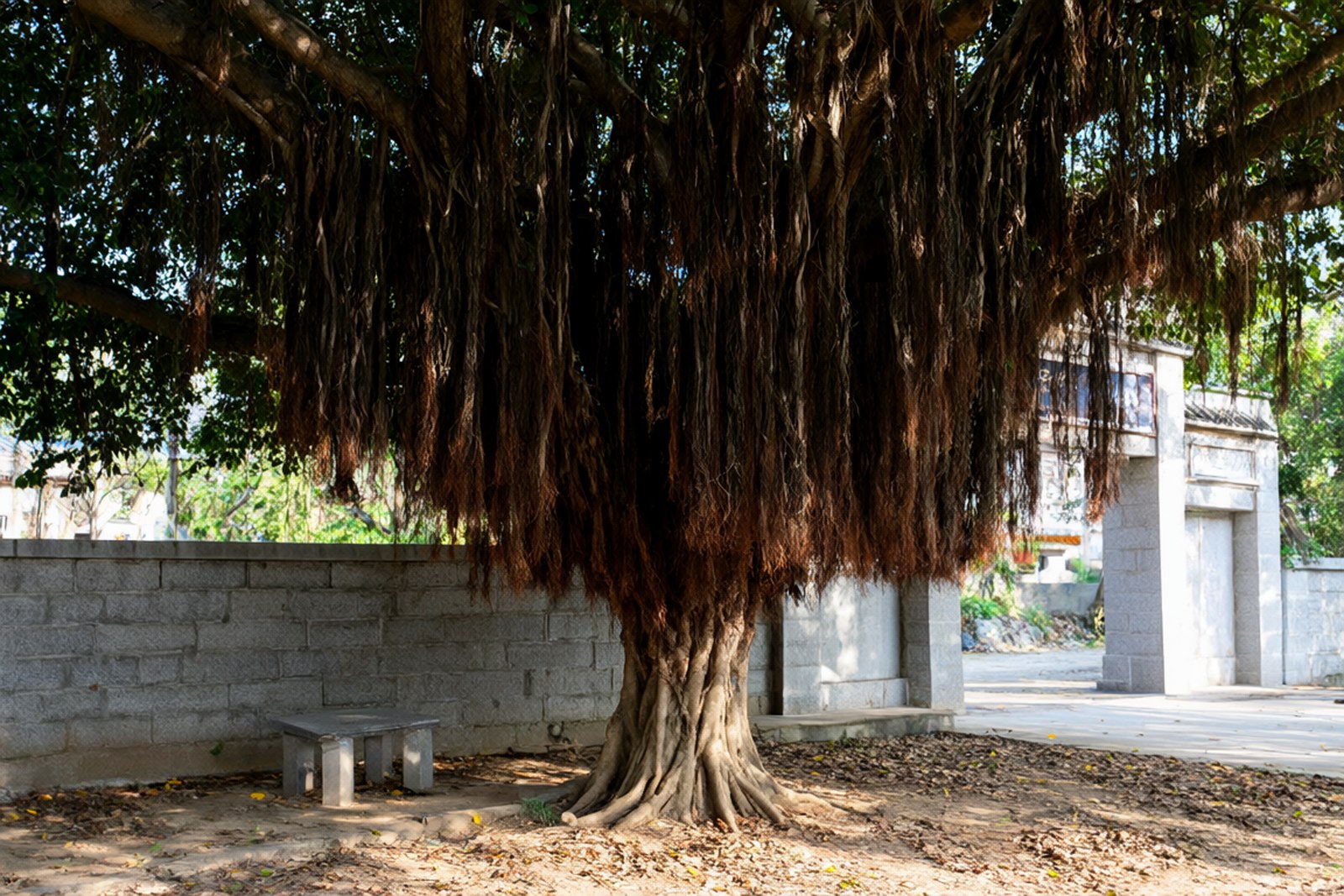
The hall and the house are the other two stops. The 王氏宗祠 was put up in the Wanli period with a gate, the 八角殿 Bā jiǎo diàn or octagonal hall, a main hall and two side corridors; the gate and corridors are gone, and the octagonal hall burned at the end of the Ming and was rebuilt in the Kangxi period. Both the hall and the archway were protected at provincial level in 1994. The former residence began in the Jiajing period and is described as a courtyard house of about 500 square metres, or as a three-courtyard brick and timber house with the largest hall in a village house at nineteen rows of tiles. In 2019 the villagers raised more than 1.2 million yuan themselves and built a square at the entrance.
Practicalities
Tickets. Both villages are free, on the county’s own 2014 statement that each is open all day without charge, and nothing found since contradicts it. There is no ticket window, no gate and no parking fee, and the only money a visitor is likely to spend is at a village shop or as a donation at the ancestral hall. The legal status points the other way: the archway and the ancestral hall are provincial protected sites, and both are still in use by the families that own them.
Opening hours. The villages are inhabited lanes rather than attractions, and the sensible rule is the one the residents would give: come in daylight, in the afternoon rather than at noon, and keep out of courtyards that are clearly private. An hour to two hours covers 高林村 on foot and an hour to ninety minutes covers 龙梅村, where the archway, the hall, the residence and the square are close together. A guide is worth arranging in advance: 张党权, a seventh-generation descendant of the tanhua, at 高林村, and 王明照 at 龙梅村.
Closing day. No closing day is reported for either village. The closures that happen are family occasions rather than rest days: the ancestral hall of 龙梅村 is busiest on the days the clan gathers to make offerings, which is when a visitor should keep to the edge of things, and both villages fill with returning relatives at the lunar New Year, when the lanes are at their most interesting and their least available.
Getting there. The two villages sit on either side of the county town and are easiest combined by car in a single day. For 高林村, leave the eastern expressway at the Juding junction and follow the road towards 龙湖镇; the drive from Haikou is about 54 to 62 km. For 龙梅村, drive north from the county seat, about ten km and twenty minutes, on the Ding’an to Longmen axis through 雷鸣镇; the Haikou to Ding’an coaches end at the county town.
Spend the day if you have it: the two villages are one lesson taught twice, one household reaching the top of the examination ladder and the other moving the ladder. Walk the lanes at Gaolin first and read the mottoes cut into the stone, one of which says that the greatest nobility lies in learning the way and the deepest joy in reading, then drive north and stand under Dong Qichang’s couplet at Longmei. One caution: the age of 高林村 is given as about 300 years and as 266, its place in the first batch of traditional villages is dated 2012 by some sources and 2013 by others, and 龙梅村’s listing is given as 2016 without its batch number.
Getting there: 高林村 lies in the northeast of 龙湖镇 in 定安县 at the edge of the Wenchang and Haikou boundaries, and 龙梅村 in 雷鸣镇 about 10 km north of the county seat, both open all day and free by the county’s own statement, both reachable by car from the eastern expressway’s Juding junction or the county town, with 张党权 at Gaolin and 王明照 at Longmei as guides; the 1574 archway and the Wang ancestral hall are provincial protected sites, no closing day is reported at either village, and Ding’an has no railway station, the nearest being Haikou East and Meilan.