
五尺悬孤棺,一关锁蜀滇。Wǔchǐ xuán gū guān, yī guān suǒ Shǔ Diān – The five-foot way hangs a lone coffin; one pass locks Shu from Dian.
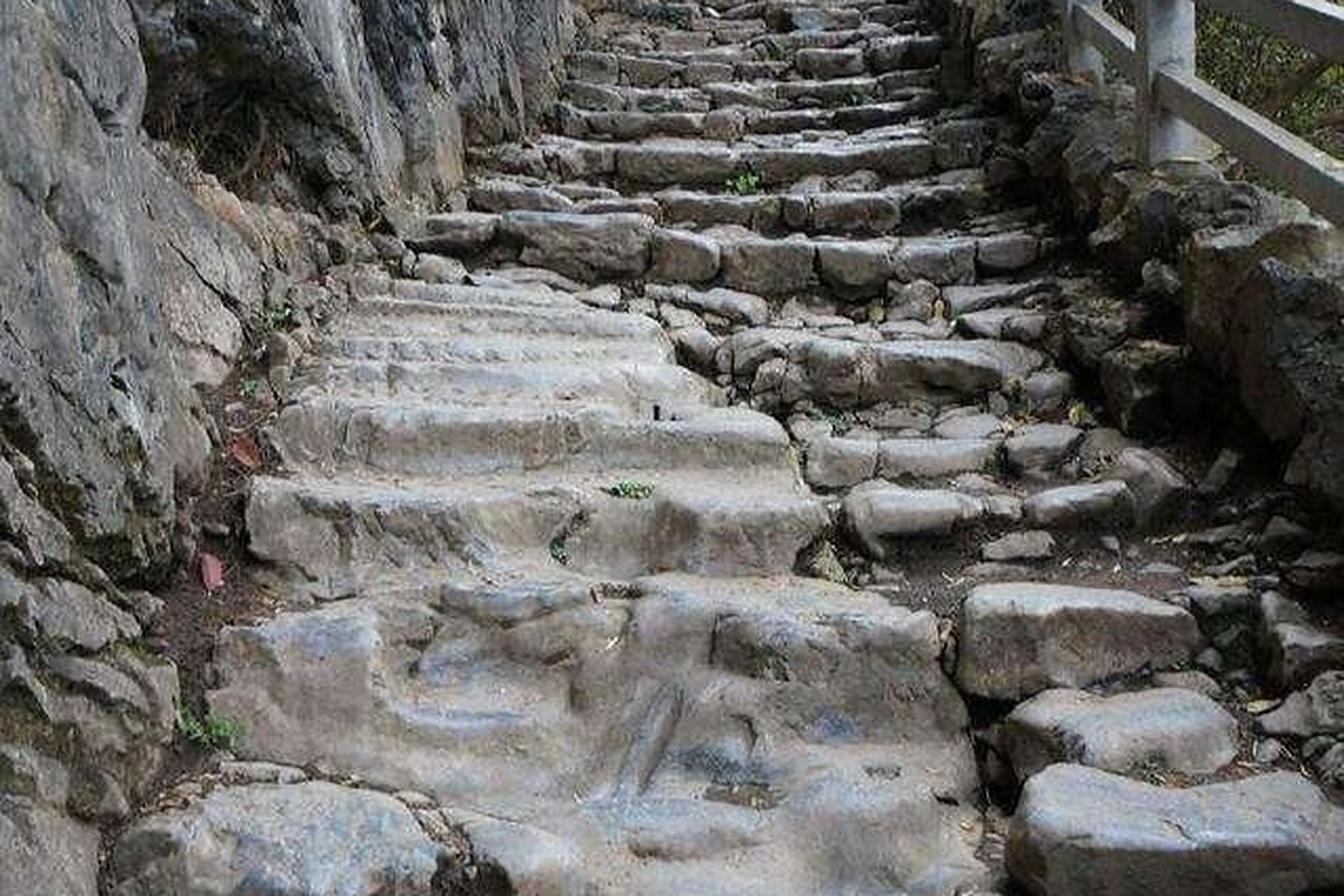
豆沙关 Dòushā Guān Doushaguan is not a mountain resort with a view platform — it is, in the plainest sense, a pass-town in 盐津县 Yánjīn Xiàn Yanjin County strung along the 关河 Guān Hé river, where the 五尺道 Wǔchǐ Dào the Five-Foot Way — the narrow Qin-era plank road cut into the cliff to link 蜀 Shǔ Sichuan with 滇 Diān Yunnan — still survives as a flight of stone steps, and where the 僰人悬棺 Bórén Xuánguān Bo people’s hanging coffins are wedged into the cliff high above the water. It is also the 石门关 Shímén Guān Stone Gate Pass, the narrow throat where the gorge pinches to a slot, so that for two thousand years whoever wanted to move between the Sichuan basin and the Yunnan plateau had to funnel through here. What you are actually visiting is a heritage corridor, not a ticketed garden: the “scenic area” is the road, the cliff tombs and the river, and the rest is a rebuilt 古镇 gǔzhèn old town that wears its history a little too neatly.
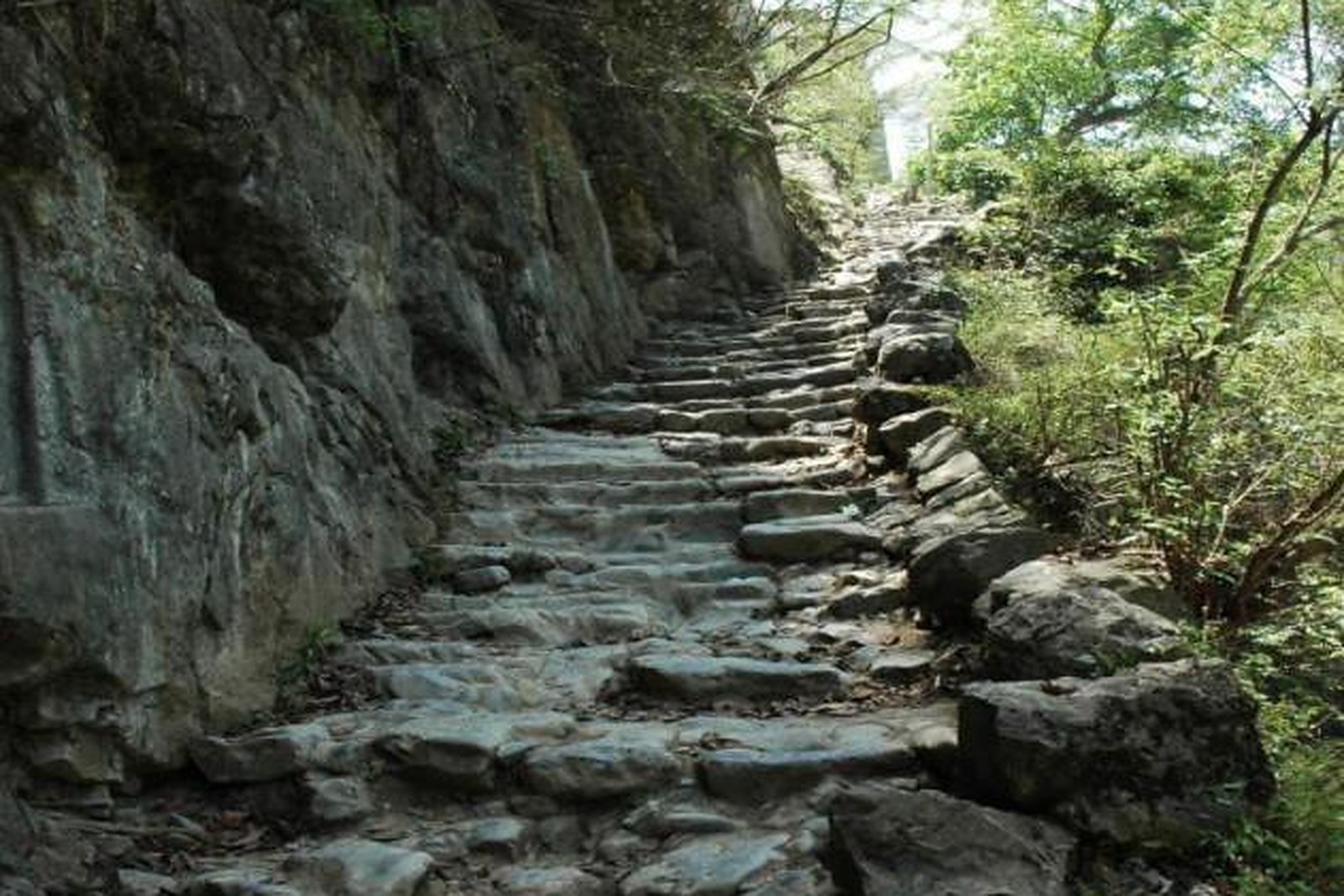
The honest grade is “a real ancient road with a reconstructed stage around it,” and that is the fair read. The 五尺道 Wǔchǐ Dào at 豆沙关 Dòushā Guān is genuinely old — the stretch was opened in the 秦 Qín Qin era to carry the 蜀 Shǔ-to-Diān route, and the surviving flagged stones and the cliff notches are the real article, not a replica. The 悬棺 xuánguān hanging coffins are the genuine cliff tombs of the 僰人 Bórén Bo, an ancient group that has long since vanished, and they sit in their rock niches exactly where they were placed. There is also the 唐袁滋摩崖 Táng Yuán Zī móyá Tang-dynasty cliff inscription carved by the envoy 袁滋 Yuán Zī Yuan Zi (worth confirming the grading and the exact reign year, because the write-ups vary). Getting here is easy by 昭通 Zhāotōng standards: 豆沙关 Dòushā Guān lies on the 内昆铁路 Nèikūn Tiělù Neikun railway corridor, roughly a couple of hours south of 昭通 Zhāotōng (worth confirming the current train and bus options — a 豆沙关站 Dòushā Guān Zhàn has existed on the line, but confirm it still sells passenger tickets before you plan around it).
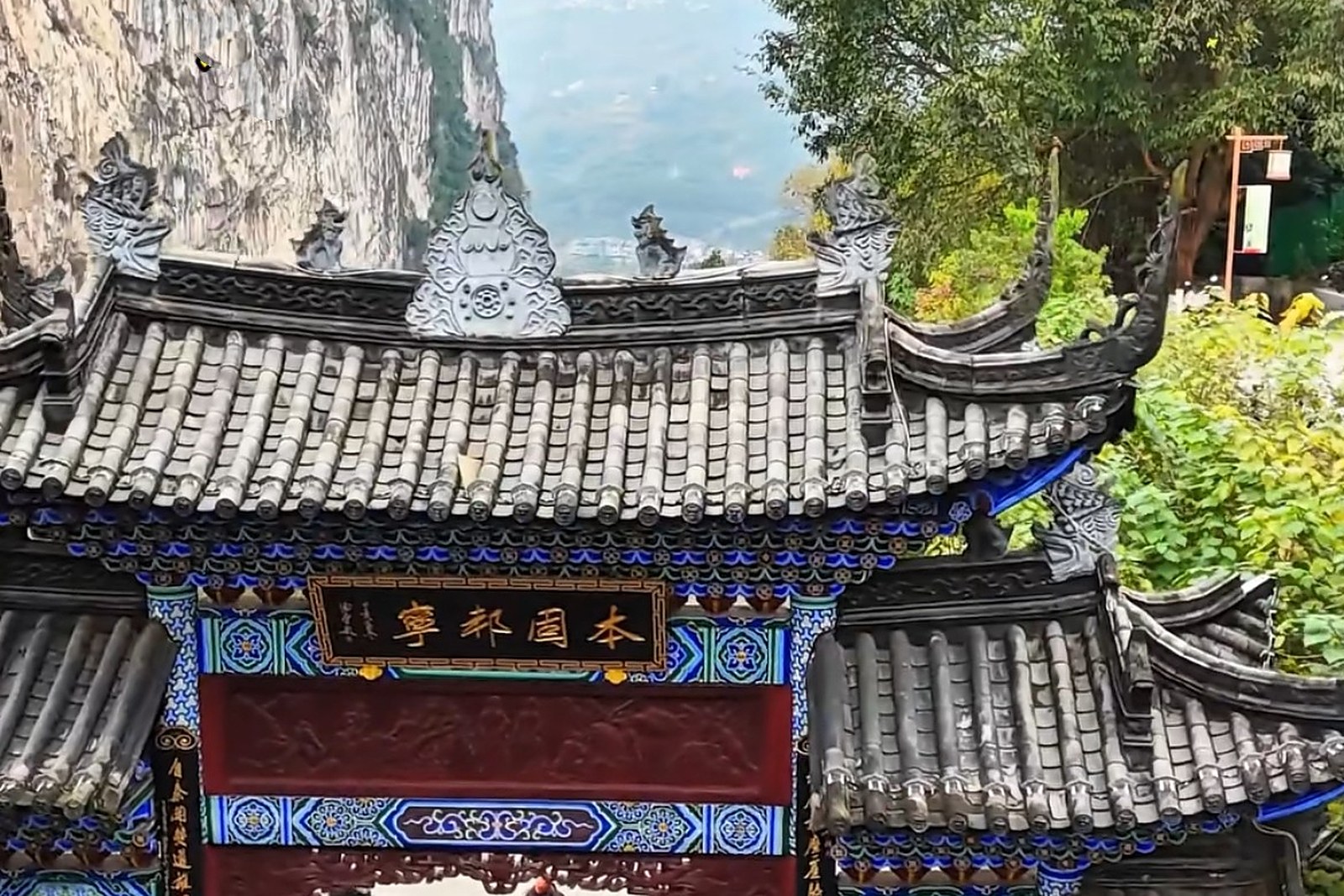
The wry take is that Doushaguan is sold as “the living Qin road and the mysterious hanging coffins,” and the road and the coffins are exactly as advertised while the “living ancient town” is mostly a costume. What is overrated is the rebuilt 古镇 gǔzhèn lanes that charge you for the frame more than the fact — you did not come three hours for the souvenir stalls. What is worth it is real: walking the actual 五尺道 Wǔchǐ Dào stone steps with the 关河 Guān Hé hissing below, craning at the 僰人悬棺 Bórén Xuánguān Bo coffins in their high niches, and reading the 袁滋摩崖 Yuán Zī móyá inscription. Best season is the dry autumn and spring, when the cliff is not weeping and the river is low; the summer rains slick the steps and swell the gorge. Carry ID for the routine checks, do not scramble at the cliff tombs (they are fragile and protected, not a climbing wall), and give the pass an hour or two rather than a day — it is a stop on a route, not a destination in itself, and the honest visitor leaves having seen the road and the coffins, not having “done” a town.
The self-deprecating footnote: I arrived expecting a lost kingdom and found a tidy strip of shops with a very old staircase behind it — and yet the staircase and the coffins were enough, because the staircase is the point, not the shops. 豆沙关 Dòushā Guān rewards the person who walks the 五尺道 Wǔchǐ Dào and looks up, and quietly forgets the person who came for the recreation. Go for the cliff and the road; let the gate be the gate, and the town be the town.
Practicalities
- Rating: A pass-town in Yanjin County on the Guan River, where the Qin-era Five-Foot Way, the Bo hanging coffins and the Stone Gate Pass survive; a heritage corridor, not a graded ticketed resort.
- Tickets: The rebuilt 古镇 gǔzhèn and the cliff sights are managed and likely carry a combined ticket (worth confirming the current price and what it covers — the 悬棺 xuánguān and the 五尺道 Wǔchǐ Dào access may be bundled or separate). The river and the pass itself are free to look at.
- Address: 豆沙关镇 Dòushā Guān Zhèn, 盐津县 Yánjīn Xiàn Yanjin County, 昭通市 Zhāotōng Shì Zhaotong — on the Neikun railway corridor, a couple of hours south of 昭通 Zhāotōng.
- Time needed: One to two hours for the road, the coffins and the pass; a half day if you linger at the inscription and the riverside, but it is a stop, not an overnight.
Words and Names
豆沙关 Dòushā Guān Doushaguan · the pass-town in Yanjin where the ancient road and coffins meet 盐津县 Yánjīn Xiàn Yanjin County · the Zhaotong county that holds Doushaguan 五尺道 Wǔchǐ Dào Five-Foot Way · the Qin-era cliff road linking Shu and Dian 僰人悬棺 Bórén Xuánguān Bo hanging coffins · the cliff tombs of the vanished Bo people 悬棺 xuánguān hanging coffin · the cliff-burials of the ancient groups 石门关 Shímén Guān Stone Gate Pass · the narrow throat of the gorge the road funnels through 关河 Guān Hé Guan River · the river the pass and the coffins sit above 唐袁滋摩崖 Táng Yuán Zī móyá Tang Yuan Zi cliff inscription · the national-relic carved envoy record 内昆铁路 Nèikūn Tiělù Neikun Railway · the line that reaches the Doushaguan corridor 蜀 Shǔ Shu · the old name for the Sichuan basin the road climbs from
flowcloud would say that 豆沙关 Dòushā Guān is Yanjin’s pass on the 关河 Guān Hé — the 五尺道 Wǔchǐ Dào Qin road, the 僰人悬棺 Bórén Xuánguān Bo coffins in their cliff niches and the 石门关 Shímén Guān Stone Gate throat — and that the honest move is to walk the real stone steps and look up at the tombs, because the road and the coffins are genuine while the rebuilt 古镇 gǔzhèn is a costume, the pass is a one- or two-hour stop not a day, and the 唐袁滋摩崖 Yuán Zī móyá inscription is the quiet prize. All checked October 2026.
Getting there: Dou Sha Guan in Yanjin county, on the northern corridor about two hours from Zhaotong (worth confirming the bus frequency); the Five-Foot Road plank path and the Bo people hanging coffins are on site, an easy half-day stop. All checked October 2026.