
A Thousand-Year Timber Tower: Dule Temple
辽构千年撑阁在,观音十一面低眉 Liáo gòu qiānnián chēng gé zài, guānyīn shíyī miàn dīméi – A Liao-era frame has held the pavilion up a thousand years; the eleven-faced Guanyin gazes down with lowered brows
独乐寺 Dúlè Sì stands in the middle of Jizhou’s county town in 天津市蓟州区 Tiānjīn Shì Jìzhōu Qū Jizhou District, and it is not a rebuilt old temple – it is the real Liao dynasty article, its gate and Guanyin Pavilion raised in 984 and never replaced since. The pavilion’s timber frame, twenty-three meters of interlocking brackets around a colossus, is among the oldest wooden structures standing anywhere, and the temple was among the first batch of national heritage listings in 1961.
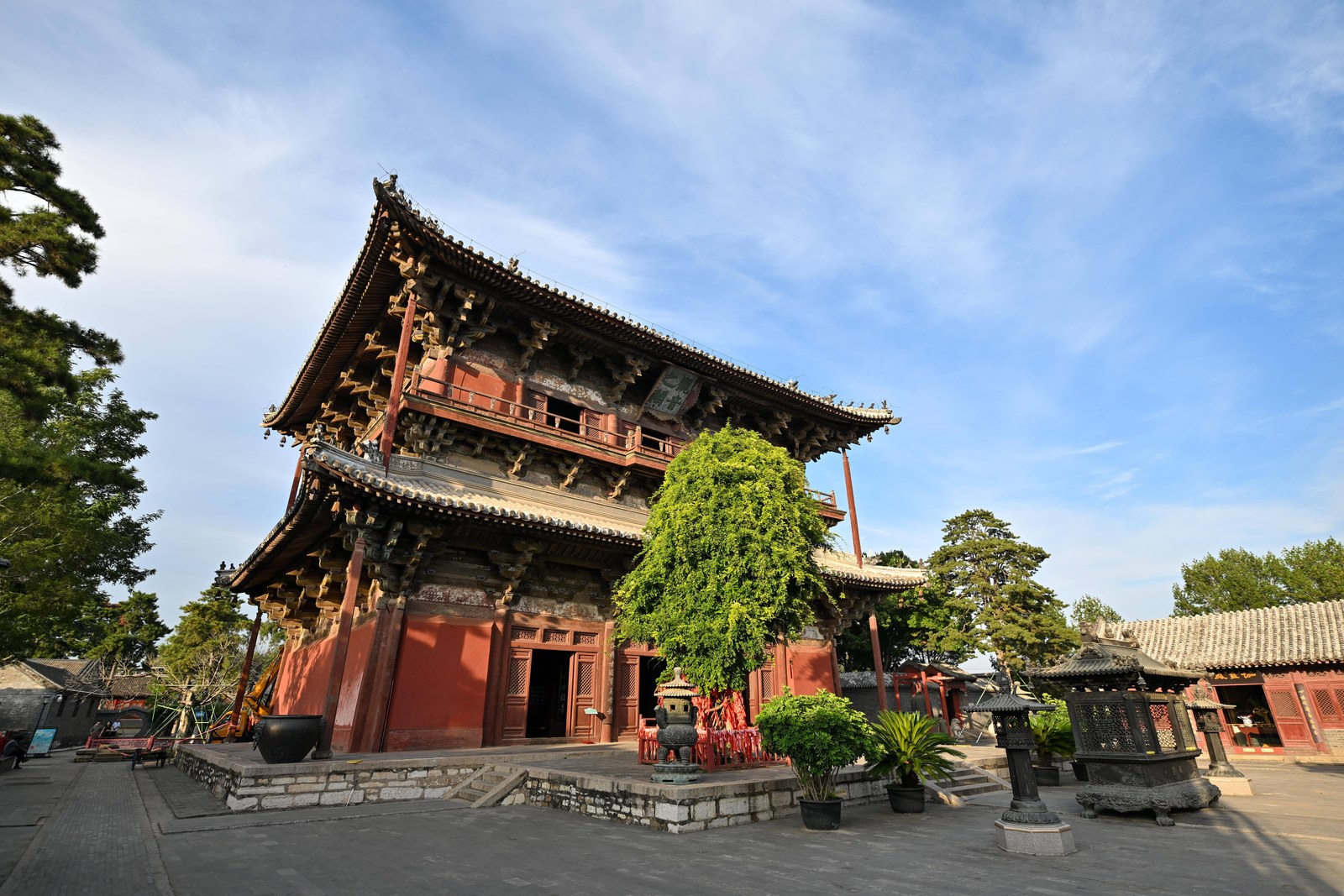
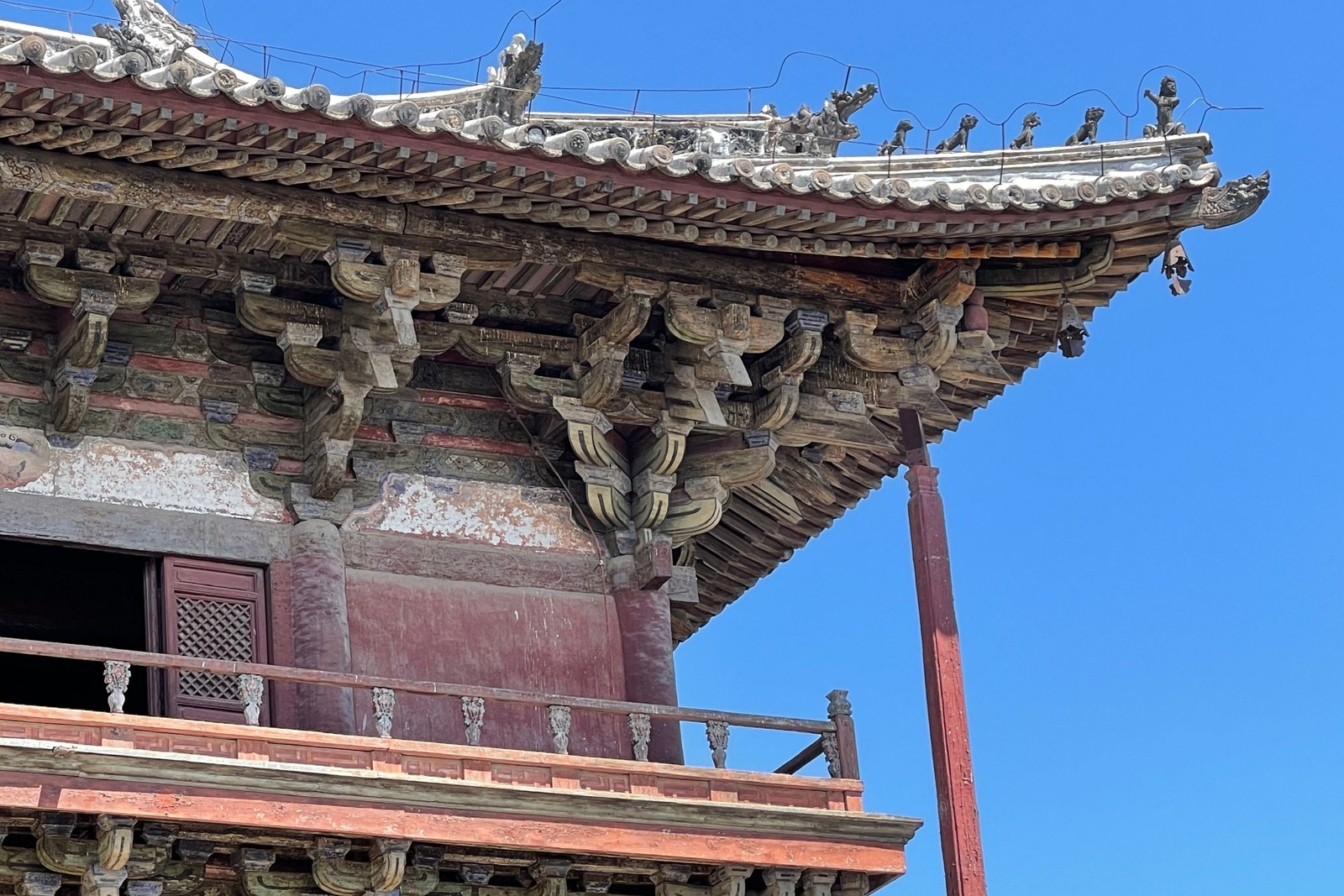
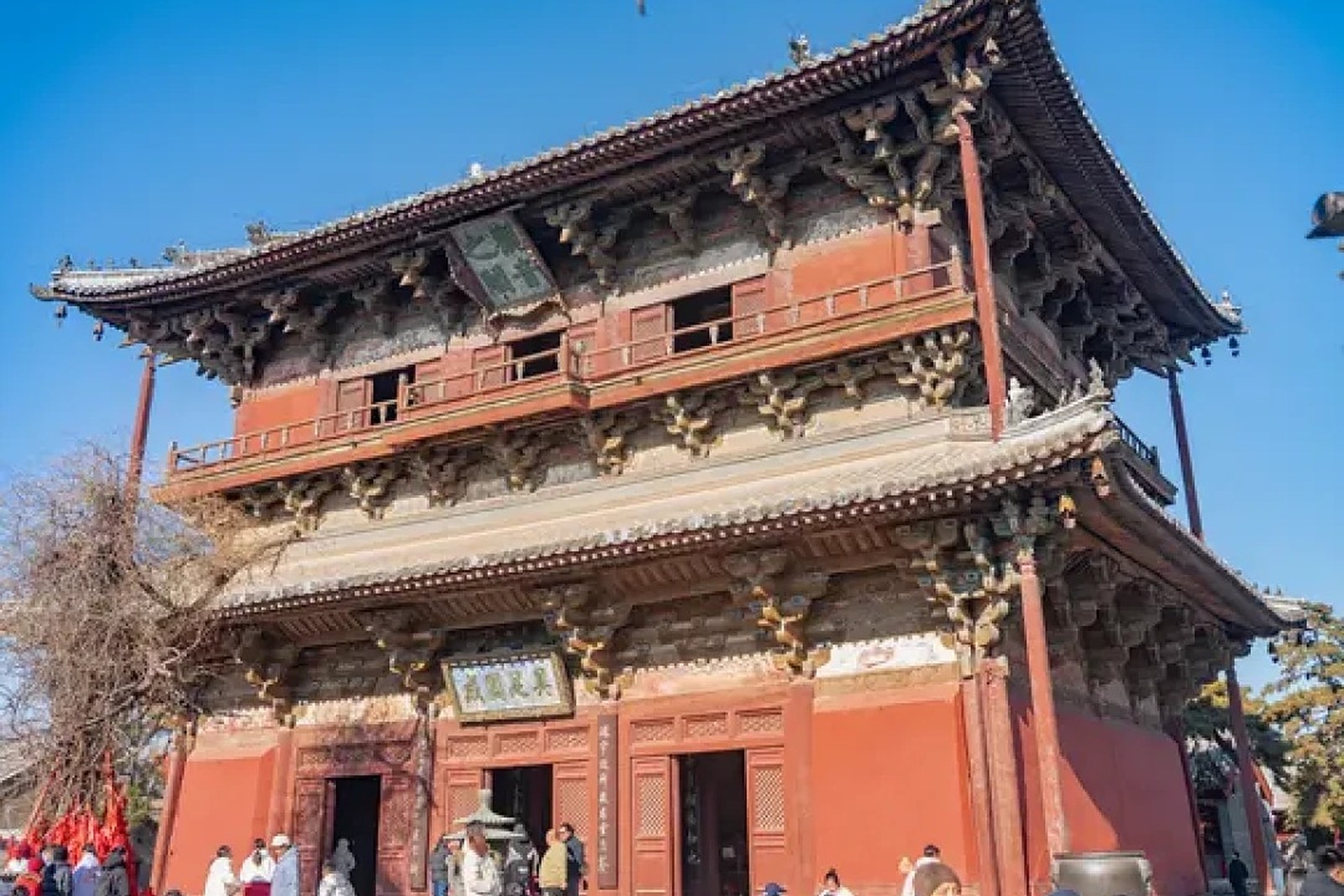
The pavilion is the show. Walk in and the statue fills the core: a sixteen-meter eleven-faced Guanyin rising through three roof levels, with the balcony galleries ringing it so Tang-dynasty pilgrims could circle the body at height. The bracket sets –Dougong the size of furniture – carry the whole cantilever without a single nail, which is why the frame has shrugged off earthquakes that flattened the town around it.
The gate in front hides its own treasure: a plaque reading 独乐寺 attributed by local tradition to Li Bai, and the gate’s own clay guardians, stern Liao-era generals, stare down the entrance axis. Between gate and pavilion the courtyard is compact – ten minutes of level flagstone – which makes the temple the easiest of Jizhou’s great sights to fold into a town walk.
The temple rewards the slow look. Liang Sicheng’s 1932 survey here became a founding document of Chinese architectural history, and his drawings still hang in exhibitions about the site; the roof profile he praised reads best from the southwest corner in afternoon light. Keep the visit short, then walk the old town’s food streets two blocks east.
Practicalities
- The temple sits in the town center; most visitors walk or taxi in – parking is street-side.
- Photography inside the pavilion is restricted; the exterior and gate photograph freely.
- An hour covers gate, pavilion and side halls; pair with the old town lunch streets nearby.
- The side halls hold Liao-era wall paintings – ask the attendants which panels are original.
Words and Names
独乐寺 Dúlè Sì Dule Temple, “solitary joy”; 观音阁 Guānyīn Gé the Guanyin Pavilion; 斗拱 dǒugǒng the interlocking bracket sets; 辽代 Liáo dài the Liao dynasty (907-1125); 梁思成 Liáng Sīchéng the architect who surveyed the temple in 1932. Beyond the temple, the same 天津市蓟州区 Tiānjīn Shì Jìzhōu Qū Jizhou District keeps more places worth the detour: 盘山 Pán Shān the emperor-counted mountain, 黄崖关长城 Huángyáguān Chángchéng the Great Wall’s Jizhou pass, 梨木台 Límùtái the quartz gorge, or 九山顶 Jiǔshāndǐng the city’s rooftop – four more doors into the same Jizhou District. Once the pavilion is behind you, our Jizhou food map fills the table.
flowcloud would say Dule Temple is time held by carpentry: a thousand-year frame still doing its job, around a statue that makes every neck in the room bend back. All checked November 2026.
Getting there: The temple fronts the old town’s west street in Jizhou’s seat – walk from the central blocks or park street-side by the gate; an hour covers gate, pavilion and side halls, with the old-town food streets two blocks east. All checked November 2026.