
The Gorge the River Drew: Dushanzi Grand Canyon, Karamay
亿年河刀切戈壁,一谷辫水写天书 Yì nián hé dāo qiē gēbì, yī gǔ biàn shuǐ xiě tiānshū – A river’s blade has cut the gobi for eons; one gorge of braided water writes a heavenly script
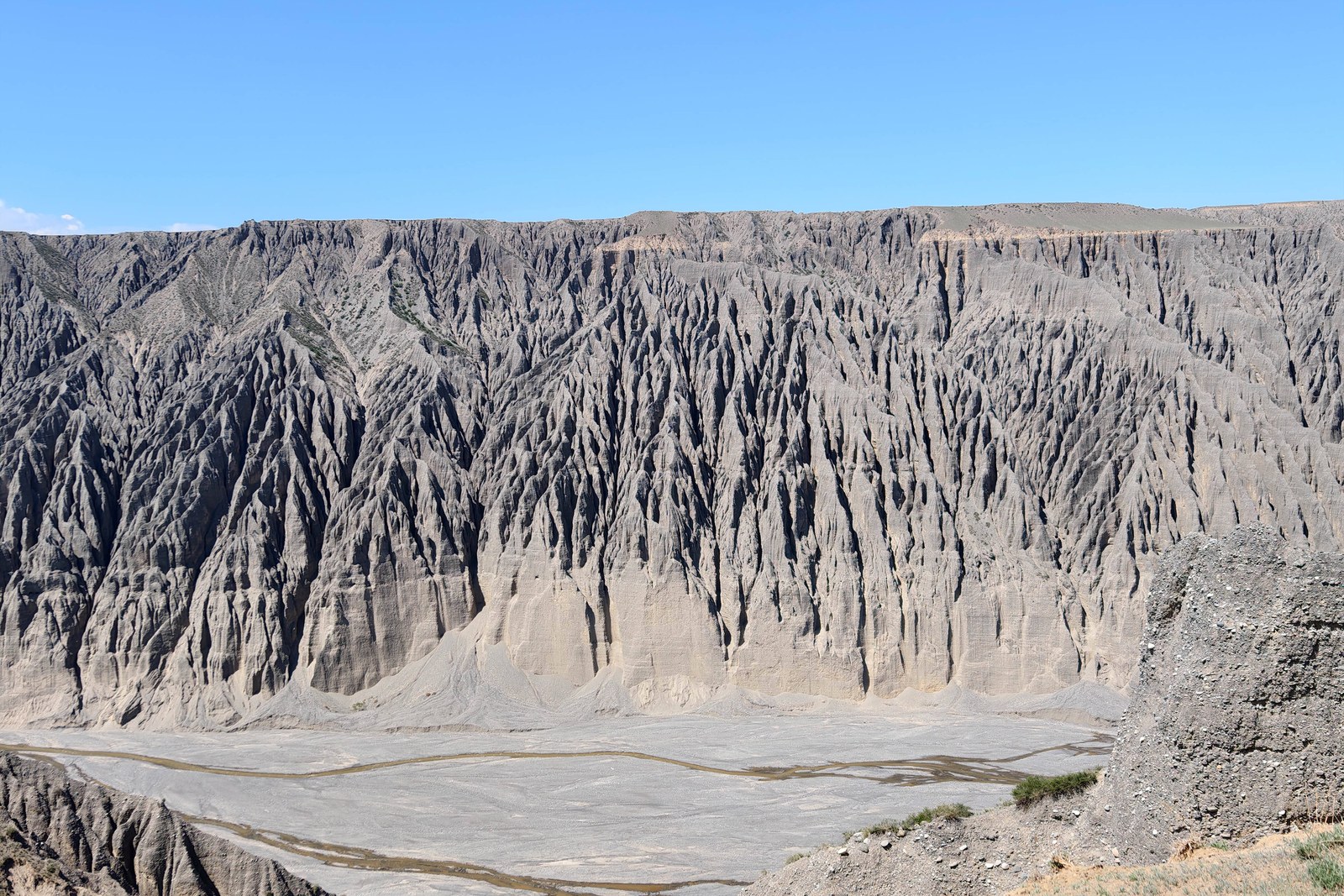
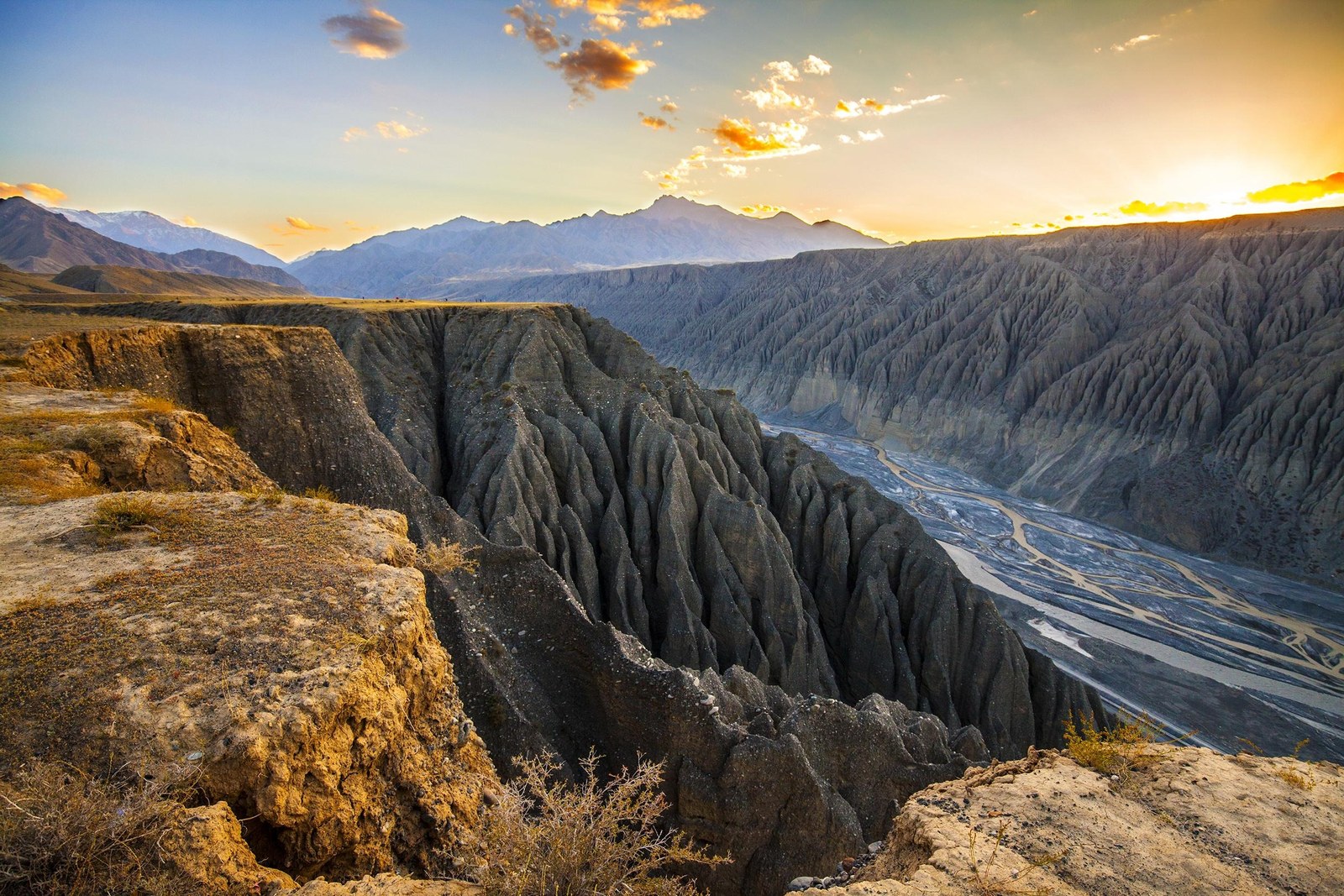
正文:独山子大峡谷 Dúshānzǐ Dàxiágǔ Dushanzi Grand Canyon is the cut in the earth at 克拉玛依市 Kèlāmǎyī Shì Karamay City’s southern gate – a kilometre-wide, two-hundred-metre-deep gorge where the Kuytun River has sawed through soft Pleistocene gravels on the edge of 独山子区 Dúshānzǐ Qū Dushanzi District, leaving walls so steeply ribbed they read like organ pipes. The canyon’s signature is its braided floor: the river splits into a silver lattice of channels that shifts with every flood, visible from the rim as a braid of light. Glass walkways and viewing decks now project over the rim, the Tianshan snowfront stands behind, and the whole formation – “the first scenery on the Duku Highway” – sits twenty minutes from a downtown built on oil.
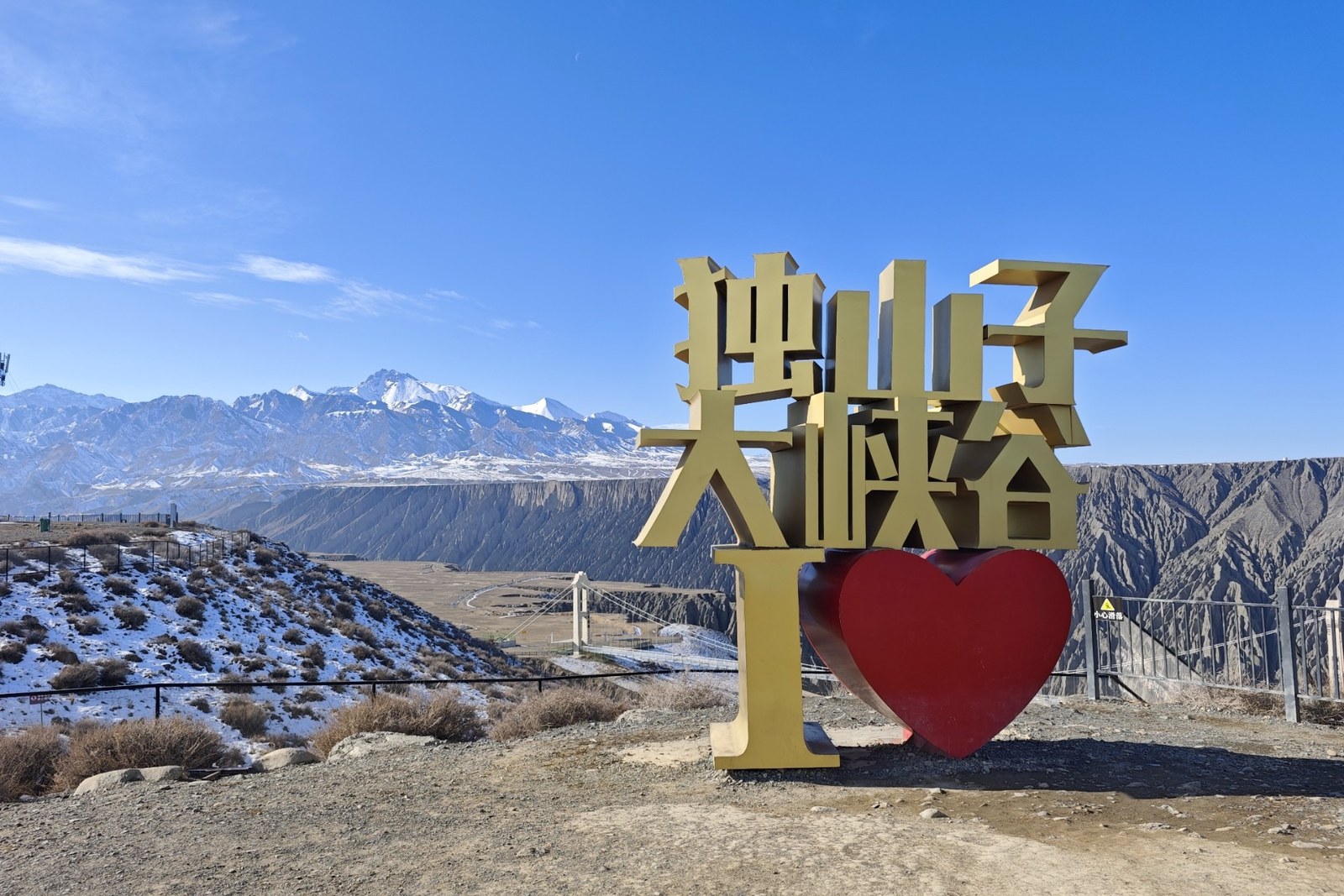
The rim decks are the first stop. From the glass platforms the gorge drops in fluted walls, the braided river crawls far below, and the snowline frames the south – a single view that stacks desert, water-carved architecture and alpine light. The I-love-Dushanzi landmark letters by the entrance have become the obligatory group photo, but walk ten minutes along the rim and the crowds thin to nothing.
Down inside, the canyon is a textbook of erosion. The soft strata stripe every wall – rust, grey, bone-white – and the ribs sharpen where runoff finds a seam; after rain the colours deepen and small falls thread the faces. Photographers favour late afternoon, when the west light rakes the flutes and the river braid catches silver.
The canyon pairs naturally with the Duku Highway legend – it stands at that road’s northern approach – and makes a full southern-day loop from Karamay City: canyon rim in the morning, the oil-town streets of Dushanzi for lunch, the drive back through pumpjack country toward evening. Surfaces and walkways are engineered but wind-exposed; the gorge is dramatic in any season and uncrowded outside holidays.
Practicalities
Beyond the canyon, the same 克拉玛依市 Kèlāmǎyī Shì Karamay City keeps more places worth the detour: 黑油山 Hēiyóu Shān Black Oil Mountain the founding seep, 乌尔禾世界魔鬼城 Wū’ěrhé Shìjiè Móguǐ Chéng Urho Ghost City the yardang badlands, 克拉玛依河 Kèlāmǎyī Hé the Karamay River greenbelt, or 百里油区 Bǎilǐ Yóuqū the Baili Oil Region – four more doors into the same 克拉玛依市 Kèlāmǎyī Shì Karamay City. Once the gorge is walked, our Karamay food map fills the table.
Practicalities
Words and Names
flowcloud would say Dushanzi Grand Canyon is the river’s sculpture hall: a braid of silver on the floor, organ-pipe walls above, and snow mountains holding the frame like patient patrons. All checked November 2026.
Getting there: The canyon is Dushanzi district’s own spectacle – about 40 minutes from the Karamay city district by car, entry is ticketed with the rim shuttle, the glass walkways and rope bridges fill half a day, and it doubles as the Duku Highway’s northern trailhead. All checked November 2026.