
The Deer That Came Home: Dafeng’s Père David’s Deer Reserve
百里滩涂草色深,还乡鹿角记潮音 Bǎilǐ tāntú cǎosè shēn, huánxiāng lùjiǎo jì cháoyīn – Over a hundred li of flats the grass grows dark; the homecoming antlers keep the sound of the tide
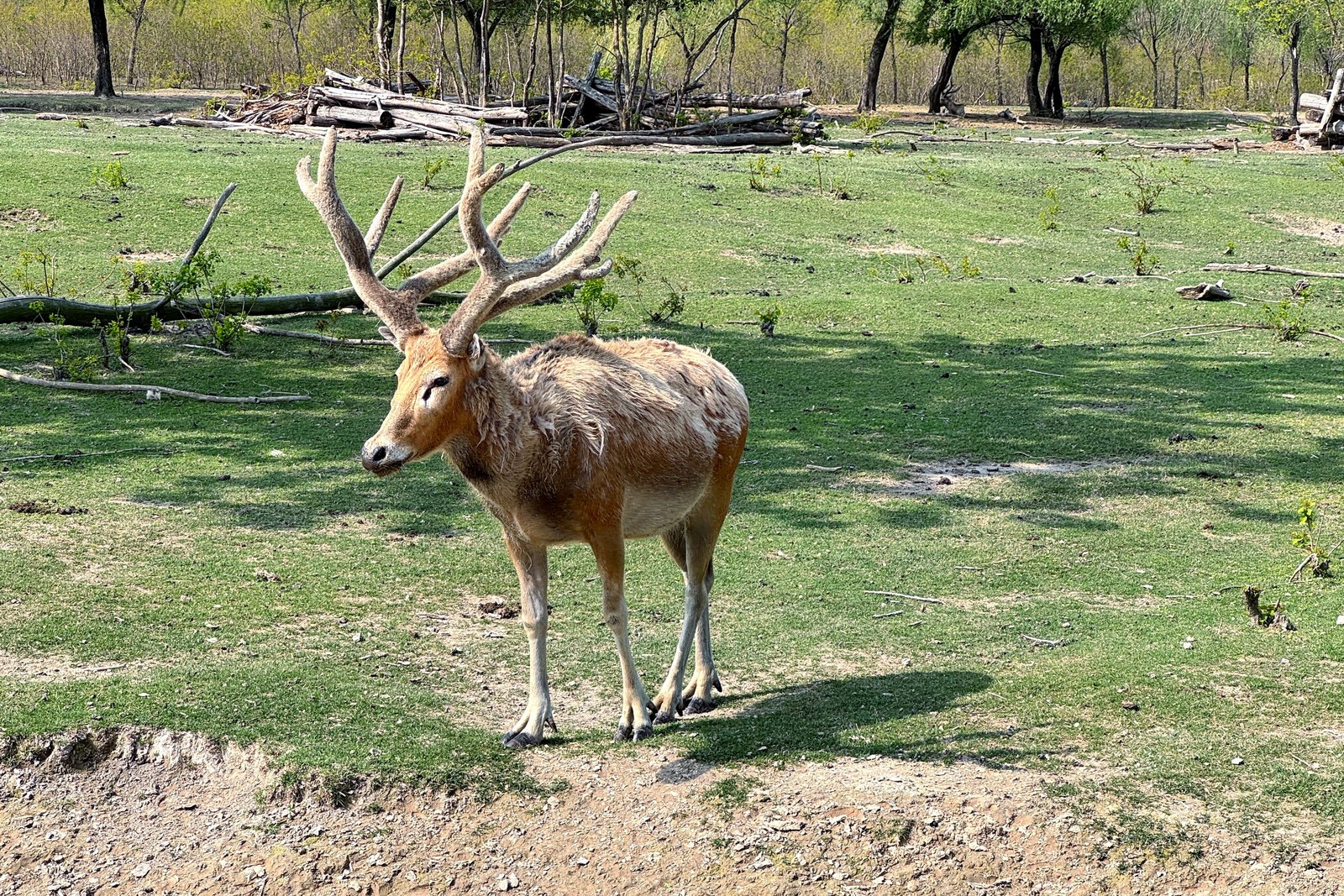
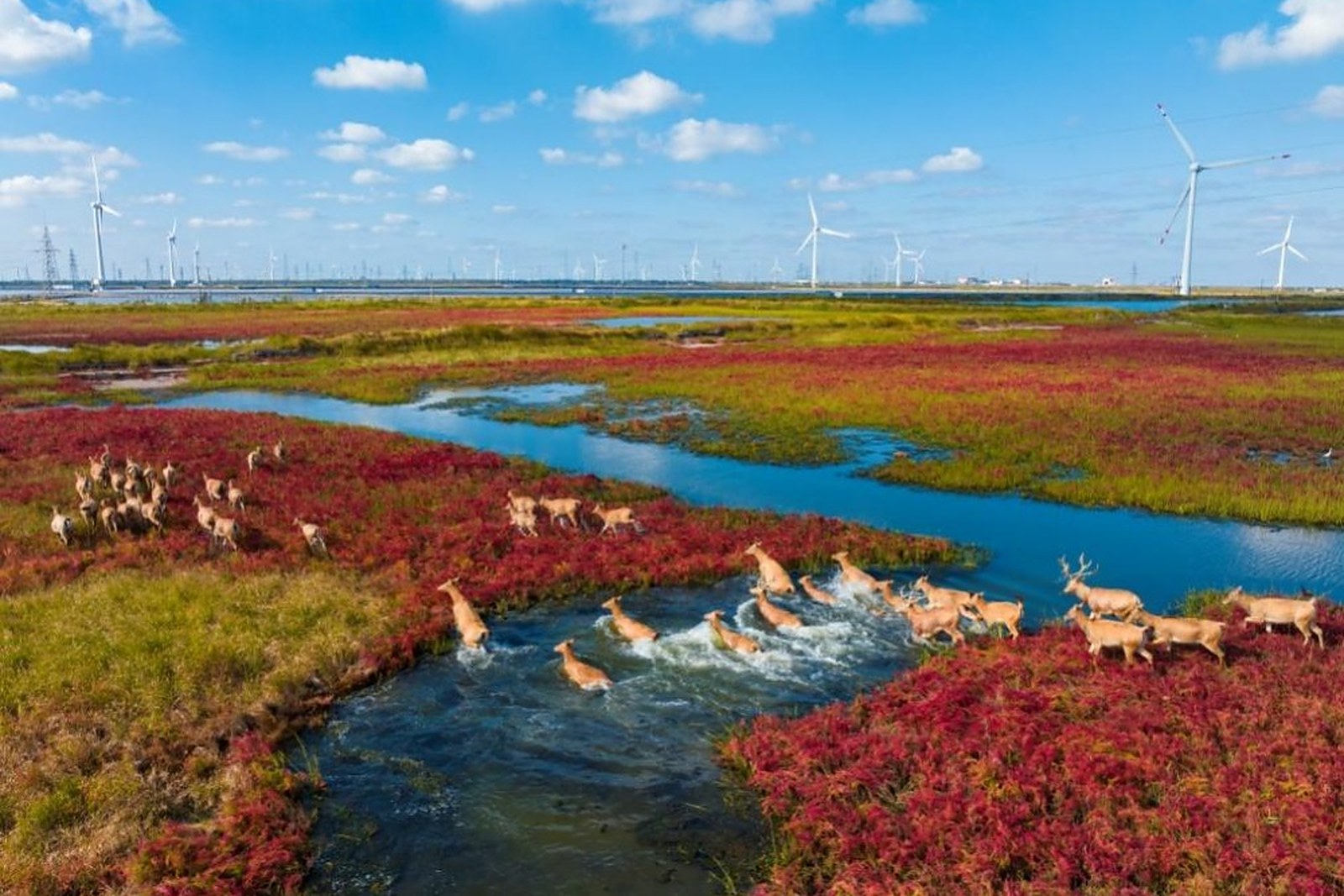
正文:大丰麋鹿保护区 Dàfēng Mílù Bǎohùqū the Dafeng elk reserve holds one of conservation’s strangest homecomings – the Père David’s deer, a species that vanished from China’s wetlands a century ago and survived only in European estates, returned to this stretch of Dafeng coast in 1986 and rebuilt a wild population on the tidal grassland. The park today is the species’ largest reserve anywhere: thousands of deer spread across wet meadow, salt marsh and woodland, with a museum tracing the animal’s tumble from imperial hunting park to English estate to Yellow Sea mudflat. The deer are the “four unlikes” – antlers of a stag, face of a horse, hooves of a cow, tail of a donkey – and on the reserve’s boardwalk loops you watch them from hides as they graze, wallow and spar.
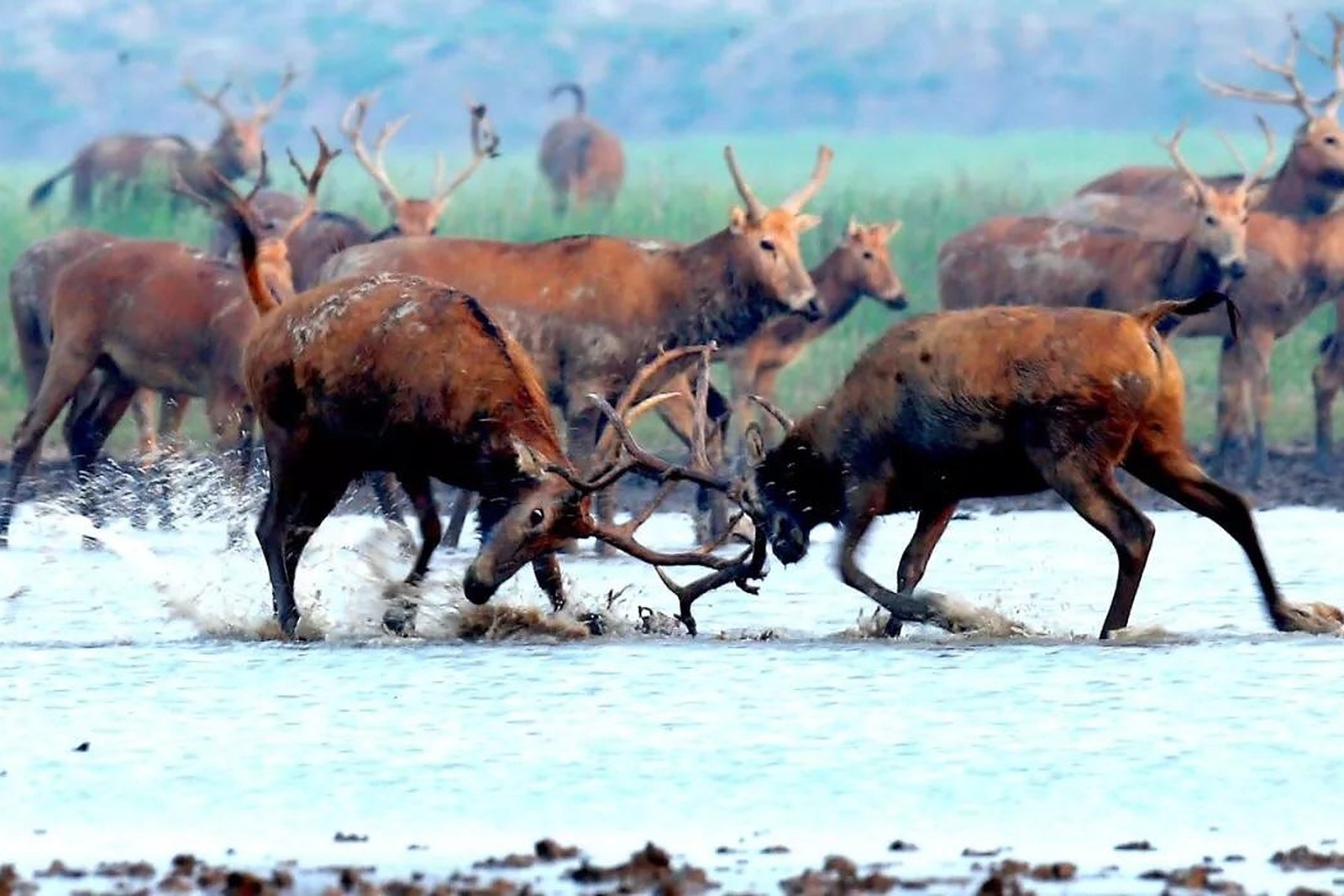
The grassland herds come first. From the main observation routes the herds stand out across the flat like islands – stags with full racks, hinds in loose groups, calves in season kept at the centre of the troop. Early morning feeding times bring them close to the boardwalks, and the wallows steam in cold weather where the deer have rolled in the wet ground.
The museum inside the gate earns its half hour: skeletons and antler racks chart the species’ size, exhibits follow the deer from the Beijing imperial gardens to Woburn Abbey in England, and the story of the 1986 return – thirty-nine deer shipped back to Dafeng – reads as one of China’s cleanest reintroduction wins. Exhibits on the coastal ecosystem explain why the salt marsh sustains them: the deer graze the wet grassland the tide renews.
Late spring adds the drama. In May and June the stags fight for harems in the shallow lagoons – two heavy bodies rearing chest-deep, antlers locked, dust and spray flying – and the reserve’s flats section, reached by shuttle, puts you near the wild bands that range the seaward mud. Bring binoculars regardless of season; the deer keep their distance, and the flats reward the patient eye with egrets, black-faced spoonbills and the odd fox track besides.
Practicalities
Beyond the meadow, the same 盐城市 Yánchéng Shì Yancheng City keeps more doors worth the drive: 丹顶鹤保护区 Dāndǐnghè Bǎohùqū the crane reserve to the north, 条子泥 Tiáozǐní Tiaozini for the World Heritage flats, 新四军纪念馆 Xīnsìjūn Jìniànguǎn the N4A Memorial in town, or 荷兰花海 Hélán Huāhǎi Holland Flower Sea for the tulip fields – four more doors into the same 盐城市 Yánchéng Shì Yancheng City. Once the herds are seen, our Yancheng food map fills the table.
Practicalities
Words and Names
flowcloud would say Dafeng’s deer carry a century of luggage: gone from these marshes, raised abroad, and back on the same ground where the antlers first grew. All checked November 2026.
Getting there: The reserve lies off the coastal road about 90 minutes south of Yancheng city; driving is the practical option, with parking at the gate and a museum plus boardwalk loops on flat ground. Deer are most active at morning feeding times, and the sea-flats section needs a separate shuttle ticket. All checked November 2026.