
峨蔓古盐田 Émàn gǔ yán tián, the old salt fields of 峨蔓 Émàn, lie along the basalt shore at the north-western corner of 儋州市 Dānzhōu shì, in and around the village of 盐丁村 Yándīng cūn, and they are the most complete hand-worked sea-salt landscape left in China. The fields are not a quarry or a ruin: they are thousands of shallow pans carved into flat volcanic rock, laid out in ranks down to the tide, still raked and still producing salt by the same method that made them. There is no ticket gate and no turnstile. The pans begin at the edge of the houses and run to the water, and the village works them.
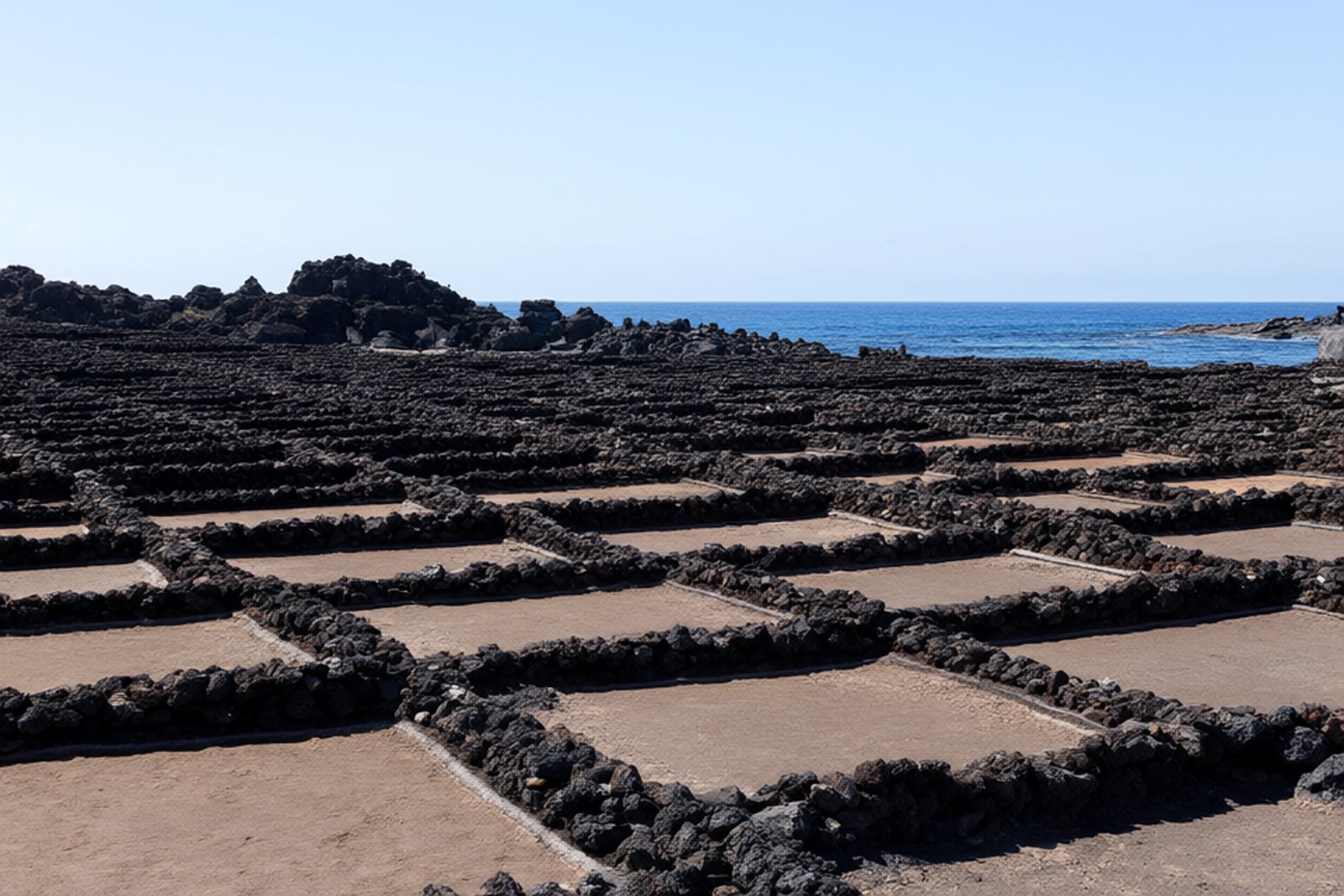
The method is called 刮泥淋卤 guā ní lín lǔ, scrape the mud and leach the brine, and it is a sequence rather than a single act. Sea water is let into the pans on the flood tide and left to evaporate; the salt-rich sand and mud that forms on the rock is scraped up and piled into a filter bed lined with grass, and sea water poured through it dissolves the salt out into a strong brine; the brine is boiled down or, in the version used here, poured into the flat 砚式石盐槽 yàn shì shí yán cáo, the inkstone-shaped stone pans, and left in the sun until the water is gone and the salt remains. In this climate, with the pots in full sun, that takes less than a day. The pans themselves are only a centimetre or two deep to speed the drying.
The fields at 峨蔓 are made of the four villages of 盐丁, 灵返, 细沙 and 小迪, and they cover well over nine hundred mu, with more than seven thousand five hundred pans between them. The tradition credits migrants from 莆田 in Fujian, who came across the water in the Song dynasty and cut the first pans out of the lava; the trade grew into the villages’ main living by the Ming, and the salt went out through 盐丁港, the little harbour below the fields. Beside the old road at 灵返 there is a boulder whose grain the salt makers read as a figure, and which they honour as the 盐神, the salt god, with a coarsely carved statue that no one repairs and everyone respects.
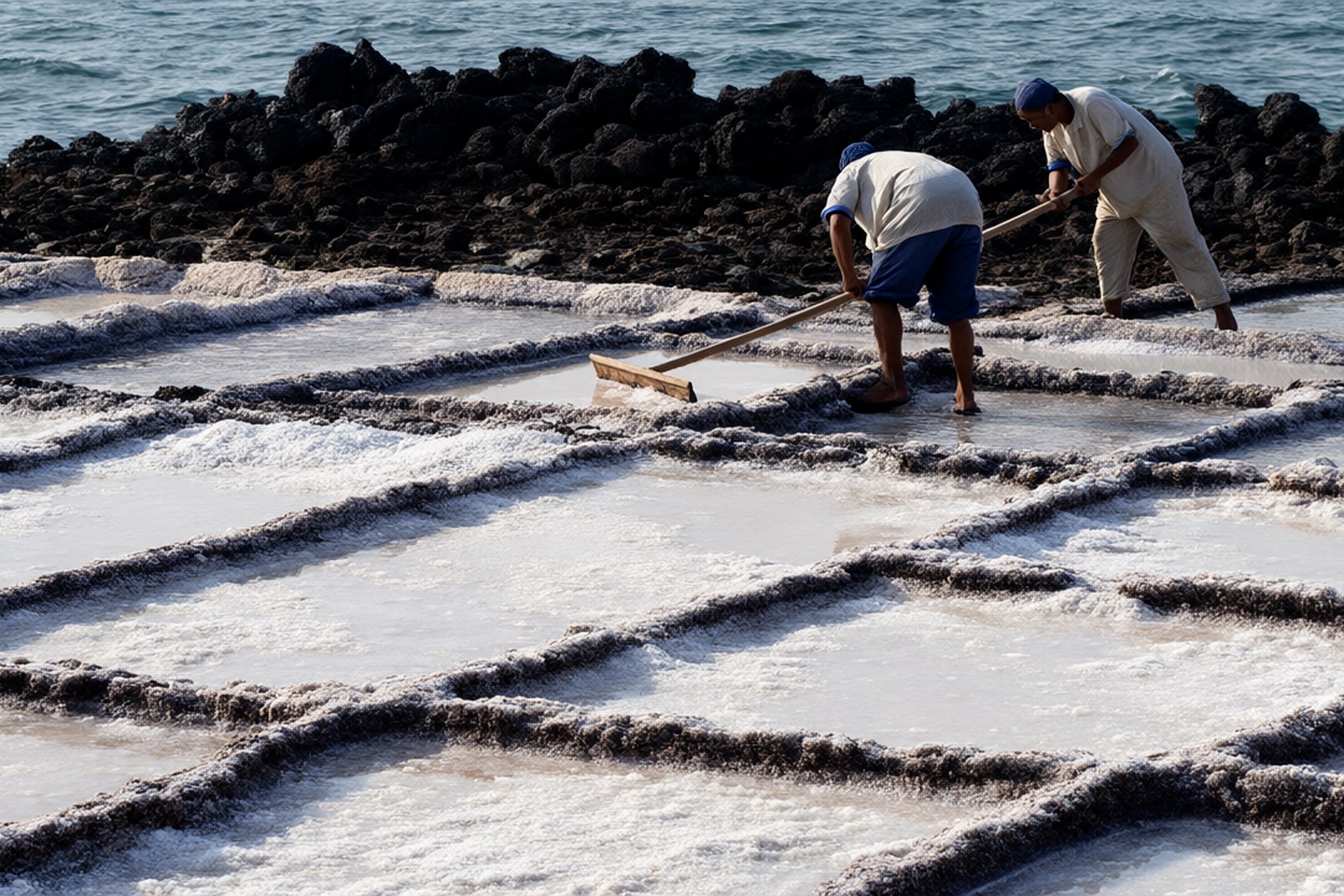
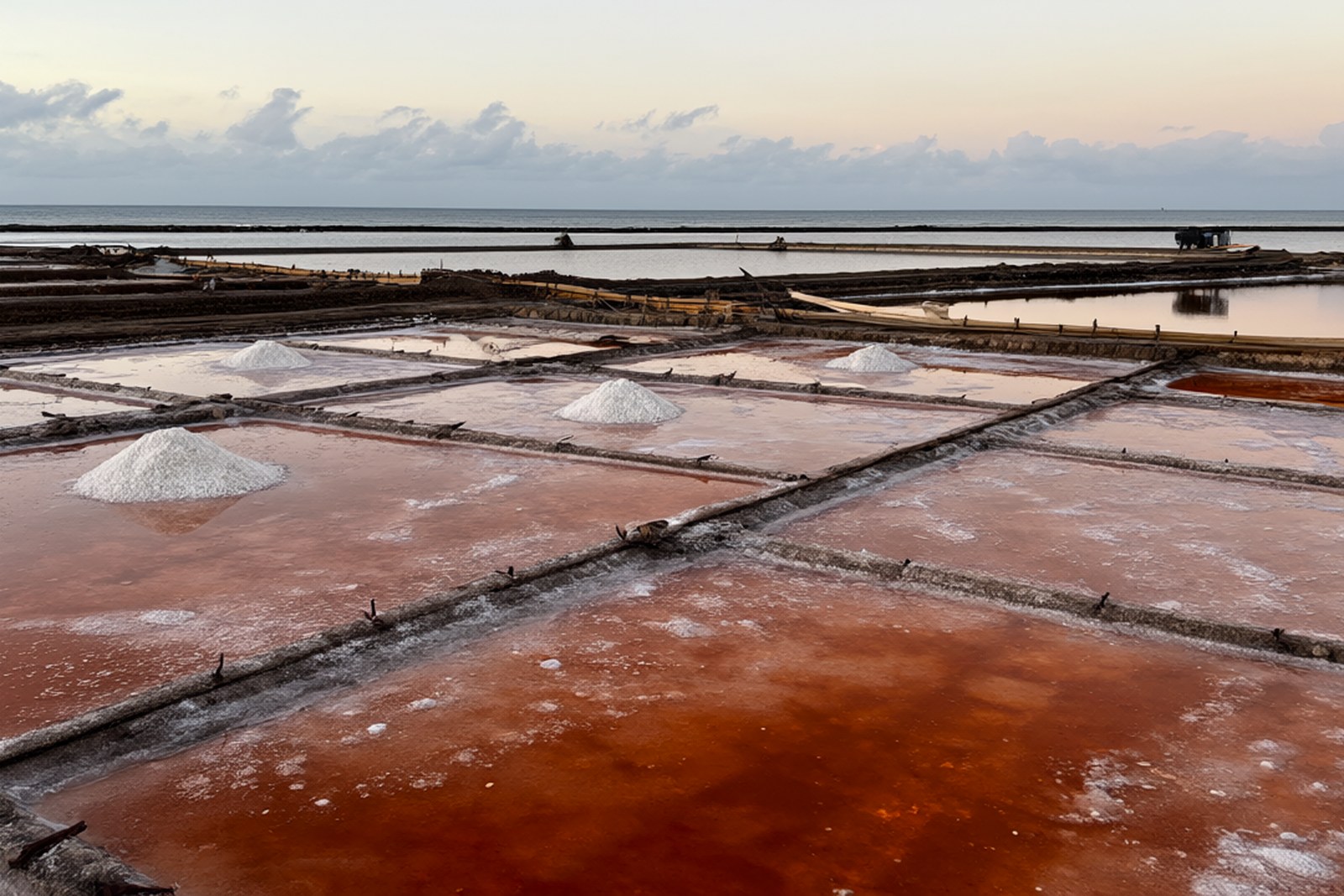
Come at the right hour and the visit is about light as much as salt. At dawn the pans hold a skim of water and the whole shelf is silver; at dusk the volcanic rock goes to silhouette and the water in the pans turns orange, and the salt makers, most of them older women who have done this since childhood, are still out with their buckets and rakes. It is also worth driving the twenty minutes to the neighbouring coast, where the same basalt makes blowholes and tide pools, and on to the 东坡书院 at 中和 for the other half of the city’s history. Wear shoes that grip the wet rock, and go on foot between the pans rather than walking the raised edges, which are older than they look.
Practicalities
Tickets. There is no entrance ticket for the salt fields, and no gate; the pans are the village’s working ground and the shore in front of it. A small visitor centre has been built at the site, and if a modest charge has been introduced there it is a matter of a few yuan.
Opening hours. The fields are open ground and can be walked at any hour, which is the point: dawn and the last two hours before sunset are when they are worth seeing. The salt makers work early and are usually finished in the field by mid-morning, though the raking around dusk brings them out again in the hot months.
Getting there. 峨蔓镇 is at the north-western corner of 儋州市, about an hour by road from 那大 Nàdà and about forty minutes north along the coast from 白马井站 Báimǎjǐng zhàn on the west ring line. 盐丁村 is signposted; the fields are immediately below the village.
Closing day. There is no closing day, since there is no gate to close. The pans are at their best in the dry months from November to April, when the sun is reliable and the rain does not interrupt the drying; a heavy rain can flood the lower fields for a day.
flowcloud would say that a shore which was given nothing but black lava and salt water, and answered by cutting seven thousand inkstone pans into the rock and raking them for a thousand years, has shown that a hard place is only hard until someone decides to use its hardness, and that the salt on the table is the record of that decision.
Getting there: 峨蔓镇 is the destination, about an hour by road from 那大 in 儋州市 or forty minutes north along the coast from 白马井站 on the west ring line; the village of 盐丁村 is signposted and the pans lie directly below it, so the last stretch is on foot.