
洱海无声,月来水底。Érhǎi wúshēng, yuè lái shuǐdǐ – Erhai makes no sound; the moon comes down to the water’s bottom.
洱海 Érhǎi Erhai Lake is the ear Dali is built around – the second-largest lake in Yunnan after 滇池 Diānchí, about 250 km² of freshwater at 1,972 m, roughly 40 km long from north to south, named for its ear-shaped outline, known in Han times as 叶榆泽 Yèyú Zé, and called the 母亲湖 mǔqīn hú mother lake of the Bai. It is free, open around the clock along its public shores, and there is no gate: the lake is a ring, not a site, and the ring road plus the 生态廊道 Shēngtài Lángdào ecological corridor run about 129 km around it, with the west-shore stretch closed to cars. The 古城 Gǔchéng old town sits west of the water, 双廊 Shuāngláng Shuanglang east, 喜洲 Xǐzhōu Xizhou north-west, and the honest frame is that the lake is the free thread between everything a visitor pays for.
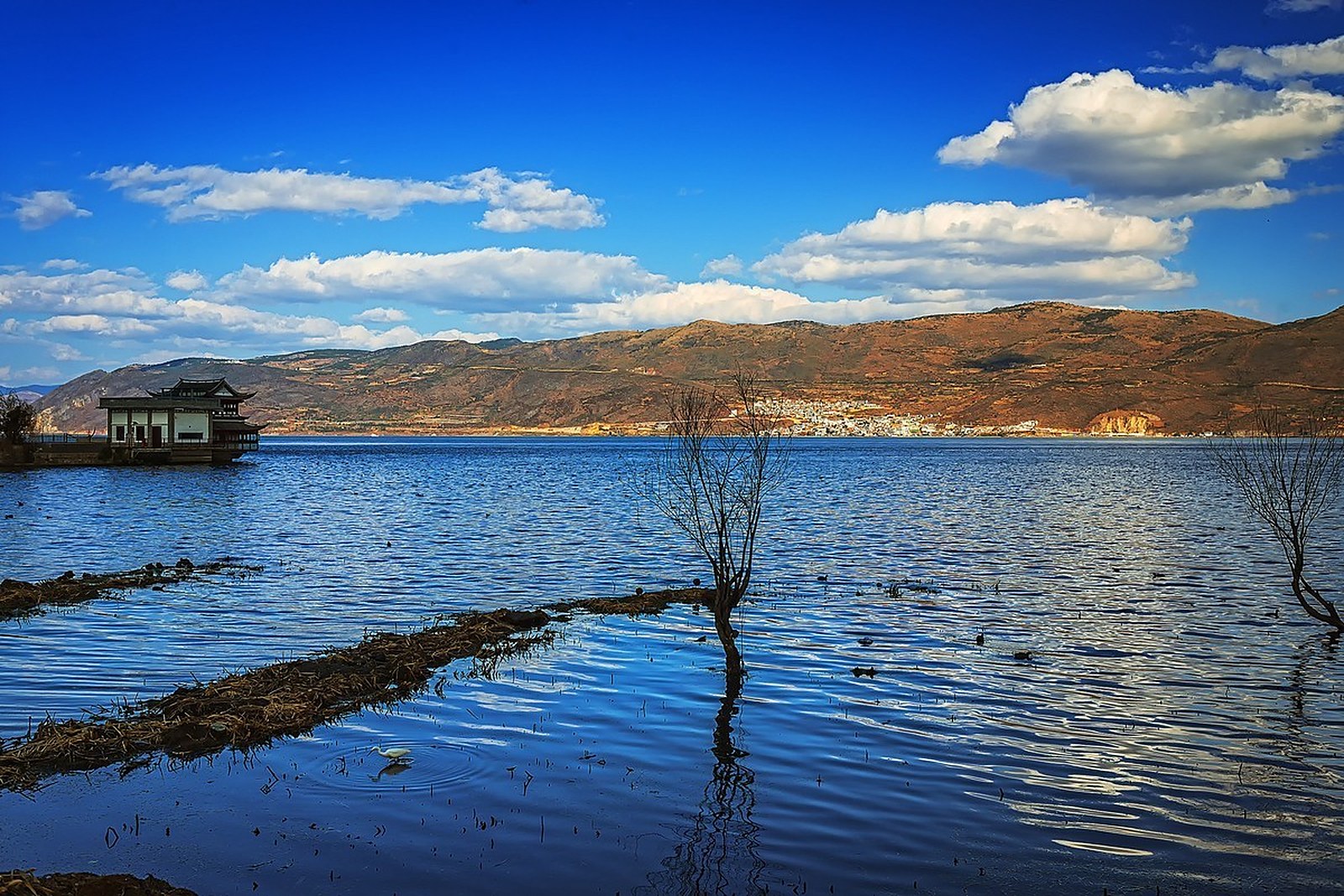
The mechanism is the mountain. 苍山 Cāngshān Cangshan’s eighteen streams feed the lake, which drains at its south end into the 澜沧江 Láncāng Jiāng Lancang (Mekong) system – and because the lake is the plain’s drinking-water source, the shoreline rules are strict. The 2016-17 rescue campaign pulled hundreds of lakeside inns back from the water and turned the shore into a buffer corridor, which is why the best west-shore riding is car-free and the closest thing to a beach is a reed bed. The lake’s own history shows in its fish: the 弓鱼 gōngyú Erhai carp, the delicacy of every old banquet record, is now protected and rare, and winter brings 红嘴鸥 hóngzuǐ ōu red-billed gulls from Siberia between November and March. 海菜花 Hǎicàihuā water cauliflower flowering in the shallows is the local sign the water is clean. The comparison with Dianchi is exact: the bigger lake belongs to a city, this one belongs to a plain.
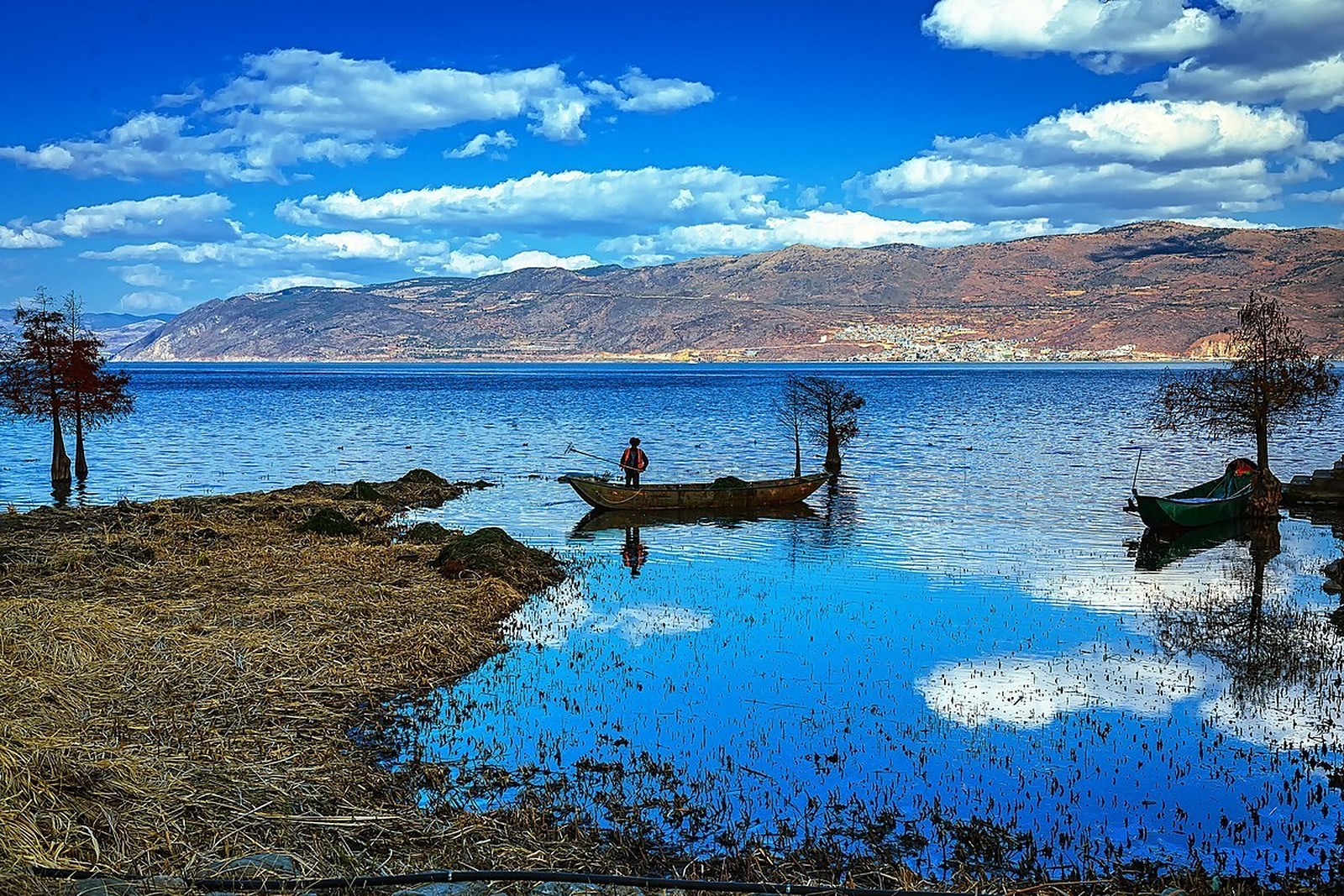
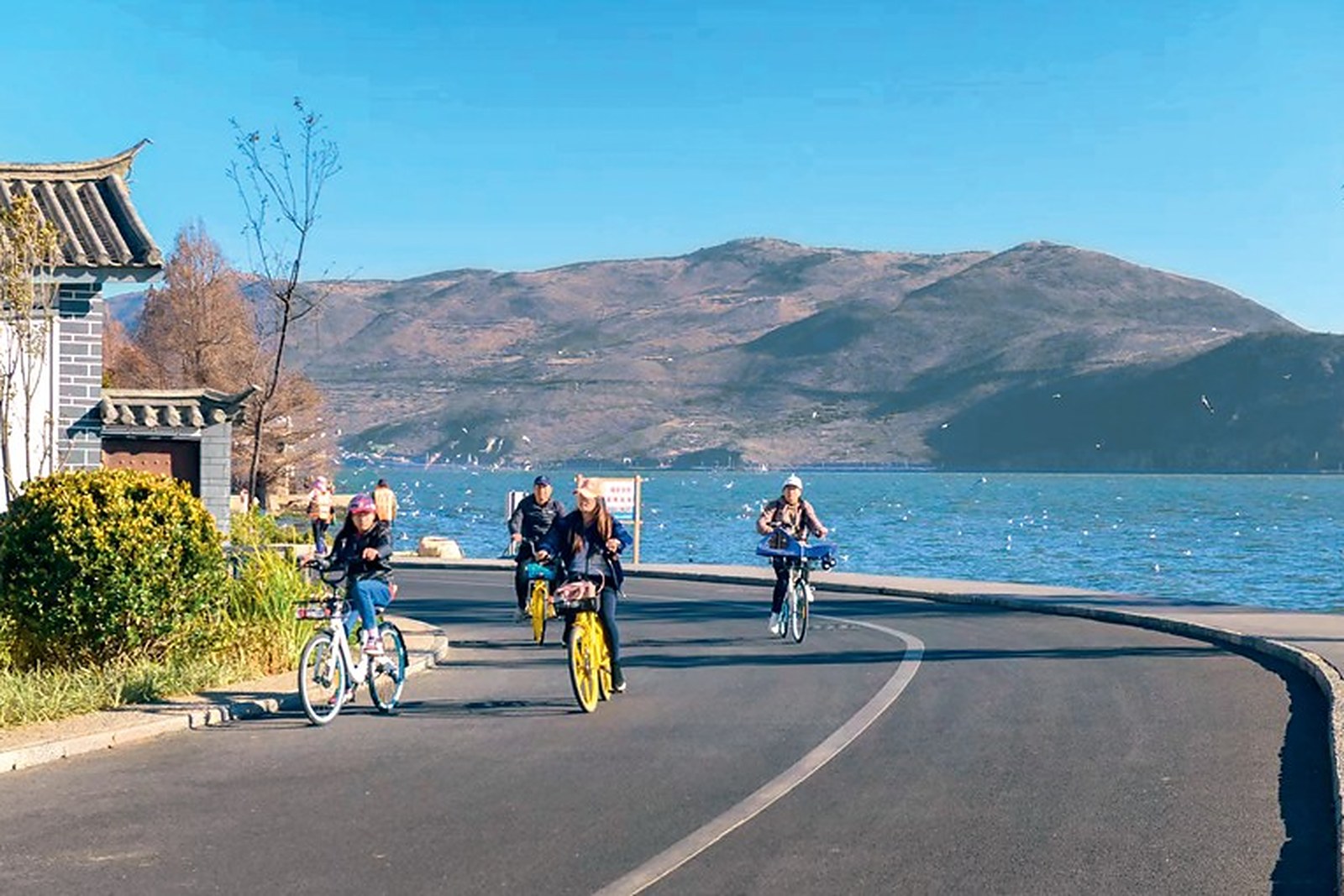
Locals fish the lake and guard it at the same time. The west shore is the sunrise side – 龙龛 Lóngkān Longkan wharf and the 磻溪 Pánxī S-bend are the early-morning addresses, 才村 Cáicūn Caicun is the one nearest the old town – and the east shore, 双廊 Shuāngláng and 挖色 Wāsè, is the sunset side. Bikes and 电瓶车 diàn píng chē scooters are the corridor’s currency; the corridor shuttle runs by the stop (10 yuan a stop, 20 for two, 40 one way along a section, 60 return), and boats leave from 大理港 Dàlǐ Gǎng (142 yuan for the long crossing). The honest shape is a lake you circle, not enter.
Practicalities
Tickets: Free along the public shores, and no national scenic grade is published for the lake itself: 洱海 Érhǎi Erhai is an open lake, not a site, and the 生态廊道 Shēngtài Lángdào ecological corridor is free to walk or ride. What costs money is crossing it or riding it: the corridor shuttle sells by the stop (10 yuan a stop, 20 for two, 40 one way along a section, 60 return), boats from 大理港 Dàlǐ Gǎng run 142 yuan for the long crossing, and 南诏风情岛 Nánzhào Fēngqíng Dǎo off 双廊 Shuāngláng charges 56 yuan plus the boat (about 70 yuan return from the wharf, or folded into the 142-yuan crossing). The honest shape is that the lake is free and the rides are not.
Opening hours: Open around the clock along the public shores – there is no gate on a ring – and the only clocks belong to the shuttle and the boats: corridor cars run about 08:00-19:30 in summer and 08:00-18:30 in winter, and the 南诏风情岛 Nánzhào Fēngqíng Dǎo island stop keeps 08:00-17:30 with last entry at 17:30. The practical split is the light, not a timetable: the west shore is the sunrise side and the east shore is the sunset side, and both are free at any hour.
Closing day: None published, which is the point of a public shoreline: no weekly rest is named for the lake or the corridor. The honest caveat is weather and water – boats stay in port in wind, and the 海舌 Hǎishé peninsula rations entry in peak season – so the honest plan is to check the day’s sailing before you count on one.
Getting there: 洱海 Érhǎi Erhai Lake, 大理市 Dàlǐ Shì, Yunnan – the address is the ring road (环海路 Huánhǎi Lù / G348) or the west-shore corridor, and the honest instruction to a driver is a village name: 才村 Cáicūn, 龙龛 Lóngkān, 磻溪 Pánxī, 喜洲 Xǐzhōu, 双廊 Shuāngláng, 挖色 Wāsè – never “the lake”. The 环洱海旅游观光巴士 Huán Érhǎi Lǚyóu Guānguāng Bāshì lake-circuit sightseeing bus sells a one-day card at 98 yuan from the old town; driving, the west-shore corridor is closed to cars, so use the east ring and cross at either end.
Words and Names
洱海 Érhǎi Erhai Lake · the ear-shaped second lake of Yunnan, about 250 km² at 1,972 m
叶榆泽 Yèyú Zé the Han-era name · the lake’s old name in the Han records
银苍玉洱 Yíncāng Yù’ěr “silver Cangshan, jade Erhai” · the local pairing of the mountain and the lake
弓鱼 gōngyú the protected Erhai carp · the delicacy of the old banquet records, now rare and protected
红嘴鸥 hóngzuǐ ōu red-billed gull · the Siberian winter guest, November to March
生态廊道 Shēngtài Lángdào the car-free lakeside corridor · the 129-km buffer shore, the west stretch closed to cars
龙龛 Lóngkān Longkan, the sunrise wharf · the west shore’s early address, gulls first
磻溪 Pánxī the S-bend village · the corridor’s postcard bend on the west shore
flowcloud would say that Erhai is the ear Dali listens with – about 250 km² at 1,972 m, free and open around the clock, circled by a 129-km car-free corridor – and that the honest move is to ride the west shore at sunrise and sit the east shore at sunset, because the lake is the free thread and the gulls are the November-to-March guests. All checked October 2026.