
Fahai Temple: The Ming Court Murals, the Water-Moon Guanyin and the Quiet of Cuiwei Mountain in Shijingshan District, Beijing
明宫妙笔传千古,法海禅灯映翠微。Míng gōng miàobǐ chuán qiāngǔ, Fǎhǎi chándēng yìng Cuìwēi – The wondrous brush of the Ming court hands down a thousand ages; the chan lamp of Dharma Sea lights up the green subtlety of Cuiwei.
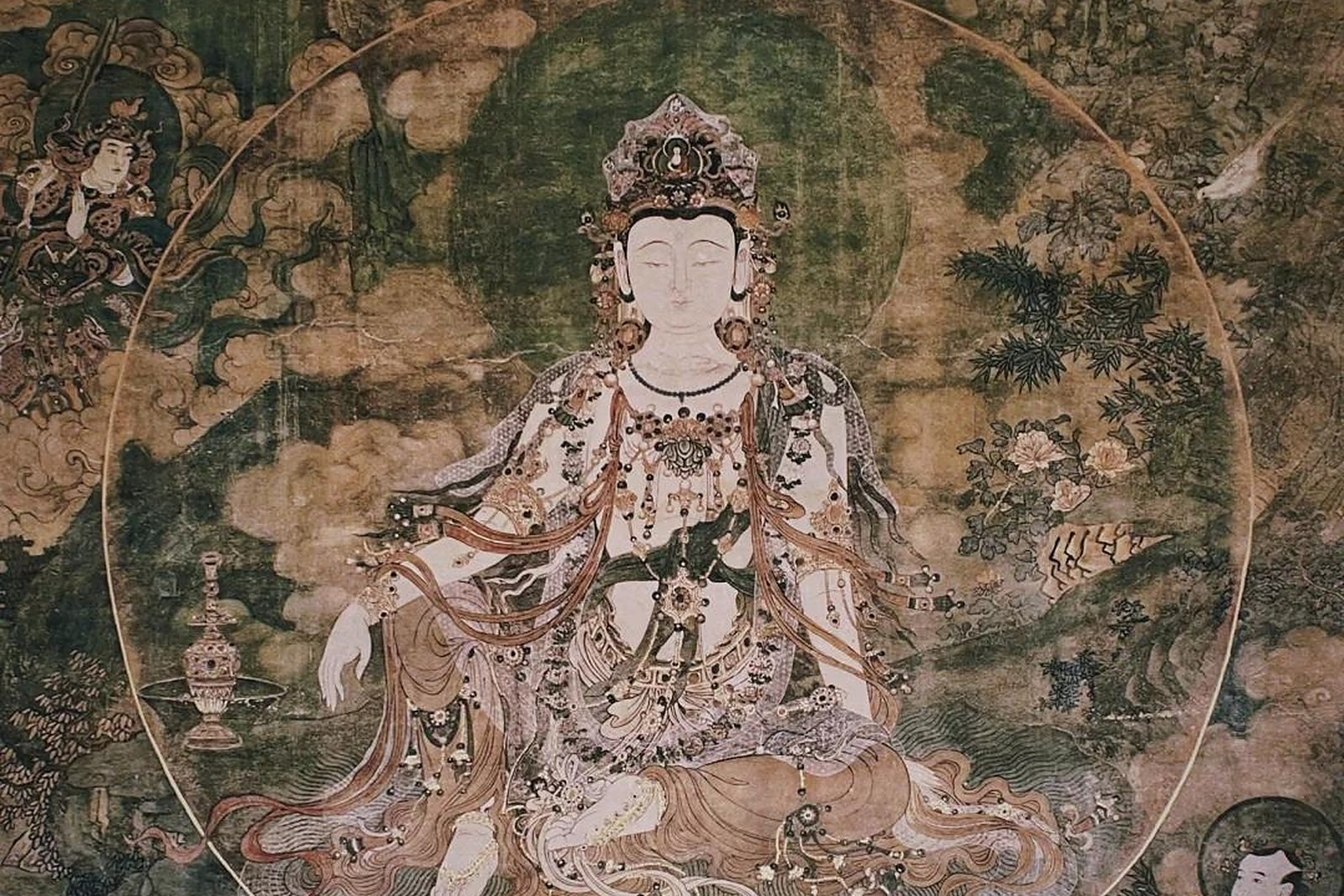
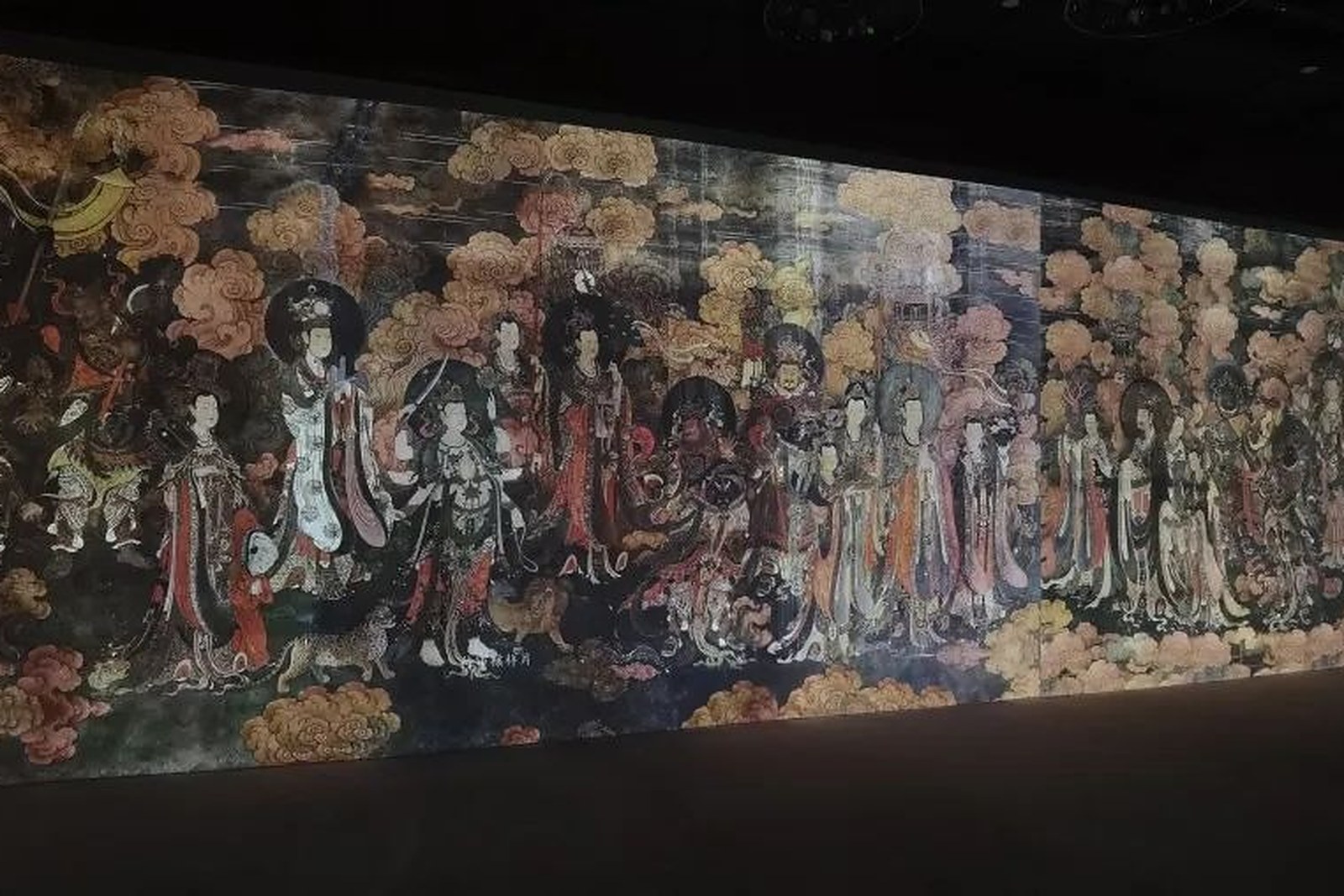
法海禅寺 Fǎhǎi Chán Sì Fahai Temple — “Dharma Sea” — is not a hillside temple with a nice hall — it is, plainly put, one of the greatest painting rooms in China: a small Ming monastery on the south foot of 翠微山 Cuìwēi Shān Cuiwei Mountain near 模式口 Móshìkǒu Moshikou in 石景山区 Shíjǐngshān Qū Shijingshan District, Beijing, whose 大雄宝殿 Dàxióng Bǎodiàn Mahavira Hall has kept its original 明代宫廷壁画 Míngdài gōngtíng bìhuà Ming court murals intact since the building was finished in 1443. The temple was begun in 正统四年 — 1439 — and completed in 正统八年 — 1443 — as a court-funded establishment, and the walls were painted by imperial-workshop hands: buddhas, bodhisattvas, heavenly hosts and guardian figures in line and mineral colour, led by the celebrated 水月观音 Shuǐyuè Guānyīn Water-Moon Guanyin, whose gauzy white veil is drawn so finely that conversation stops in front of it. Connoisseurs set these walls beside 敦煌 Dūnhuáng Dunhuang and the 永乐宫 Yǒnglè Gōng Yongle Palace murals — the three names Chinese art history recites together for wall painting (worth confirming the details for the current viewing arrangements). What you actually visit is small and controlled: one precious hall under dim lamps, a limited viewing time, and a quiet mountain garden around it.
Call it honestly: a small ticketed temple with strict rules, and every rule is the reason the walls survive. The temple entry is ticketed, the mural hall is viewed under separate arrangement, and both run on reservations with daily limits and timed slots (worth confirming the details for the current booking system and rates); photography is barred in the hall, and viewing is by lamplight for minutes rather than hours (worth confirming the details); the 壁画艺术馆 bìhuà yìshùguǎn mural art gallery with its full-scale reproductions and digital displays stands near the approach and keeps its own hours (worth confirming the details). The temple sits up a mountain road within the 法海寺森林公园 Fahai Temple Forest Park, so allow the walk or the ride up. Weekday mornings are quietest and holidays book out early. The honest warning: arrive without a reservation in high season and you may see the mountain but not the walls.
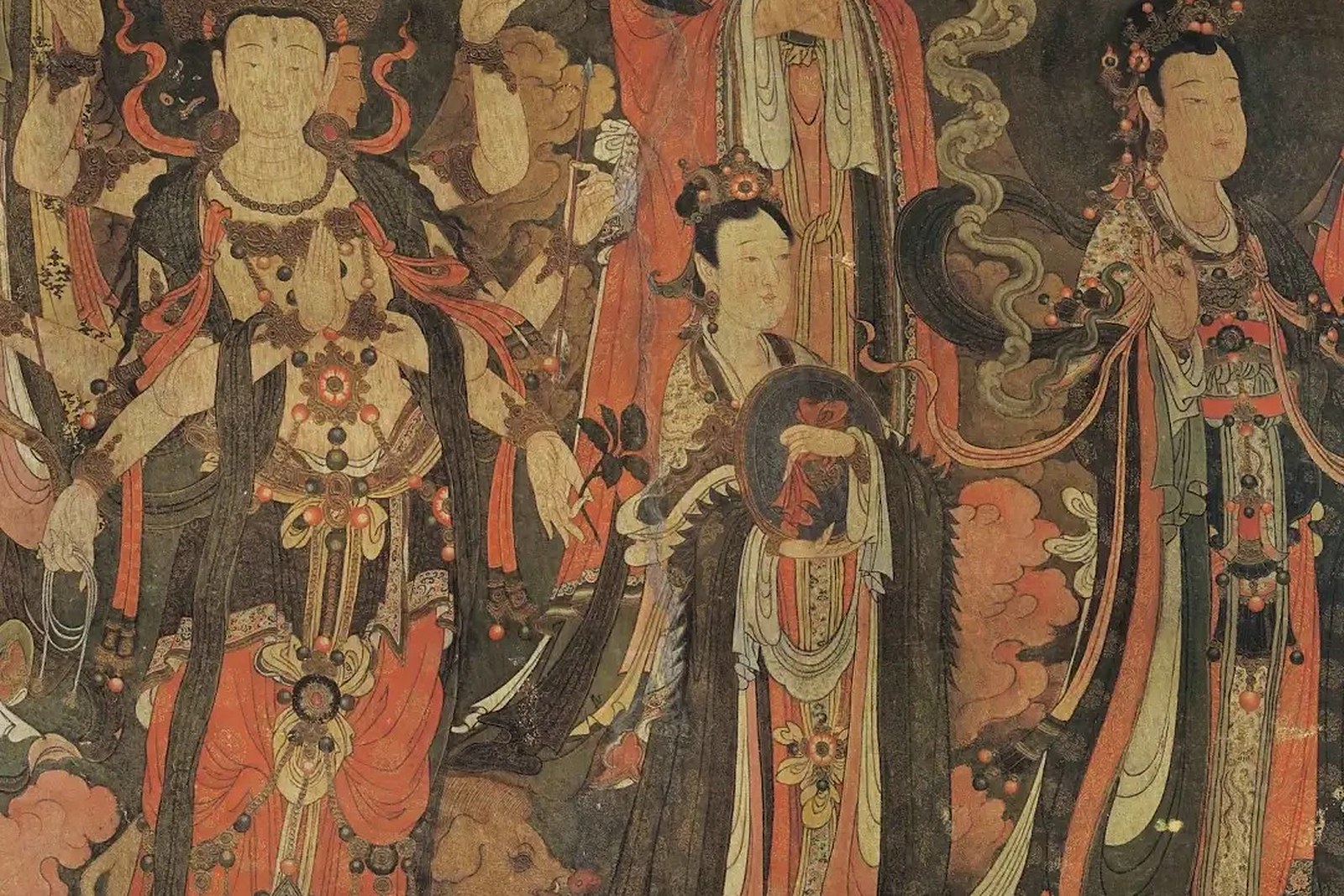
The honest star is the 水月观音 Shuǐyuè Guānyīn Water-Moon Guanyin behind the lamplight, not the mountain gate. Look long enough and the wall gives up its secrets — the translucent veil edged in fine gauze, the gold outlines that read as relief carving, the figures that seem to float rather than stand — and the five centuries between the painter’s hand and yours collapse to nothing. What gets oversold is scale: this is one hall, not a cave-field like 敦煌 Dūnhuáng, and the viewing is minutes long by design. What repays the effort is everything else in the compound — the Ming bell and bronzes, the old trees, the approach where four cypresses grow straight out of a single-arch bridge over the stream (worth confirming the details) — and the gallery near the foot of the hill, where reproductions let you look without the queue (worth confirming the details). Pair the visit with the old street of 模式口 Móshìkǒu Moshikou below. Come for the layering of the place: mountain, then hall, then wall.
The self-aware postscript: I came for twenty minutes of lamplight and left thinking about a wall no one has had to repaint since 明 Míng Ming times. That is the visit in miniature. 法海禅寺 Fǎhǎi Chán Sì suits whoever treats it as a small, disciplined pilgrimage first and a mountain walk second — reserve ahead, look slowly, accept the rules — and exhausts whoever arrives expecting a full-day scenic area around a casual photo stop. Everything else on this Shijingshan list lies within a short ride: the eight-temple climb of 八大处公园 Bādàchù Gōngyuán Badachu Park over the ridge to the south-east, the steel-and-Olympic estate of 首钢园 Shǒugāng Yuán Shougang Park in the valley by the river, the world sculptures of 北京国际雕塑公园 Běijīng Guójì Diāosù Gōngyuán Beijing International Sculpture Park along 玉泉路 Yùquán Lù, and the fairground lights of 石景山游乐园 Shíjǐngshān Yóulèyuán Shijingshan Amusement Park by the metro — all in the same 石景山区 Shíjǐngshān Qū Shijingshan District where a Ming brush waits in the dark.
Practicalities
- Rating: ★★★★★ — the capital’s finest Ming painting, kept in one small hall under lamplight; the 明代宫廷壁画 Míngdài gōngtíng bìhuà outrank every practical friction; reserve ahead and the short viewing is worth a journey across the city.
- Tickets: Ticketed temple entry with the mural hall on separate timed reservation, plus the mural art gallery near the approach (worth confirming the details for current rates, booking channels and viewing rules).
- Address: 法海禅寺 Fǎhǎi Chán Sì Fahai Temple, south foot of 翠微山 Cuìwēi Shān Cuiwei Mountain near 模式口 Móshìkǒu Moshikou, 石景山区 Shíjǐngshān Qū Shijingshan District, Beijing — up the mountain road through the temple’s forest park.
- Time needed: One to two hours for the temple, mural viewing and gallery; half a day adding the Moshikou street and the forest walk.
Words and Names
法海禅寺 Fǎhǎi Chán Sì Fahai Temple · the Ming temple of “Dharma Sea”, begun 1439 and finished 1443 明代宫廷壁画 Míngdài gōngtíng bìhuà Ming court murals · the imperial-workshop walls of the main hall 大雄宝殿 Dàxióng Bǎodiàn Mahavira Hall · the hall that has kept the murals since 1443 水月观音 Shuǐyuè Guānyīn Water-Moon Guanyin · the celebrated mural figure behind the fine veil 永乐宫 Yǒnglè Gōng Yongle Palace · the Yuan mural masterwork the walls are ranked beside 翠微山 Cuìwēi Shān Cuiwei Mountain · the hill at whose south foot the temple sits 模式口 Móshìkǒu Moshikou · the old western-passage street at the mountain’s foot 壁画艺术馆 bìhuà yìshùguǎn mural art gallery · the modern gallery of reproductions and exhibits
flowcloud would say that 法海禅寺 Fǎhǎi Chán Sì is a Ming brush kept behind lamplight — the court-funded temple of 1443 on the south foot of 翠微山 Cuìwēi Shān, whose 大雄宝殿 Dàxióng Bǎodiàn preserves the 明代宫廷壁画 Míngdài gōngtíng bìhuà ranked with 敦煌 Dūnhuáng and 永乐宫 Yǒnglè Gōng, with the 水月观音 Shuǐyuè Guānyīn Water-Moon Guanyin the star of the wall — and that the honest move is to reserve ahead and look slowly within the short viewing, because tickets, timed slots, the 壁画艺术馆 bìhuà yìshùguǎn gallery and the photography rules are all strict and shifting (worth confirming the details), the holiday queue is the crowded half, and the temple repays whoever treats the twenty minutes as a pilgrimage while losing whoever expects a full-day scenic area. All checked October 2026.
Getting there: Metro Line 11 to 模式口 Móshìkǒu Moshikou station, then a short bus or taxi ride up the mountain road into the 法海寺森林公园 Fahai Temple Forest Park, or bus routes along the old western corridor below 模式口 Móshìkǒu in 石景山区 Shíjǐngshān Qū Shijingshan District, Beijing — the temple sits above the street on the south foot of 翠微山 Cuìwēi Shān Cuiwei Mountain (worth confirming the details for the current metro reach, bus connections, reservation requirements and walking distances). All checked October 2026.