
放鸡岛 Fàng jī dǎo is the largest island on this coast, a kilometre and a half of rock and scrub lying about three kilometres south-west of 莲头港 Lián tóu gǎng in the 电白区 Diàn bái qū district of 茂名市 Mào míng shì, roughly eight nautical miles from the harbour at 水东. It is shaped like an olive, oriented north-east to south-west, about two kilometres long and nine hundred metres across at its widest, with a rocky ridge running up to a hundred and thirty-five metres at the north-eastern end and a shoreline of just under six kilometres round it. It has had at least four names – 汾州山 Fén zhōu shān originally, then 湾舟岛 Wān zhōu dǎo, then officially 放鸡岛, and in the tourist trade 潜梦岛 Qián mèng dǎo – and the one that stuck comes from a custom.
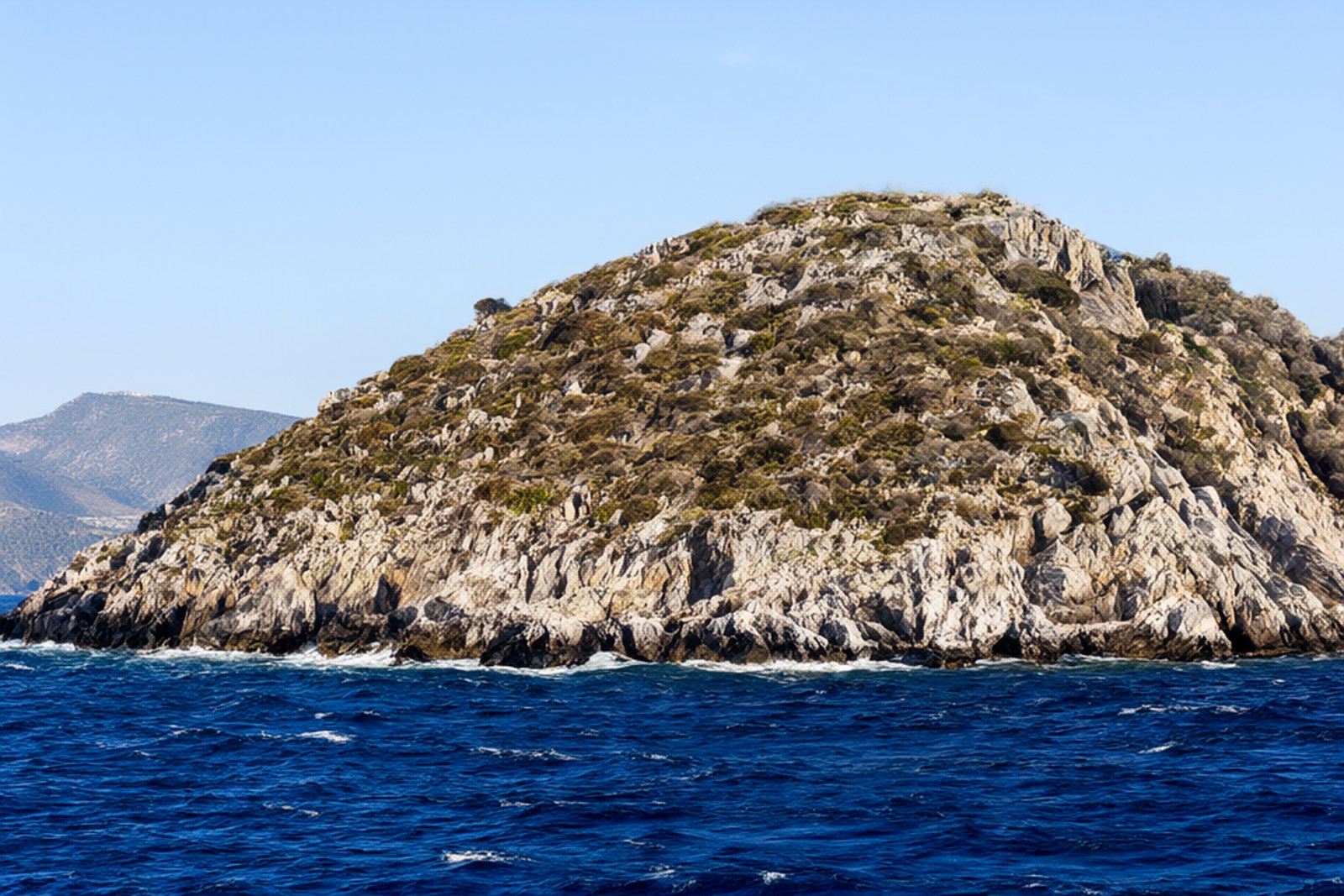
The name means release-a-chicken island, and the story is that passing ships used to put a live chicken ashore here to let it go, as an offering for a safe passage; whether the practice was about propitiating the sea or about provisioning a future shipwrecked crew, the island kept the name. What the island actually is, geologically, is a block of rock that the sea has been working on for a long time. It has no beach to speak of on the exposed side, and the coast is a series of sea cliffs, wave-cut platforms and undercut ledges, with caves and gullies cut into the base of the rock at water level, plus a couple of sheltered coves on the north-western shore where the sand is white and the water is shallow for a few metres out. The county’s own description of the place is that it manages to hold both the drama of the sea and the shape of a mountain at once, which is unusual for an island this size.
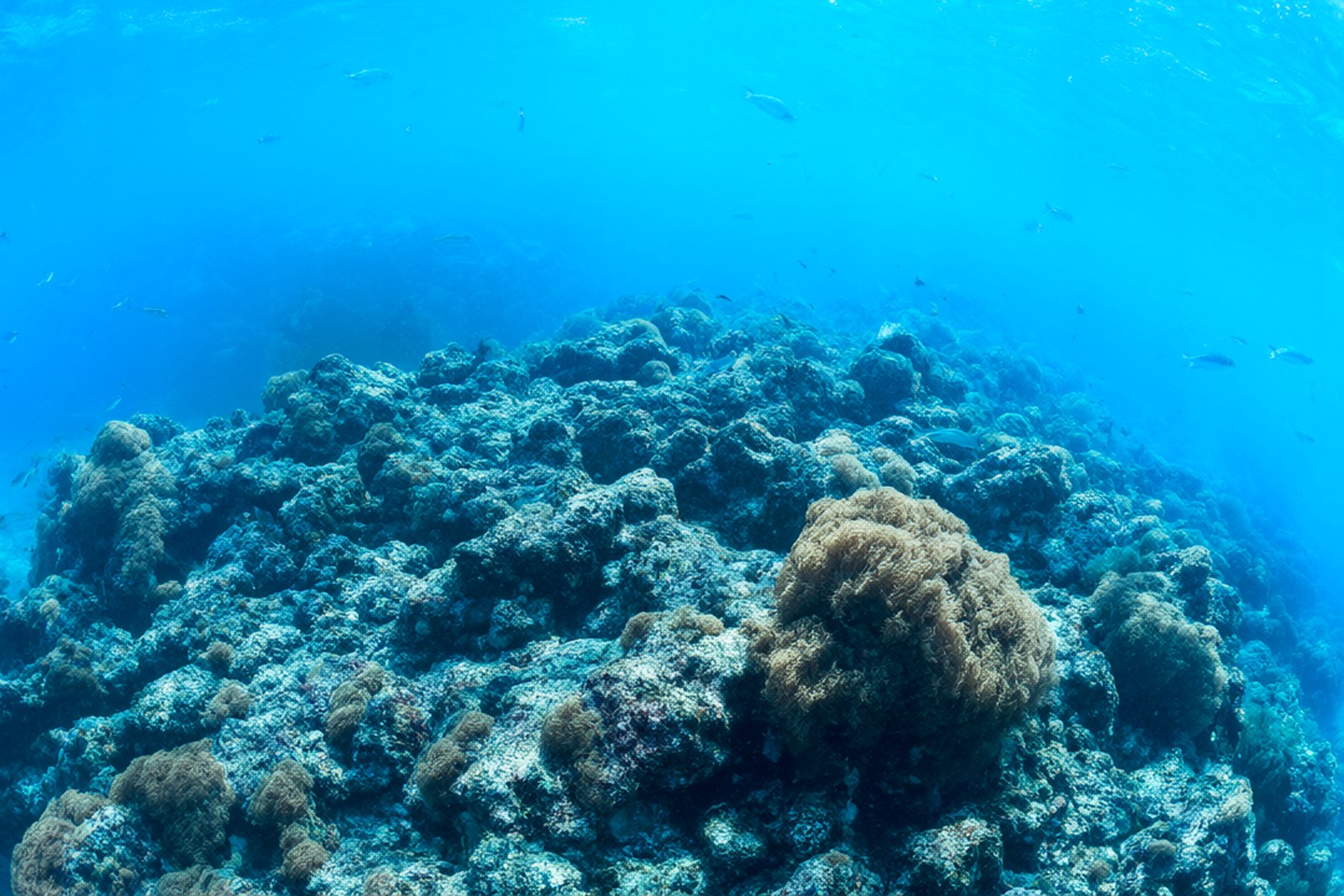
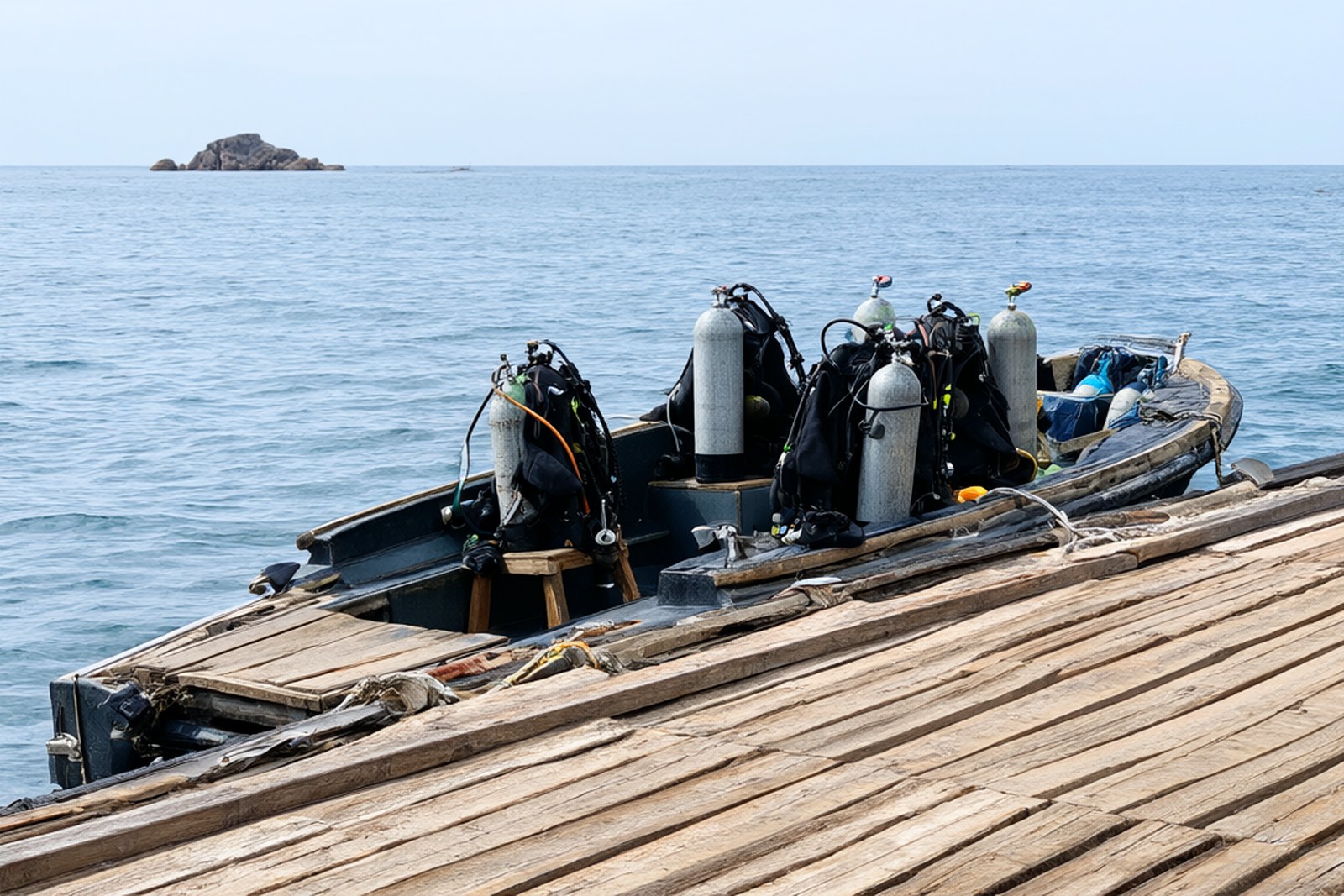
The reason people come is the water. The island sits where the coastal current keeps the sediment moving past rather than settling, and the visibility around it is reported at up to eight metres, which is exceptional for this part of the South China Sea and is the basis of the local claim to be one of the best dive sites in the country. The diving is on rock and coral bommies and on the wreck of a freighter that was deliberately sunk as an artificial reef, and the range of depths close to shore suits beginners as well as experienced divers; the island has dive operators, equipment hire and courses. Snorkelling off the north-western coves is the cheaper version and on a calm day is nearly as good. The other activity is fishing, which is what the island was used for long before it was a resort – the rocks at the northern point are a recognised mark for boat anglers.
The island was developed as a resort in the 1990s, when a Taiwanese businessman put several hundred million yuan into building a 4A-level scenic area on it, with a pier, a road around the shore, a hotel with sea-view rooms, a lighthouse, a small temple to 天后 Tiān hòu, the sea goddess, viewing platforms at the northern end and a set of artificial attractions. It has been through changes of operator since and the facilities are uneven – some of the buildings are showing their age, and the island’s own marketing has grown more ambitious than its infrastructure – so the honest description is that the diving is genuinely good, the scenery is genuinely odd and beautiful, and the resort around it is a work in progress. Boats run from the harbour at 博贺 Bó hè and from 水东 in the season, and the crossing takes twenty to thirty minutes depending on the boat.
Practicalities
Tickets. There is a combined ticket covering the boat crossing and admission to the island, and it is not cheap by the standards of a mainland scenic area; expect a few hundred yuan per person return in the season, with dive packages, equipment hire and the hotel on top of that. Prices move with the season and with the operator, so confirm before buying.
Opening hours. The island is day-trip territory: boats run out in the morning and back in the afternoon, and the last return is early. If the wind is up the crossing is cancelled, which happens more often in winter and in the typhoon months, so build a spare day into any plan that depends on getting across. The hotel on the island allows an overnight stay, which is the only way to see it without other people on it.
Getting there. The island is off 莲头港 in 电白区, 茂名市, about eight nautical miles from 水东; boats leave from the harbours at 水东 and 博贺 Bó hè, both about forty minutes by road from 茂名站 Mào míng zhàn on the 深湛 railway. The nearest airports are 湛江 and 广州, both reached by rail from 茂名.
Closing day. The island shuts for weather rather than for a weekday: there is no weekly closing day, but crossings stop when the sea state is above the operator’s limit, and the island is effectively closed for part of the winter and during typhoon warnings. The diving season runs roughly from April to October, and out of it the island is a place for a walk and a photograph rather than a swim.
flowcloud would say that a rock which sailors used to leave a live chicken on for luck turned out to have eight metres of visibility under it, and that the most valuable thing anyone ever gave up to the sea here was a bird that had no idea how lucky it was.
Getting there: 放鸡岛 lies off the 电白 coast of 茂名市, about three kilometres south-west of 莲头港 Lián tóu gǎng, and is reached by passenger boat from the harbours at 水东 Shuǐ dōng and 博贺 Bó hè; the crossing takes twenty to thirty minutes, boats run in the morning with returns in the afternoon, and 茂名站 Mào míng zhàn on the 深湛 railway is about forty minutes from either harbour by road.