
Fangta Garden: The Garden of the Square Pagoda in Songjiang Old Town, Built around the Nine-Storey Northern Song Xingshengjiao Temple Pagoda, a Ming Dynasty Brick-Carved Screen Wall, the Relocated Tianfei Palace and a Great Lawn of Classical Restraint in Songjiang District, Shanghai
九层方塔擎宋月,一壁砖雕阅明清。Jiǔ céng fāngtǎ qíng Sòng yuè, yī bì zhuāndiāo yuè Míng-Qīng – The nine-storey square pagoda holds up the Song moon; one wall of brick carving has read through Ming and Qing.
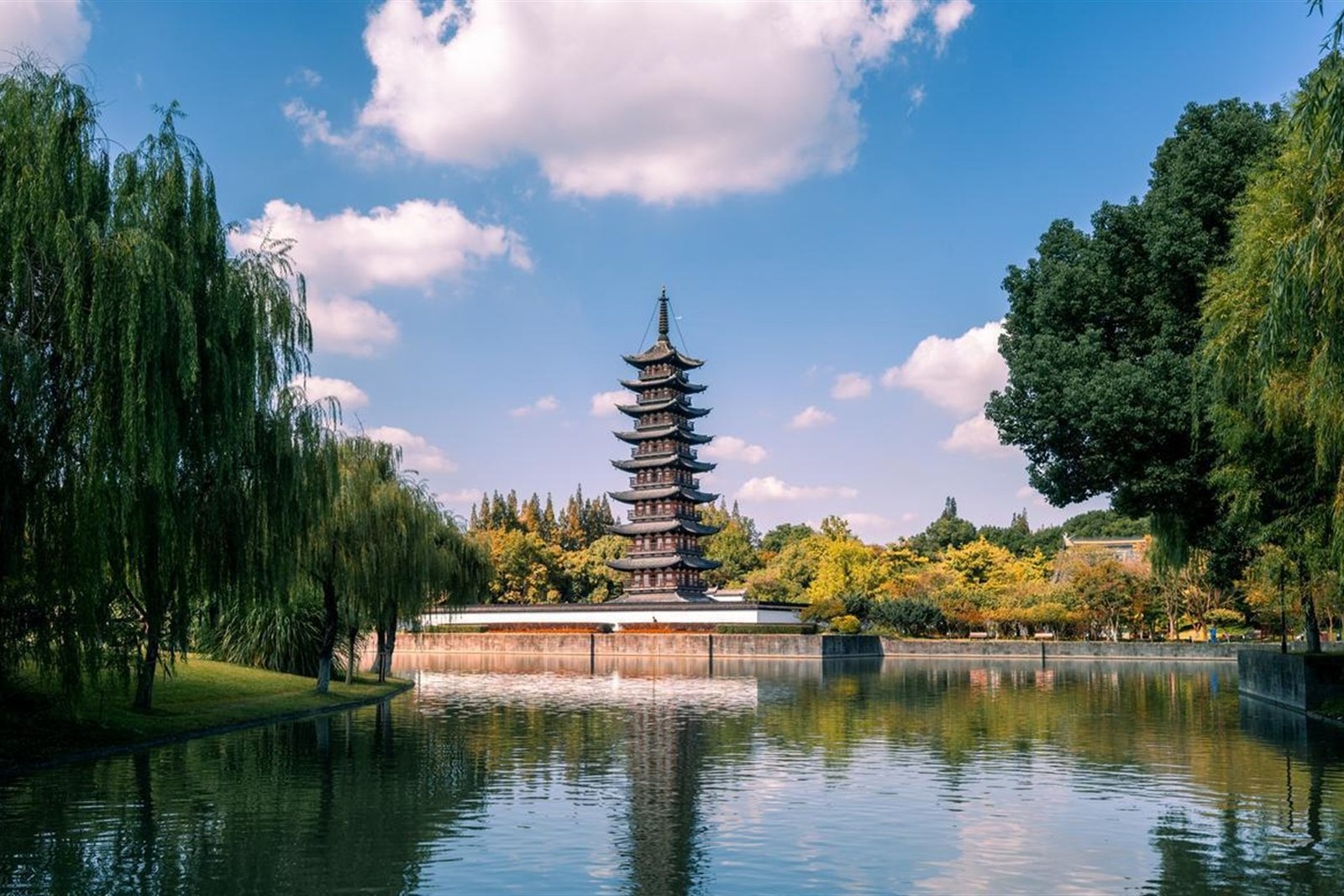
方塔园 Fāngtǎ Yuán Fangta Garden is not a park that was built around nothing — it is, plainly put, a garden designed as a stage for one tower: in the old town of 松江 Sōngjiāng Songjiang, southwest of central Shanghai, the square brick pagoda of 兴圣教寺 Xīngshèng Jiàosì the Xingshengjiao Temple has stood since the Northern Song, nine storeys of slim wooden eaves rising from a square brick core, the tallest and most graceful ancient tower in the Shanghai region. The park that now surrounds it was laid out by the architect 冯纪忠 Féng Jìzhōng Feng Jizhong in the modern era with deliberate restraint — wide lawns, low walls and quiet water left empty so the tower always owns the view. Beside it stands a massive 明代砖雕照壁 Míngdài zhuāndiāo zhàobì Ming dynasty brick-carved screen wall, its grey tiles crowded with carved beasts and waves, one of the largest and finest of its kind surviving in the south. What you actually visit is a park designed so that one Song tower can be seen properly.
Call it honestly: the garden keeps a modest entry ticket, with a small surcharge if you climb the pagoda itself when the climb is open (worth confirming the details for current ticket prices, tower-climbing days and any conservation closures before you set out), and 松江老城 Sōngjiāng lǎochéng Songjiang Old Town around it — temple streets, noodle counters and the old Confucian temple quarter — is walkable from the gate. The honest warning is the seasons: the great central lawn that gives the garden its open sky is at its best in spring and late autumn, while a humid August afternoon flattens it. Weekday mornings bring tai chi players, school groups and pigeons; weekends bring kite flyers and wedding parties on the grass. Give the garden and old town two to three hours, half a day with a slow lunch in the old streets.
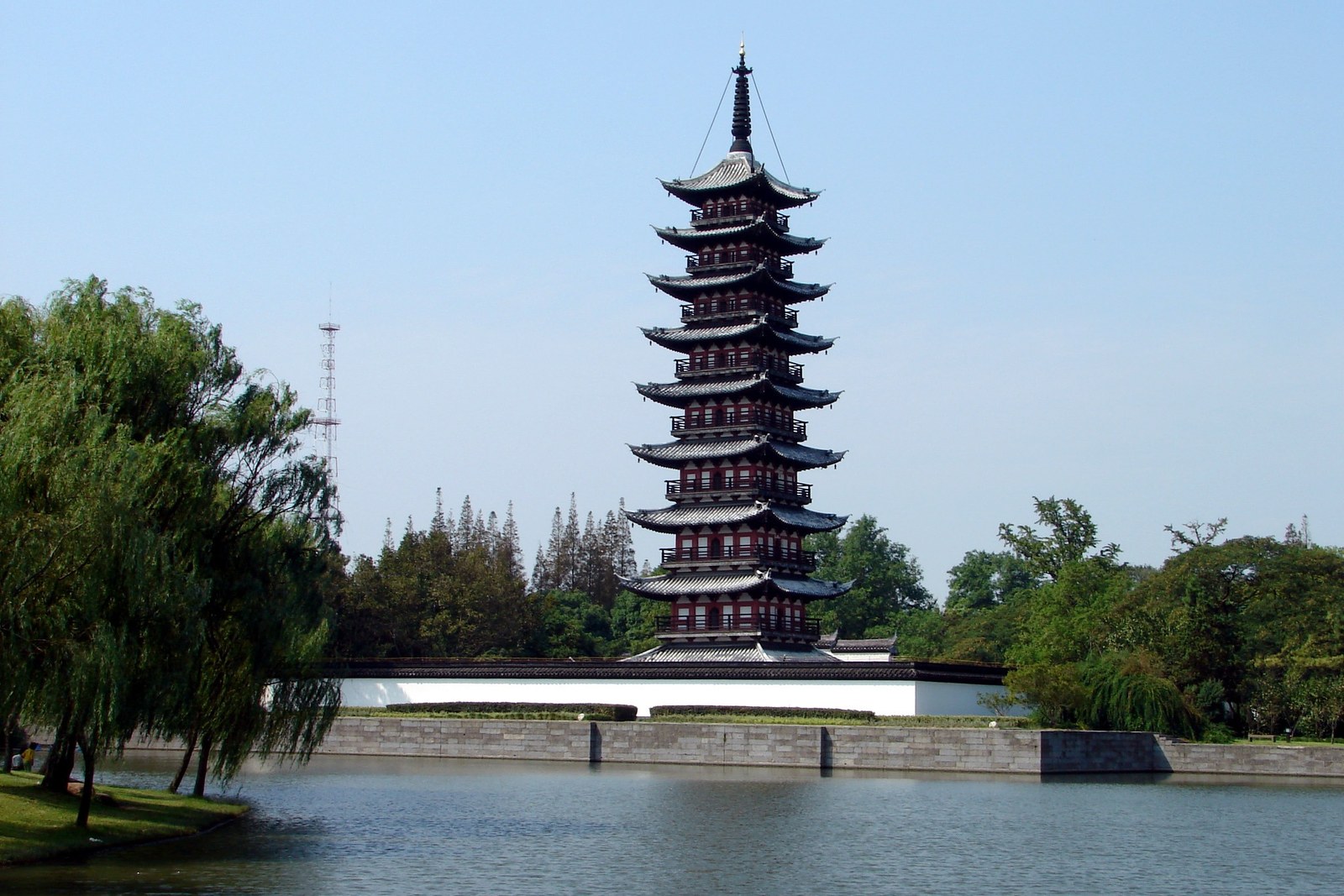
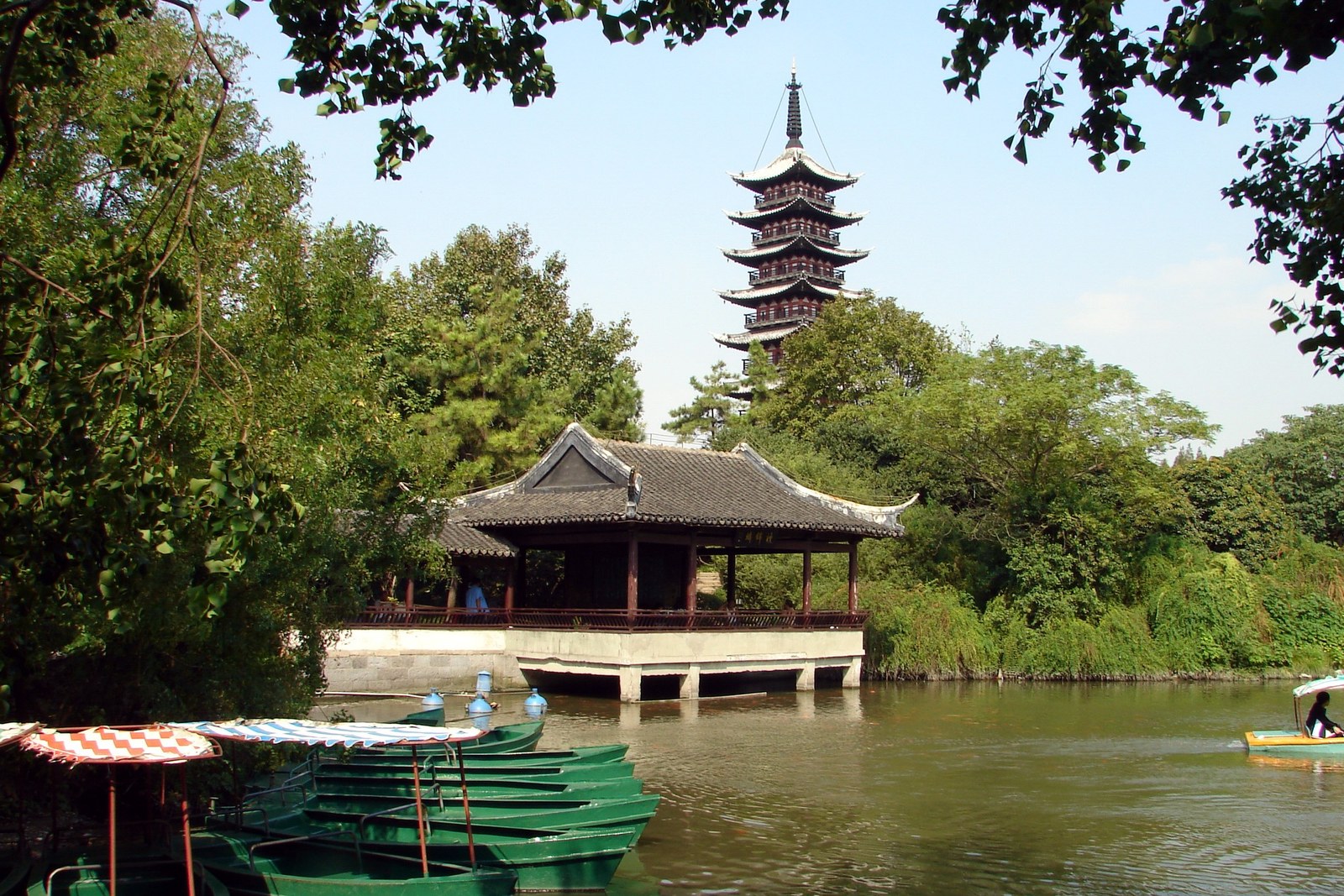
The honest star is 兴圣教寺塔 Xīngshèng Jiàosì Tǎ the Xingshengjiao Temple Pagoda itself — the tower locals simply call 方塔 fāngtǎ the square pagoda, its nine stacked storeys of dark eaves and white plaster narrowing toward a cast-iron finial, best seen from the lawn’s far edge where the emptiness Feng Jizhong designed does its quiet work and the tower seems to float above the park. What gets oversold is the word “garden”: visitors expecting rockeries and peony beds find a modern landscape of grass, water and axes of view, and the point is exactly there — this is a designed stage, not a collector’s courtyard (worth confirming the details for whether the pagoda interior climb is running on your day before you plan around it). What repays the effort is the ensemble walk: the Ming screen wall first, then 天妃宫 Tiānfēi Gōng the Tianfei Palace, a timber hall of the sea goddess Mazu moved here piece by piece, then the tower from the water’s far bank. See the wall first, then the tower. Come for the layering of the place: wall, then palace, then tower.
The self-aware postscript: I was photographing the pagoda from the lawn one clear November morning when a retired surveyor flying a kite beside me volunteered the local view. “People rush in, photograph the tower, rush out,” he said, letting out line, “but the architect left all that grass empty on purpose — the tower needs distance the way a singer needs silence; stand far back and it’s still the Northern Song”. That is the visit in miniature. From the western edge of the lawn at noon, looking across open grass, lotus ponds and low whitewashed walls to the nine dark eaves against the sky, the garden holds its whole argument in one frame — a modern park that succeeded by knowing when to build nothing. 方塔园 Fāngtǎ Yuán suits whoever treats it as a masterpiece of quiet site design holding Shanghai’s finest ancient tower first and a garden of flowers second, and disappoints anyone expecting dense classical planting and pavilion teas. The rest of this Songjiang list fans out around it: the classical courts of 醉白池 Zuìbái Chí Zuibaichi Park lie south in the old town, the prehistoric lakeside of 广富林文化遗址 Guǎngfùlín Wénhuà Yízhǐ Guangfulin Relics Park and the slopes of 佘山 Shèshān Sheshan Hill wait north, and the red-brick lanes of 泰晤士小镇 Tàiwùshì Xiǎozhèn Thames Town sit in the new city — all inside the same 松江区 Sōngjiāng Qū Songjiang District whose oldest skyline this garden keeps.
Practicalities
- Rating: ★★★★☆ — a quietly masterful modern garden built as a stage for the nine-storey Northern Song square pagoda, with a Ming brick-carved screen wall and the relocated Tianfei Palace; stand on the far lawn and let the tower work.
- Tickets: Modest garden entry, small surcharge for the pagoda climb when open (worth confirming the details for current prices and climbing days).
- Address: 方塔园 Fāngtǎ Yuán, 中山东路 Zhōngshān Dōnglù Zhongshan East Road, 松江老城 Sōngjiāng lǎochéng Songjiang Old Town, 松江区 Sōngjiāng Qū Songjiang District, Shanghai.
- Time needed: Two to three hours for garden and old town; half a day with a slow lunch in the old streets.
Words and Names
方塔园 Fāngtǎ Yuán Fangta Garden · 兴圣教寺塔 Xīngshèng Jiàosì Tǎ the Xingshengjiao Temple Pagoda, the nine-storey Northern Song square pagoda · 方塔 fāngtǎ the square pagoda, the local name · 明代砖雕照壁 Míngdài zhuāndiāo zhàobì the Ming dynasty brick-carved screen wall · 天妃宫 Tiānfēi Gōng Tianfei Palace, the relocated sea-goddess hall · 冯纪忠 Féng Jìzhōng Feng Jizhong, the architect of the park · 松江老城 Sōngjiāng lǎochéng Songjiang Old Town · 松江区 Sōngjiāng Qū Songjiang District
flowcloud would say that 方塔园 Fāngtǎ Yuán is what happens when a modern architect is handed a Song tower and has the nerve to build almost nothing — a garden of great lawns, still water and low walls in 松江老城 Sōngjiāng lǎochéng Songjiang Old Town, drawn by 冯纪忠 Féng Jìzhōng Feng Jizhong to keep every axis pointed at 兴圣教寺塔 Xīngshèng Jiàosì Tǎ the nine-storey square pagoda that has risen there since the Northern Song, flanked by the 明代砖雕照壁 Míngdài zhuāndiāo zhàobì Ming brick-carved screen wall and the timber columns of 天妃宫 Tiānfēi Gōng Tianfei Palace (worth confirming the details for entry prices and pagoda-climbing days before you set out) — and that the honest move is a weekday morning spent on the far edge of the lawn instead of the ticket gate, because the classical-garden expectation is the poster half and the designed emptiness, the kite over the grass and the nine dark eaves against open sky are the real half, and the garden repays whoever lets the tower keep its distance. All checked October 2026.
Getting there: Metro Line 9 to 松江体育中心 Sōngjiāng Tǐyù Zhōngxīn Songjiang Sports Center station, then a short bus or taxi east to the garden gate on 中山东路 Zhōngshān Dōng Lù (worth confirming the details for the last bus times, which thin after dusk); the 方塔 fāngtǎ square pagoda anchors the lawn. All checked October 2026.