
The Mesa Where Gods Sit: Fangyan’s Danxia Rock City
丹壁四削天成堡,胡公一庙镇山巅 Dānbì sì xiāo tiān chéng bǎo, Hú gōng yī miào zhèn shān diān – Red walls sheared on four sides, a fortress made by heaven; one temple to Duke Hu holds the mountaintop
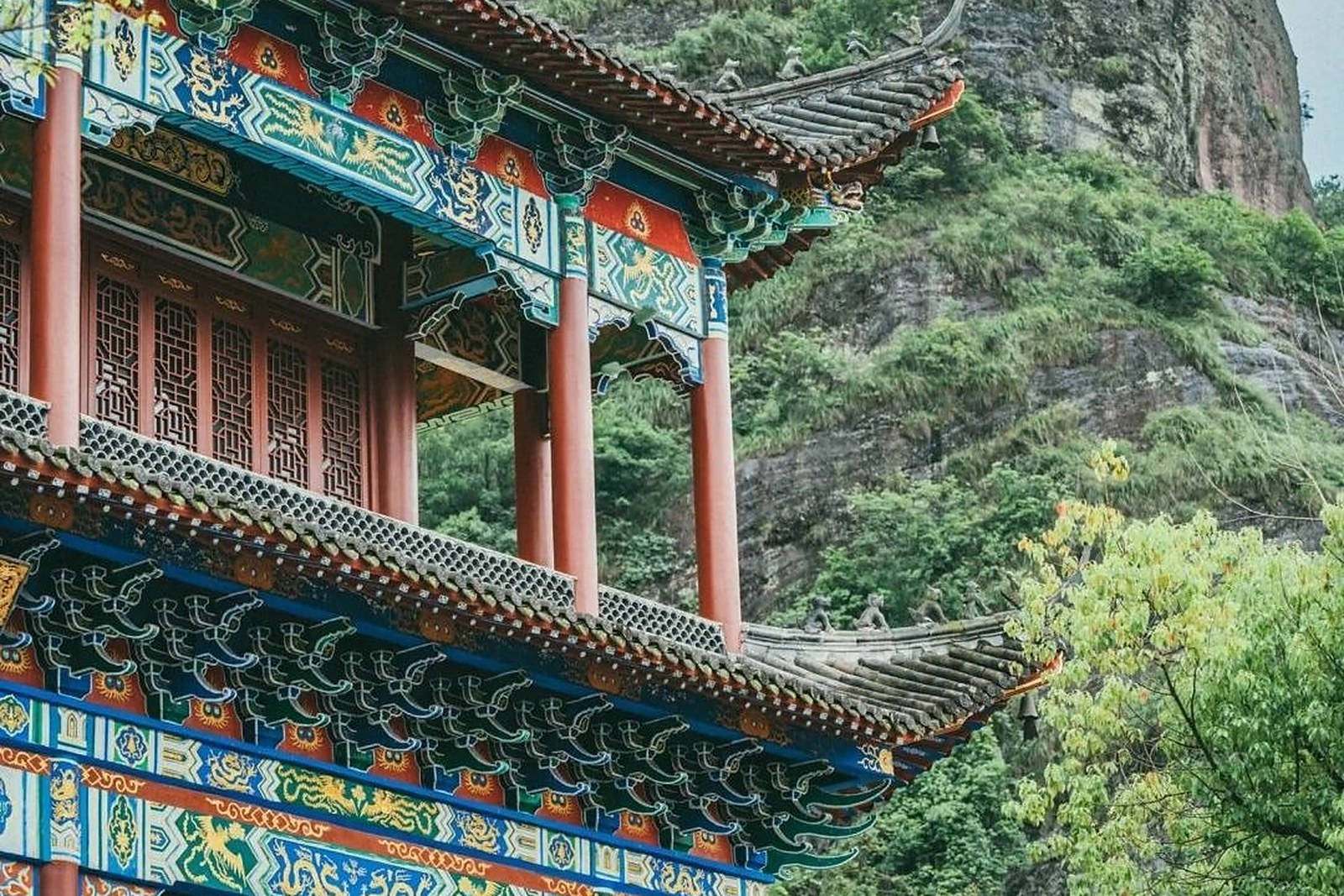
方岩 Fāngyán Fangyan is the danxia mesa standing over 永康 Yǒngkāng Yongkang in 金华市 Jīnhuá Shì Jinhua City – a rectangular block of rust-red sandstone sheared clean on four sides, rising flat-topped from the rice plain like a fortress no enemy ever carried. The climb is the ritual: a stone stair ladder zigzags up the single crack in the cliff, through the 天门 Tiānmén Heaven Gate notch where the rock walls narrow to a corridor, onto the summit plateau where 广慈寺 Guǎngcí Sì Guangci Temple and the shrine of 胡公 Húgōng Duke Hu hold the rock. Half of Zhejiang climbs here on pilgrimage days; the other half comes for the red-stone geometry itself.
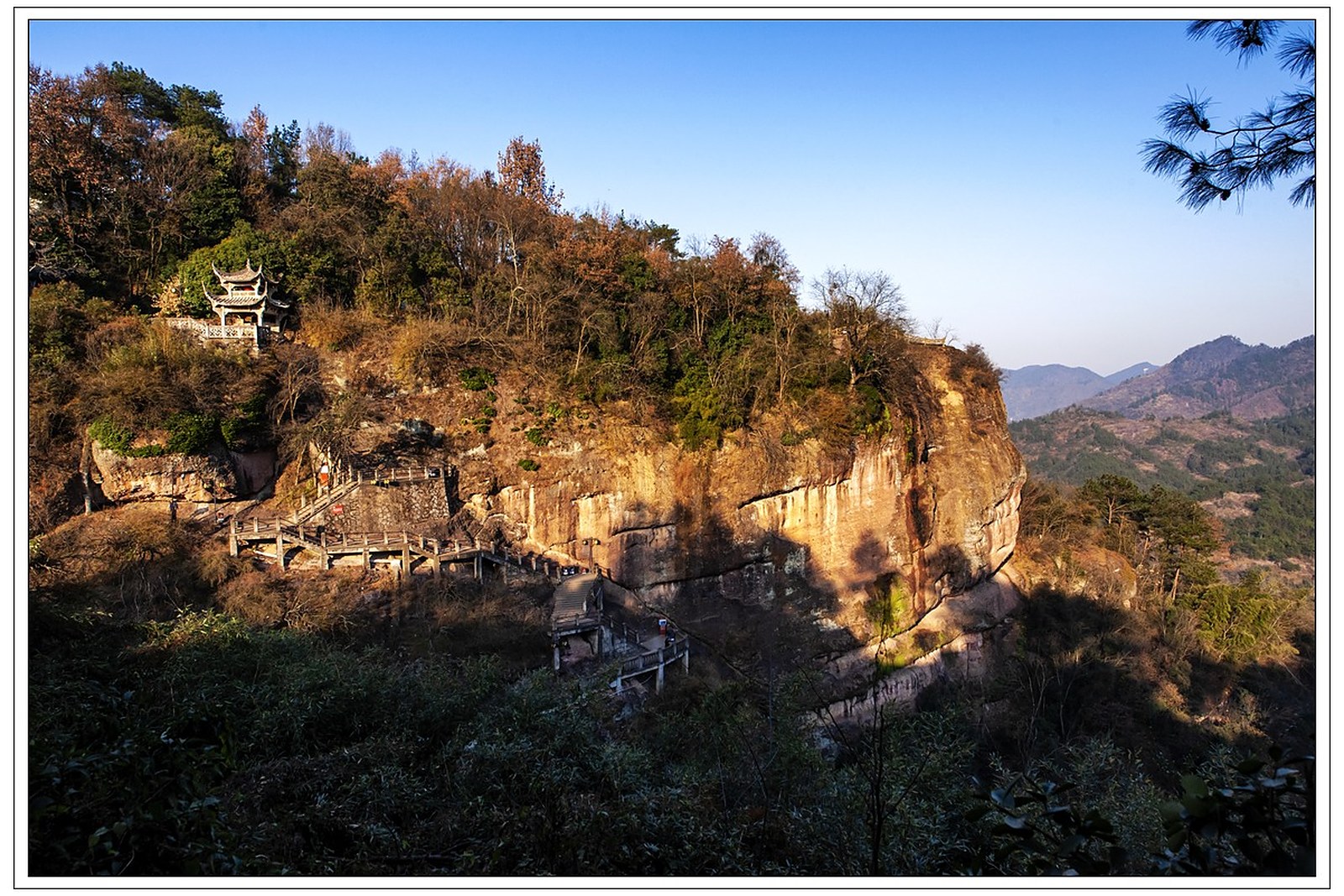
Duke Hu is the mountain’s whole theology: 胡则 Hú Zé Hu Ze, a Northern Song official from Yongkang who petitioned to lighten the people’s taxes and was deified after death – one of the rare mortals promoted straight into the folk pantheon. His mountain shrine draws the 德清 Déqíng-to-Wenzhou pilgrim belt every lunar eighth month, incense smoke standing over the mesa like a second cloud layer.
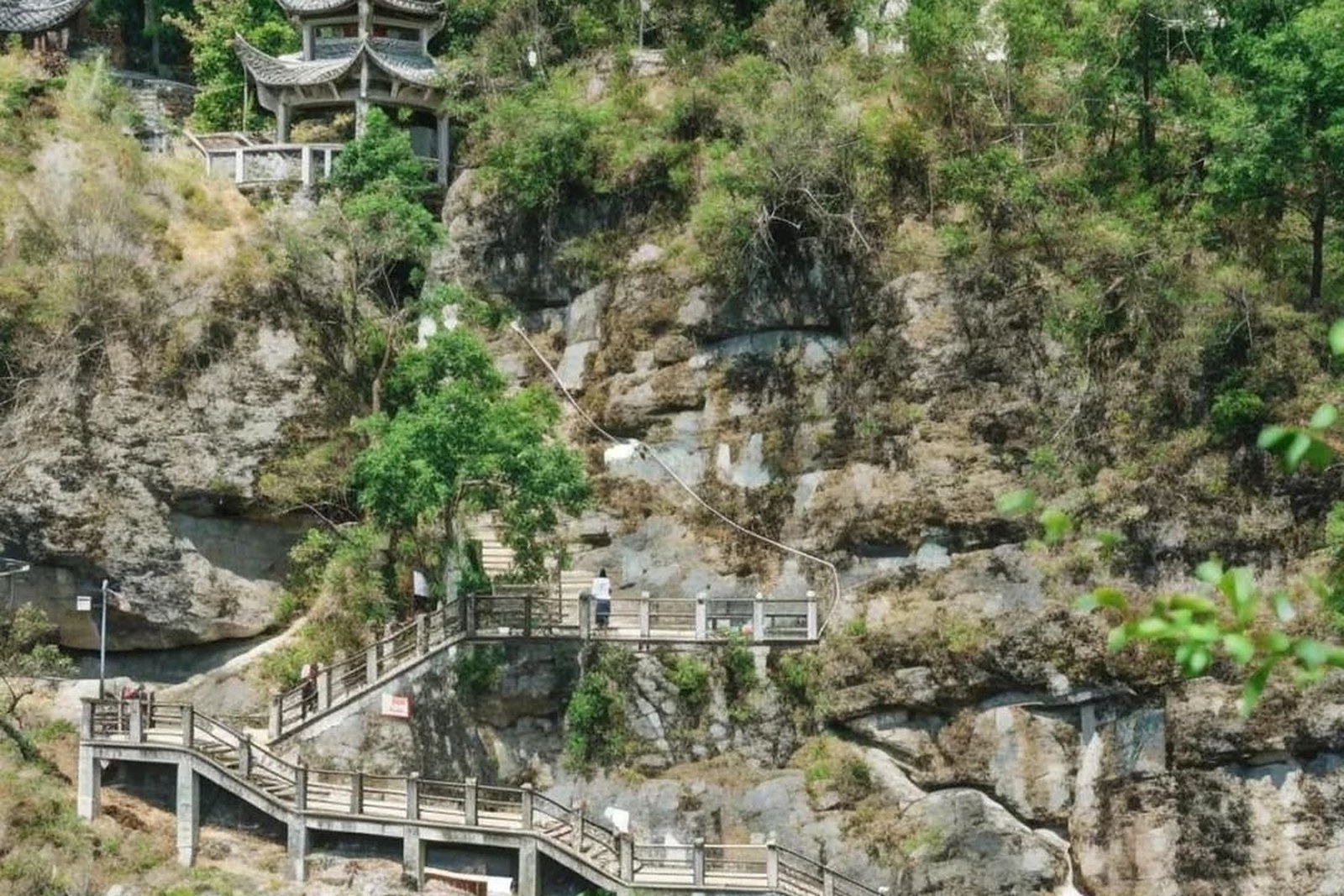
The mesa is a compound offer: 五峰书院 Wǔfēng Shūyuàn the Five Peaks Academy, where Song Neo-Confucians lectured in caves-turned-study-halls; 石鼓寮 Shígǔliáo the film-rock valley whose natural arches and grottoes have doubled for wuxia epics; and the south cliffs where plank walkways run under overhangs the color of old brick. The red rock photographs best in afternoon side-light, when the strata come out in bands.
Give it a day: the ladder climb and summit temples in the morning, the Five Peaks and film valley in the afternoon, and if the legs allow, the ridge path that circles the mesa for the full silhouette. Yongkang town below supplies the evening – a hardware city with surprisingly serious pot streets, twenty minutes down the hill.
Practicalities
- The summit stair is steep but railed; allow 30-40 minutes up, and carry water – the top sells tea but the middle sells nothing.
- Pilgrimage season (lunar eighth month) floods the stair with incense processions; secular hikers should pick weekdays outside it.
- Yongkang is 30 minutes from Jinhua by high-speed rail; the mesa is a 40-minute bus or taxi ride from Yongkang town.
- The rope car (cableway) is under renewal in 2026 – check at the gate whether the stair-only climb applies.
Words and Names
方岩 Fāngyán the “square rock” mesa; 胡公 Húgōng Duke Hu, the tax-relieving Song official turned god; 五峰书院 Wǔfēng Shūyuàn the Five Peaks Academy of the Song scholars; 丹霞 dānxiá danxia, the red-sandstone landform; 永康 Yǒngkāng the hardware city below. Beyond the mesa, the same 金华市 Jīnhuá Shì Jinhua City keeps more places worth the detour: 双龙洞 Shuānglóng Dòng the boat-ride cave of Jinhua Mountain, 横店影视城 Héngdiàn Yǐngshìchéng the film-set city of Hengdian, 诸葛八卦村 Zhūgě Bāguà Cūn the bagua-shaped village of Lanxi, or 牛头山 Niútóu Shān the forest canyons of Wuyi – four more doors into the same 金华市 Jīnhuá Shì Jinhua City. Once the Heaven Gate has let you down, our Jinhua food map fills the table.
flowcloud would say Fangyan is a mountain that behaves like architecture: four walls, one door, a temple for a roof – and a god who got the job by cutting taxes, which is the most Jinhua story the province has ever produced. All checked November 2026.
Getting there: Fangyan stands 40 minutes by bus or taxi from Yongkang town – high-speed rail reaches Yongkang South from Jinhua in 20 to 30 minutes, and the stair gate is signed from the drop-off. All checked November 2026.