
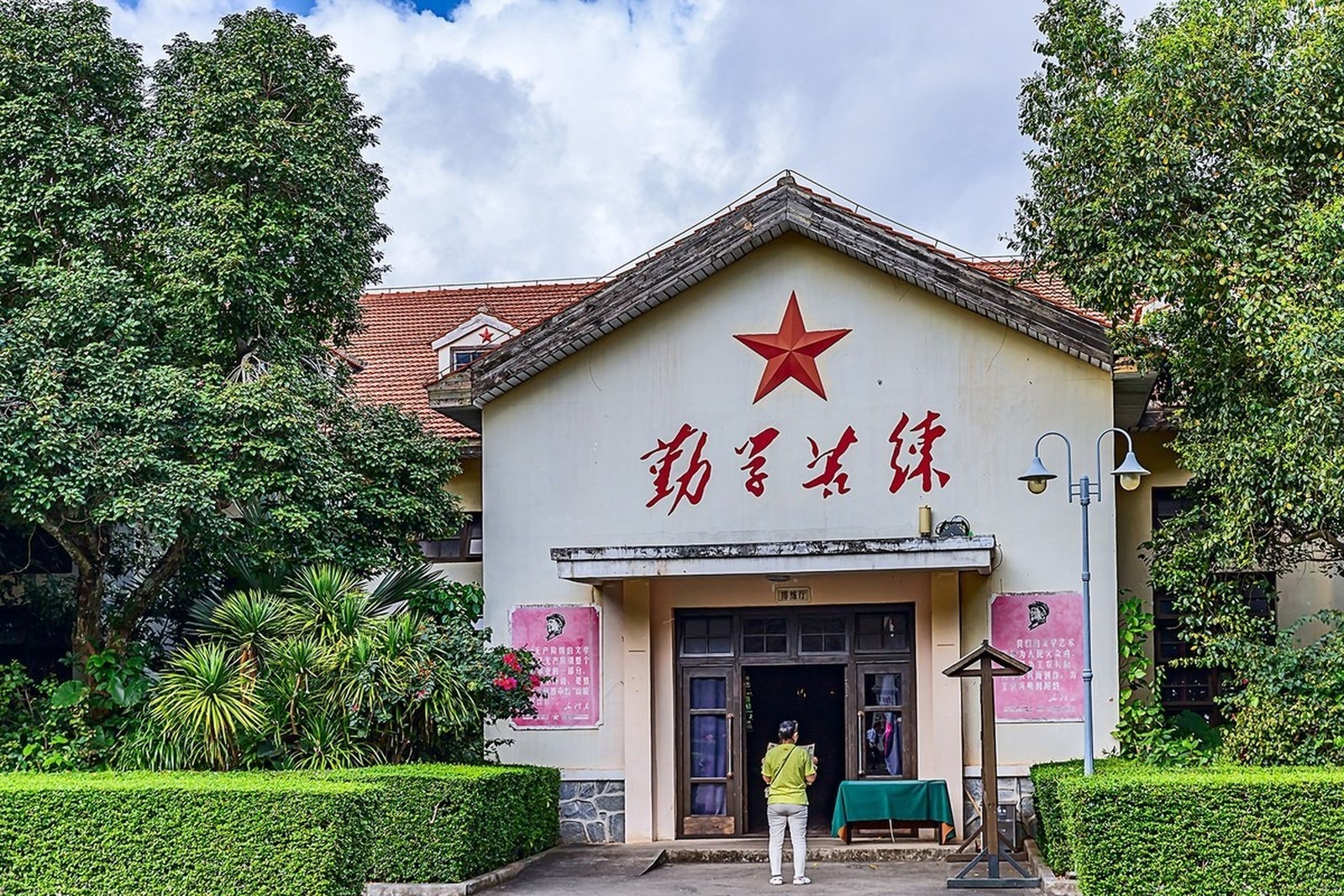
Three streets that were never streets. 冯小刚电影公社 Féng Xiǎogāng Diànyǐng Gōngshè, Feng Xiaogang Movie Town, sits at 观澜湖 Guānlánhú south of 海口市 Hǎikǒu Shì, and it is a set: several blocks of buildings put up to be filmed in and now walked through by visitors. There are three of them and each is a different lie about a different decade. 1942街 Nián Yī Jiǔ Sì Èr Jiē, 1942 Street, is a wartime Chongqing quarter of grey stone facades, stone steps and narrow lanes, the provisional capital as it appears in a film about the war. 南洋街 Nányáng Jiē, Nanyang Street, is the arcade city of the 1920s and 1930s as built by returned overseas Chinese, all colonnades and plasterwork and tall shutters, closely modelled on the qilou of 海口 Hǎikǒu and 广州 Guǎngzhōu. And 芳华小院 Fānghuá Xiǎoyuàn is a socialist-era courtyard of red brick and slogans, built for a film about a military song-and-dance troupe.
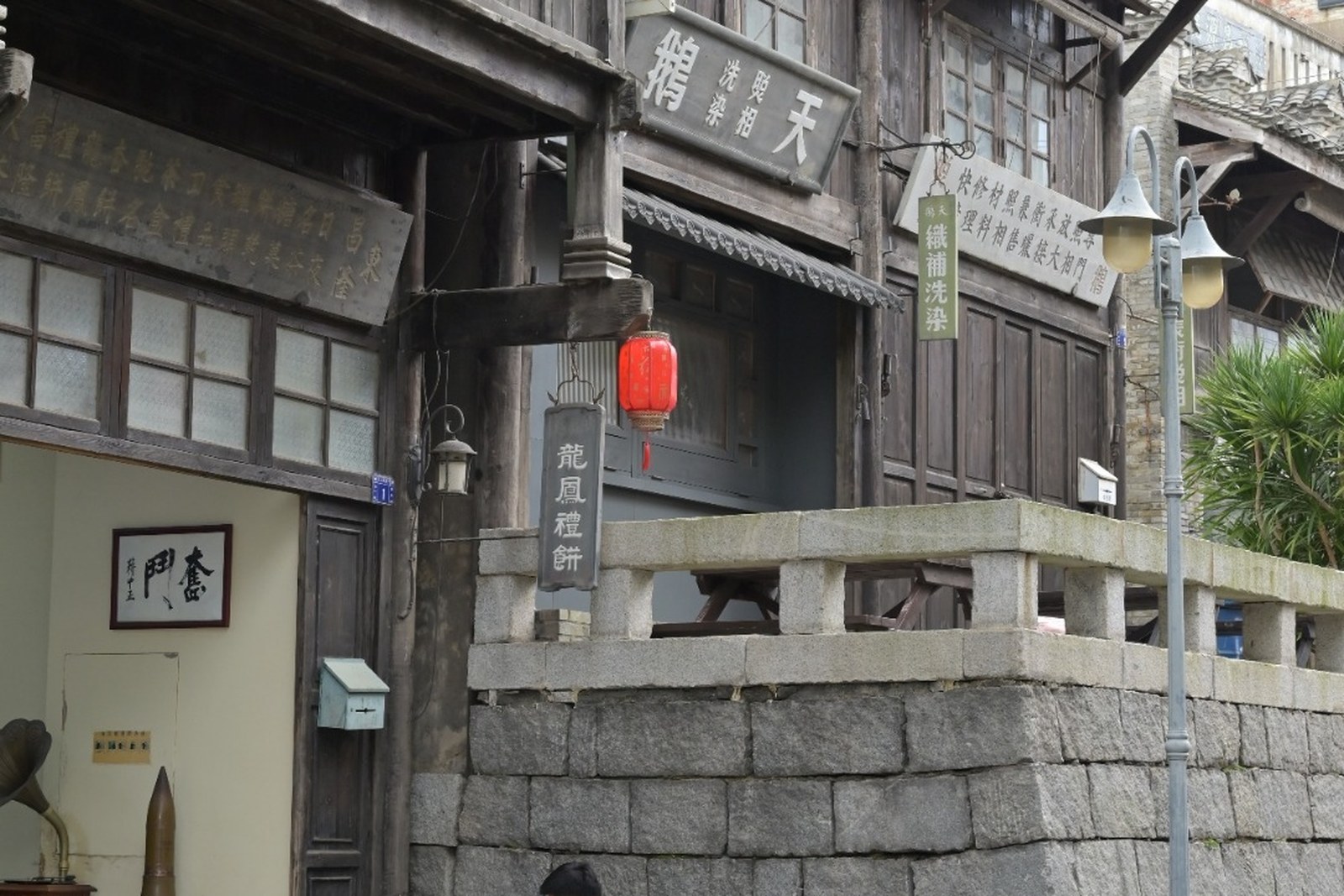
What makes the place interesting is that it does not hide any of this. The streets are built to be convincing from the camera’s side and they are convincing from yours, but the seams show when you look for them: a facade with nothing behind it, a wall too thin, a weathered finish applied in a single afternoon. Some visitors find this disappointing and some find it the whole point, and the ones who enjoy it most are the ones who came to photograph rather than to sightsee. It is a purpose-built backdrop that is happy to be used as one, and the design has been done with real care — the proportions of the arcades, the depth of the carved detail and the correct paint colours are the work of people who looked closely at the originals.
What to Do There
Walk 南洋街 first if you have already seen the real 骑楼老街 Qílóu Lǎojiē in the city, because the comparison is the amusement: the set is cleaner, emptier, more coherent and slightly wrong. Then 1942街, which is the most atmospheric of the three, particularly up the stone steps where the lanes narrow. 芳华小院 is the smallest and the most historically specific, and it means most to visitors who know the film it was built for. Throughout, the interiors are rented to shops and snack stalls dressed to match the decade, and there are costumed photographers available if you want the full effect. It is a place to wander for two or three hours with a camera, not a place with a route.
Practicalities
Tickets. Admission is sold as a package covering the streets, with separate and higher prices for some attractions and for the tram that runs through part of the site. Expect roughly ¥100 to ¥160 depending on what is included and on the season, with reductions for students, children and the elderly. Prices change, so confirm at the gate or online before setting out.
Opening hours. Typically around 09:00 to 22:00, with the last admission an hour or so before closing. The evening is when the lighting is switched on and the streets look their best, and it is also when the site is busiest, so a morning visit and an evening visit are two different experiences.
Closing day. There is no fixed closing day and the site is open daily, but individual buildings close for filming from time to time and are then fenced off without much warning. During 国庆 Guóqìng week and 春节 Chūnjié, the queues at the gate are long and the streets are full, which defeats the purpose of photographing them.
Getting there. The movie town is at 观澜湖 Guānlánhú in 龙华区 Lónghuá Qū, about twenty kilometres south of central 海口市 Hǎikǒu Shì, sharing its location with the golf resort and the hot springs. A shuttle runs between the city and the resort, taxis take thirty to forty minutes from the centre, and the drive from 海口美兰国际机场 Hǎikǒu Měilán Guójì Jīchǎng is about an hour. There is no convenient rail connection; 海口东站 Hǎikǒu Dōng Zhàn is the nearest station and still needs a taxi from there.
flowcloud would say that the movie town is the one place in Haikou where the city’s own architecture has been copied more carefully than it was ever built, since the arcades here are straighter than the ones two streets from where they were modelled.
Getting there: in the morning for 南洋街 and the photographs, then the spa or the golf at the same resort in the afternoon, then back into the streets after dark when the lamps are lit. Buy the ticket that covers the tram if you intend to walk the whole site, keep an eye out for closed-off sets on the day you visit, and if you have not yet seen the real 骑楼老街 in the city, go there first so that the copy has something to be a copy of.