
Yǐn yán: Báidì chéng tóu, cǎi yún guī lái. — Above the throat of the gorges stands the White Emperor’s city, where a kingdom’s last trust was given.
Baidi City (白帝城) perches on a green hill at the mouth of Qutang Gorge, where the Yangtze narrows into the great gate of Kuimen. It was first raised in the last years of the Western Han, when the warlord Gongsun Shu (公孙述) fortified the cliff and took the proud title “White Emperor,” lending the place its name. For two thousand years the hill has watched the river’s traffic between Shu and Chu, and what began as a frontier fortress became one of the most storied sites of the Yangtze. The present temple cluster — halls, courtyards and stele walls — sits on a peninsula that the rising reservoir of the Three Gorges turned almost into an island, so that today you approach it across water, as travellers have for centuries approached a gate.
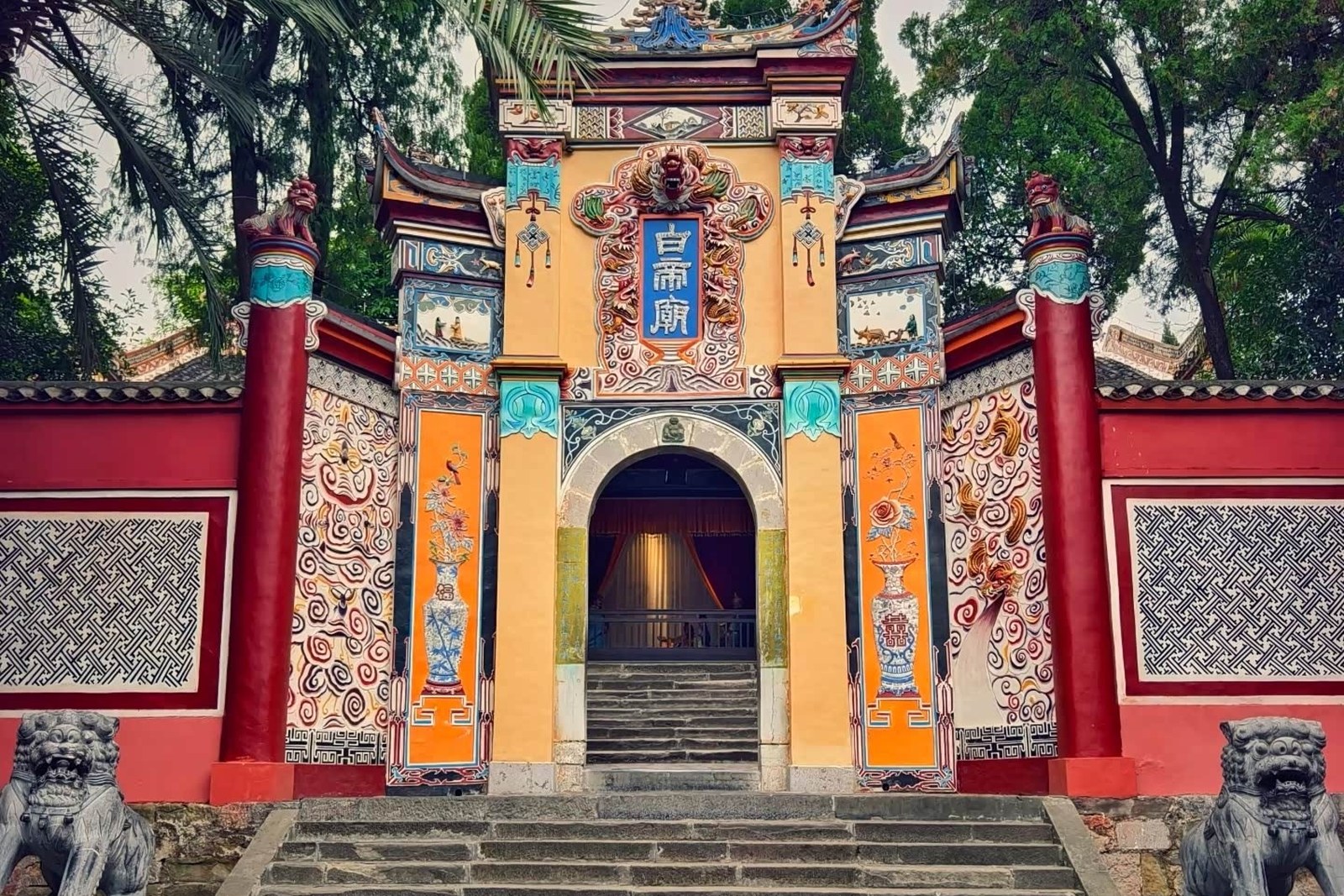
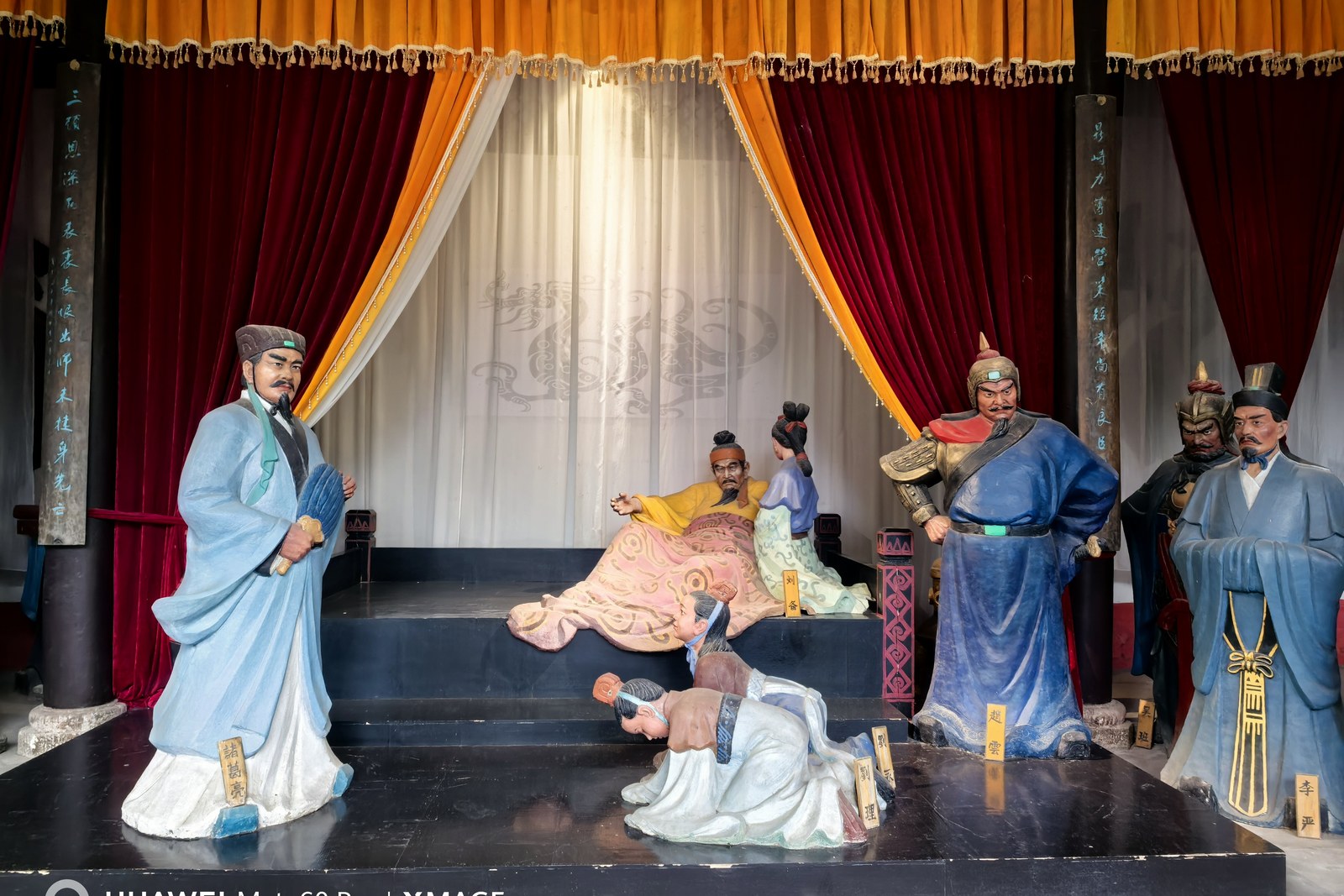
The city’s deepest claim on memory is the “Entrusting of the Orphan” of 223 AD. After his crushing defeat at Yiling, the Shu-Han emperor Liu Bei (刘备) fell ill here and summoned his chancellor Zhuge Liang (诸葛亮) to the Hall of Farewell to the Throne. There, in the words of the chronicles, Liu placed his young son Liu Shan (刘禅) and the fate of the state into Zhuge’s hands — “if the heir can be helped, help him; if not, you may take his place.” Zhuge wept and pledged his life. This scene of absolute trust between ruler and minister is enshrined in the Tuogu Hall (托孤堂), and it is why Baidi City is more than a fortress: it is a monument to loyalty. Later the Ming restored the shrine to the heroes of Shu-Han, and the halls still hold their statues — Liu Bei, Zhuge Liang, Guan Yu and Zhang Fei.
Poetry made the city immortal. In 725 AD the young Li Bai (李白), leaving at dawn, wrote “朝辞白帝彩云间” — “At dawn I left Baidi amid the coloured clouds” — and the line has carried the place in every Chinese memory since. Du Fu, Liu Yuxi and hundreds more added their verses, so that Fengjie earned the title 中华诗城, the “City of Poetry,” the first of its kind in China. Walking the terraces you read the cliffs across the water where Li Bai saw his clouds, and the gorges where Du Fu listened to the wind.
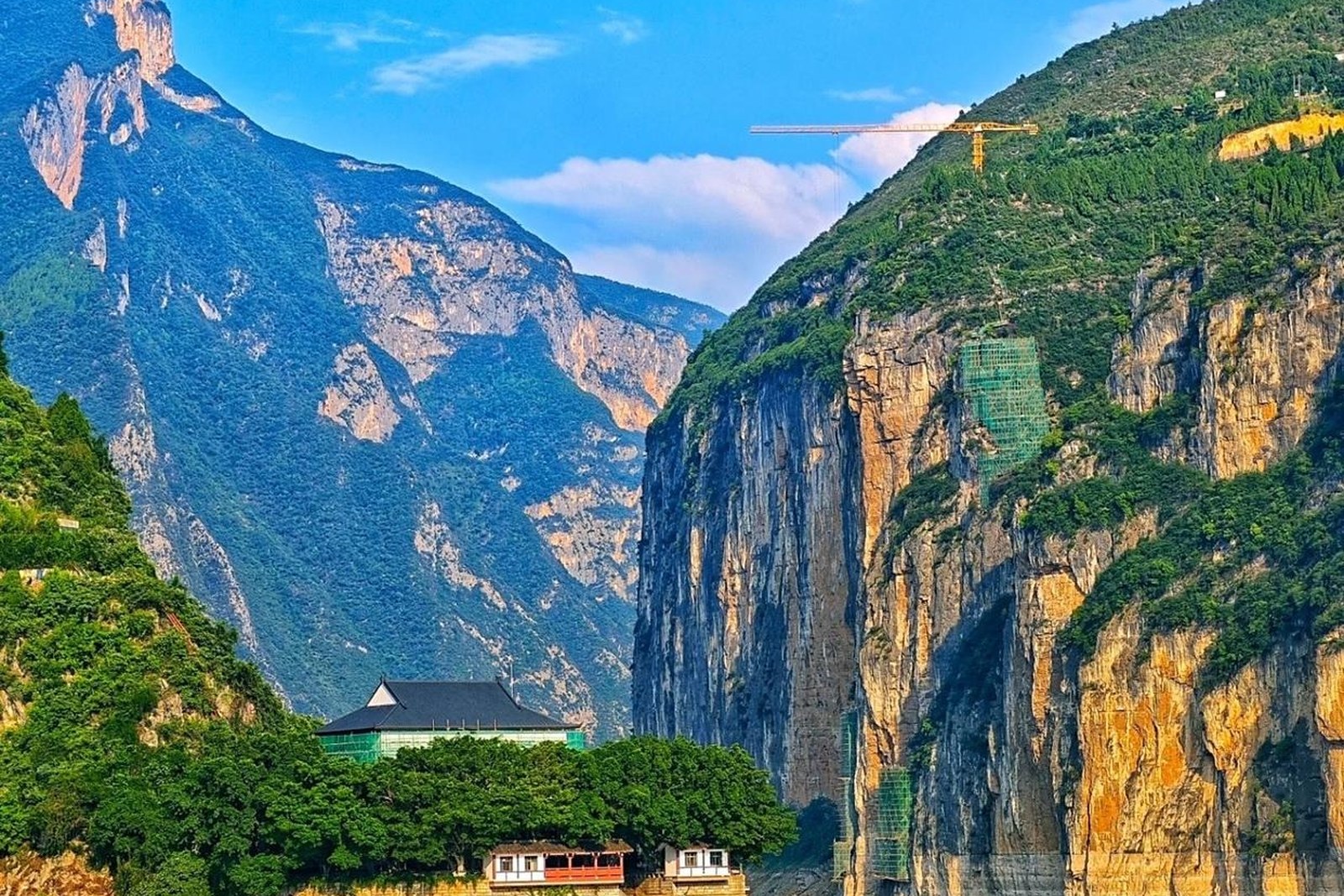
Allow a slow morning. Climb to the Observation Pavilion for the classic frame of Kuimen below, wander the eastern and western stele forests where masters of calligraphy left their strokes, and let the river breeze do the rest. Baidi City rewards the unhurried: the stones hold both the strategy of generals and the music of poets, and standing between them you feel the whole Yangtze story pressed into one green hill.
Words and Names
白帝城 Báidì Chéng — Baidi City, the White Emperor’s fortress above the mouth of Qutang Gorge 刘备托孤 Liú Bèi Tuō Gū — Liu Bei’s entrusting of his son to Zhuge Liang, the city’s defining scene of 223 AD 诸葛亮 Zhūgě Liàng — the Shu-Han chancellor to whom Liu Bei entrusted the state 夔门 Kuímén — Kuimen, the towering gorge gate framed by the cliffs below the city 中华诗城 Zhōnghuá Shī Chéng — the “City of Poetry,” Fengjie’s national title for its millennial verse 白帝庙 Báidì Miào — the White Emperor Temple complex crowning the hill today