
Yǒu shī yún: Kuímén tiānxià xióng. — The poets said it best: Kuimen, the most majestic gate under heaven.
Kuimen (夔门) is the gate of the Qutang Gorge and the formal threshold of the whole Three Gorges — the point where the Yangtze, having run wide and brown through Sichuan, is squeezed between two sheer mountains and forced into a passage barely wide enough to be called a river. On one side rises Chijia Mountain (赤甲山), its rock stained the red of old armour; on the other Baiyan Mountain (白盐山), pale as if crusted with salt. The two cliffs lean toward each other until the water between them narrows to a fraction of the river’s upstream breadth, and it is here, more than anywhere, that the Yangtze earns its reputation for force. The name itself — Kuimen, the Gorge Gate — is simply a description of what you see.
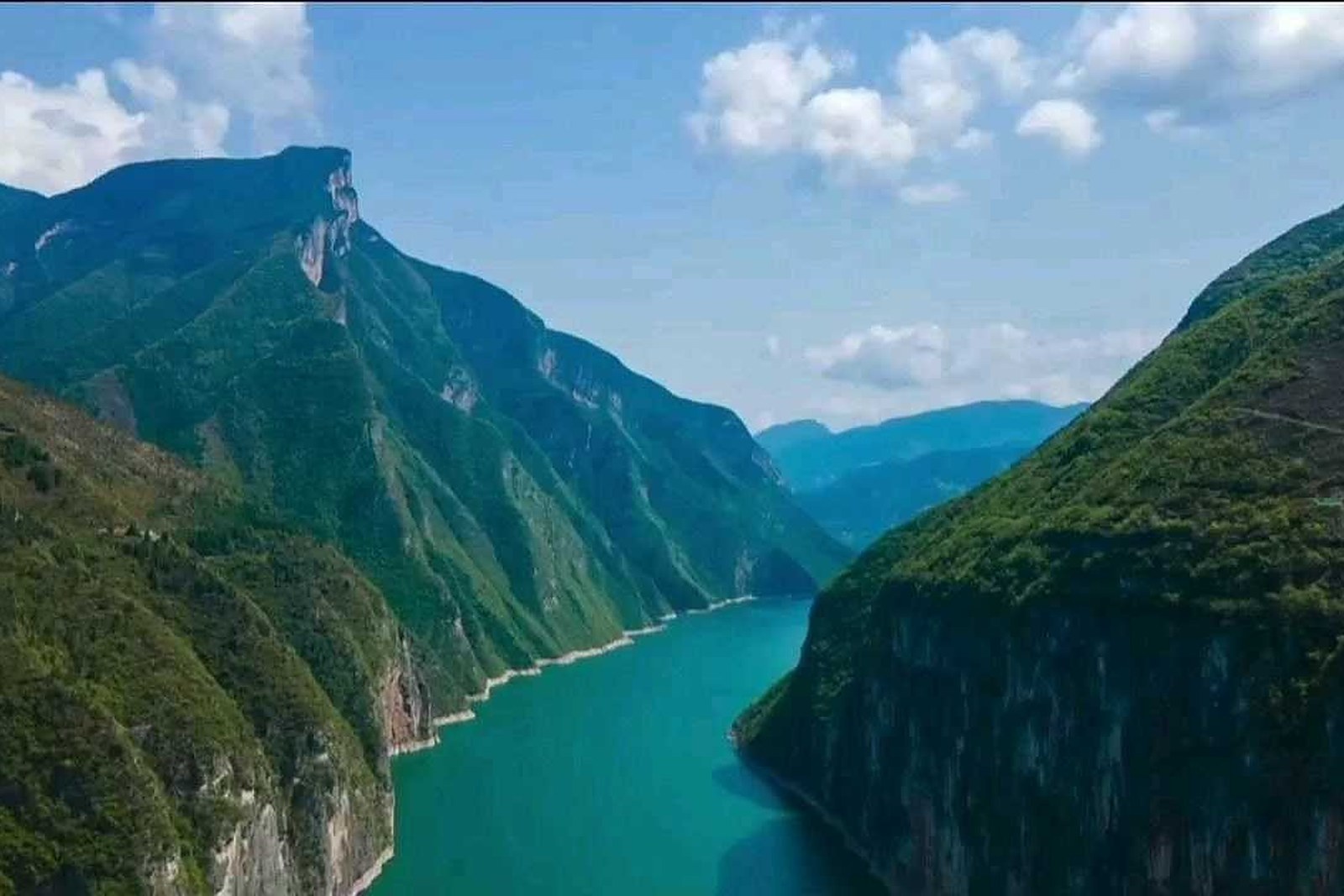
For millennia this gate has been a chokepoint as much as a landscape. In imperial times it was guarded as 瞿塘关, a fortress controlling all river traffic between Shu and Chu, and generals who held Kuimen held the throat of the Yangtze. Travellers who passed through it going east — soldiers, officials, porters, poets — understood they were leaving the Sichuan basin behind and entering a stretch of water hemmed in for hundreds of kilometres by stone. The White Emperor City sits directly above the gate, so the two are inseparable: the fortress watched the gate, and the gate made the fortress worth holding.
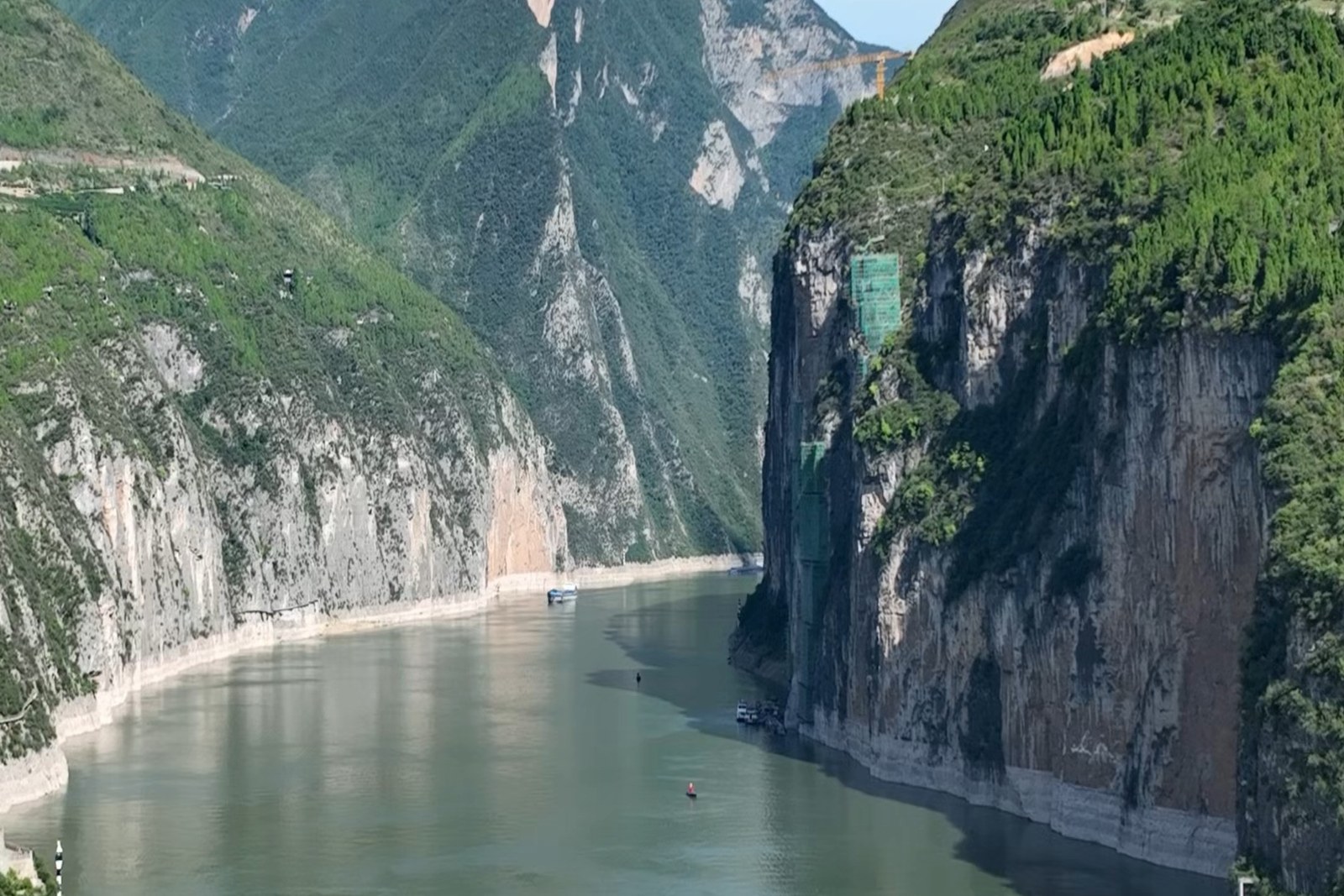
What made Kuimen famous to every Chinese, though, was not war but money: the view of the gate is printed on the back of the ten-yuan banknote, so the scene is carried in pockets across the country. The best light is early or late. At sunrise the cliffs catch the first red and the gate glows; at sunset the stone turns copper and the river carries the colour downstream. From the Fengjie side you can look across to the gate, or climb above it on Chijia Mountain, or see it framed from the terraces of Baidi City — and from any of them the geometry is the same, two walls and a river between.
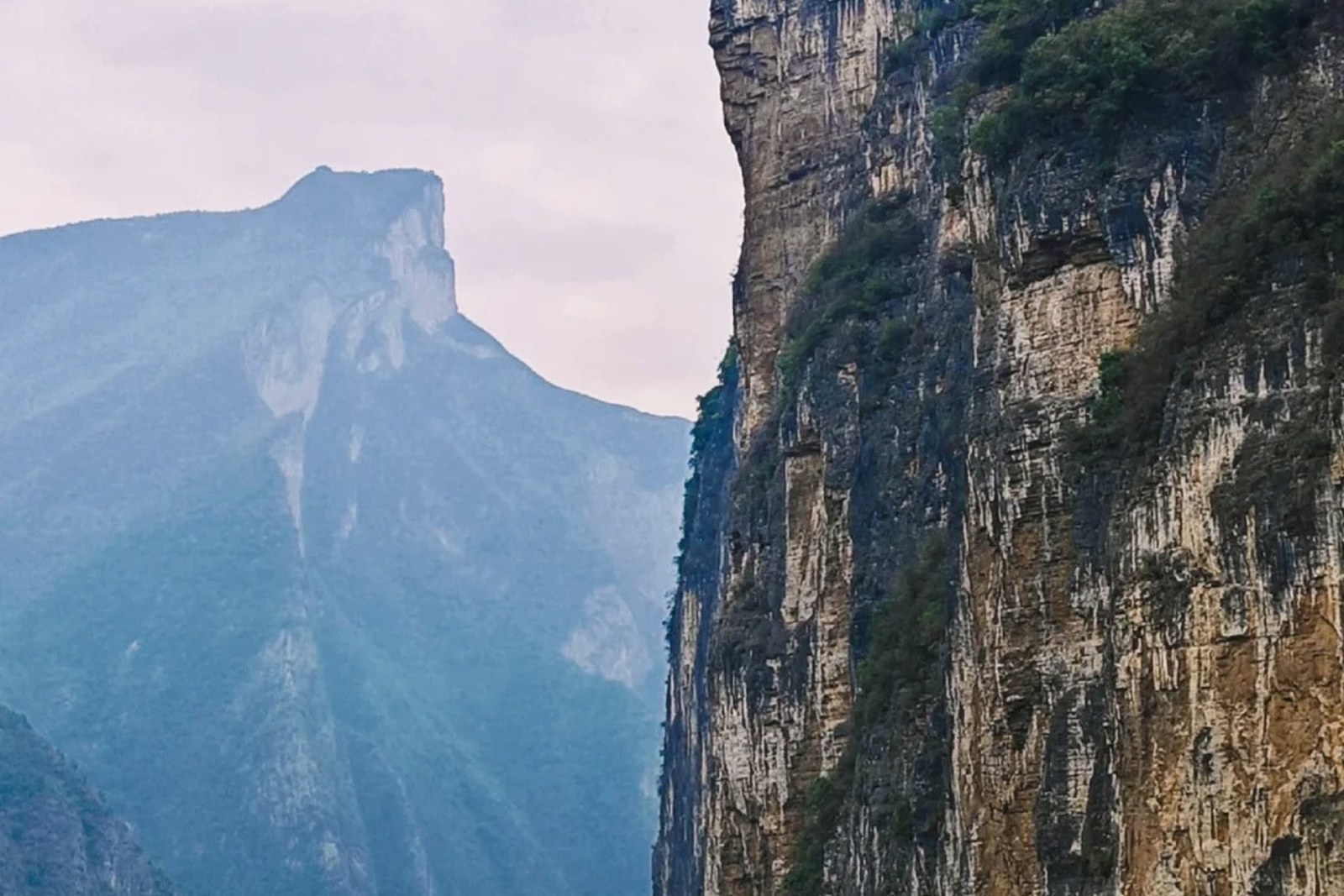
Allow yourself to simply stand and look. Kuimen is not something to be toured so much as witnessed; the scale only settles when you find something small — a boat, a figure on the far shore — and measure the walls against it. Two thousand years of history have been decided at this narrow place, and the river still goes through it with the same patient, unstoppable weight.
Words and Names
夔门 Kuímén — the Gorge Gate, the Yangtze’s narrowed entrance to the Qutang Gorge and the Three Gorges 瞿塘峡 Qútáng Xiá — Qutang Gorge, the shortest and steepest of the Three Gorges, of which Kuimen is the gate 瞿塘关 Qútáng Guān — the old river pass at Kuimen, a strategic fortress controlling Yangtze traffic 赤甲山 Chìjiǎ Shān — Chijia Mountain, the red-cliffed wall on the north side of the gate 白盐山 Báiyán Shān — Baiyan Mountain, the pale-cliffed wall on the south side of the gate 夔门天下雄 Kuímén tiānxià xióng — “Kuimen, the most majestic gate under heaven,” the traditional praise of the view