
Yǐn yán: Qūtáng yī xiá, liǎng àn rú qiē. — Qutang cuts the shortest, sharpest wound through the mountains, and the river runs between walls of stone.
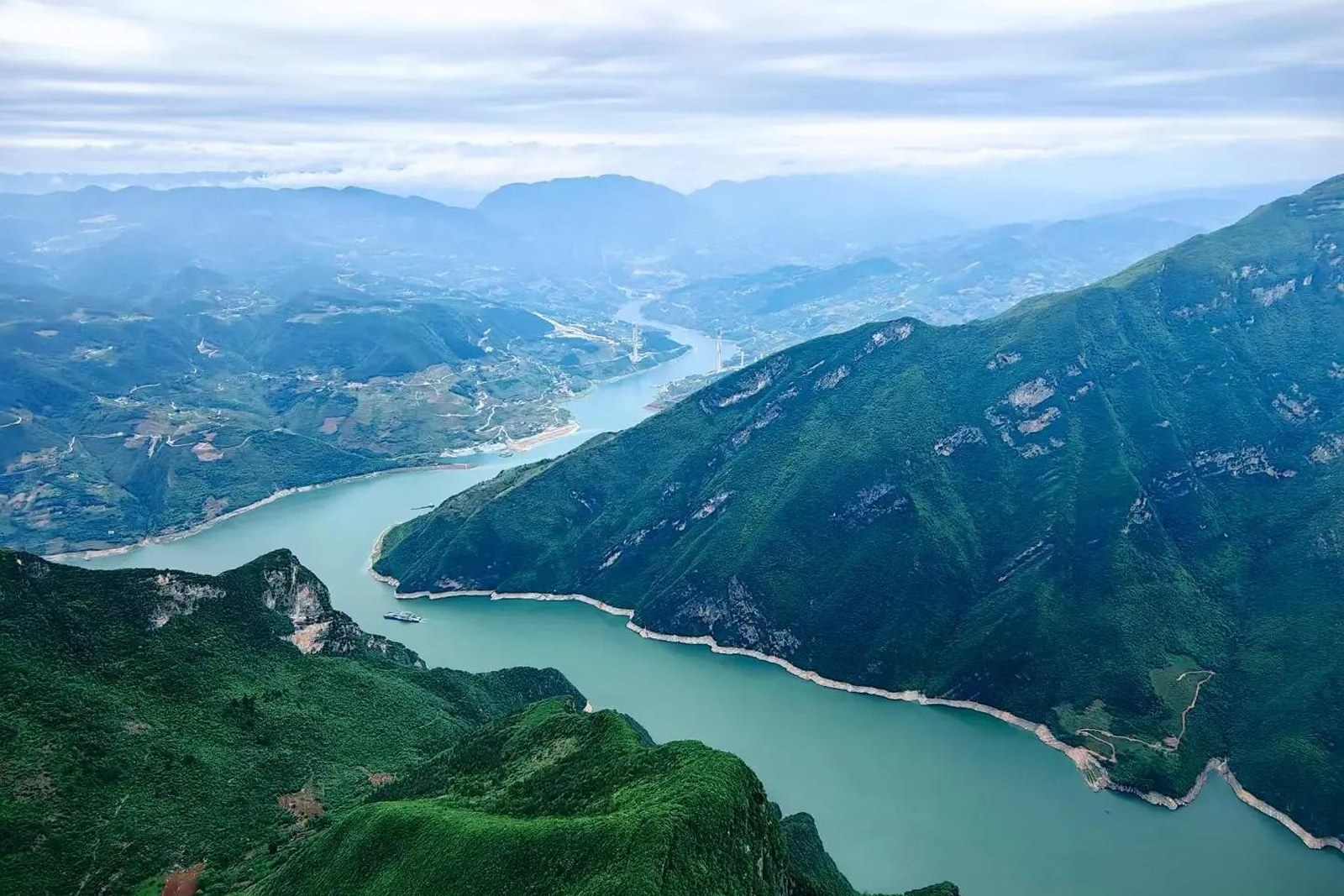
Qutang Gorge (瞿塘峡) is the first and fiercest of the Yangtze’s Three Gorges, a mere eight kilometres of water squeezed between cliffs that rise almost sheer from the current. It begins at Baidi City in the west and ends at Daxi in the east, but in that short run it delivers the most concentrated drama of the whole 190-kilometre passage. Ancient travellers called it “a case joined to the sky, a boat moving through an earth-cave,” and the description still fits: the gorge is less a valley than a rift, and the river, funnelled narrow, runs deep and green below walls that seem carved by a single stroke.
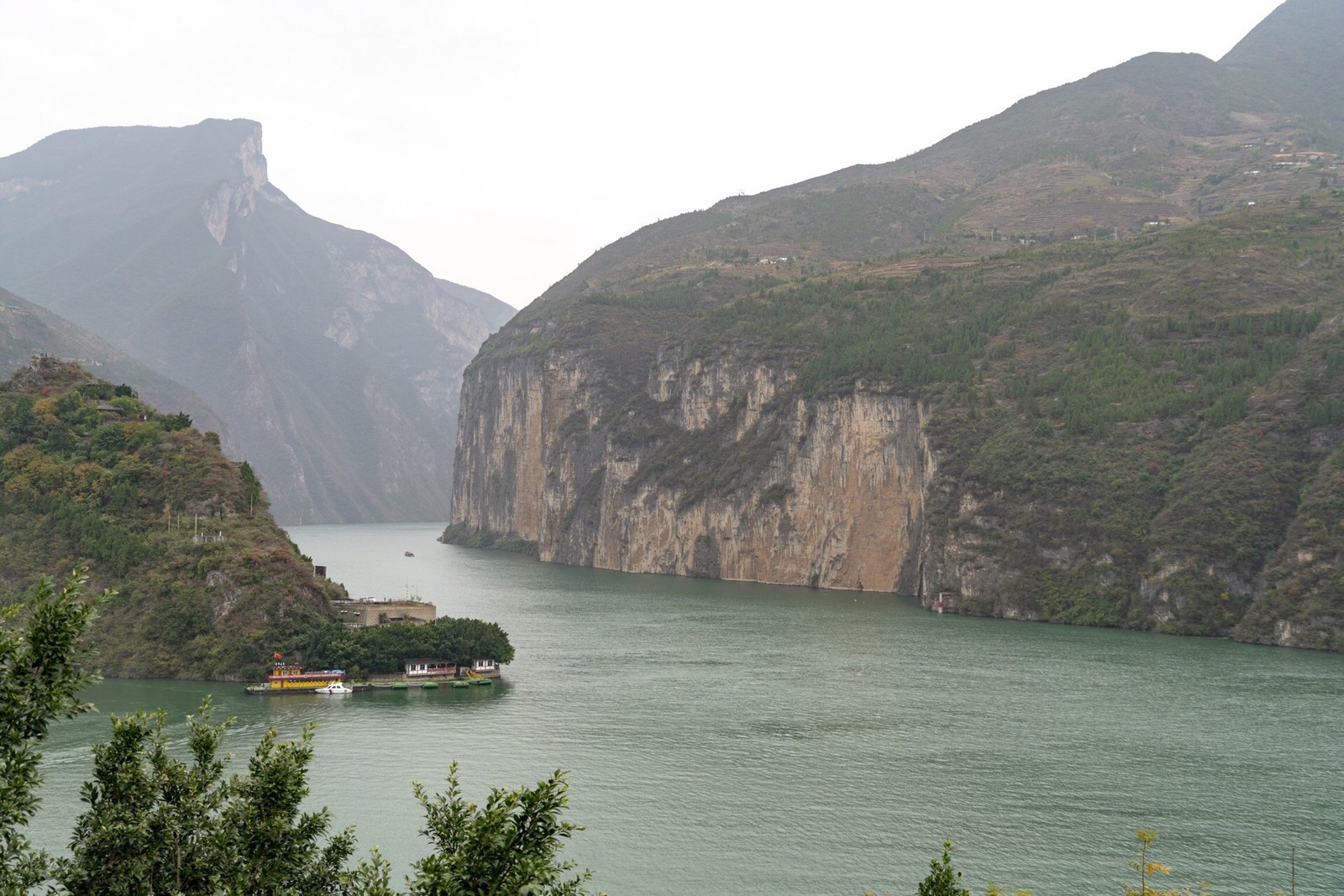
Two mountains make the gorge what it is. On the north bank stands Chijia Mountain (赤甲山), its rock stained rust-red by iron oxide, said too to honour the “Red Armour” general of old Ba; opposite, on the south, is Baiyan Mountain (白盐山), pale as salt in the sun. Between them the river’s width collapses to little more than a hundred metres, and at the narrowest point only tens of metres, so that a freighter looks like a toy drawn through a doorway. This doorway is Kuimen, the “Gate of Kuizhou,” and it is the gorge’s signature view. The cliffs here are layered limestone — the “horizontal bedding” a geologist reads as a former seabed — cut by the river over millions of years into a wall that the eye cannot scale.
History clings to every ledge. Along the north wall runs the ruin of an ancient plank road, chiselled for armies and later for porters carrying produce to the county seat; most of it now lies beneath the reservoir. The south face bears the “Painted Wall” (粉壁墙), a cliff of stone inscriptions in seal, clerical, cursive and running scripts — a open-air gallery of calligraphy. Nearby, the wind-cave cliff once held悬棺, the suspended coffins of a people who placed their dead high above the water. Du Fu wrote that “Baidi towers as the guardian of the gorges, Qutang is more perilous than the Pass of a Hundred Forts,” and the peril was real: before the dam, the reef of Yanyu Dui (滟滪堆) here could smash a careless boat, until it was blasted away in the 1950s.
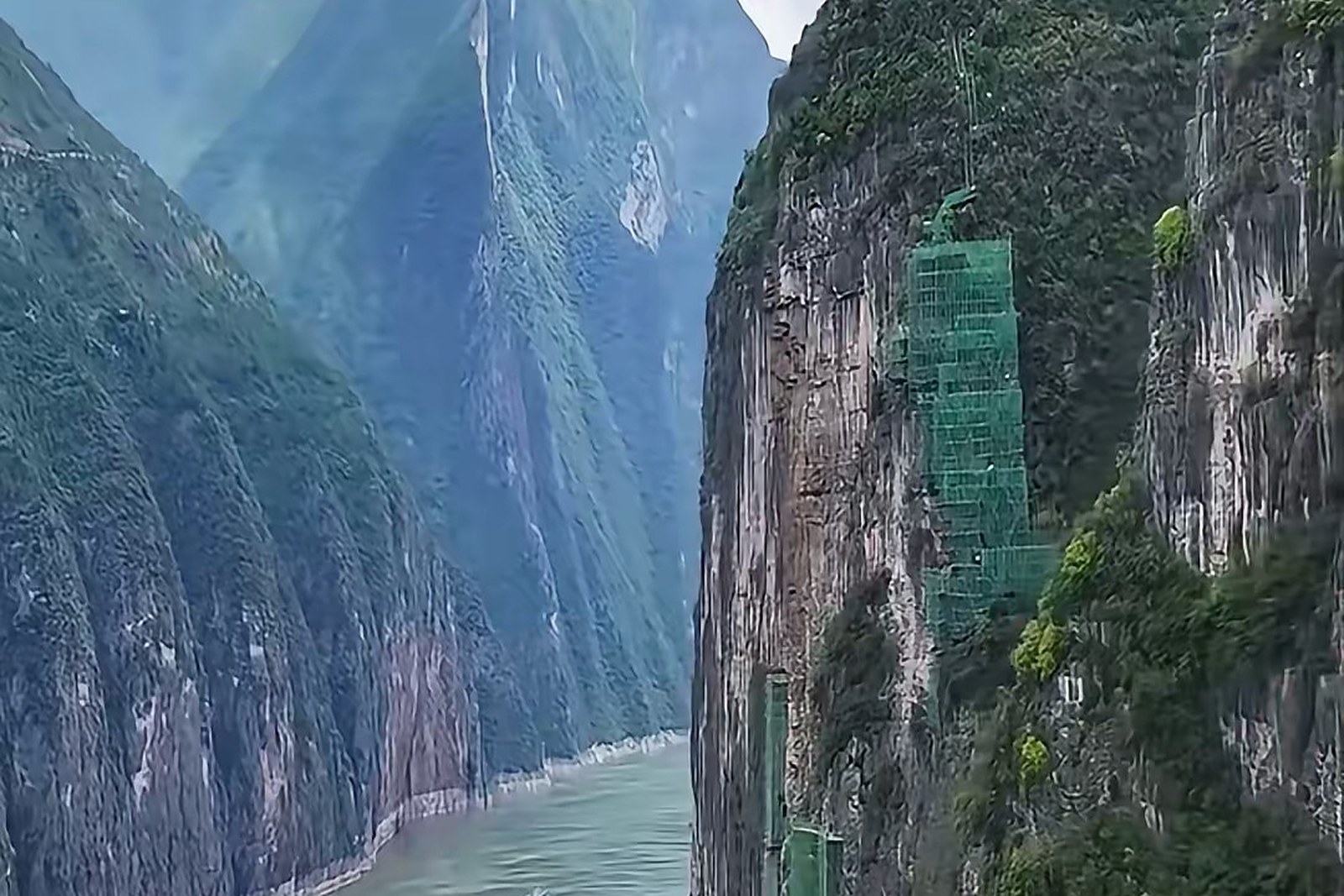
To see Qutang well, take the ferry or a cruise ship through Kuimen at first light, when the clouds catch the eastern glow and the walls glow red and white in turn. The gorge is short, but it is the heart of the Yangtze’s fame — the place where the river stops being a river and becomes a gate. Stand at the rail as the boat threads the narrows and you understand why a thousand poems were written for eight kilometres of stone.
Words and Names
瞿塘峡 Qūtáng Xiá — Qutang Gorge, the shortest and most dramatic of the Three Gorges 赤甲山 Chìjiǎ Shān — Chijia Mountain, the iron-red cliff on the gorge’s north bank 白盐山 Báiyán Shān — Baiyan Mountain, the pale salt-white cliff opposite on the south bank 夔门 Kuímén — Kuimen, the gorge gateway where the cliffs squeeze the river narrowest 粉壁墙 Fěnbì Qiáng — the “Painted Wall,” a cliff of ancient stone inscriptions at Qutang 悬棺 xuánguān — suspended coffins placed high on the cliff faces by an ancient people