
Xiáoyán: Xiǎozhài tiānkēng, yī kǒu zhuī luò de jǐng. — Deep in the hills south of Fengjie yawns the Xiaozhai Tiankeng, a well the earth swallowed whole.
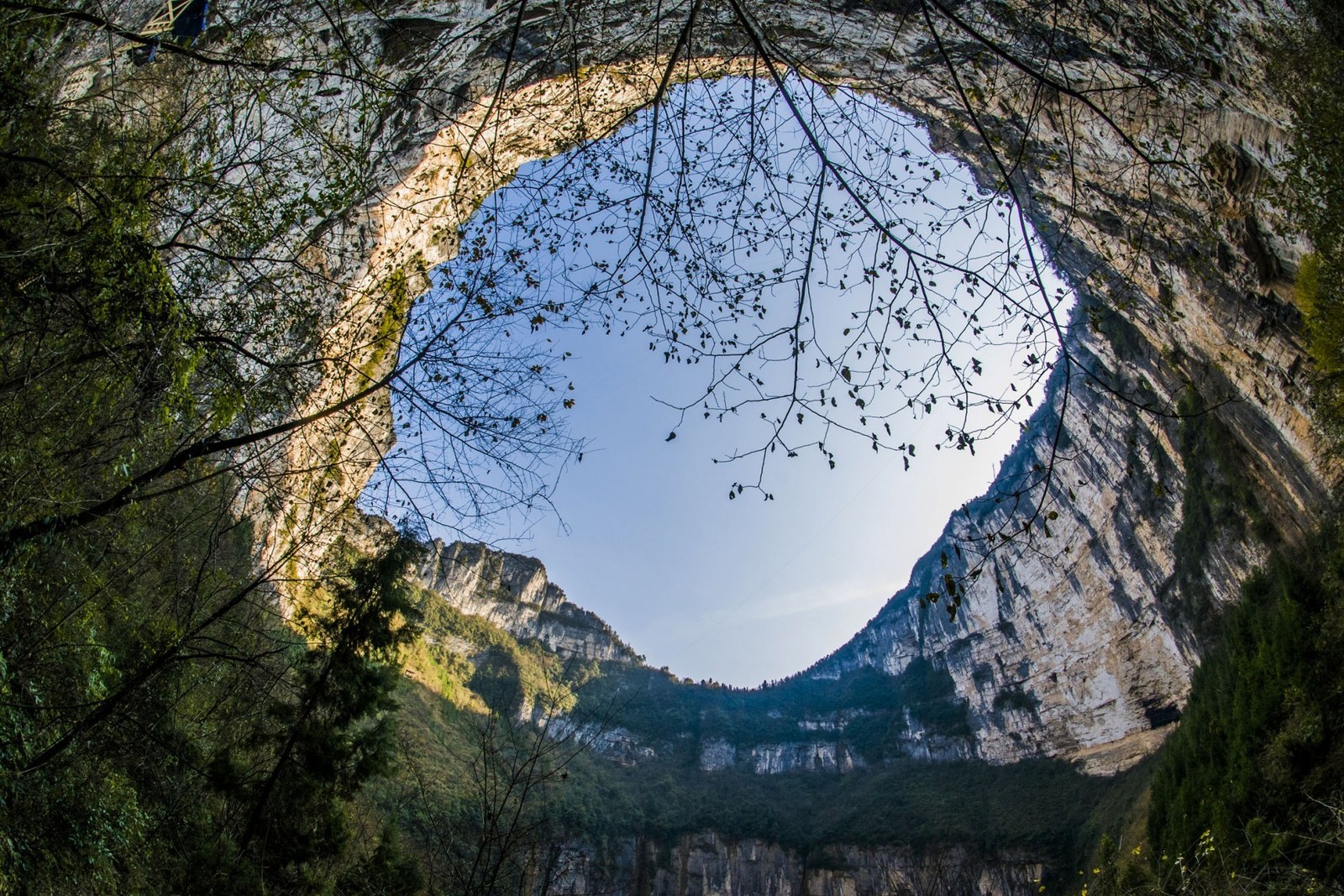
An hour’s climb into the mountains south of Fengjie town, the ground simply disappears. The Xiaozhai Tiankeng (小寨天坑) is a sinkhole of staggering proportions — roughly six hundred metres across and over six hundred metres deep, ranking among the largest on the planet — a near-perfect circular bowl where the roof of a limestone cavern collapsed long ago and let the surface drop into the dark. Water, rock and time did the rest: an underground river cut the void, the roof gave way, and what remains is a vertical amphitheatre of cliffs, forest and echo, into which the eye falls and finds no floor. Standing on the rim, you hear birds and falling water rising from far below, and the scale is so wrong to the human eye that it takes a moment to believe it is natural and not quarried.
The companion attraction is the Tianjing Crevice (天井峡地缝), and it is the opposite geometry: where the sinkhole is a hole that goes down, the crevice is a cleft that goes sideways. A narrow slot canyon — in places only a few paces wide, in places hundreds of metres tall — it is the seam where the earth cracked open rather than caved in. You walk it along stairways and a riverside path, the walls pressing so close that the sky is a bright ribbon overhead, cool and dripping with the sound of the stream that runs at the bottom. The contrast is the point: first the ground opens downward, then it splits apart, both revealing the same hidden plumbing of the karst.
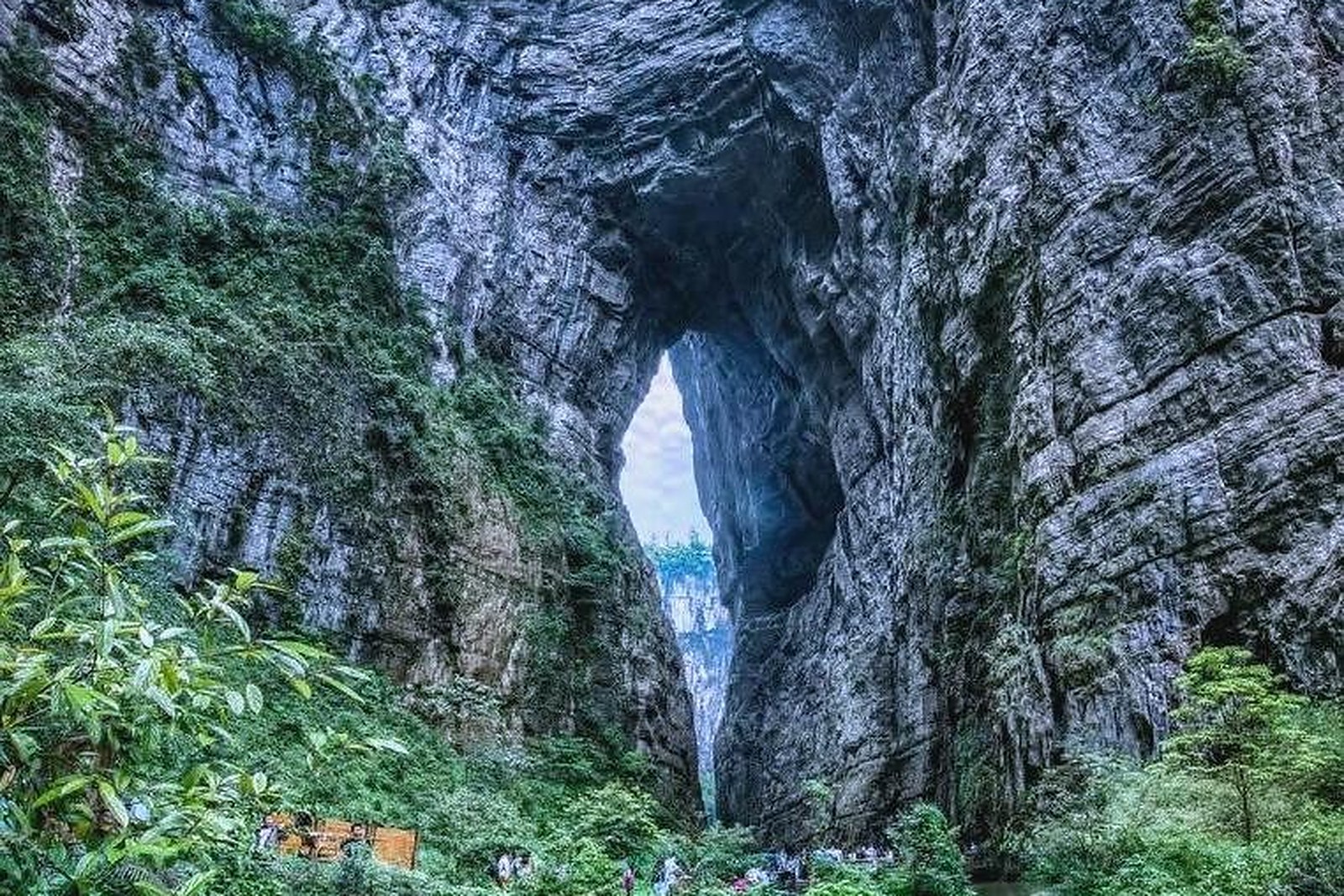
Together the two give the scenic area its name, 天坑地缝 — “sinkhole and crevice” — a twin lesson in what water does to limestone over millions of years. The park spreads across the karst hills of Xinglong township, with caves, an underground river and shaded forest paths between the two wonders, so a visit is a full day of walking rather than a quick stop. The drama of the place has not gone unnoticed by the film industry, which has used the eerie verticality of the cliffs as a backdrop. Bring shoes for stairs and a jacket for the damp cool of the crevice; the sun rarely reaches the bottom.
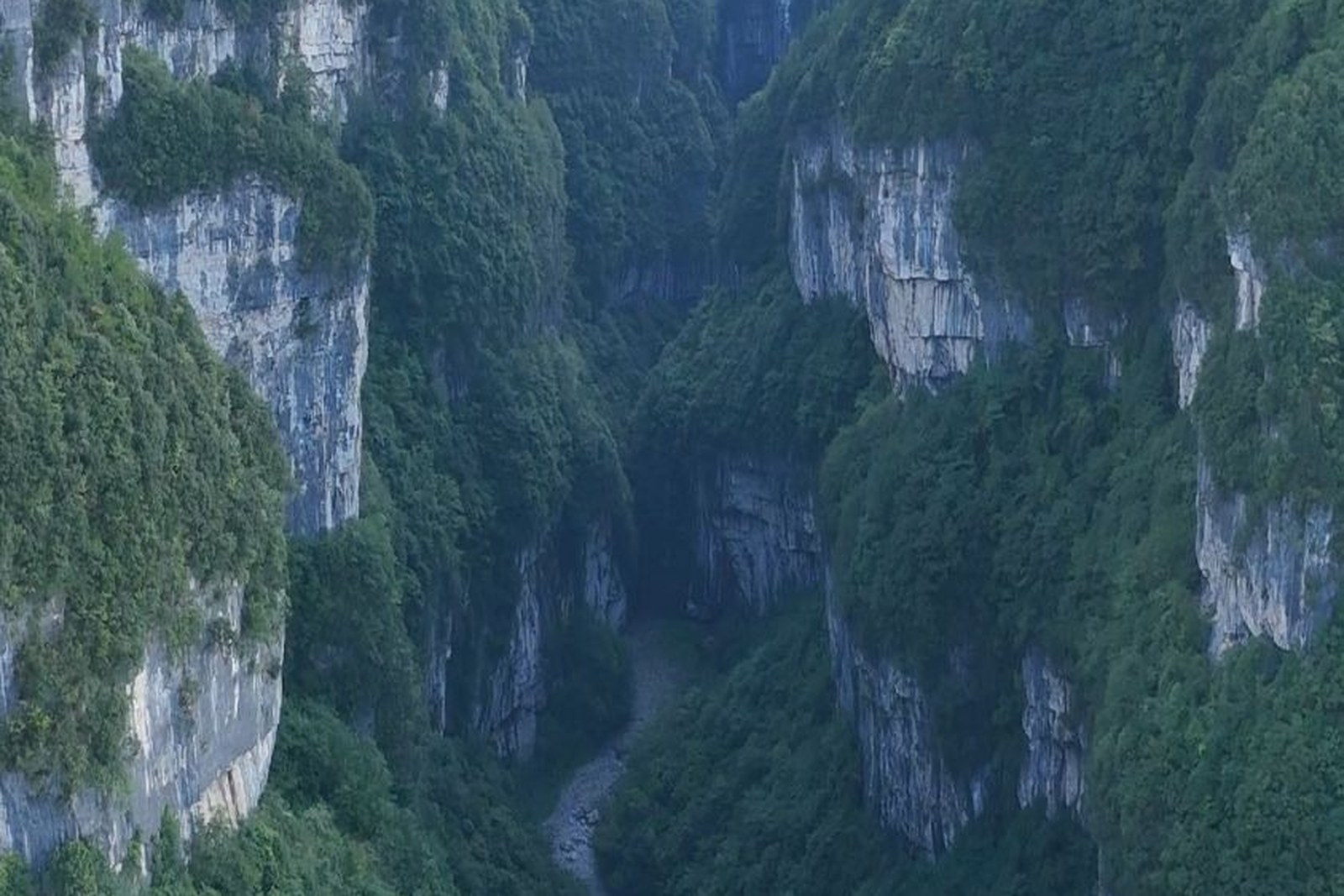
Come for the geology and stay for the vertigo. The Tiankeng-Difeng is Fengjie’s other face: if the Qutang Gorge and Kuimen are the county’s river drama, this is its underground one — a landscape of holes and cracks that reminds you most of the Three Gorges happens beneath your feet, hollowed out one drop at a time.
Words and Names
天坑地缝 Tiānkēng Dìfèng — “sinkhole and crevice,” Fengjie’s karst scenic area of a giant pit and a narrow gorge 小寨天坑 Xiǎozhài Tiānkēng — Xiaozhai Tiankeng, the sinkhole, among the world’s largest karst pits 天井峡地缝 Tiānjǐng Xiá Dìfèng — Tianjing Crevice, the narrow slot canyon companion to the sinkhole 喀斯特 Kāsītè — karst, the limestone landscape of sinkholes, caves and underground rivers 兴隆镇 Xīnglóng Zhèn — Xinglong township, where the Tiankeng-Difeng area lies in the southern hills 暗河 ànhé — underground river, the hidden stream that carved the cave beneath the sinkhole