
Fengjing Ancient Town: The Border Water Town Straddling Ancient Wu and Yue, with the Yuan-Era Zhihe Bridge, the Covered Lanes of Shengchan Street, a Preserved People’s Commune Site and the Famous Fengjing Trotters along Stone Bridges and Old Canals in Jinshan District, Shanghai
一镇横跨吴越地,千年桥影枕水眠。Yī zhèn héng kuà Wú-Yuè dì, qiānnián qiáo yǐng zhěn shuǐ mián – One town lies across the border of Wu and Yue; a thousand years of bridge shadows sleep pillowed on the water.
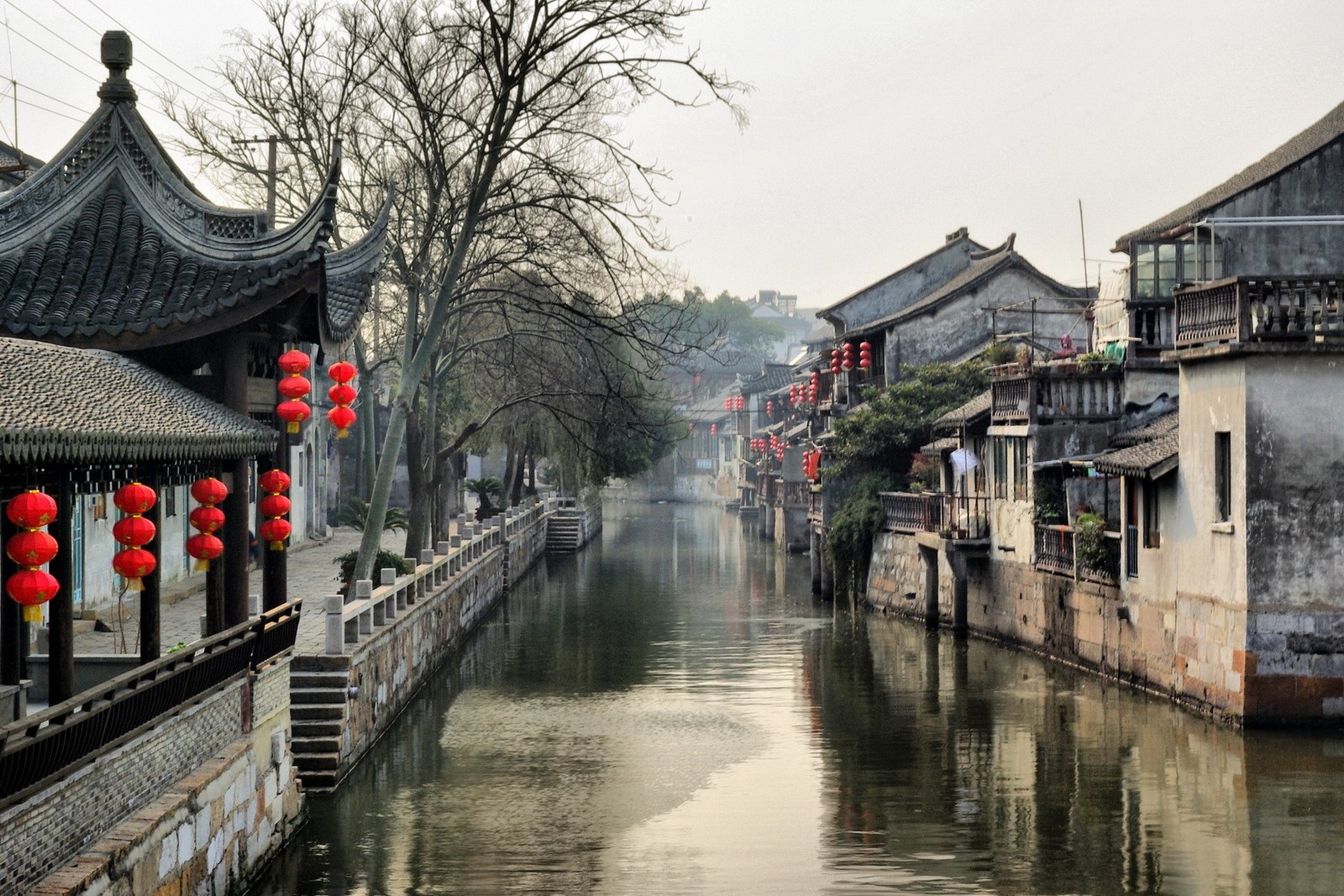
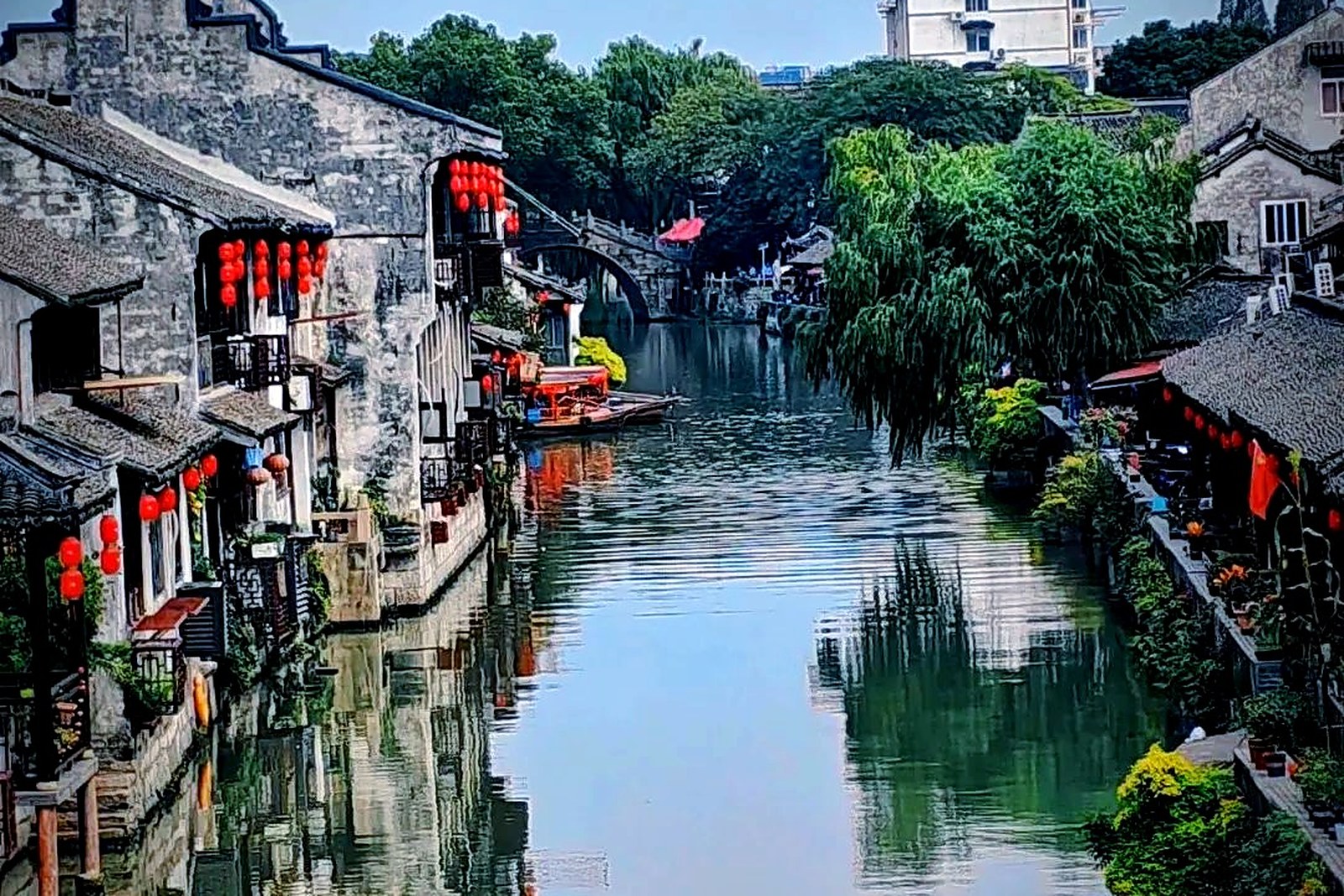
枫泾古镇 Fēngjīng Gǔzhèn Fengjing Ancient Town is not another polished canal brand near the expressway — it is, plainly put, the water town that sits on an old provincial border and kept both accents: the market town grew up where 吴越 Wú-Yuè the ancient kingdoms of Wu and Yue met, and locals still say half the town faced one kingdom and half the other, which earned it the proud tag 吴越名镇 Wú-Yuè míngzhèn the famous town of Wu and Yue. Its lanes follow a lattice of small canals crossed by dozens of stone bridges, the oldest celebrated one being 致和桥 Zhìhé Qiáo Zhihe Bridge, named for the Yuan reign era when it was first raised and still arching its worn grey back over the water. Around the bridges run 石桥老街 shíqiáo lǎojiē old streets of stone bridges and timber shopfronts, and out of the riverside kitchens drifts the sweet smoke of 丁蹄 dīngtí the Fengjing trotter, the town’s braised ham-style signature. What you actually visit is a working border town that never needed a franchise.
Call it honestly: the lanes themselves are free to wander, while a small combination ticket covers the pay-to-enter courtyards and exhibition houses, including 人民公社旧址 Rénmín Gōngshè Jiùzhǐ the People’s Commune Site, an unusually intact relic of the 1958 commune era that now works as a period museum (worth confirming the details for current combination-ticket prices and which interiors are open before you set out). There is no metro at the gate — the town sits in the far southwest of 金山区 Jīnshān Qū Jinshan District, reached by bus or car from central Shanghai in roughly ninety minutes — so the honest warning is the journey: come early or stay late, because midday tour coaches fill the bridge decks and leave by four. Weekday mornings belong to residents and their shopping baskets. Give the town two to three hours with a canal-side lunch, half a day if the teahouses catch you.
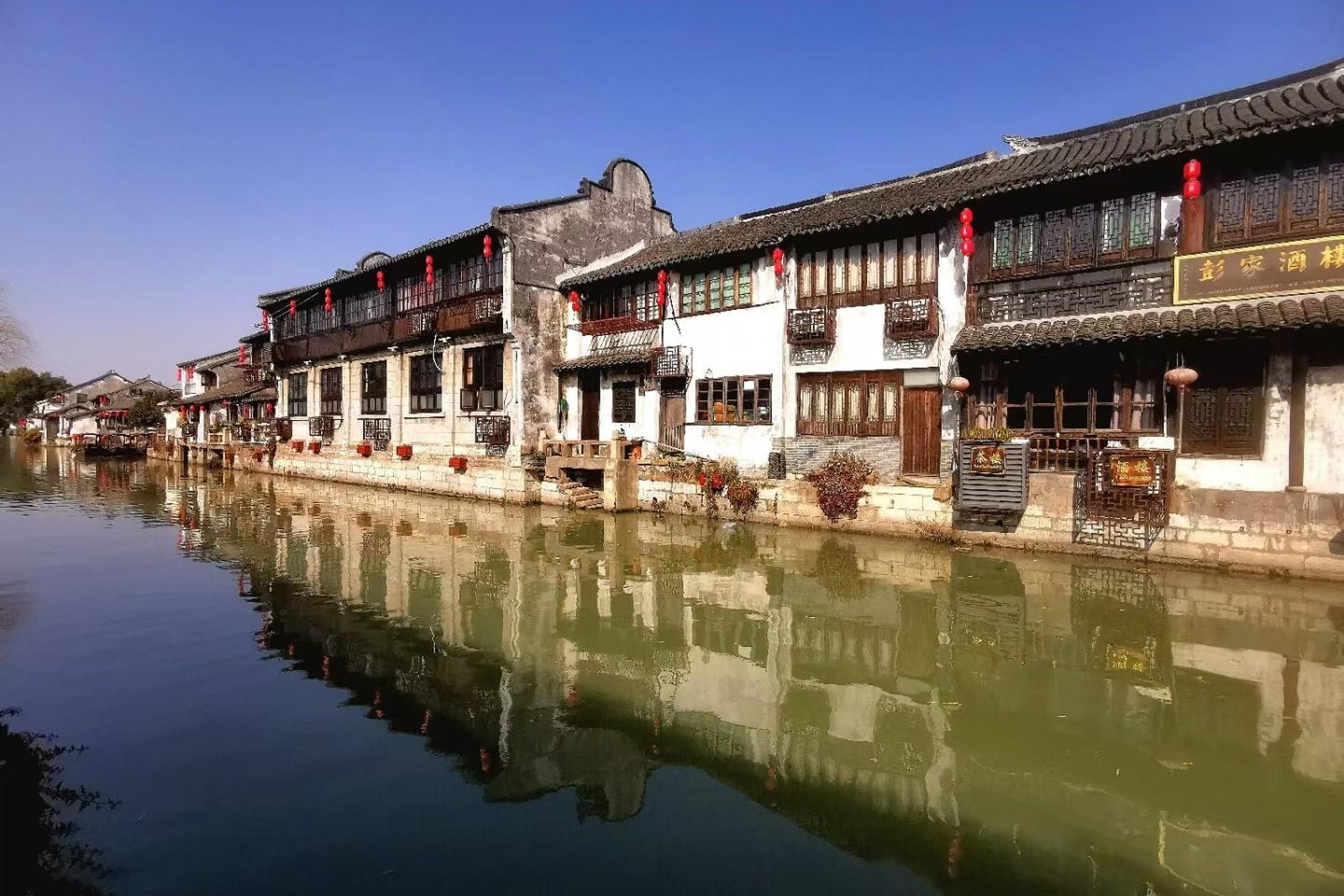
The honest star is 生产街廊棚 Shēngchǎn Jiē Lángpéng the covered corridor of Shengchan Street — the long riverside arcade of dark timber pillars and tiled roofing that runs beside the water so shoppers, boatmen and tea drinkers never meet the weather, the most complete stretch of 廊棚 lángpéng covered walkway in the Shanghai countryside. What gets oversold is the snack trail: the famous 丁蹄 dīngtí trotters and the rice wine of the old 丁义兴 Dīng Yìxīng shop are genuinely good, but posters imply a food street while the reality is a handful of family counters among hardware shops and cycle-repair stalls (worth confirming the details for which food workshops offer tastings on weekdays before you plan the day around them). What repays the effort is walking one bridge further than the crowd, where whitewash fades, door gods peel and the private town of laundry lines and fishing poles opens up. Stand on Zhihe Bridge first, then walk the arcade. Come for the layering of the place: bridge, then arcade, then the water’s memory.
The self-aware postscript: I was photographing the arcade one weekday morning when a shopkeeper sweeping her doorstep volunteered the local view. “Everyone photographs the bridges from the bank,” she said, leaning on the broom, “but under the roofed lane is where the town actually lives — rain or sun, the market has never stopped for weather in six hundred years”. That is the visit in miniature. From Zhihe Bridge at noon, looking down the canal at grey tile, whitewash and reflection fused into a single watercolour, the town holds its whole argument in one frame — a border post that outlived its border. 枫泾古镇 Fēngjīng Gǔzhèn suits whoever treats it as a real, unhurried water town with a great covered street and a commune-era curiosity first and a snack pilgrimage second, and disappoints anyone expecting light shows and boutique lanes. The rest of this Jinshan list fans out around it: the painter lanes of 金山农民画村 Jīnshān Nóngmín Huàcūn the Jinshan Peasant Painting Village lie just north of town, while the sands of 金山城市沙滩 Jīnshān Chéngshì Shātān Jinshan City Beach, the incense of 东林寺 Dōnglín Sì Donglin Temple and the fields of 廊下郊野公园 Lángxià Jiāoyě Gōngyuán Langxia Country Park wait toward the coast and the old county seat — all inside the same 金山区 Jīnshān Qū Jinshan District whose oldest water this town keeps.
Practicalities
- Rating: ★★★★☆ — the Wu-Yue border water town with Shanghai’s finest riverside arcade, a Yuan-era bridge and a rare People’s Commune site; walk one bridge further than the crowd.
- Tickets: Free open lanes; small combination ticket for interior sites including the People’s Commune Site (worth confirming the details for current prices and openings).
- Address: 枫泾古镇 Fēngjīng Gǔzhèn, 枫泾镇 Fēngjīng Zhèn Fengjing Town, 金山区 Jīnshān Qū Jinshan District, Shanghai — by bus or car from central Shanghai, roughly ninety minutes.
- Time needed: Two to three hours with a canal-side lunch; half a day if the arcades and teahouses hold you.
Words and Names
枫泾古镇 Fēngjīng Gǔzhèn Fengjing Ancient Town · 吴越名镇 Wú-Yuè míngzhèn the famous town on the old Wu-Yue border · 致和桥 Zhìhé Qiáo Zhihe Bridge, named for its Yuan reign era · 生产街廊棚 Shēngchǎn Jiē Lángpéng the covered corridor of Shengchan Street · 廊棚 lángpéng riverside covered walkway · 人民公社旧址 Rénmín Gōngshè Jiùzhǐ the People’s Commune Site, a 1958-era museum · 丁蹄 dīngtí the Fengjing trotter, the town’s braised signature · 丁义兴 Dīng Yìxīng the old food shop of the trotter trade · 石桥老街 shíqiáo lǎojiē old streets of stone bridges · 金山区 Jīnshān Qū Jinshan District
flowcloud would say that 枫泾古镇 Fēngjīng Gǔzhèn is the water town that stayed itself by standing on a border nobody needed anymore — a Wu-Yue market town in far southwestern 金山区 Jīnshān Qū Jinshan District, where 致和桥 Zhìhé Qiáo Zhihe Bridge has arched the same canal since its Yuan reign era, 生产街廊棚 Shēngchǎn Jiē Lángpéng the covered corridor of Shengchan Street keeps shoppers and tea tables dry through every season, 人民公社旧址 Rénmín Gōngshè Jiùzhǐ the People’s Commune Site preserves a 1958 world in amber, and the smell of 丁蹄 dīngtí the Fengjing trotter drifts from family counters beside the 石桥老街 shíqiáo lǎojiē old streets of stone bridges (worth confirming the details for combination-ticket prices and weekday openings before you set out) — and that the honest move is an early weekday walk entered on foot from the bus stop, because the postcard-bridge expectation is the poster half and the dry-market arcade, the peeling door gods and the one-bridge-further quiet are the real half, and the town repays whoever lets the old border stay invisible. All checked October 2026.
Getting there: From 上海南站 Shànghǎi Nánzhàn Shanghai South railway station take the 金山铁路 Jīnshān Tiělù Jinshan railway to 金山卫 Jīnshān Wèi Jinshanwei, then bus 枫泾线 Fēngjīng Xiàn toward the old town gates (worth confirming the details for the bus timetable, which shifts with the season); the 廊棚 lángpéng covered walks start at 生产街. All checked October 2026.