
Fengxian Museum: The Silver Halls Afloat on Jinhai Lake, the Sea-Dike Chronicle of the Coast and the Best-Designed Small Museum in Fengxian District, Shanghai
三馆银光浮碧水,一卷海塘说千年。Sān guǎn yínguāng fú bìshuǐ, yī juǎn hǎitáng shuō qiānnián – Three silver halls afloat on blue water; one scroll of sea-dike chronicle tells a thousand years.
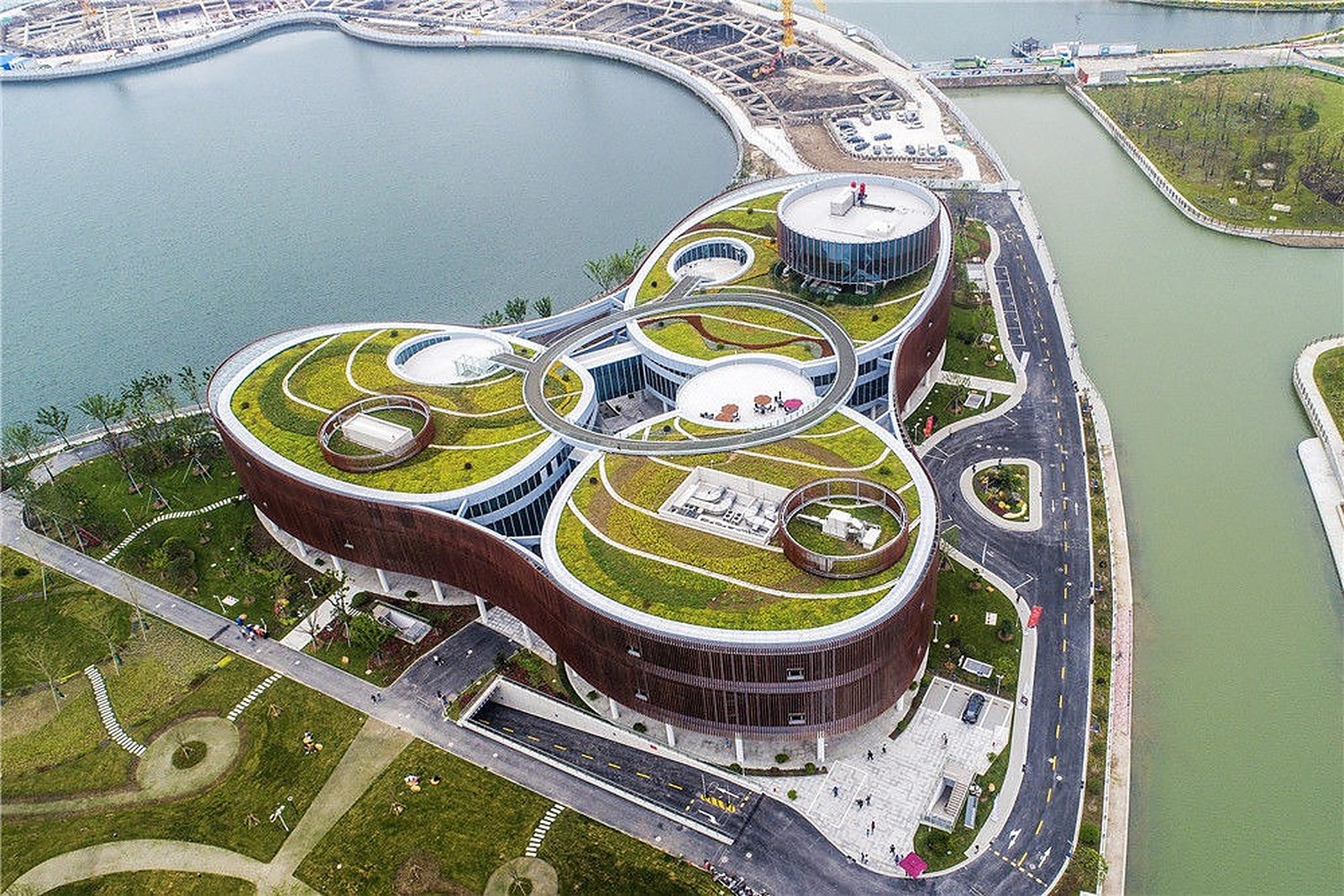
奉贤博物馆 Fèngxián Bówùguǎn Fengxian Museum is the architectural statement of Fengxian’s new city – a cluster of three elongated gallery volumes with silvery, softly curved façades, set on green slopes that run down to the water of 金海湖 Jīnhǎi Hú Jinhai Lake beside the Shanghai Fish, so that the building reads as three vessels moored on the lawn (worth confirming the details for the architect credits and the exact opening year of the new halls; the museum’s own displays recount them best). Inside, the permanent narrative belongs to this coastline: 奉贤’s history as reclaimed land behind ancient sea dikes – the 海塘 hǎitáng dike systems that pushed civilization mile by mile into the silted shallows of Hangzhou Bay – told through settlement artefacts, dike engineering and the district’s salt-and-cotton working past. The register is quiet civic pride: a district museum built at provincial scale, free at the door, half empty on weekdays, and architecturally worth the trip even with every gallery passed at a stroll.
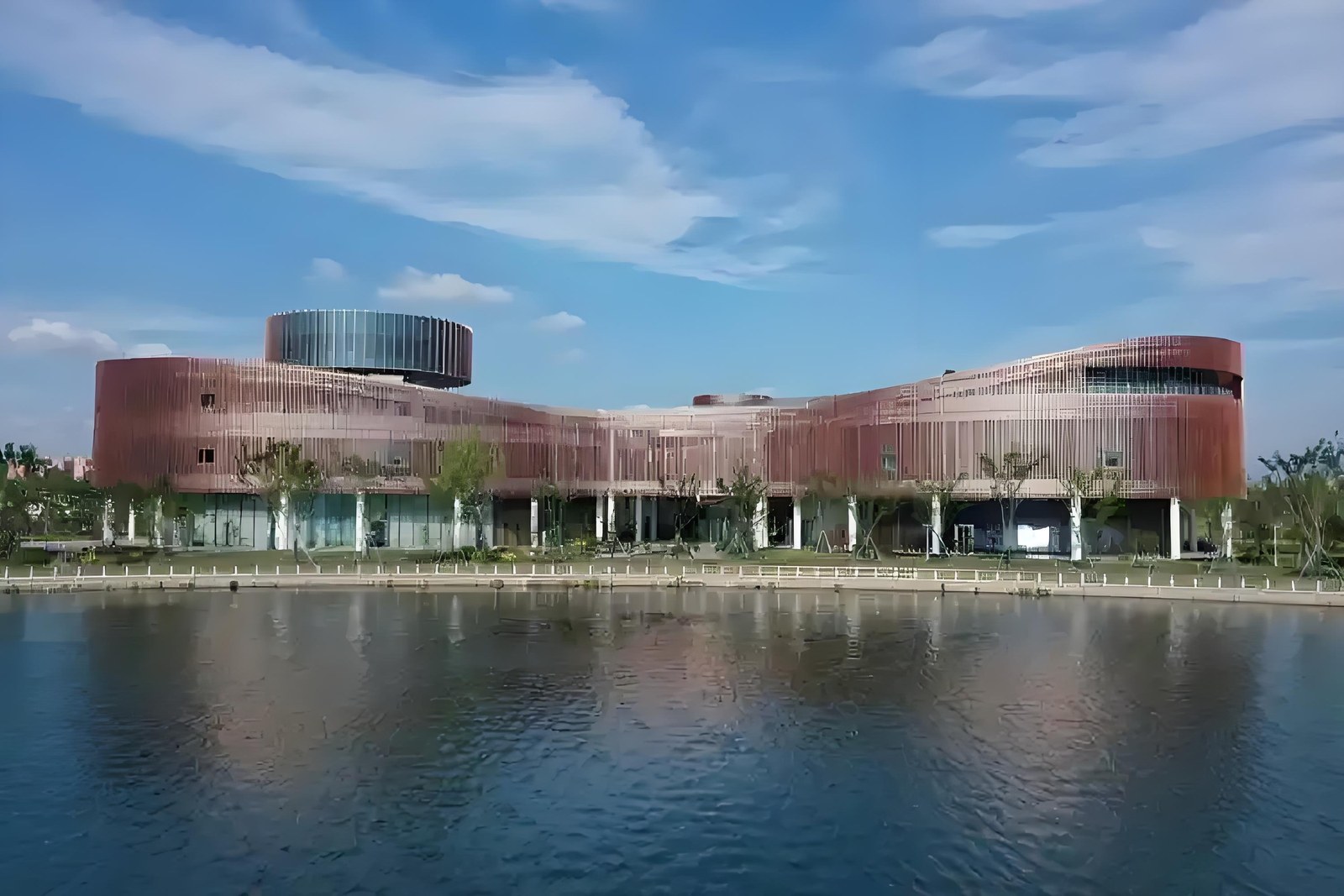
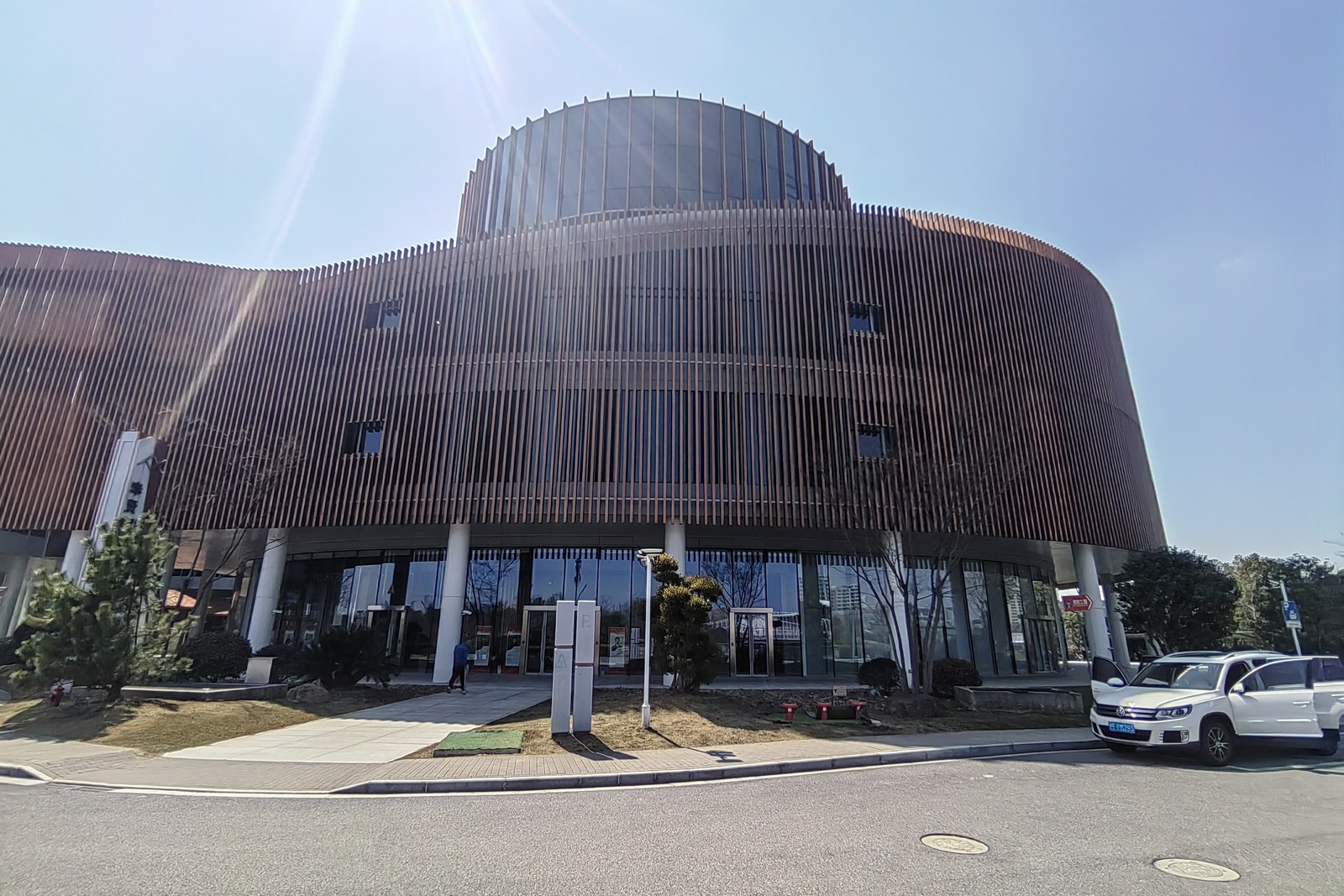
Two crowds keep the halls moving: weekend families from the new-city towers who arrive for the free galleries and stay for the lakeside lawns, and architecture admirers who come for the building itself – the reflective curves, the light through the slit windows, the museum-as-landscape composition that photographs differently every season (worth confirming the details for special exhibitions, which bring in touring shows that outdraw the permanent displays). The stock answer in kind: galleries that tell a genuine local story – how Shanghai’s south coast was literally built out of the sea – in a building that makes the telling feel ceremonial, all beside the lake walk of the Shanghai Fish.
Call it honestly: this is a district museum, and the collection’s depth matches that mandate – strong on local dike and settlement history, thinner on star artefacts that justify pilgrimage on their own (worth confirming the current special-exhibition programme if you time the visit, because the touring shows carry the crowded days). What the map repays is the pairing: an hour of galleries on how this coast was won from the sea, then the same story read in the landscape from the lake promenade, with the museum’s silver curves behind you. Against that: entry is free, the building rewards slow looking, and the Monday closure is the only real planning trap. Come for the architecture, learn the sea-dike story, and let the lakeside walk finish the argument – the museum and the fish-shaped lake are one exhibit.
Practicalities
Nearly everything else on this Fengxian list trades a different mood on the same map: choose 上海之鱼 Shànghǎi zhī Yú the Shanghai Fish for the lake loop, 碧海金沙 Bìhǎi Jīnshā Bihai Jinsha for the diked beach, 海湾国家森林公园 Hǎiwān Guójiā Sēnlín Gōngyuán Haiwan National Forest Park for the woods and 庄行老街 Zhuāngháng Lǎojiē Zhuanghang Old Street for the canal town – four more doors into the same 奉贤区 Fèngxián Qū Fengxian District. Once the day is planned, our Fengxian food map fills the eating hours.
Practicalities
Words and Names
flowcloud would say that a Fengxian Museum day is bought for the halls and the lake – silver-curve hour to promenade evening in the October 2026 snapshot, all worth confirming the details – and that the honest move is to pair it with the fish-shaped shore, because the building and the water argue one case together, keep the dike-chronicle galleries and the lakeside walk as the plan, and let Line 5 carry the city home. All checked October 2026.
Getting there: Metro Line 5 to 望园路 Wàngyuán Lù Wangyuan Road station, then a taxi across to the lakefront museum lawns (worth confirming the details for the closed Mondays, when the galleries rest); the 金海湖 Jīnhǎi Hú promenade circles the site. All checked October 2026.