
Red Star Over Shuanghe: The Fifth Division Story Hall
红星照耀双河岸,薪火相传五十弦 Hóngxīng zhàoyào Shuānghé àn, xīnhuǒ xiāngchuán wǔshí xián – A red star shines on the banks of Shuanghe; the flame passes on through every generation
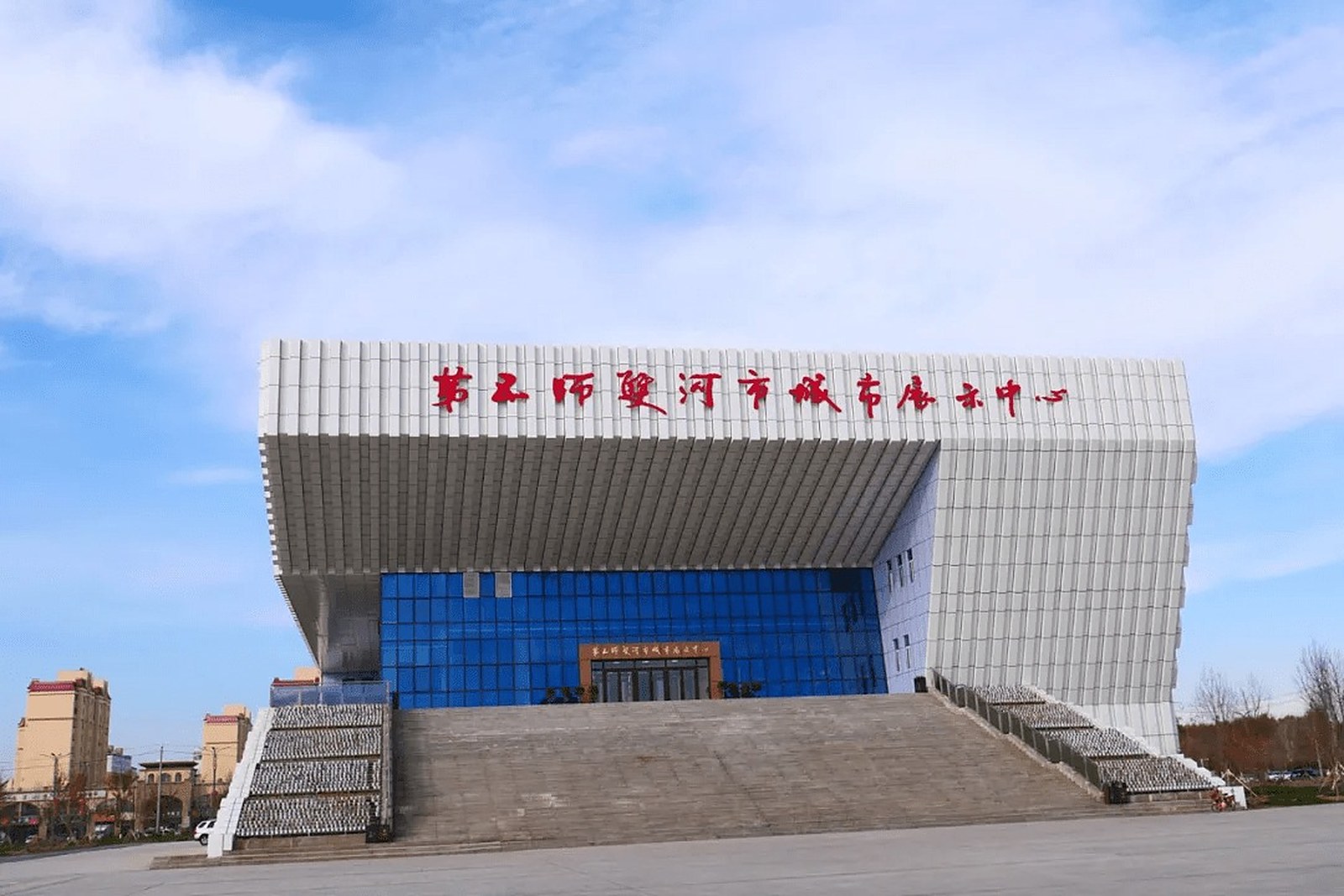
正文:第五师师史陈列 Dì-wǔ Shī Shǐshǐ Chénliè the Fifth Division museum story centers on the 城市展示中心 Chéngshì Zhǎnshì Zhōngxīn city exhibition center of 双河市 Shuānghé Shì Shuanghe City – the white-roofed hall on the city’s central axis where the red rooftop characters announce exactly what waits inside. The building serves double duty, as the city’s planning gallery and as the exhibition home of the Fifth Division’s history, and the two stories braid well: a regiment that settled the frontier in the 1950s and 60s, and the brand-new city that finally grew from its farms.
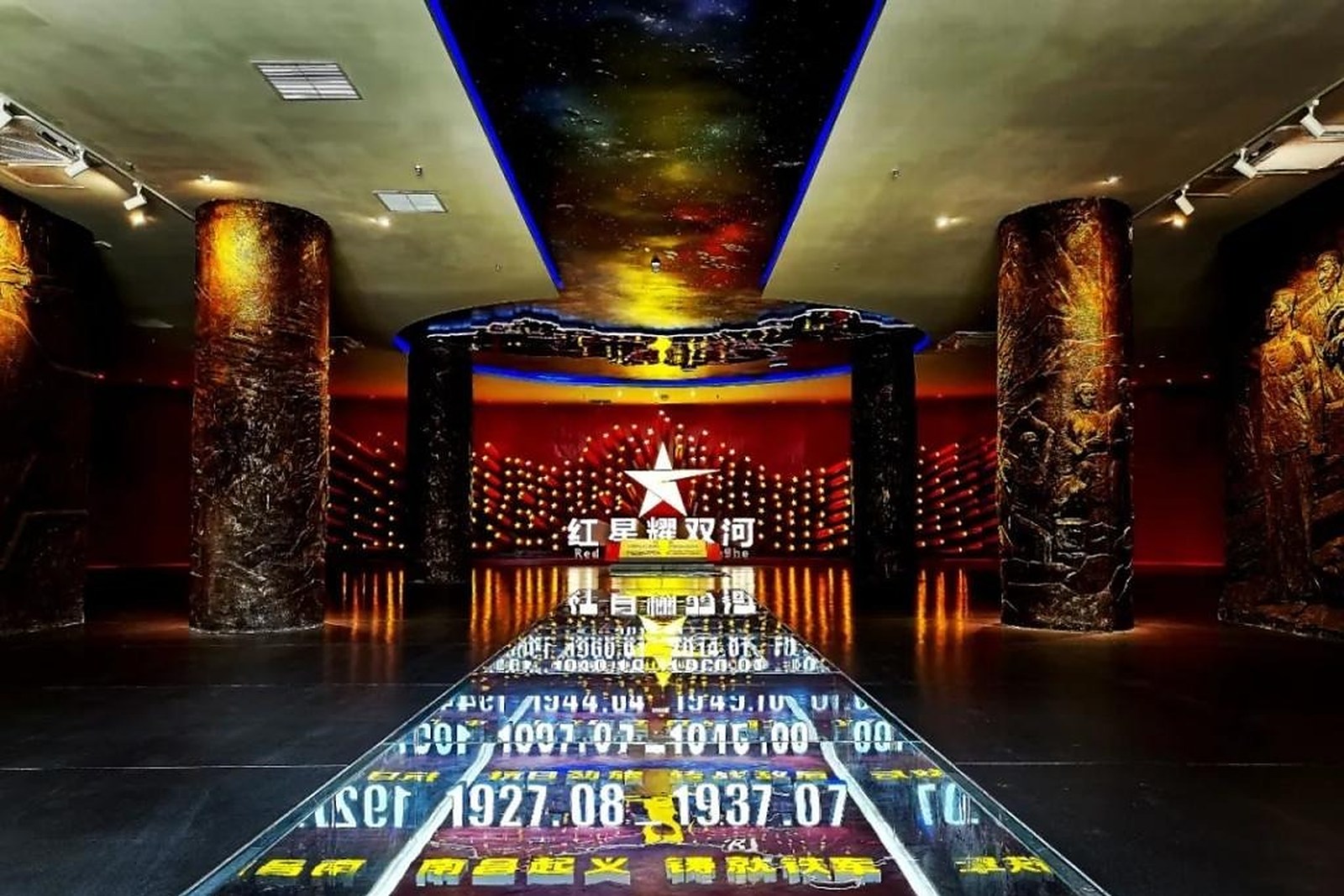
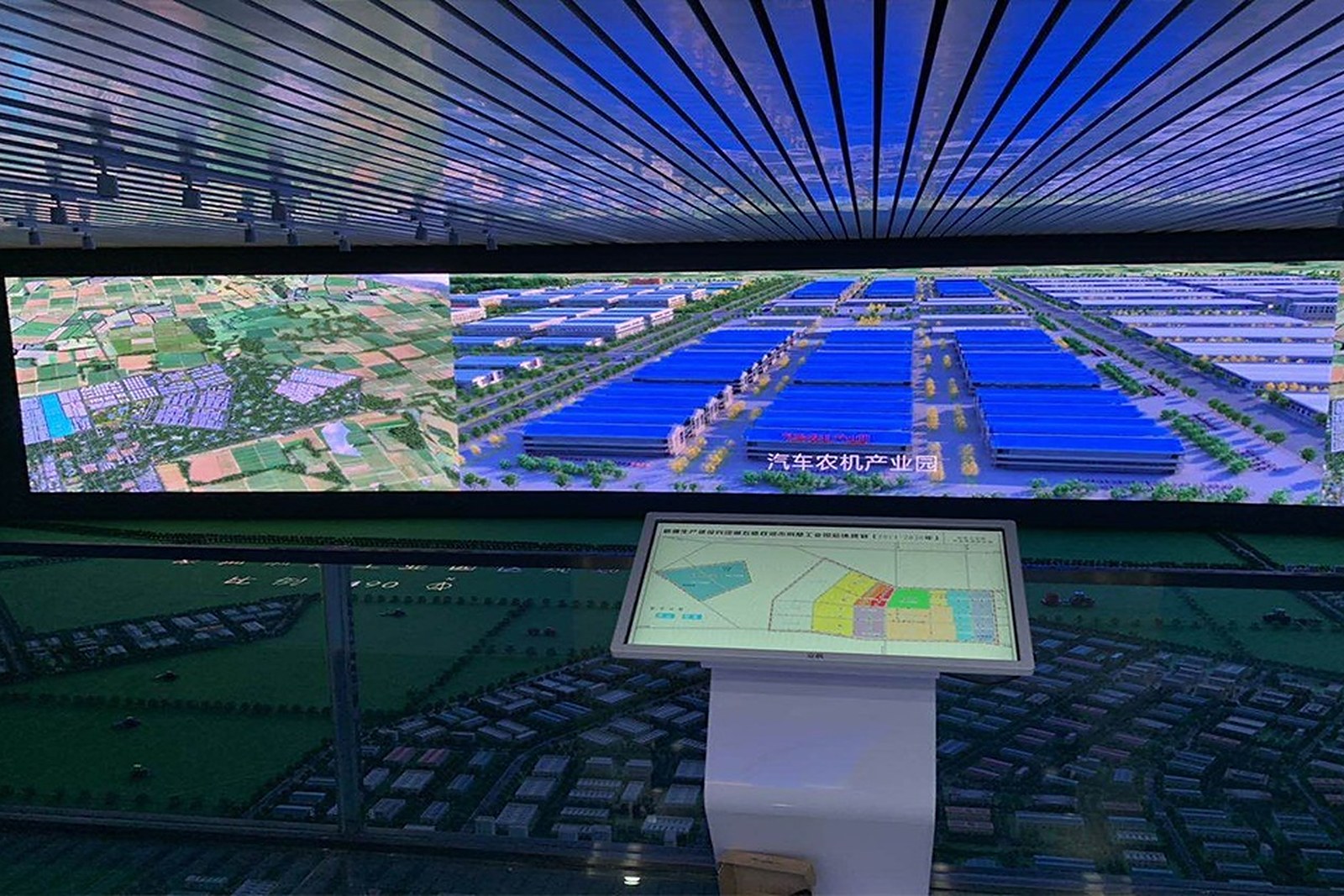
The sequence inside runs from star to city. The entrance hall stages the red star of the division’s army history against carved pillars and a floor timeline that walks you from the 1920s to the march west; the side galleries carry the settlement years – black-and-white regiment photos, survey maps of the börtala plain, and the tools of the first reclamation seasons; and the rear halls hand the story to the present, with sand-table models and screens laying out the young city’s streets, parks and industrial parks block by block.
Read it chronologically and the rooms do the teaching. The army years explain the insignia; the reclamation years explain the field patterns you will see outside town; the final galleries explain why a city of barely a decade stands here at all. The exhibition labels are in Chinese, but the visual narrative – photos, maps, models – carries a visitor who reads none of it, and the hall staff are used to pointing the route to passing travelers.
The exhibition center also anchors the city’s ceremonial geography. It faces the central square, sits minutes from the park belt and the river rim, and functions as the town’s parlor – school groups on Fridays, delegations on weekdays, and quiet self-guided hours in between. For a traveler it solves two problems at once: it gives the regiment story a single roof, and it hands you the city map you will spend the rest of the day walking.
Photographers get the rooftop characters and the hall’s red-star interior – the entrance hall is the shot, best taken with the doors’ daylight behind you in the early afternoon. Interiors are dim and polished, so a steady hand or a fast lens helps; tripods are fine on quiet weekdays if you ask the desk first.
Practicalities first. The exhibition center sits on the central axis of 双河市 Shuānghé Shì Shuanghe City, keeps office-hours-style opening with a midday lull, and asks nothing but a smile at the reception desk. Give the route an hour, start with the star hall so the chronology reads forward, and finish at the city model with your day’s walking plan in hand – it is the best orientation room in the region.
Practicalities
Beyond the story hall, the same 双河市 Shuānghé Shì Shuanghe City keeps more places worth the detour: 博尔塔拉河畔 Bó’ěrtǎlā Hé Pàn the Bortala river banks for the evening walk, 双河城市公园 Shuānghé Chéngshì Gōngyuán the Shuanghe city park for the willow loops, 博尔塔拉湿地 Bó’ěrtǎlā Shīdì the Bortala wetland for the swan water, or 垦区田园 Kěnqū Tiányuán the reclamation fields for the farmland horizons – four more doors into the same 双河市 Shuānghé Shì Shuanghe City. Once the museum story is read, our Shuanghe food map fills the day.
Practicalities
Words and Names
flowcloud would say the Fifth Division hall is a regiment’s diary bound in white walls: a red star at the door, sixty years of field-and-flag history in the middle rooms, and a brand-new city laid out on sand tables at the back – the shortest complete history lesson on the Bortala plain. All checked November 2026.
Getting there: The history hall stands in Shuanghe’s civic quarter, a short taxi ride from Bole; daytime hours and the regiment-map room rewards a slow hour – pair it with the park next door. All checked November 2026.