
The Forbidden City: The Vermilion Palace of Twenty-Four Emperors on the Central Axis
紫禁城中轴一线,红墙内外六百年。Zǐjìnchéng zhōngzhóu yī xiàn, hóngqiáng nèiwài liù bǎi nián – One line of axis runs through the Purple Forbidden City; inside and outside the red walls, six hundred years.
故宫 Gùgōng the Forbidden City is not one building with a fence — it is, plainly put, a walled city of palaces in the heart of 东城区 Dōngchéng Qū Dongcheng District, the core of old Beijing, completed in 1420 under the 明永乐帝 Míng Yǒnglè Dì Yongle Emperor and home for the next five centuries to 24 emperors of the 明 Míng Ming and 清 Qīng Qing dynasties. Chinese names it 紫禁城 Zǐjìnchéng, the Purple Forbidden City, and the English name is no metaphor: a commoner who crossed the threshold uninvited risked his life. What you actually visit is the largest surviving palace complex on earth — vermilion walls, golden-glazed roofs and marble terraces in a strict grid strung along 北京中轴线 Běijīng zhōngzhóuxiàn Beijing’s central axis, now a UNESCO World Heritage site — and since 1925 it has doubled as the 故宫博物院 Gùgōng Bówùyuàn Palace Museum, so the day is half architecture, half one of Asia’s great museums of treasure, painting, clocks and ceramics.
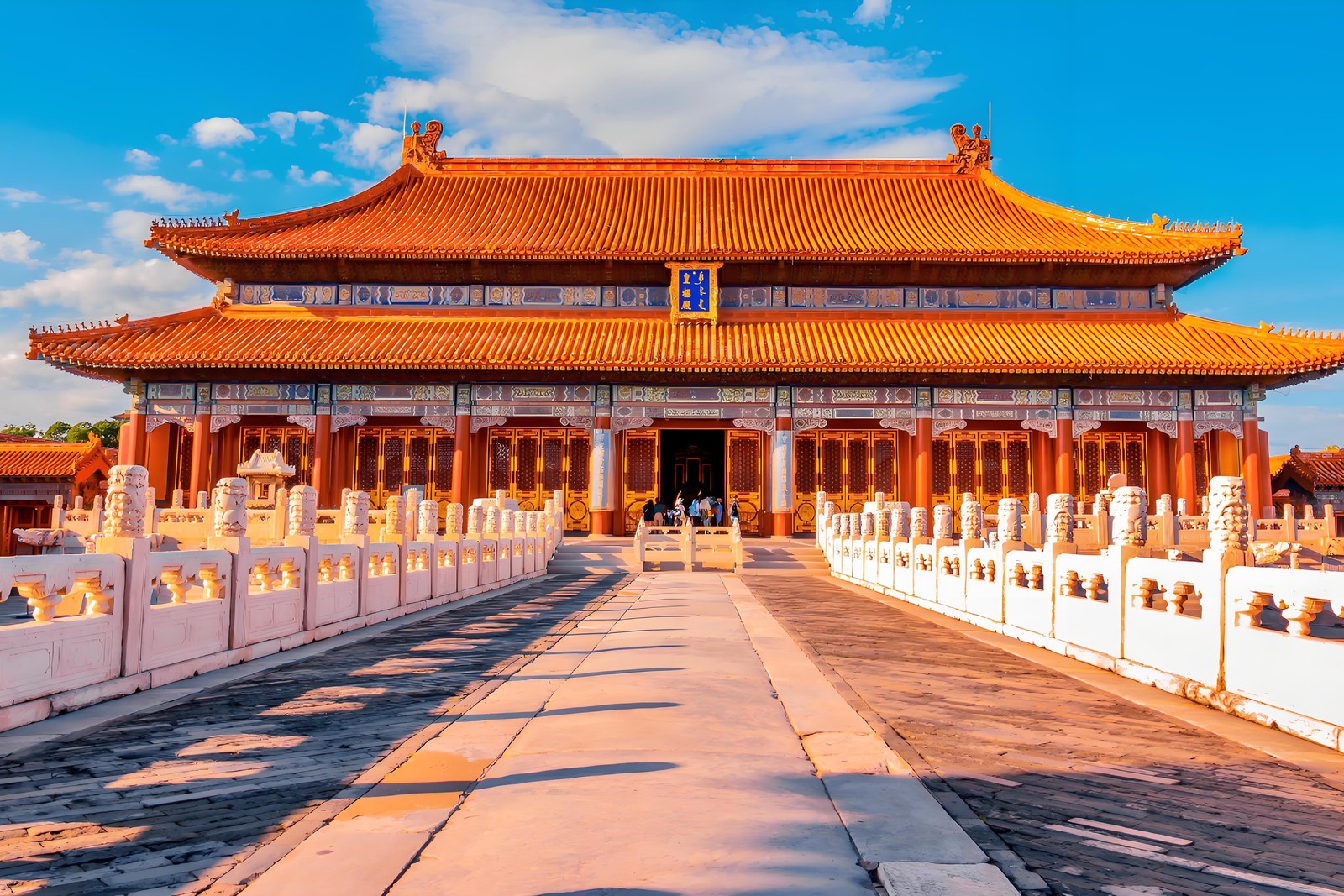
Call it honestly: the most commanding piece of imperial architecture on earth, managed with the friction of an airport on a holiday weekend. The palace runs a hard daily cap on numbers and sells every entry by real-name advance reservation through its official online channels, typically opening slots about a week ahead (worth confirming the current cap, booking window and passport booking procedure — foreign visitors book with the same passport they enter on). It shuts on Mondays except statutory holidays (worth confirming the closure rule before you plan a Monday). Tickets have historically run 40 to 60 yuan by season, with 珍宝馆 Zhēnbǎo Guǎn the Treasure Gallery and 钟表馆 Zhōngbiǎo Guǎn the Clock Gallery charged separately (worth confirming current prices and inclusions). Entry is south through 午门 Wǔmén the Meridian Gate, exit north or east, and the one-way flow limits backtracking, so decide your route before you queue. Half a day is the floor, not the ambition.
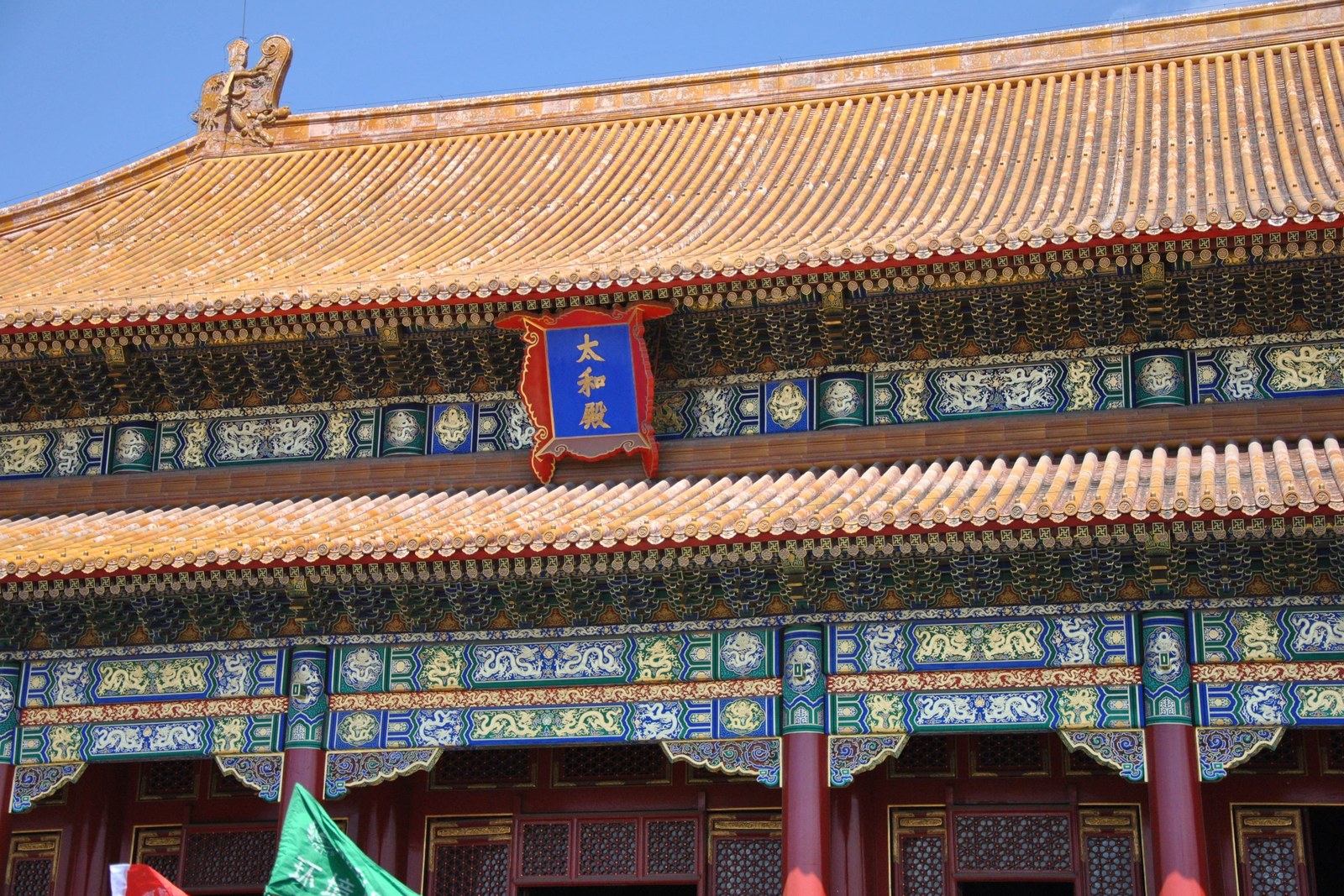
The honest trap is the axis everyone photographs. By ten the line from 天安门 Tiān’ānmén through 端门 Duānmén is a river of coach groups and 太和殿 Tàihé Diàn the Hall of Supreme Harmony, the throne hall crowning the axis, is a shoulder-to-shoulder scrum. What gets oversold is the center at midday; what repays the effort is the periphery. The side galleries hold exhibitions with room to breathe, the eastern and western quarters of the grid are an order of magnitude calmer, and after the north exit the 角楼 jiǎolóu corner towers step down to the 护城河 hùchénghé moat, where the classic angle — outside the northwest corner in late-afternoon light — doubles the multi-eaved turrets in still water. Do the axis early, drift the flanks late, and treat 景山 Jǐngshān Jingshan hill across the north gate as the compulsory finale: its summit sells the one full panorama over the golden roofs.
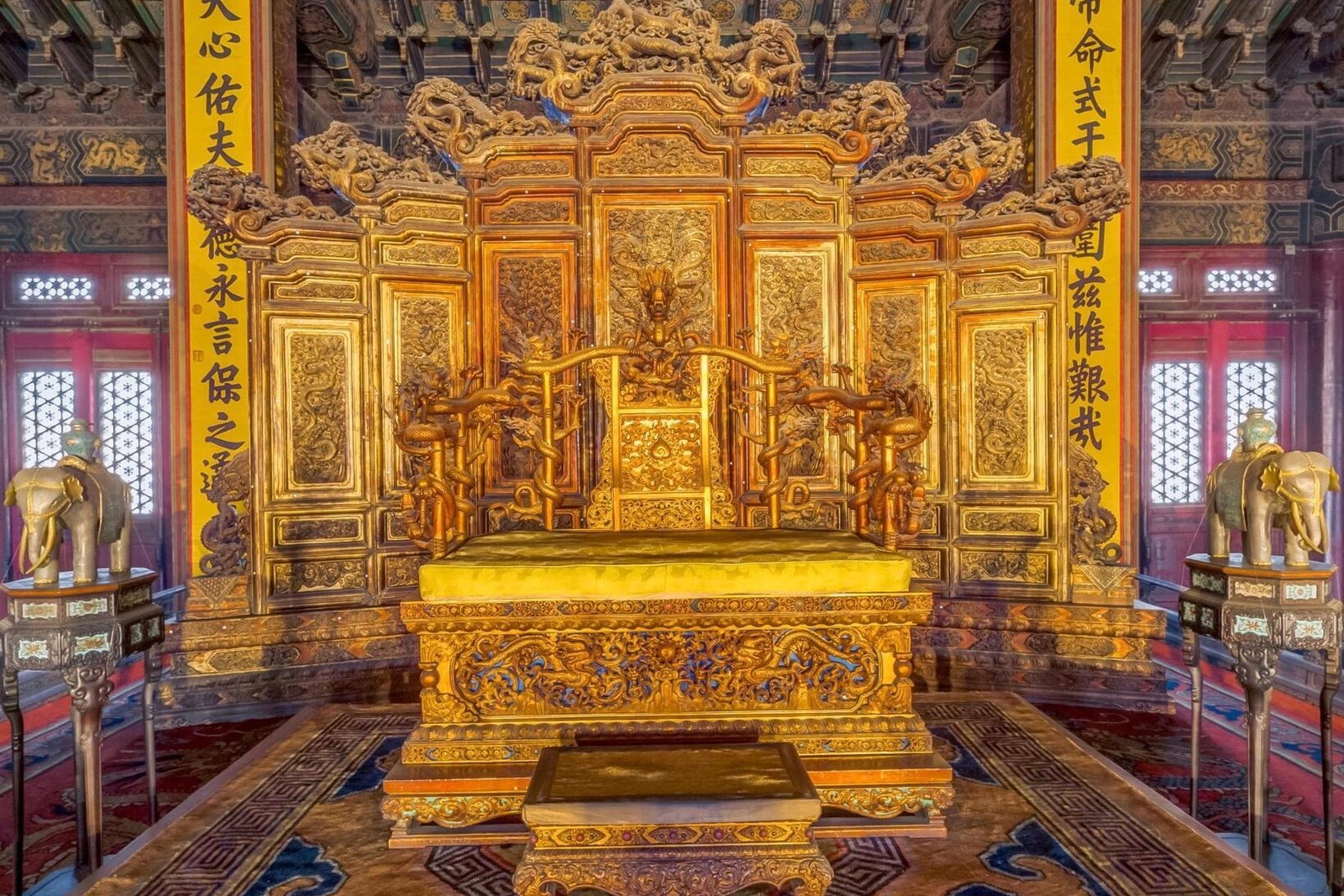
The self-aware postscript: I queued before opening, still lost twenty minutes to security, reached the throne hall as the crowd crested and retreated east in defeat — where I found empty courtyards, a drowsy gallery of automaton clocks and half an hour alone with a bronze lion. That is the visit in miniature. 故宫 Gùgōng suits whoever walks it like a city — axis once, sides twice — and exhausts whoever tries to sprint the centerline at noon. Everything else in this list lies within a short metro ride or a long stroll, because Dongcheng packs the old capital tight: half a day here, a morning at 天坛 Tiāntán, and you have barely left the same district.
Practicalities
- Rating: ★★★★★ — the supreme imperial palace complex on Beijing’s central axis; the architecture outranks the queues and the side courtyards are the connoisseur’s half of the visit.
- Tickets: Real-name advance reservation under a strict daily cap; historically 40–60 yuan by season with the Treasure and Clock galleries extra (worth confirming current prices, cap and booking window).
- Address: No. 4 景山前街 Jǐngshān Qiánjiē Jingshan Front Street, 东城区 Dōngchéng Qū Dongcheng District, Beijing — on the central axis just north of 天安门 Tiān’ānmén; entrance 午门 Wǔmén on the south side.
- Time needed: Half a day minimum — three hours for a fast axis-only pass, a full day if you open the galleries.
Words and Names
故宫 Gùgōng / 紫禁城 Zǐjìnchéng the Forbidden City · the Ming-Qing imperial palace and Palace Museum on the central axis 太和殿 Tàihé Diàn Hall of Supreme Harmony · the throne hall at the climax of the axis 午门 Wǔmén Meridian Gate · the south entrance where tickets, security and queues begin 角楼 jiǎolóu corner tower · the multi-eaved turret above the 护城河 hùchénghé moat 故宫博物院 Gùgōng Bówùyuàn Palace Museum · the museum established here in 1925 景山 Jǐngshān Jingshan · the hill park north of the north gate with the panorama over the roofs
flowcloud would say that 故宫 Gùgōng is the old city’s crown — a 1420 palace of 24 emperors strung on 北京中轴线 Běijīng zhōngzhóuxiàn, 午门 Wǔmén in, 太和殿 Tàihé Diàn at the peak, 角楼 jiǎolóu doubled in the 护城河 hùchénghé — and that the honest move is a half day with tickets booked ahead, because the daily cap and the Monday closure rule the schedule (worth confirming both), the axis crushes by ten so the flanks are the smarter walk, and the palace repays the side-courtyard wanderer while exhausting the noon sprinter. All checked October 2026.
Getting there: the Forbidden City in central Dongcheng, by Metro Line 1 to Tiananmen East and a walk north through Tiananmen and Duanmen to the Meridian Gate entrance (worth confirming the current checkpoint arrangements, which have shifted more than once); real-name tickets sell by daily cap roughly a week ahead and Mondays are closed. Go at opening, walk the axis early and the side courtyards late, and finish on Jingshan hill across the north gate for the panorama over the golden roofs. All checked October 2026.