
Foshan Lingnan Tiandi
By nine at night the arcades are strung with lanterns, the restaurants have spilled their tables onto the brick pavement, and the old shophouses glow warm behind their wooden shutters while a lion-dance drum thuds somewhere down the lane — and you realise the whole street has been rebuilt, and that it does not matter at all.
岭南天地 (Lǐngnán Tiāndì) is a restored historic quarter in the heart of 佛山 (Fóshān), the city just southwest of Guangzhou that is the ancestral home of Cantonese culture. It sits directly beside the 佛山祖庙 (Fóshān Zǔmiào), the Ancestral Temple of Foshan, and it is built out of the old 祖庙大街 area: a grid of narrow lanes lined with 骑楼 (qílóu, arcaded shophouses) and 镬耳屋 (huò’ěrwū, “wok-ear” houses) — the classic Lingnan townscape, with its grey brick, its deep overhangs and its curving gable walls — restored and given over to shops, teahouses, restaurants and small museums.
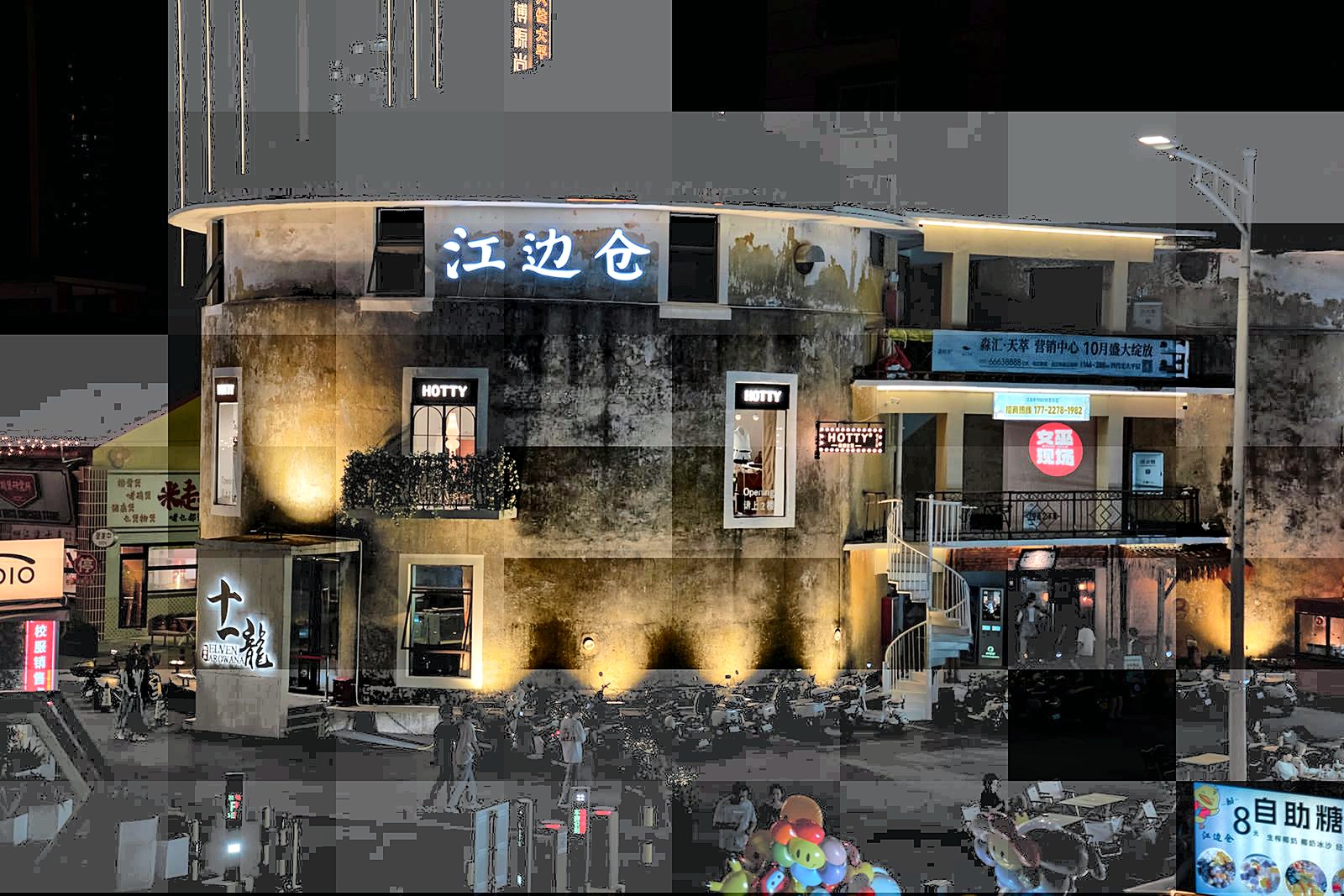
The Quarter
The pleasure of Lingnan Tiandi is that it is a whole district rather than a single sight. You wander. The lanes keep turning up small things: a 石湾陶 (Shíwān) ceramics shop, a workshop selling 香云纱 (xiāngyúnshā), the shiny black silk of the region, a tiny temple with incense going, a courtyard where an old man is doing calligraphy on the paving stones with a water brush, his characters drying and vanishing behind him.
Then, at one end, stands the 祖庙 itself — the Ancestral Temple, founded in the eleventh century and rebuilt many times, dedicated to 北帝 (Běidì), the Northern Emperor. It is the spiritual centre of Foshan and one of the great temple complexes of the south: carved stone, iron statues, and roofs crowded with 石湾陶塑 (Shíwān ceramic figures) in the same tradition you see at 陈家祠 in Guangzhou. Do not skip it — the quarter makes much more sense once you have been inside.
If you have time, the Foshan Lingnan Tiandi area also connects to the 黄飞鸿纪念馆 (Wong Fei-hung Memorial Hall), honouring the famous martial artist and folk hero who was born here, and to the workshops where 佛山狮头 (Foshan lion heads) are still made by hand.
Practicalities
Tickets. Wandering Lingnan Tiandi is free — it is a public quarter, open all day. The 祖庙 (Foshan Ancestral Temple) is ticketed at around ¥20, and is the one thing here you should pay for. Small workshops and museums charge their own modest fees.
Do you need to book? No. The quarter needs no tickets or bookings, and the temple can usually be entered on the door. Only the popular restaurants need reserving at weekends.
Opening hours. The lanes are open all day; the shops, cafes and restaurants keep their own hours, and the quarter is at its best in the evening, when the lanterns come on. The 祖庙 runs roughly 08:30–17:30 (last entry around 17:00). Allow half a day for the quarter plus the temple.
Getting there. Foshan is on Guangzhou’s metro network, which makes this the easiest day trip in Guangdong.
- By metro: Guangzhou Metro Line 1 to 西朗 (Xīlǎng), change to the 广佛线 (Guangfo Line) and ride to 祖庙站 (Zǔmiào) — the exit brings you out at the edge of the quarter. Total about an hour from central Guangzhou.
- By high-speed rail: 佛山西站 (Foshan West) is a short taxi ride away if you are coming from further afield.
- By taxi or Didi: say 岭南天地; drivers know it.
One warning. This is a restored, commercial version of an old street, not a lived-in one — beautiful, but tidy in a way that real Lingnan lanes are not. If you want the un-restored version, walk a few blocks out of the quarter into the older parts of 禅城区 and look at the actual 镬耳屋, still inhabited and still weathering. Go on a weekday evening to avoid the weekend crush.
flowcloud would say that a city which rebuilds its old streets is arguing with time, and that Foshan — home of kung fu and of lion dances — has always enjoyed a good argument.
Getting there: 岭南天地 (Lingnan Tiandi), 禅城区, 佛山 (Foshan), Guangdong — beside the 佛山祖庙. Guangzhou Metro Line 1 to 西朗, change to the 广佛线 to 祖庙站 (Zumiao); about an hour from central Guangzhou. The quarter is free and open all day; the 祖庙 ticket is about ¥20, open roughly 08:30–17:30. Best in the evening for the lanterns; pair it with 黄飞鸿纪念馆 and the lion-head workshops.