
The Fruit That Named a City: Fragrant-Pear Country at Tiemenguan
梨花院落溶溶月,九月香梨满筐金 Líhuā yuànluò róngróng yuè, jiǔyuè xiānglí mǎn kuāng jīn – In the courtyard the pear blossom swims in mild moonlight; in September the fragrant pears fill golden baskets
正文:香梨园 Xiānglí Yuán the fragrant-pear orchards are the reason the whole oasis calls itself Pear City – Korla fragrant pears, the thin-skinned, juice-heavy fruit that carries a national geographical-indication name, grow their best rows on the Kongque river soils around 铁门关市 Tiěménguān Shì Tiemenguan City, where the regiment farms of the Second Division keep some of the oldest blocks in production. The trees are crooked, silver-barked and half a century old in the veteran blocks, and in fruit season every branch works so hard the orchards smell like a juice press.
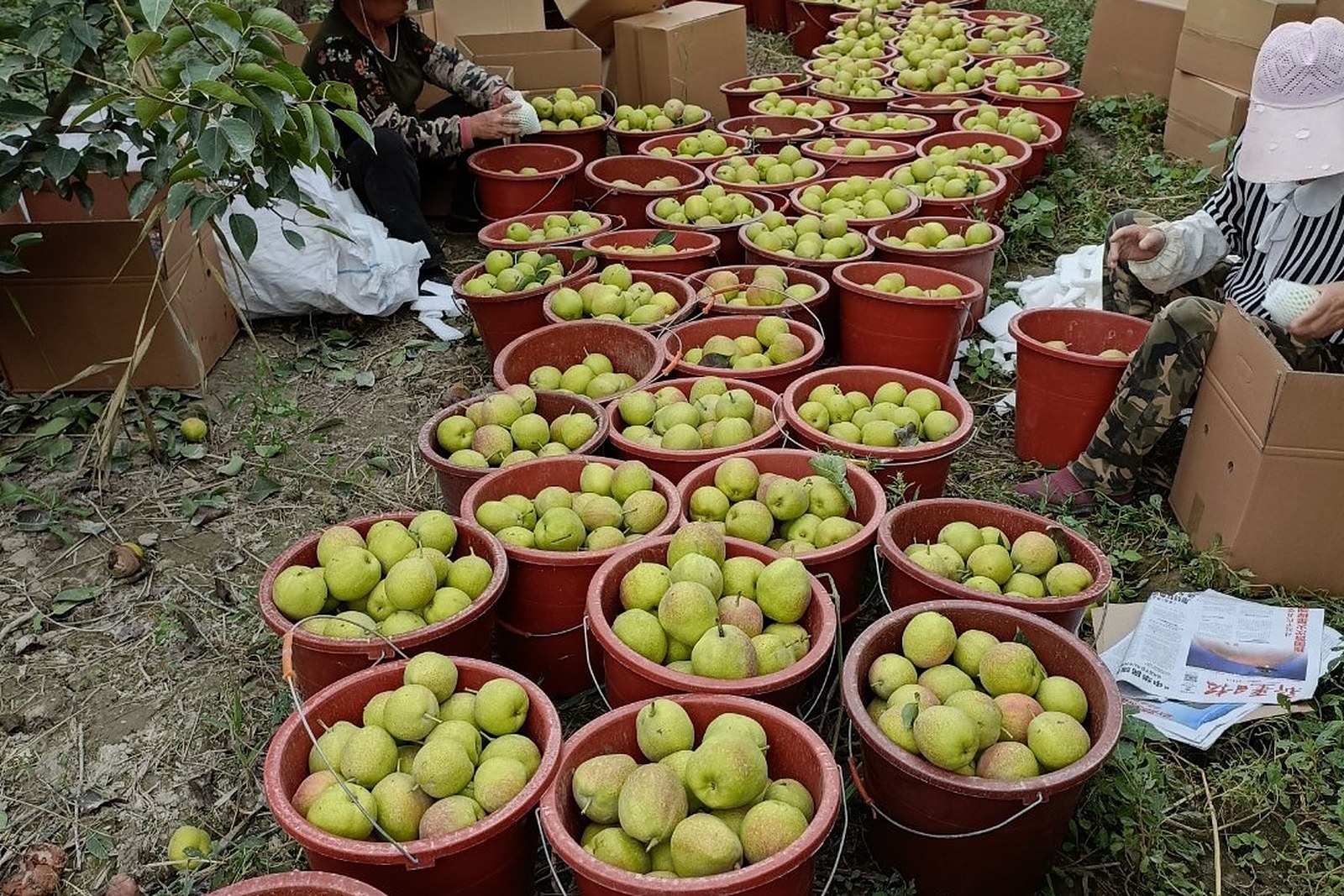
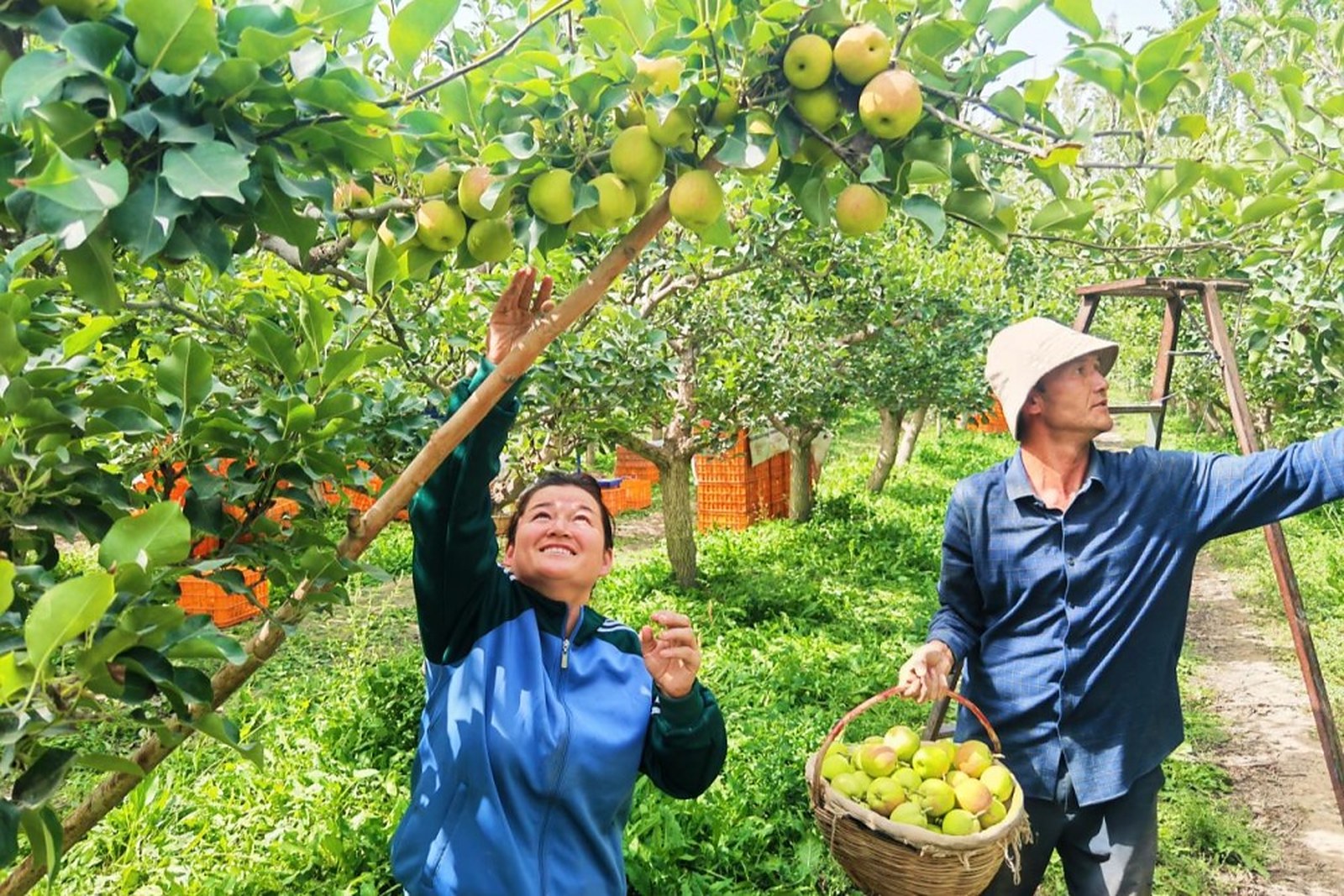
The harvest runs September into October. Crews move down the rows with picking bags and shoulder crates, the grading sheds fill with wash-water and sorting tables, and the roadside stalls open where the orchard roads meet the highway – a basket of tree-ripe pears handed over the tailgate, cold from the morning pick and heavy enough to surprise you. Buyers come from as far as the coast; the growers will let you watch the grading if you ask at the block office.
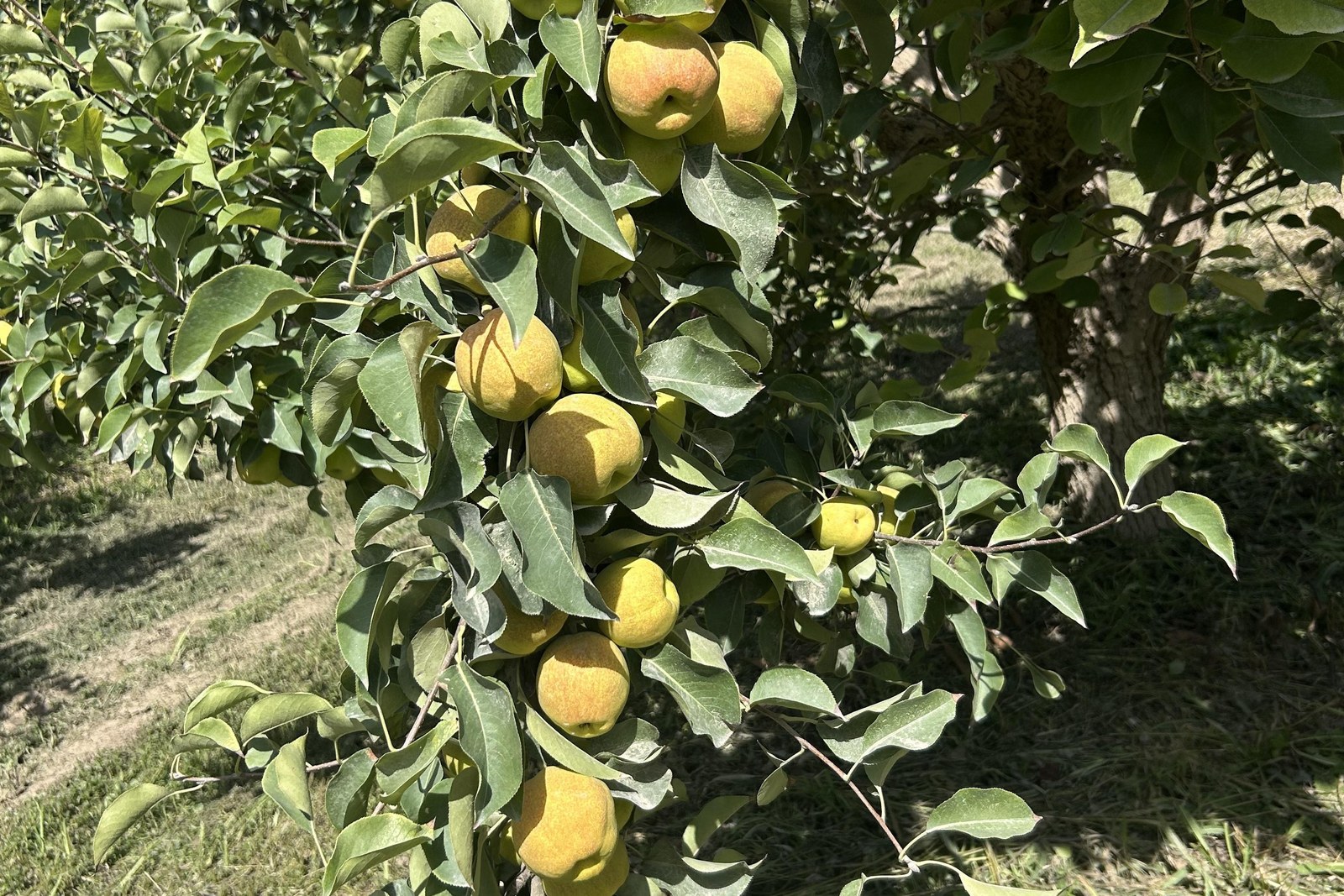
The fruit itself is the argument. A ripe Korla fragrant pear is small – palm-sized, calyx-scarred, green-gold – and dissolves off the stone with a sweetness that carries a faint rose note; locals rate a block’s vintage the way elsewhere they rate wine. The best expression is the simplest: fruit off the tree at dawn, wiped on a sleeve, eaten standing between the rows while the dew is still on the grass.
The orchard calendar gives the district its other season. In April the pear blossom turns the farm belt white for two weeks and the bee boxes stack along every headland; in autumn the picking ladders and crates take over. Between the two, the regiment towns run the packing economy – cold stores, box printers, fruit-coop offices – and the orchard roads stay the pleasantest slow drives on the whole oasis map.
Practicalities
Beyond the orchards, the same 铁门关市 Tiěménguān Shì Tiemenguan City keeps more places worth the detour: 孔雀河风景带 Kǒngquè Hé Fēngjǐngdài the Kongque River Belt for the swan-winter water, 棉田 Mián Tián the cotton fields for the white season, 铁门关城市公园 Tiěménguān Chéngshì Gōngyuán the city parks for the pagoda-and-bridge walks, or 铁门关新城 Tiěménguān Xīnchéng the new city for the planned-grid streets – four more doors into the same 铁门关市 Tiěménguān Shì Tiemenguan City. Once the orchards are walked, our Tiemenguan food map fills the day.
Practicalities
Words and Names
flowcloud would say the fragrant-pear orchards are the desert doing orchard arithmetic: snowmelt plus brutal light equals a fruit small enough to pocket and sweet enough to export a name – and September is when the whole district smells like the answer. All checked November 2026.
Getting there: The orchard belt lies west and south of Tiemenguan along the regiment roads of the Korla oasis; a taxi from downtown takes 20 minutes and growers welcome drive-by buyers in September. All checked November 2026.